Wheat vs Oats: Are Oats Wheat or a Different Grain?
Wheat vs oats involves two different cereal grains with distinct plants, nutrients, gluten content, and agricultural uses. Although both belong to the grass family, their differences affect food choices, grain processing, planting seasons, and crop management.
Oats are not wheat. Both are cereal grains, but oats come from Avena sativa, while wheat comes from Triticum species. Oats naturally lack wheat gluten, although cross-contact can occur. Wheat suits breadmaking, while oats are commonly used for oatmeal, cereals, and livestock feed.
Wheat vs Oats: What Are the Main Differences?
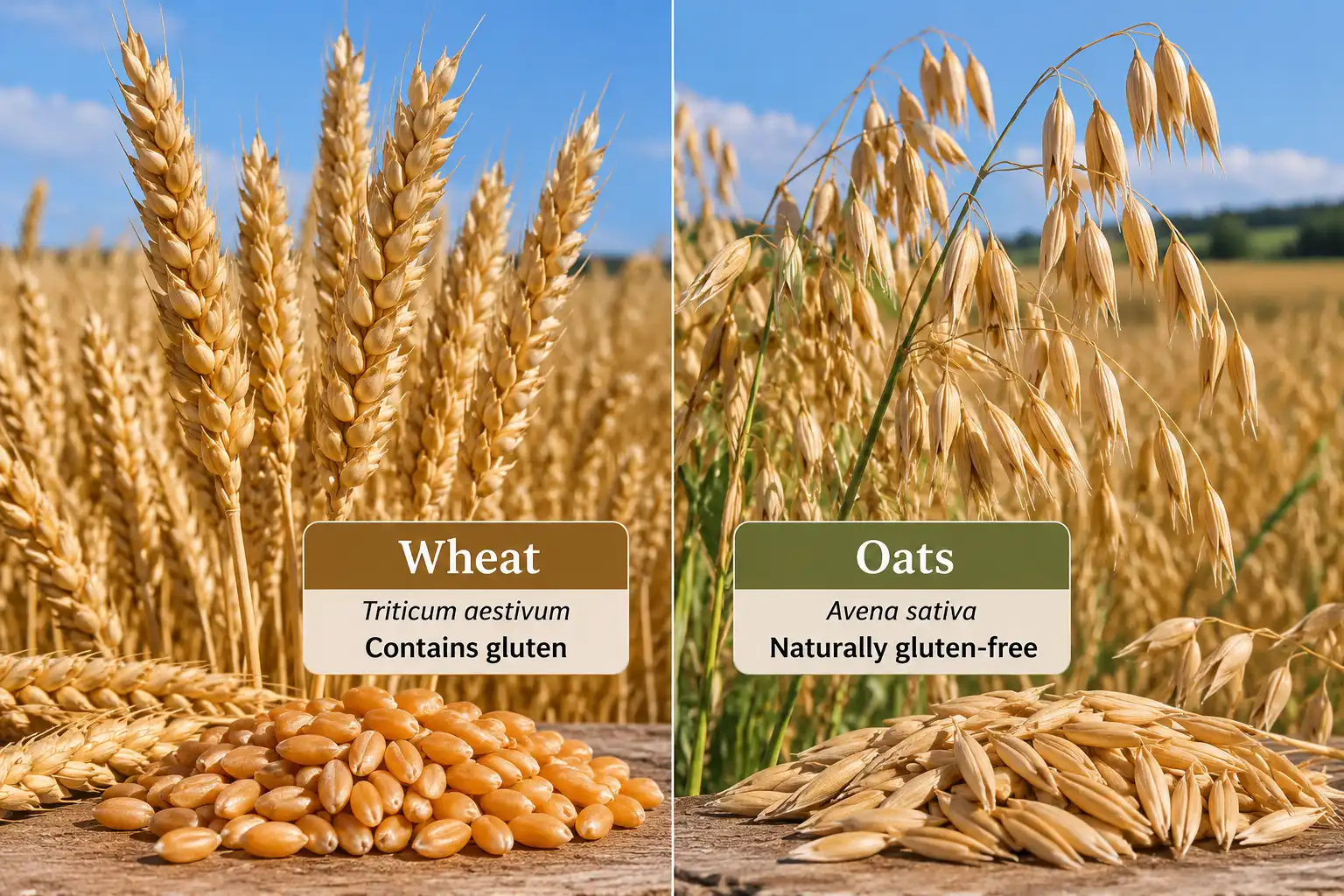
Wheat and oats differ most in botanical identity, seed-head structure, gluten proteins, processing, and end use.
| Feature | Wheat | Oats |
|---|---|---|
| Botanical name | Triticum species | Avena sativa |
| Plant family | Poaceae (grass family) | Poaceae (grass family) |
| Grain head | Compact spike | Loose, branching panicle |
| Natural gluten | Contains gluten | Lacks wheat, barley, and rye gluten |
| Main food uses | Bread, pasta, flour, cereals | Oatmeal, granola, oat flour |
| Major dietary feature | Protein that forms elastic dough | Beta-glucan soluble fiber |
| Common growing types | Spring and winter wheat | Primarily spring oats in northern states |
| Grain processing | Threshing and milling | Dehulling, heating, cutting, or rolling |
| Standard US grain bushel | 60 pounds | 32 pounds |
The standard bushel weights are confirmed in the University of Georgia Extension planting guide. They are accounting weights, not predictions of yield or the actual density of every grain lot.
Both crops produce edible seeds and support grain-based foods. However, they cannot always replace each other in recipes or farming systems.
Are Oats Wheat or a Different Type of Grain?
Oats are a separate cereal grain, not a wheat variety.
Wheat and oats belong to the same botanical family, Poaceae, which includes barley, rye, rice, and corn. However, they belong to different genera.
What Are Oats?
Oats are the edible seeds of the oat plant, Avena sativa. The plant is an annual grass cultivated for human food, livestock feed, forage, and cover cropping.
Unlike wheat, oat plants produce open, branching grain heads. Their seeds commonly remain enclosed in hulls after threshing.
Are Oats a Grain?
Yes. Oats are true cereal grains because they come from grasses cultivated for their edible seeds.
Whole oat kernels contain three major edible components:
- Bran: The outer layer, which supplies fiber and minerals.
- Germ: The embryo containing nutrients needed for seed development.
- Endosperm: The largest portion, containing starch and protein.
Wheat kernels have these same basic components. Their different proportions, proteins, and processing characteristics explain many differences between oat and wheat foods.
What Are Oats Made From?
Oats are made from the harvested seeds of oat plants, not from wheat or another grain.
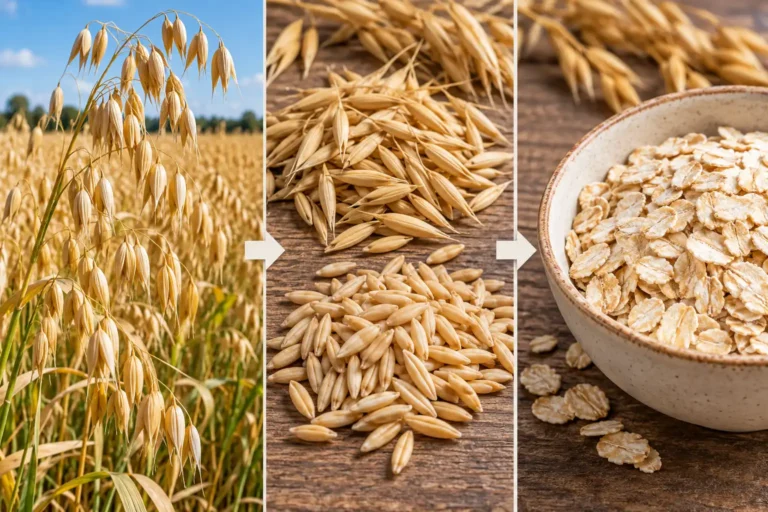
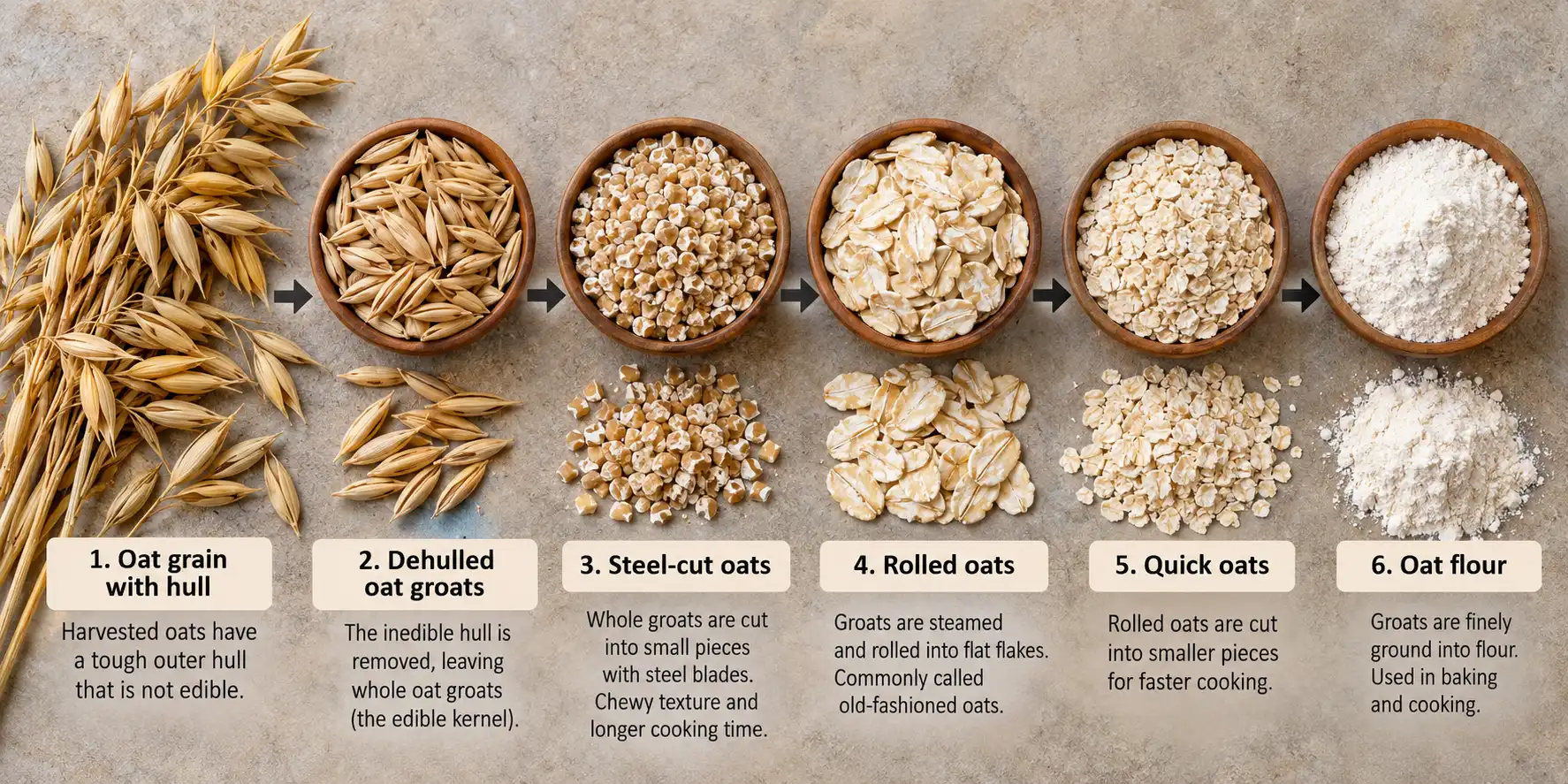
After harvest, food processors clean the oats and remove their inedible outer hulls. The remaining edible kernels are called oat groats.
The North Dakota State University Extension explains that processors heat-stabilize oat groats to limit enzyme activity that could cause off-flavors. They then process the groats into different products.
| Oat product | How it is made |
|---|---|
| Oat groats | Whole edible kernels with hulls removed |
| Steel-cut oats | Groats cut into smaller pieces |
| Rolled oats | Groats steamed and flattened |
| Quick oats | Oats processed into thinner or smaller pieces for faster cooking |
| Instant oats | Oats pre-cooked and processed for rapid preparation |
| Oat flour | Oat kernels ground into flour |
Plain steel-cut, rolled, and quick oats generally retain all three edible parts of the grain.
However, instant oatmeal packets may contain added sugar, salt, or flavorings. Those ingredients are not naturally part of the oat grain.
Do Oats Contain Gluten Like Wheat?
Pure oats naturally lack the gluten proteins found in wheat, barley, and rye, but regular oat products may contain gluten from cross-contact.
Wheat contains gluten proteins that allow dough to stretch and hold gases produced during fermentation. Oats contain a different storage protein called avenin.
Oats may contact wheat, barley, or rye during field production, harvesting, transportation, storage, or milling.
The US Food and Drug Administration requires foods labeled “gluten-free” to contain less than 20 parts per million of gluten, with additional ingredient restrictions. Third-party certification is not required under this federal rule.
Can People With Celiac Disease Eat Oats?
Many people with celiac disease can tolerate moderate amounts of uncontaminated oats, but some react to oat proteins.
The National Institute of Diabetes and Digestive and Kidney Diseases recommends choosing gluten-free-labeled oats and consulting a doctor or registered dietitian before including them in a celiac diet.
If you have a wheat allergy, examine ingredient and allergen labels separately. A gluten-free claim does not automatically guarantee that a food contains no wheat-derived ingredients.
Wheat vs Oats Nutrition: Which Is Healthier?
Neither grain is automatically healthier. Whole oats and whole wheat both provide dietary fiber, protein, carbohydrates, and minerals.
A fair comparison requires similar portions and clearly identified products.
USDA FoodData Central provides the following approximate values for plain, dry regular oats and whole-grain wheat flour.
| Nutrient per 1.4 oz (40 g) | Regular oats | Whole-wheat flour |
|---|---|---|
| Calories | 152 | 136 |
| Protein | 5.3 g | 5.3 g |
| Dietary fiber | 4.0 g | 4.3 g |
| Total fat | 2.6 g | 1.0 g |
Source: USDA FoodData Central, SR Legacy food records 173904 and 168893. Values are rounded from equal dry weights and do not represent every oat or wheat product.
Oats stand out for beta-glucan, a soluble fiber associated with lowering LDL cholesterol as part of an appropriate diet.
Whole wheat also provides substantial fiber. Refined white wheat flour contains considerably less fiber because processing removes much of the bran and germ.
For most people, choosing a suitable whole-grain product matters more than declaring either crop the winner.
How Can You Tell Wheat and Oats Apart in a Field?
The easiest identification feature is the grain head. Wheat produces a compact spike, while oats produce a branching panicle.
Wheat spikelets attach along a central stem, forming a relatively dense head. Some wheat varieties also have long bristles called awns.
Oat spikelets hang from smaller branches spreading outward from the main stem. Mature oat panicles often appear more open and drooping than wheat heads.
Before heading, both crops can look similar because they have narrow grass leaves and upright stems. Early identification requires closer inspection of leaf collars and other plant characteristics.
If you need to identify wheat before maturity, the wheat plant identification guide explains its leaves, stems, and developing grain heads.
When Should You Plant Wheat and Oats in the United States?
Both crops grow during cool weather, but spring oats, spring wheat, and winter wheat follow different planting schedules.
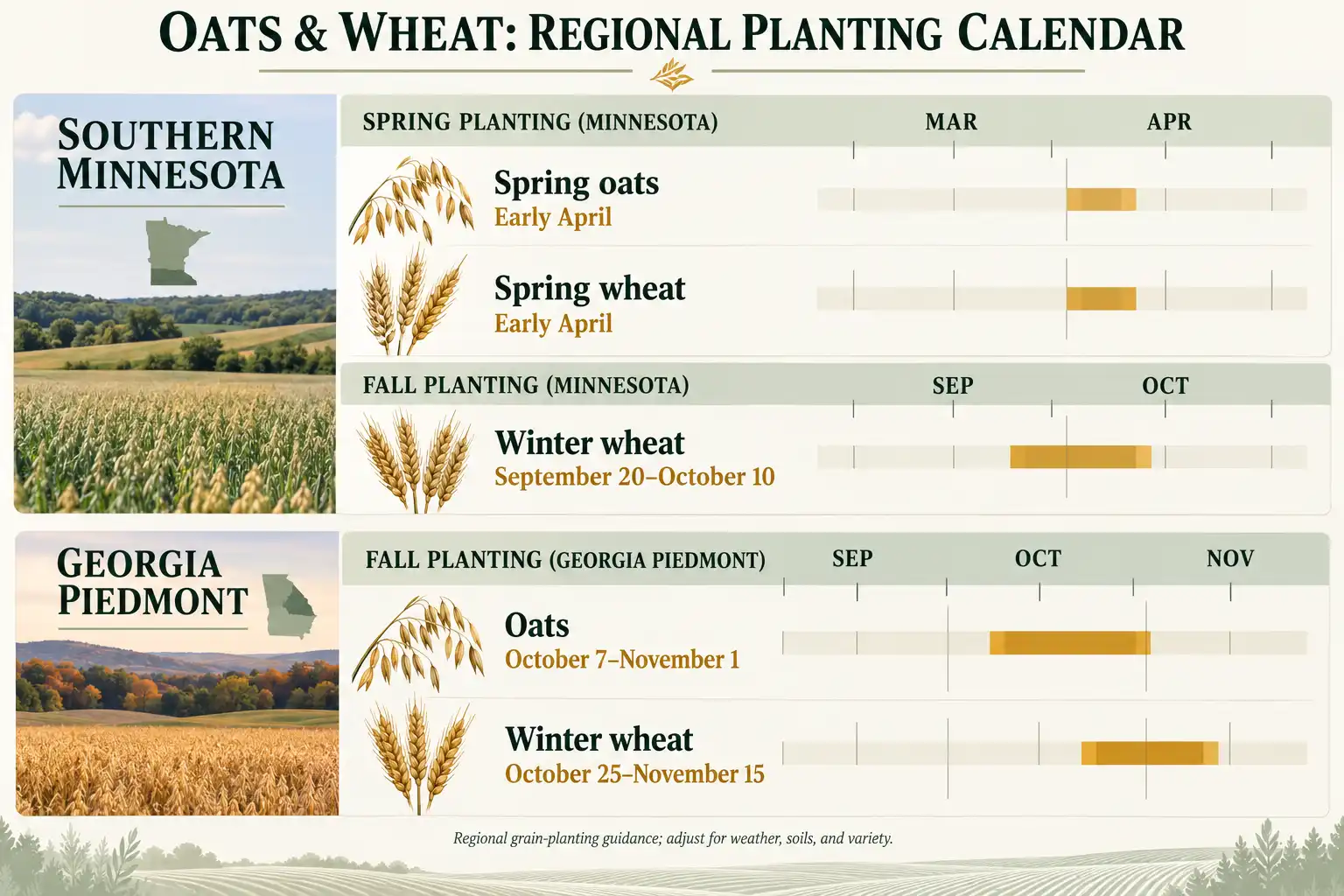
According to the University of Minnesota Extension, spring oats and spring wheat begin germinating actively when soil temperatures reach approximately 40°F.
Early establishment helps the plants develop before summer heat reduces grain-production potential.
| US region | Crop | Typical planting window |
|---|---|---|
| Southern Minnesota, south of US Highway 12 | Spring oats and spring wheat | First week of April |
| Southern Minnesota, south of Interstate 90 | Winter wheat | September 20 to October 10 |
| Georgia Piedmont | Grain oats | October 7 to November 1 |
| Georgia Piedmont | Winter wheat | October 25 to November 15 |
Dates are regional recommendations from University of Minnesota Extension and University of Georgia Extension, not nationwide planting dates.
Winter wheat uses fall establishment and spring regrowth. Spring oats generally lack the winter hardiness needed to survive northern winters.
In the Southeast, locally adapted oats can be planted in fall for grain or forage.
For specific wheat schedules, use the spring wheat planting guide or winter wheat planting guidance.
How Do Wheat and Oats Compare for Seeding and Harvest?
Wheat and oats require crop-specific seeding rates, even where their growing seasons overlap.
The University of Georgia Extension lists these reference rates for grain production:
| Crop | Seed rate per acre | Seed for 100 sq ft |
|---|---|---|
| Oats | 60 to 75 lb | 2.2 to 2.8 oz |
| Wheat | 60 to 90 lb | 2.2 to 3.3 oz |
The wheat range excludes Georgia’s higher rates for intensive management. Values for 100 sq ft are area conversions, not separate garden-specific recommendations.
For any plot, calculate:
Seed needed (lb) = Seeding rate (lb/acre) × Plot area (sq ft) ÷ 43,560
Seed size, germination, expected stand loss, planting date, and growing region affect the final rate. The University of Minnesota Extension recommends using seed counts and desired plant populations rather than relying on a fixed weight alone.
Does Planting Depth Differ?
The University of Minnesota Extension recommends approximately 1.5 to 2 inches for spring small grains under typical conditions.
Its winter wheat guidance recommends a shallower 1 to 1.5 inches. Excessively deep planting can delay emergence and reduce stands.
Which Grain Is Easier to Process After Harvest?
Wheat is generally easier to prepare for home milling because common free-threshing bread wheat releases its kernels during threshing.
Most oat varieties need additional dehulling before food preparation.
For commercial production, grain cleanliness, moisture, buyer specifications, and available processing facilities influence which crop is practical.
Wheat or Oats: Which Should You Choose?
Choose based on the intended food, farming purpose, local climate, and harvest requirements.
| Your goal | More suitable choice | Reason |
|---|---|---|
| Make conventional yeast bread | Wheat | Gluten supports elastic dough |
| Prepare porridge or oatmeal | Oats | Groats and flakes cook into cereal |
| Avoid gluten for celiac disease | Gluten-free-labeled oats, if medically suitable | Pure oats lack wheat gluten, but cross-contact matters |
| Establish spring grain in a northern region | Spring oats or spring wheat | Both suit cool spring conditions |
| Maintain living winter ground cover | Adapted winter wheat | Better winter survival in cold regions |
| Establish a cover crop intended to winterkill | Spring oats in cold climates | Winterkill can simplify spring management |
| Produce food-grade oats | Milling-quality oat varieties | Dehulling and processor requirements matter |
Winter wheat and oats can both provide soil cover, but they behave differently after freezing weather.
Northern fall-seeded oats often die during winter, leaving residue. Winter wheat can resume growth in spring and requires management before the next crop.
For a field-scale decision, consider crop rotation, soil test results, equipment, grain markets, and regional performance. The crop selection guide provides a broader framework for matching crops to a farming operation.
What Problems Should You Watch for When Growing Either Grain?
Several crop-management problems can reduce wheat or oat production.
Poor seedling emergence: Planting too deeply, dry soil, or surface crusting can delay emergence and weaken stands. Check seed placement and soil moisture before changing seeding rates.
Oat lodging: Excessively dense or heavily fertilized oat stands may fall over, making harvest difficult. Choose lodging-resistant varieties and base nitrogen applications on soil tests and regional recommendations.
Winter injury: Fall-planted oats in northern states may die during severe freezing weather. Use adapted winter wheat when overwintering is necessary.
Grain contamination: Shared equipment and storage can mix oats with wheat. Keep grain lots separate when producing food-grade oats intended for gluten-free markets.
FAQs about Wheat vs Oats
Are Quick Oats and Rolled Oats Whole Grains?
Yes. Plain quick oats and rolled oats generally retain the bran, germ, and endosperm, even after cutting, steaming, and flattening. However, flavored instant products may contain additional sugar or other ingredients that change their nutritional profile.
Does Oat Milk Contain Wheat?
Oat milk is generally made by blending oats with water and separating the liquid from larger particles, not by processing wheat. However, ingredients and manufacturing conditions vary, so check for gluten-free labeling when avoiding gluten.
Can Oat Flour Replace Wheat Flour in Bread?
Oat flour cannot usually replace wheat flour one-for-one in conventional yeast bread because it lacks wheat’s gluten structure. Recipes developed for oat flour often require additional binders, starches, or other ingredients to provide stability.
Are Oat Groats the Same as Wheat Berries?
No. Oat groats are edible oat kernels after their tough outer hulls have been removed, while wheat berries are whole wheat kernels. Both retain the grain’s bran, germ, and endosperm but differ in composition and cooking characteristics.
Can Wheat and Oats Be Planted Together?
Yes, wheat and oats can be grown in mixtures where the combination suits the intended forage or cover-crop purpose. However, mixing them complicates separate grain harvests and is unsuitable for producing gluten-free oats without reliable separation.
Choosing the Right Grain for Your Needs
Wheat is the stronger choice for conventional bread flour, while oats suit oatmeal, grain-based cereals, and certain cover-crop systems.
For growing either crop, use regional planting windows, appropriate seeding rates, and soil test results. Before committing acreage, confirm how the harvested grain will be cleaned, processed, stored, and sold.