
Where Do Oats Come From? Plant, Origin, and Oatmeal
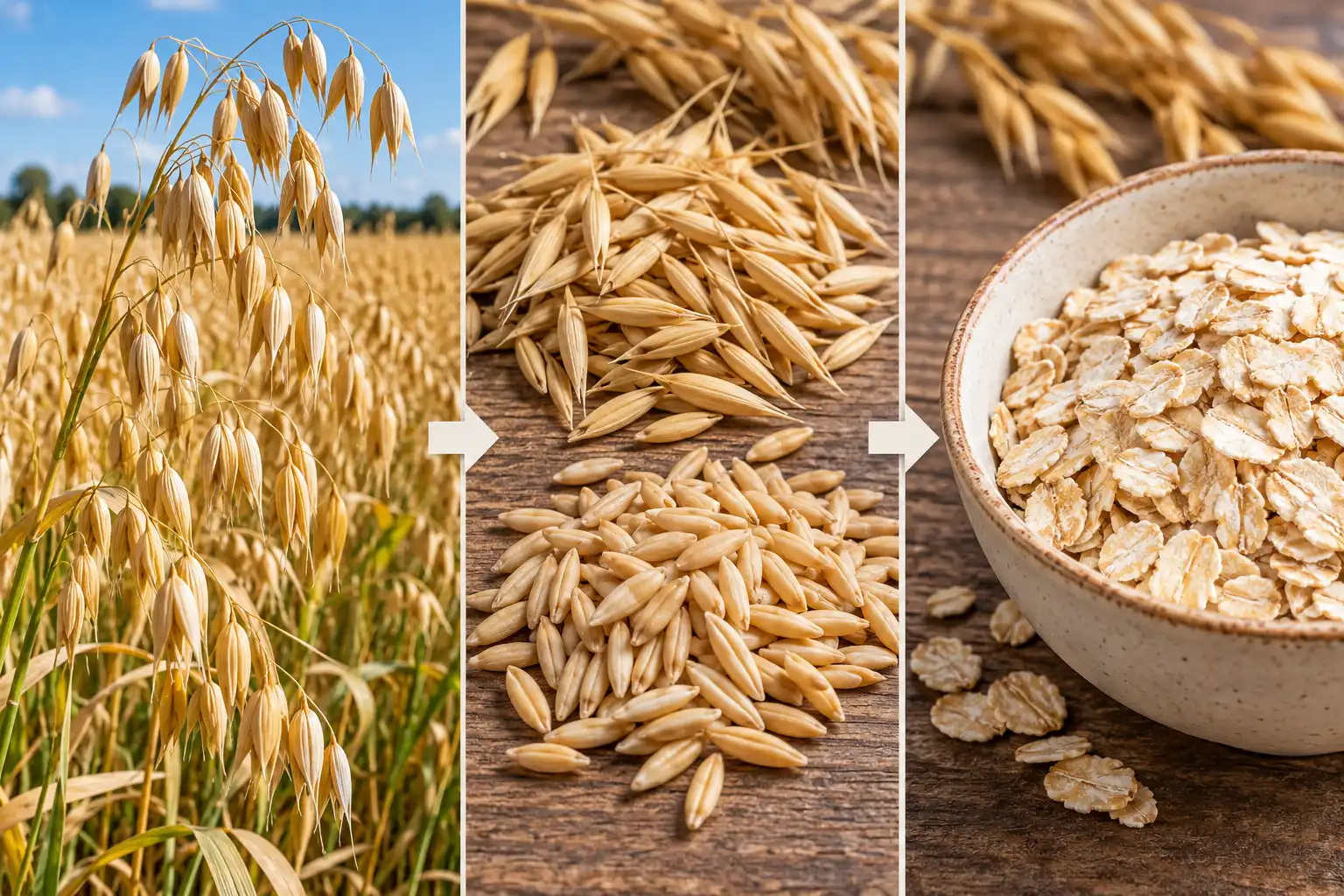
Oats are not manufactured from wheat or another grain. So, where do oats come from? They grow naturally as seeds on a cereal grass cultivated in farm fields. After harvesting, the grains are cleaned and processed into the oats used for oatmeal, cereals, and other foods.
Oats come from the edible seeds of the oat plant (Avena sativa), an annual cereal grass. Farmers harvest mature oat grains, which mills then process into whole oat groats, steel-cut oats, rolled oats, and oat flour.
Where Do Oats Come From Originally?
Oats originated from wild grasses found around the Mediterranean and Southwest Asia. They later became an established agricultural crop in Europe.
According to Oxford University’s botanical history of oats, wild oats originally grew alongside cultivated wheat and barley. Farmers initially regarded them as weeds rather than valuable food crops.
As agriculture spread into cooler, wetter parts of Europe, oats adapted well to those growing conditions. Over time, people began deliberately cultivating them for food and animal feed.
The precise location of oat domestication remains uncertain.
North Carolina State Extension identifies the region of present-day Iran and Iraq as an early domestication area. Oxford University emphasizes the later development of cultivated oats in European farming systems, roughly 4,000 years ago.
These accounts reflect different aspects of oat history. The wild ancestors came from Eurasia, while the familiar cultivated oat became an important crop in cooler European regions.
Today, oats are cultivated across many parts of the world.
What Plant Do Oats Come From?
Oats come from Avena sativa, an annual grass belonging to the Poaceae family, which also includes wheat, barley, rice, and corn.
The plant typically grows about 2 to 4 feet tall, although its height varies with the variety and growing conditions.
An oat plant has several recognizable features:
- Stems: Upright, slender stalks that support the developing grain.
- Leaves: Long, narrow, green blades resembling other cereal grasses.
- Seed heads: Loose, branching clusters called panicles, with grains hanging from smaller branches.
- Grains: Small, elongated kernels that develop inside protective outer hulls.
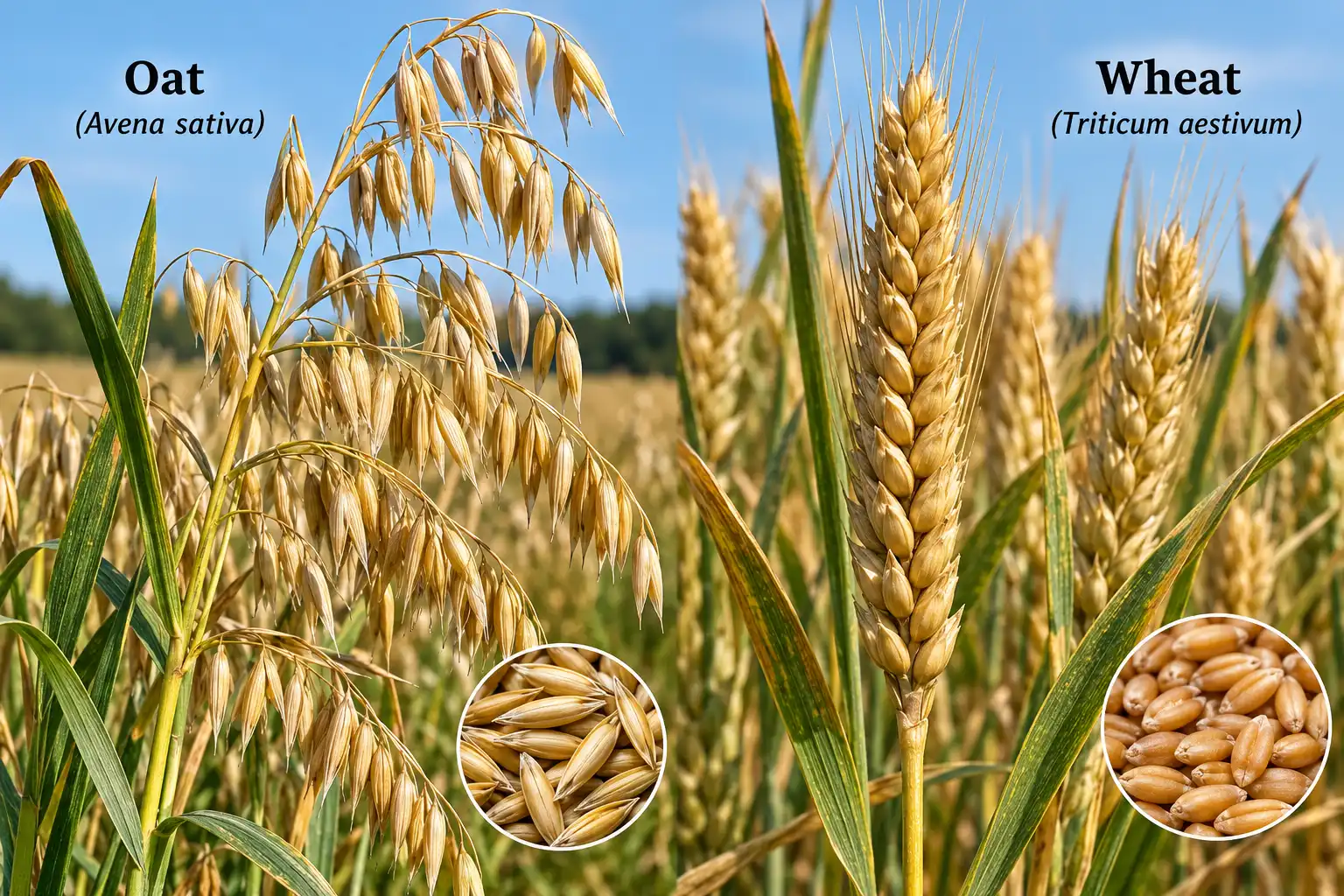
Unlike wheat, which produces compact grain heads, oats develop open, spreading panicles.
Each mature kernel can become food after processing or serve as seed for a new oat plant.
For more identification details, see how oat plants and their seed heads look during growth.
Where Are Oats Grown Today?
Oats grow in many temperate agricultural regions. They generally perform well when the important stages of plant growth occur during cool weather.
Major oat-growing areas include Canada, northern Europe, and the northern United States. Oats are also grown in warmer American regions during cooler months.
The growing season differs by climate.
| Growing region | Typical planting season | Grain harvest |
|---|---|---|
| Upper Midwest, including Minnesota | Early spring, often March to April | Summer |
| Southeastern U.S., including Georgia | Fall, depending on location | Late spring to early summer |
| Canada and northern Europe | Mostly spring | Summer to early fall |
The University of Minnesota Extension describes spring oat planting beginning as early as March, with many Minnesota fields planted by mid-April.
By comparison, the University of Georgia Cooperative Extension lists regional oat planting windows from late September through early December, followed by grain harvest from late May through June.
Canada is also an important source of oats processed for U.S. consumers. This means a package of oatmeal purchased in the United States may contain grain grown in Canada rather than on an American farm.
How Do Oats Become Oatmeal?
Oatmeal begins as mature oat grain harvested from the field. Milling changes the grain’s shape and texture without turning it into a different cereal.
From the Oat Field to Oatmeal
- Grow: Oat plants grow in farm fields and develop grain-bearing seed heads.
- Harvest: Farmers use combines to collect mature oat grains.
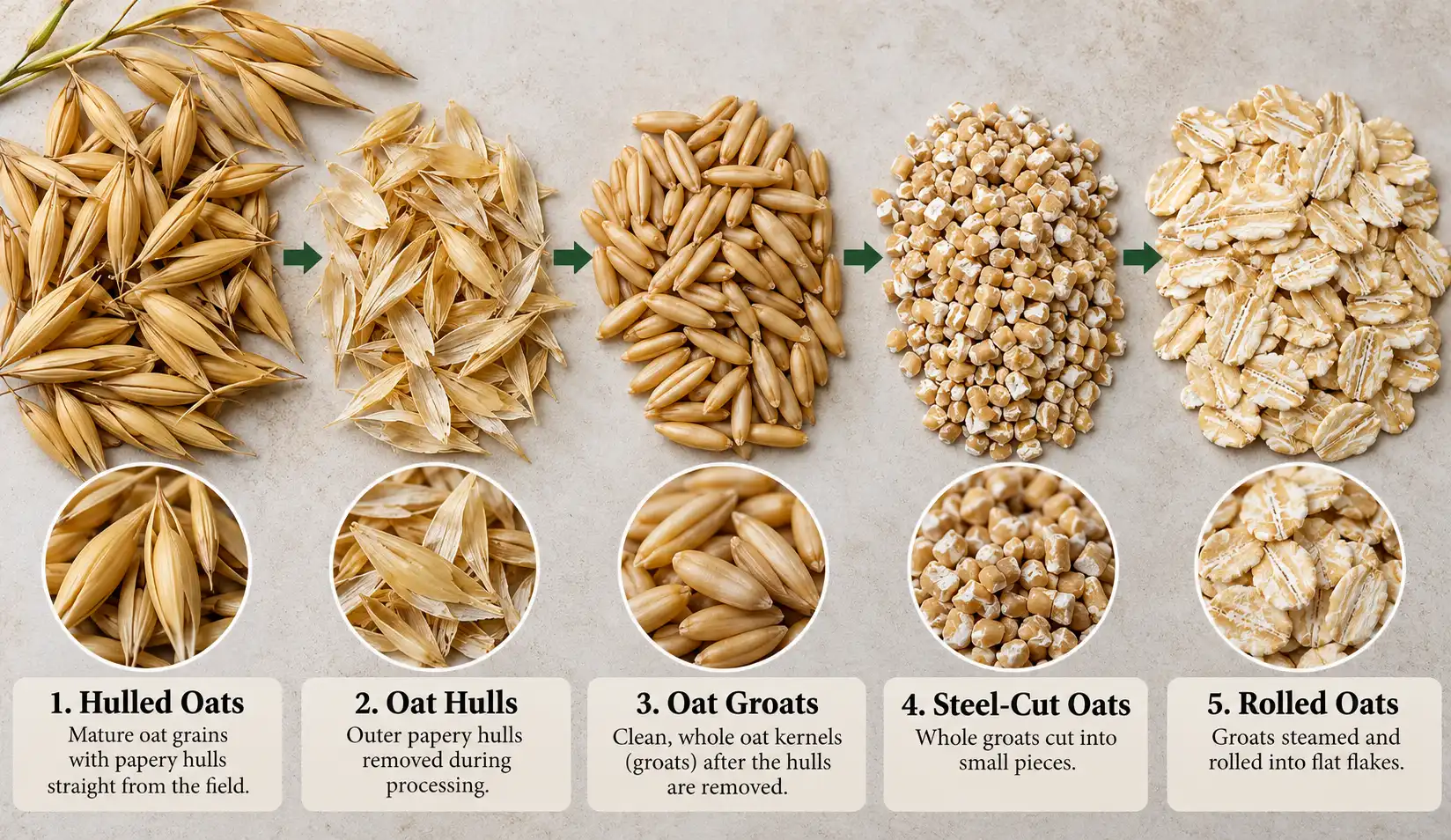
- Dehull: Mills clean the grain and remove its tough outer hull, leaving edible oat groats.
- Process: Groats are cut into steel-cut oats or steamed and flattened into rolled oats.
- Cook: Oats are cooked with water or milk to make oatmeal porridge.
Process: Oat plant → Harvested grain → Whole groat → Processed oats → Oatmeal
1. Growing and harvesting
Farmers plant oat seeds in prepared fields. The plants develop leaves, stems, and eventually grain-bearing panicles.
As the crop matures, the kernels harden and the plants turn from green to golden yellow.
A combine harvester cuts the mature crop and separates the grain from most of the straw and chaff.
2. Cleaning and removing the hull
The harvested grain passes through cleaning equipment that removes dust, plant debris, and foreign seeds.
Most cultivated oats have a tough outer hull that people do not normally eat.
Milling equipment removes this hull, leaving the edible whole kernel, known as an oat groat.
3. Heat treatment and milling
Oat groats are commonly heat-treated to improve storage stability. Further processing depends on the intended product.
Whole groats can be cut into pieces, steamed and flattened into flakes, or ground into flour.
That is how oats become the familiar ingredients used in oatmeal, granola, baking, and breakfast cereals.
What Are Oats Made Of?
Plain oats consist of the edible grain from the oat plant. They are not made from wheat, rice, corn, or a mixture of other cereals.
An oat groat contains three main parts.
Bran
The bran forms the outer edible layers of the grain beneath its protective hull.
It contains dietary fiber, including beta-glucan, a soluble fiber associated with cholesterol management.
Endosperm
The endosperm makes up most of the oat kernel.
It contains mainly starch, along with protein and other nutrients. This part supplies much of the energy found in oats.
Germ
The germ is the small embryo from which a new oat plant can develop.
It contains natural fats, vitamins, and other nutrients needed for early seedling development.
According to the Harvard T.H. Chan School of Public Health’s Nutrition Source, whole oat groats retain the bran, endosperm, and germ.
Therefore, plain steel-cut oats and rolled oats can remain whole-grain foods even though their physical shapes differ.
Are Oats Wheat or a Different Grain?
Oats are cereal grains, but they are not wheat.
Both crops belong to the grass family. However, they come from different botanical genera.
| Feature | Oats | Wheat |
|---|---|---|
| Main cultivated species | Avena sativa | Triticum aestivum |
| Grain classification | Cereal grain | Cereal grain |
| Seed head | Open, branching panicle | Compact spike |
| Main food products | Oatmeal, oat flour, oat bran | Wheat flour, bread, pasta |
| Natural gluten status | Does not contain wheat-type gluten | Contains gluten |
The important point is that oats and wheat are separate crops. Oats are not a variety of wheat or a wheat byproduct.
Although both are grains, their physical characteristics and food uses differ. The comparison of wheat and oats explains those agricultural differences in more detail.
Oats are also classified as true cereal grains because their edible kernels develop from grass flowers. The grain classification of oats helps distinguish them from pseudocereals such as quinoa.
What Are the Different Types of Oats Made From?
Most plain oat products begin with the same type of cereal grain. The main difference is how the edible groat is processed.
| Oat product | How it is made | Typical use |
|---|---|---|
| Whole oat groats | Hull removed; kernel kept intact | Hearty porridge and grain dishes |
| Steel-cut oats | Groats chopped into smaller pieces | Chewy oatmeal |
| Rolled oats | Groats steamed and flattened | Oatmeal, granola, baking |
| Quick oats | Smaller or thinner processed flakes | Faster-cooking porridge |
| Instant oats | More extensively steamed and flattened | Very quick oatmeal |
| Oat flour | Groats ground into powder | Baking and cooking |
| Oat bran | Bran-rich portion separated during milling | High-fiber cereal and baking |
Steel-cut oats and rolled oats are not different plants. They are different forms of processed oat grain.
Harvard’s Nutrition Source also explains that plain versions of these products have broadly similar nutritional compositions. Their processing affects texture and cooking time.
Flavored instant oatmeal may contain sugar, salt, milk ingredients, or other additives. Check the ingredient list when you want plain whole-grain oats.
Are Oats Naturally Gluten-Free?
Pure oats do not contain the gluten proteins found in wheat, barley, and rye. However, ordinary packaged oats are not automatically suitable for everyone who must avoid gluten.
Cross-contact can occur when oats and gluten-containing grains share harvesting equipment, transportation systems, storage facilities, or processing machinery.
According to the U.S. Food and Drug Administration’s gluten-free labeling rules, foods labeled gluten-free must contain less than 20 parts per million of gluten.
If you have celiac disease, choose oats specifically labeled gluten-free instead of assuming regular oats meet that standard.
Third-party certification can provide additional assurance, but the FDA does not require certification for a gluten-free label. Some people with celiac disease also need individual medical guidance about oat tolerance.
Do All Oat Plants Produce Oatmeal?
No. Oat plants are cultivated for several agricultural purposes, and not every field is grown for human food.
Some farmers grow oats specifically for grain that meets food-milling requirements. Others grow the crop for livestock feed or forage.
Oats can also serve as cover crops. In that role, the plants protect soil and take up nutrients between main cash crops. They may be terminated before mature grain forms.
After grain harvest, oat straw can be used for animal bedding.
The crop’s intended use determines whether its grain eventually reaches a food mill, feeds livestock, or is never harvested as grain.
FAQs About Oats Come From
Does oatmeal come directly from fresh oat plants?
No. Oatmeal comes from mature oat grains that have been harvested, cleaned, dehulled, and usually cut or rolled. The plant’s leaves and stems are not used in the breakfast oatmeal sold in grocery stores.
Can you grow oats from a packet of rolled oats?
No. Grocery-store rolled oats have been dehulled, steamed, and flattened, making them unsuitable for germination. To grow an oat crop, use viable oat seed sold for planting rather than processed breakfast oatmeal.
Do oat plants grow back every year?
Common oats are annual plants, meaning each plant normally completes its life cycle within one growing season. Farmers establish another crop from seed, although fallen grain can sometimes germinate and produce volunteer oat plants.
Is oat milk made from the same grain as oatmeal?
Yes. Oat milk starts with oat ingredients mixed with water and processed into a beverage. Some packaged versions also contain oils, salt, or added vitamins, so the ingredient label identifies any additional ingredients.
Are wild oats the same as cultivated oats?
Not exactly. Wild oats are related grasses, while most food oats come from cultivated Avena sativa. Domestication favored plants that retain mature grain for harvesting instead of releasing their seeds naturally.
From the Oat Field to Your Table
Oats begin as edible grains growing on a cereal grass, not as the flattened flakes found in a package.
Whether you buy whole groats, steel-cut oats, or rolled oats, the starting point is the same: mature oat kernels harvested from the field. The processing method determines their final form.


