10-52-10 Fertilizer: Uses, Tomato Tips, and Mixing Rates
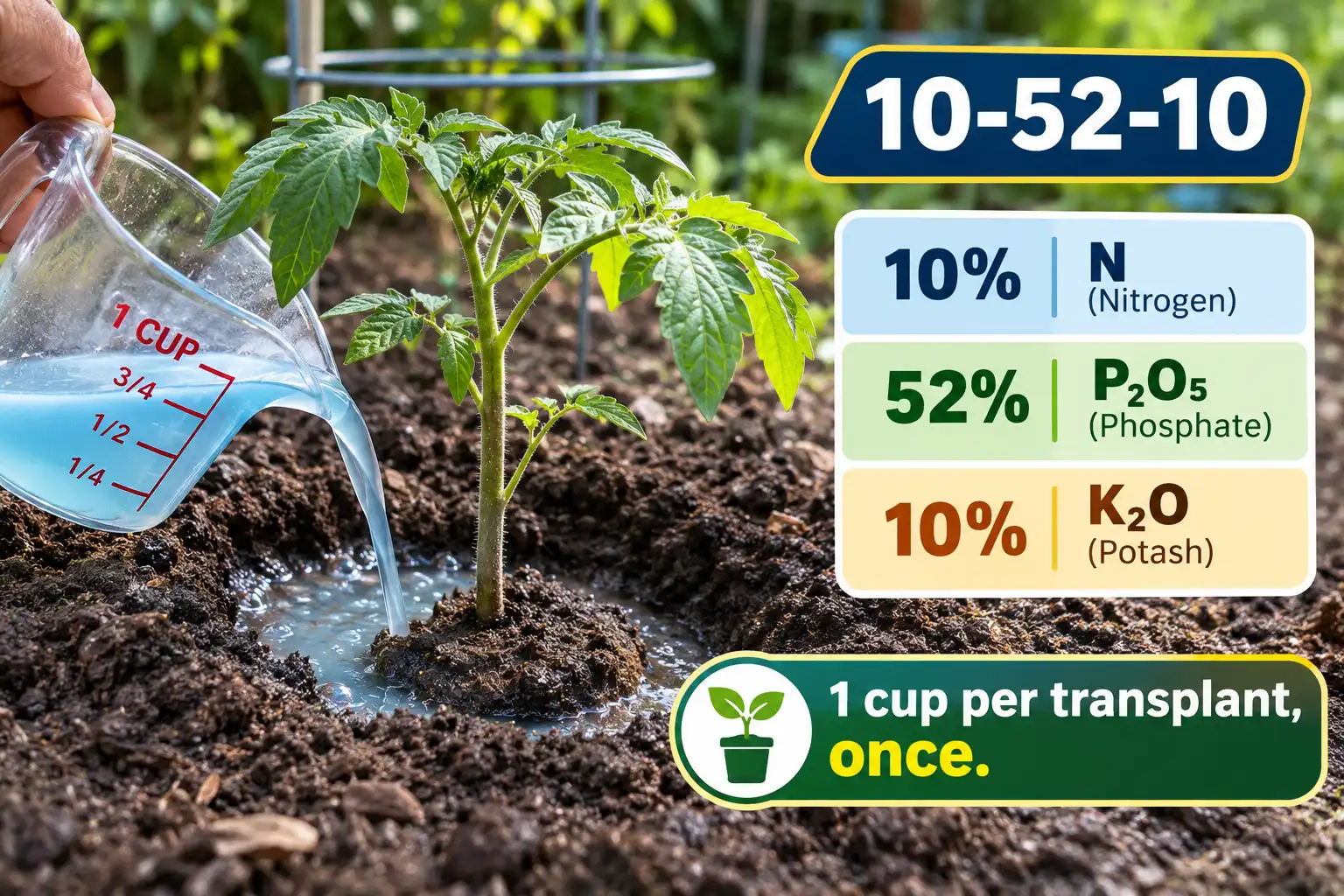
Bags of 10-52-10 fertilizer promise strong roots and big blooms. Its actual job is narrower: a one-time phosphorus drink for transplants going into cool spring soil. Here is what the label means, when tomatoes benefit, how to mix it, and which bag fits your planting.
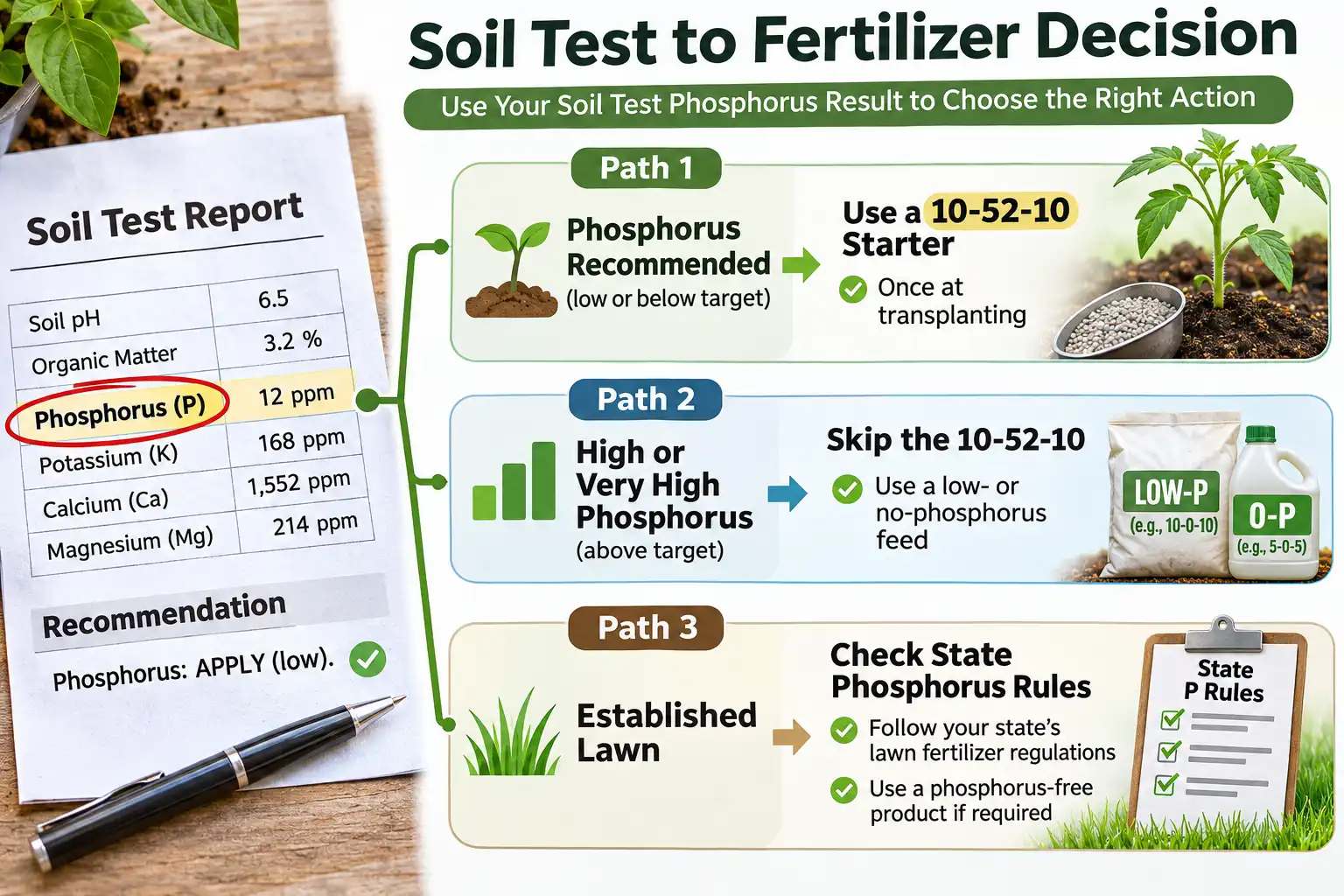
For transplants going into cool soil, 10-52-10 fertilizer works as a one-time phosphorus starter. Purdue Extension’s rate is a half pint of solution per plant at planting; skip it if your soil test shows high phosphorus.
What Is 10-52-10 Fertilizer?
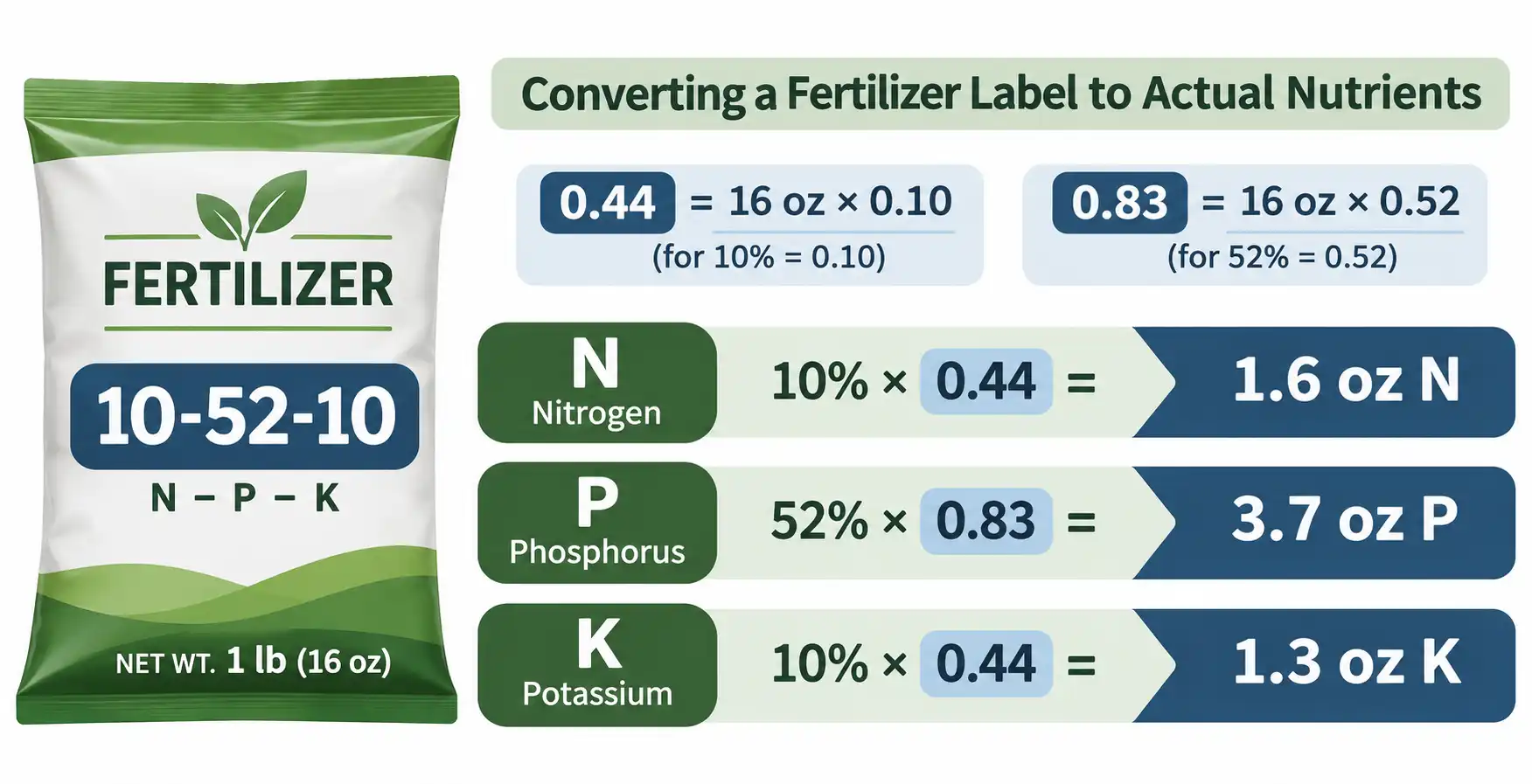
10-52-10 is a fertilizer grade with 10% nitrogen, 52% phosphate (P2O5) and 10% potash (K2O) by weight. The middle number is why people buy it.
Phosphate is not the same as phosphorus. Penn State Extension gives the conversions: multiply P2O5 by 0.44 for actual phosphorus, and K2O by 0.83 for actual potassium. So one pound of 10-52-10 holds about 1.6 ounces of nitrogen, 3.7 ounces of phosphorus and 1.3 ounces of potassium.
Most garden 10-52-10 is a fully water-soluble powder. You dissolve it and pour it, which puts phosphorus right at the roots in a form plants take up at once.
How 10-52-10 Compares With Other Phosphorus Sources
| Fertilizer | Grade (N-P2O5-K2O) | Actual P per lb | Form | Usual job |
|---|---|---|---|---|
| Water-soluble starter | 10-52-10 | 0.23 lb | Soluble powder | Transplant starter solution |
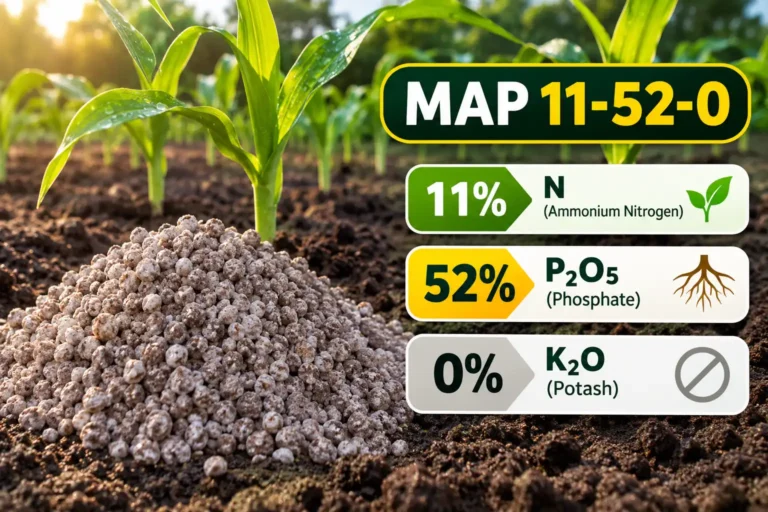
| MAP | 11-52-0 | 0.23 lb | Granular | Soil-applied phosphorus |
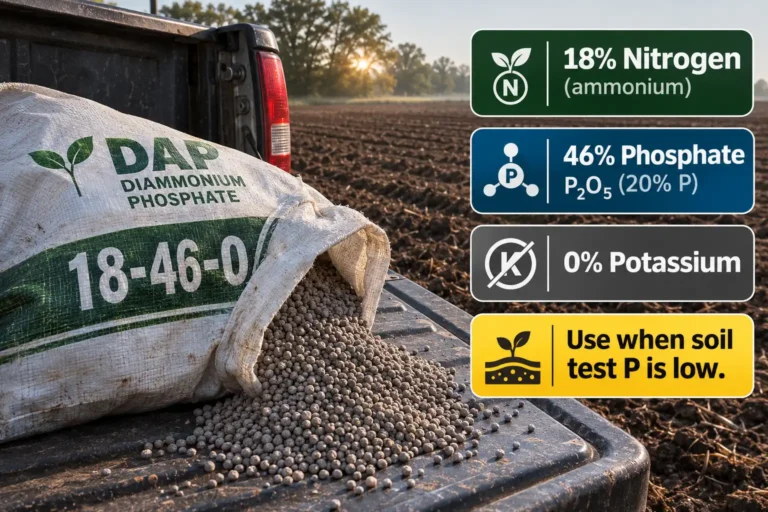
| DAP | 18-46-0 | 0.20 lb | Granular | Soil-applied phosphorus |
| Ammonium polyphosphate | 10-34-0 | 0.15 lb | Liquid | Starter in transplant water |
| Balanced blend | 10-10-10 | 0.04 lb | Granular | General garden feeding |
University of Minnesota Extension lists MAP at 11 to 12% nitrogen and 48 to 52% phosphate, and DAP at 18-46-0. Purdue Extension names 10-34-0 as a liquid starter. Per pound, 10-52-10 carries 5.2 times the phosphate of a balanced 10-10-10 blend. It matches MAP on phosphate, but it adds potash and dissolves fully for liquid use.
Also learn: 18-46-0 Fertilizer (DAP) Uses, Rates, and Cost
What Is 10-52-10 Fertilizer Used For?
10-52-10 is used mainly as a starter solution for transplants. Purdue Extension’s Midwest Vegetable Production Guide lists it among starter grades for transplanted crops. The guide’s rate is 3 pounds per 50 gallons of water.
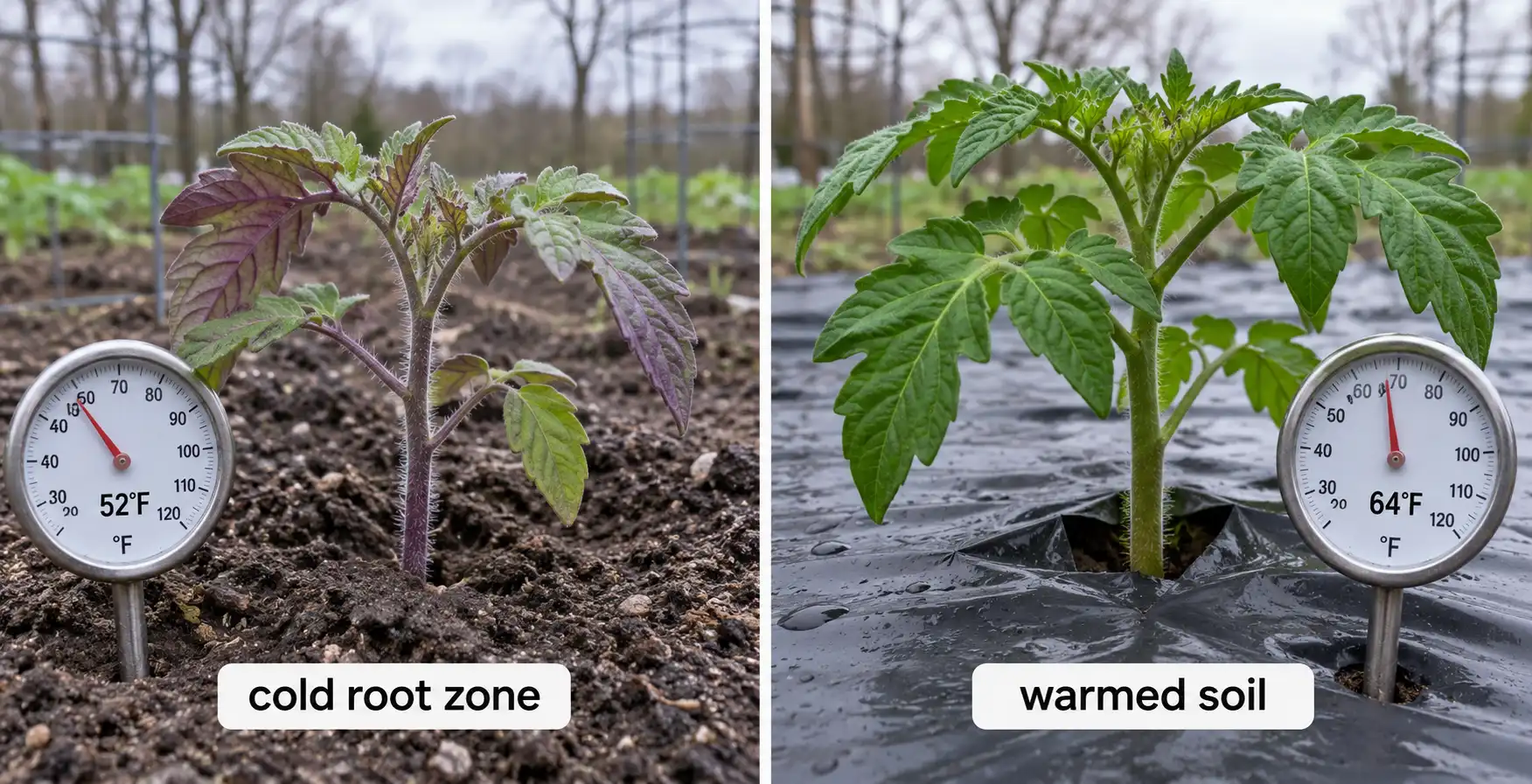
The reason is cold soil. University of Minnesota Extension notes that phosphorus does not move through soil the way nitrate does. Cold roots also take it up slowly. In fact, Texas A&M AgriLife Extension reports that tomato roots in cold soil absorb phosphorus poorly. A dissolved starter places phosphorus against the root ball, so young roots reach it before the soil warms.
Retail labels add a few more uses. The two products reviewed below list these jobs:
- Drenching transplants at setting
- Feeding young seedlings
- Hydroponic starts
- Container plants and perennials
- Foliar spray from a backpack sprayer
One popular use does not hold up. NDSU Extension reports that high phosphorus rates do not increase flower numbers. So treat “bloom booster” claims with caution. NDSU also notes that commercial greenhouses feed far less phosphorus than nitrogen. N to P ratios of 3:1 or 5:1 are common there.
Is 10-52-10 Fertilizer Good for Tomatoes?
Yes, as a single starter drench at transplanting, especially into cool spring soil. After that first watering, tomatoes need nitrogen and steady moisture far more than extra phosphorus.
When It Helps
Purdue Extension names tomatoes, peppers, melons, cabbage and broccoli as transplants that often respond to a soluble starter. Texas A&M AgriLife Extension links purple tomato leaves, especially purple veins, to poor phosphorus uptake in a cold root zone. So early plantings into cool ground are the strongest case for 10-52-10. The same reasoning applies when growing eggplant or peppers from transplants.
When It Does Not Help
The research is mixed. In 2021, a University of Minnesota Extension trial ran at two southern Minnesota sites. It found no marketable yield difference between starter-fed and untreated tomatoes. The author noted that drought may have masked any effect.
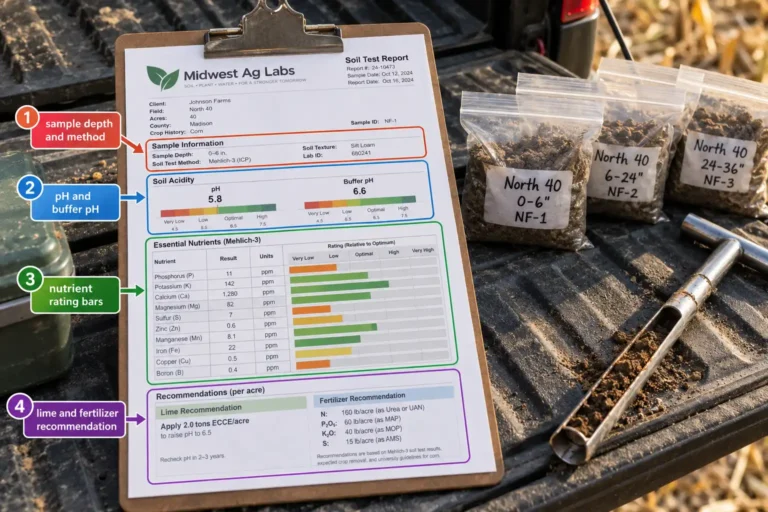
Your soil test settles the rest. University of Minnesota Extension advises a low- or no-phosphorus fertilizer for tomatoes unless the report specifically recommends phosphorus. NDSU Extension adds that excess soil phosphorus ties up iron and zinc.
What Tomatoes Need After Planting
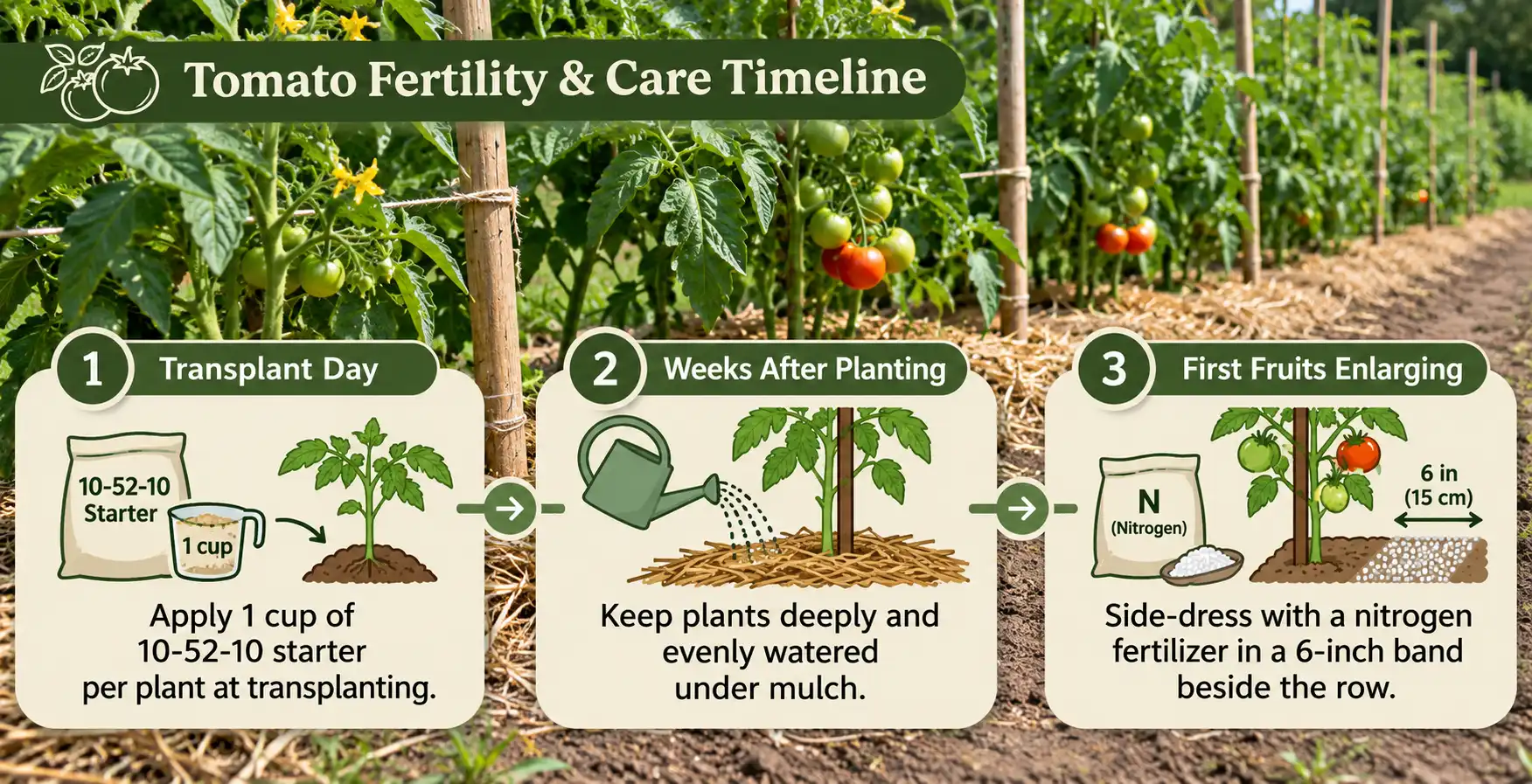
University of Minnesota Extension times the main feeding for when the first fruits start to enlarge. At that point, band a nitrogen fertilizer beside the row. Go easy, though, because the same guide warns that too much nitrogen makes plants bushy, leafy and slow to bear. Also, 10-52-10 will not stop blossom-end rot. UMN ties that disorder to uneven soil moisture during fruit growth.
How to Use 10-52-10 Fertilizer
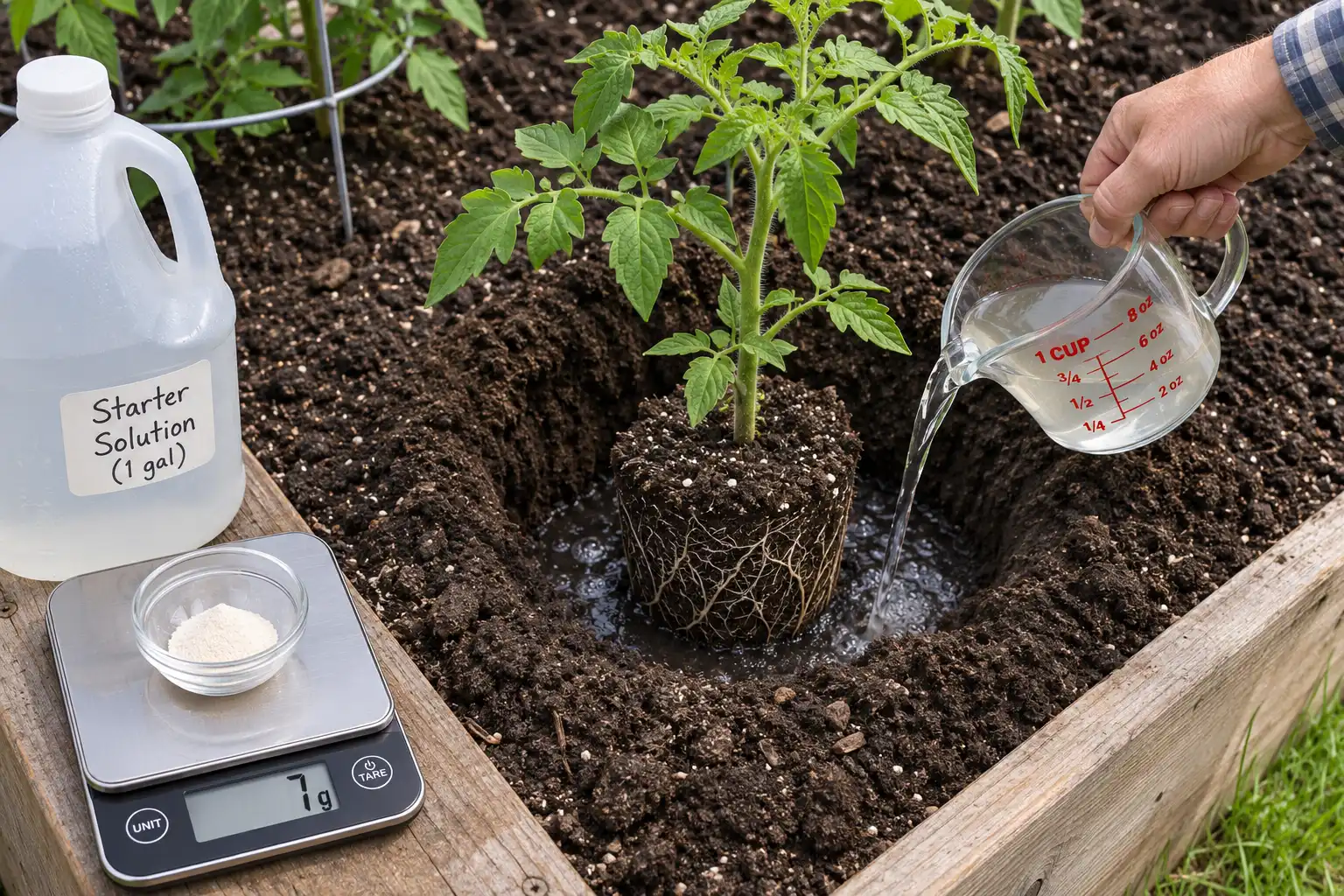
Use it once, at transplanting, at the label rate. Purdue Extension’s general starter rate is 3 pounds per 50 gallons of water. Pour a half pint (8 ounces) per plant.
- Check your soil test first. If phosphorus already reads high, the starter adds cost and nothing else. Your soil test report shows the phosphorus level and a rating.
- Read the bag’s mixing rate. Rates differ by product. Masterblend’s package, for example, calls for 1 tablespoon per gallon. Never mix stronger than the label, since extra strength adds risk to young roots and no benefit.
- Dissolve it fully. Stir until no powder remains, so every cup carries the same dose.
- Set the plant, then pour. Pour a half pint (1 cup) of solution around each root ball. Grow More’s directions use the same 1 cup per plant for hand setting.
- Water if the weather is dry. Purdue’s guide says to irrigate after setting plants in dry weather. That keeps the root ball in moist contact with the surrounding soil.
- Stop there. Later feedings should follow your soil test, usually as nitrogen for fruiting crops.
How Much 10-52-10 Do You Need?
At Purdue’s rate, each gallon of solution takes 0.06 pound of product, and each transplant gets 1/16 gallon. Here is how that scales from a raised bed to an acre.
| Planting | Transplants | Solution | 10-52-10 needed |
|---|---|---|---|
| 4 by 8 raised bed | 4 | 1 quart | 7 grams (0.24 oz) |
| Home garden rows | 25 | 1.6 gallons | 1.5 ounces |
| Market garden block | 100 | 6.25 gallons | 6 ounces |
| 1 acre, plants 18 inches apart on 5-foot beds | 5,808 | 363 gallons | 21.8 pounds |
Weigh small batches on a kitchen scale. If you follow Masterblend’s 1 tablespoon per gallon label instead, the quart for a raised bed takes 3/4 teaspoon.
That acre rate supplies about 11 pounds of phosphate (P2O5). So a starter is a small, placed dose. It does not replace a soil-test phosphorus program.
If Your Soil Test Calls for Phosphorus
Divide the recommended phosphate by 0.52. Say a report asks for 1 pound of P2O5 per 1,000 square feet. That area then needs 1.9 pounds of 10-52-10. On a 4 by 8 bed, that works out to about 1 ounce. For acreage, granular MAP delivers the same phosphate per pound through a spreader or planter. The same soil-test math drives corn fertilizer plans per acre.
When to Skip 10-52-10
Skip it whenever the extra phosphorus has nowhere useful to go. These four cases come up most:
- Your soil tests high in phosphorus. NDSU Extension notes that garden phosphorus falls very slowly, so a surplus can last for years.
- You are feeding an established lawn. Minnesota and other states ban phosphorus on established lawns unless a soil test documents a deficiency, per NDSU Extension.
- You want an all-season feed. Fruiting crops need nitrogen later, per University of Minnesota Extension, not repeated phosphorus.
- You expect more flowers. NDSU Extension reports that high phosphorus rates do not increase flower numbers.
Excess phosphorus also leaves the garden. NDSU Extension warns that it can reach lakes and rivers, where it feeds algae.
Troubleshooting After a 10-52-10 Starter
| Symptom | Likely cause | What to do |
|---|---|---|
| Purple leaves persist after the starter | Cold root zone, per Texas A&M AgriLife | Warm the bed with plastic mulch and wait for warmer soil |
| Purple seedlings in pots or hydroponics | Low overall fertility, per Texas A&M AgriLife | Switch to a balanced liquid feed |
| Bushy, leafy plants with few fruit | Too much nitrogen, per UMN | Hold nitrogen until the first fruits enlarge |
| Yellowing leaves on high-phosphorus soil | Iron or zinc tied up by excess P, per NDSU | Stop phosphorus inputs and retest |
| Scabbed or moldy blossom ends on fruit | Blossom-end rot from uneven moisture, per UMN | Water evenly and mulch to hold soil moisture |
How to Choose a 10-52-10 Product
Start with your transplant count, because a starter gets used once per plant. At Purdue Extension’s rate, 1 pound of 10-52-10 makes about 16.7 gallons of solution. That covers roughly 267 transplants at a half pint each. A 25-pound bag covers about 6,700.
Next, check three things on the label:
- Full solubility. Injectors, drip lines and sprayers need a product that dissolves completely.
- Clear mixing directions. Rates differ for drenches, sprayers and seedlings.
- Labeled uses. Some bags target soil and hydroponics, while others target sprays and flowers.
Most mistakes come from a mismatch. Buying 25 pounds for a dozen tomatoes wastes most of the bag. Mixing a drench at a sprayer rate, or feeding weekly into soil that already tests high, wastes the rest. The reviews below draw on manufacturer directions and owner reports.
10-52-10 Fertilizer Products Reviewed
1. Masterblend Kick Starter 10-52-10 (1 lb)
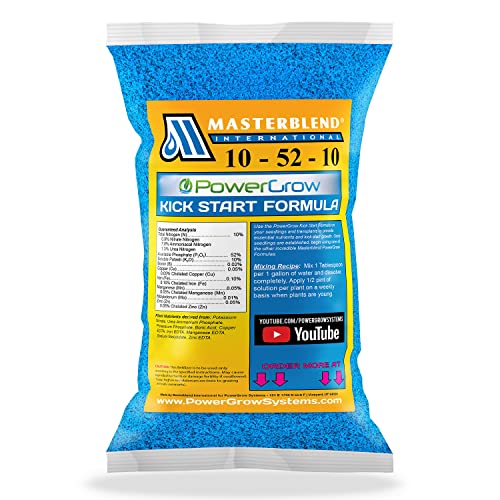
- MasterBlend 10-52-10 Kick Starter Formula is fully Water Soluble
- Made for PowerGrow Systems in exlcusive 1 pound bags so you don't have to buy more than you need
- Highly concentrated! Just 2 tsp of Masterblend Kick Starter per gallon of water
Quality label: Best small-batch pick
Masterblend makes this starter for PowerGrow Systems in 1-pound bags, a size that suits a home garden. It is fully water soluble and labeled for both soil and hydroponic use. A food-grade blue dye lets it run through injection systems. The color varies from blue to light blue by batch. One problem: the listing says 2 teaspoons per gallon. The package directions say 1 tablespoon per gallon, weekly, for young plants. Follow the package. Safety notes advise avoiding skin and eye contact and working in a ventilated area, and the powder may stain surfaces.
Pros
- Right-sized 1-pound bag
- Fully water soluble
- Injector-ready blue dye
- Soil and hydroponic use
Cons
- Listing and package rates conflict
- Few owner reviews so far
Specifications
- Analysis: 10-52-10
- Form: water-soluble powder
- Size: 1 lb (16 oz)
- Rate: 1 tablespoon per gallon (package directions)
Owner evidence: Reviews are limited. One owner reports that it works well but flagged the mixing-rate mismatch in the listing.
2. Grow More 10-52-10 (25 lb)
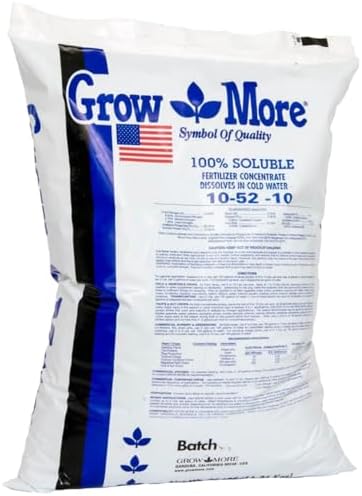
- PHOSPHORUS-RICH – Supercharge your greens with Grow More's garden fertilizer for outdoor plants and flowers, packed with…
- ENHANCED DISEASE DEFENSE – Made with optimal phosphorus levels to bolster plant resilience, our blooming fertilizer ensu…
- MULTI-PLANT COMPATIBILITY – Our bloom plant food easily adapts to any garden setting—be it a humble home garden or a pro…
Quality label: Best bulk pick
Grow More 10-52-10 comes in a 25-pound bag and dissolves in cold water with no special equipment. Grow More lists it for flowers, perennials, container plants and young plants, by spray or drench. Directions change with the job. A backpack sprayer takes 4 teaspoons per gallon, and hand setting uses 1 cup of mixed solution per plant. That makes it a practical match for a battery backpack sprayer on larger plantings. It is made in the USA. The marketing leans hard on blooms, which the NDSU Extension findings above do not support. Buyer Q&A also notes it is geared mainly toward flowers. Even so, some owners use it on vegetables, fruit trees and plumerias.
Pros
- Dissolves in cold water
- Spray or drench use
- Large 25-pound supply
- Made in the USA
Cons
- Far more than most gardens need
- Bloom claims outrun the research
Specifications
- Analysis: 10-52-10 (NPK)
- Form: water-soluble powder and granules
- Size: 25 lb (400 oz)
- Sprayer rate: 4 teaspoons per gallon
Owner evidence: Owner reports are positive overall. Buyers consistently describe it as easy to dissolve and say it improved new growth. One reviewer felt it was expensive.
FAQs About 10-52-10 Fertilizer
Which vegetables besides tomatoes respond to a 10-52-10 starter?
Purdue Extension lists cabbage, broccoli, peppers and melons as transplants that often respond. Give each transplant a half pint once at setting, unless your soil already tests high in phosphorus.
Is 10-52-10 a bloom booster?
Not in the way most labels suggest, because extra phosphorus does not mean extra flowers. NDSU Extension reports that high phosphorus rates do not raise flower numbers, and most northern gardens hold enough already.
Can I put 10-52-10 on my lawn?
Usually not on an established lawn, and not without checking your state’s rules. Minnesota and other states ban phosphorus on established lawns unless a soil test shows a deficiency, per NDSU Extension.
How often should you apply 10-52-10?
Once, at transplanting, is enough for most outdoor crops like tomatoes and peppers. Masterblend’s label allows weekly feeding of young plants, but University of Minnesota Extension times later tomato feeding around nitrogen.
How much Grow More 10-52-10 goes in a backpack sprayer?
Grow More’s directions call for 4 teaspoons of product per gallon of water in a backpack sprayer. For hand setting, they switch to 1 cup of mixed solution per transplant instead.
Will 10-52-10 fix purple tomato leaves?
Only sometimes, because Texas A&M AgriLife Extension traces most purple tomato leaves to a cold root zone. For early field plantings, it says plastic mulch eases the problem by warming the root zone.
What to Check Before You Plant
Pull a soil test before you buy anything. If the report recommends phosphorus and your soil is still cool, mix 10-52-10 at the label rate. Then give each transplant a half pint, once.
If phosphorus already tests high, skip the starter. Plan a nitrogen side-dress for when the first tomatoes start to enlarge instead. Finally, buy the bag that matches your transplant count, not the biggest one on the shelf.