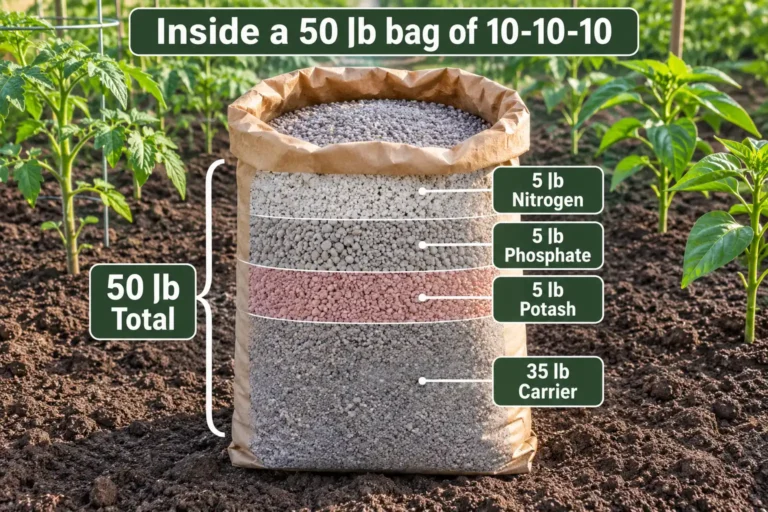
11-52-0 Fertilizer (MAP): Analysis, Rates, and How to Apply It
11-52-0 fertilizer is a granular phosphorus source sold to farms by the ton and to gardeners by the pound. Used right, it corrects low-phosphorus soil and feeds young roots. Used without a soil test, it often adds phosphorus the ground already has.
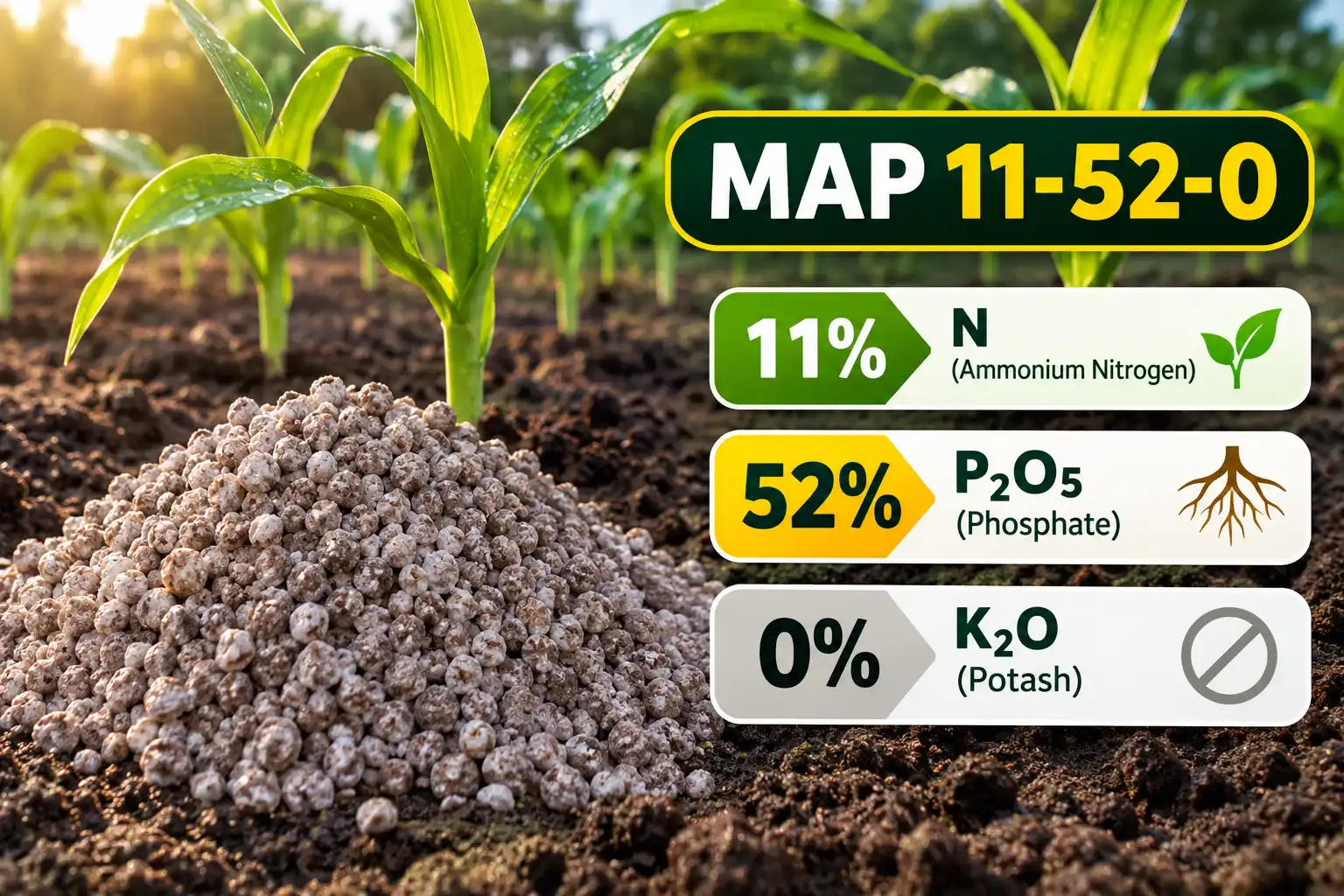
11-52-0 fertilizer is monoammonium phosphate (MAP): 11% ammonium nitrogen and 52% phosphate (P2O5), with no potash. Apply it only when a soil test calls for phosphorus. Divide the recommended pounds of P2O5 by 0.52 to get pounds of product.
What Is 11-52-0 Fertilizer?
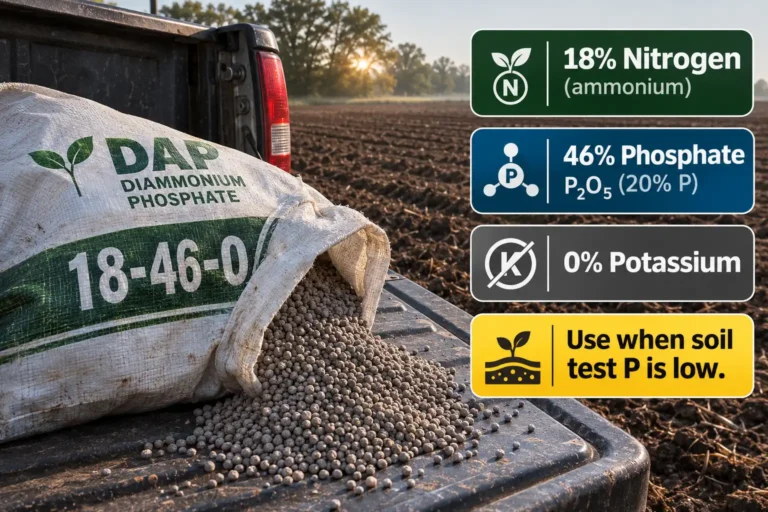
11-52-0 fertilizer is monoammonium phosphate, a granular salt made by reacting ammonia with phosphoric acid. Its formula is NH4H2PO4. That means one ammonium ion for each phosphate, while diammonium phosphate (DAP) carries two, as University of Minnesota Extension explains. So MAP delivers more phosphate and less nitrogen per pound than DAP.
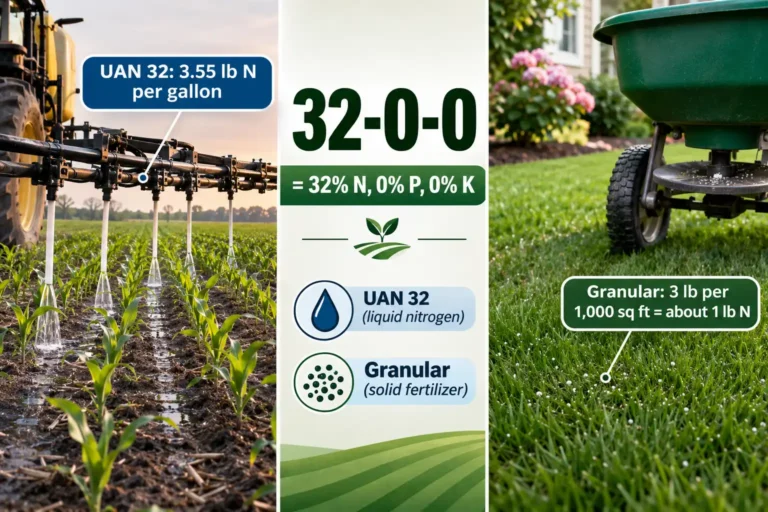
The three numbers are the guaranteed analysis by weight. For example, the J.R. Simplot Company label for its MAP guarantees 11.00% total nitrogen, all of it ammoniacal, and 52.00% available phosphate.
| Label number | Nutrient | Amount in a 50 lb bag |
|---|---|---|
| 11 | Nitrogen (N), all in ammonium form | 5.5 lb |
| 52 | Available phosphate (P2O5) | 26 lb |
| 0 | Potash (K2O) | None |
Why 52% Phosphate Is Not 52% Phosphorus
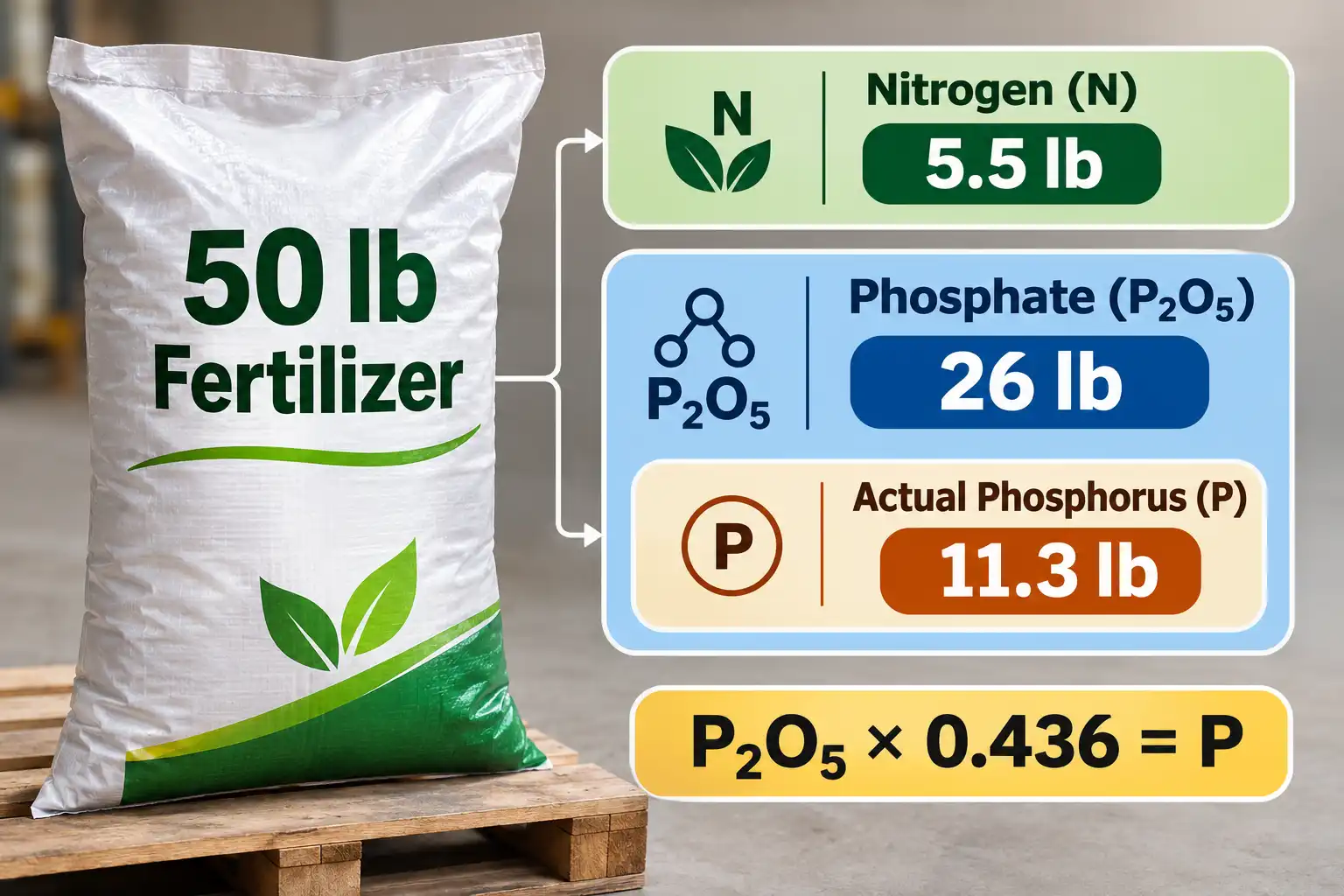
The middle number measures phosphate (P2O5), not elemental phosphorus. To convert, multiply by 0.436. So 52% P2O5 equals about 22.7% actual phosphorus, and a 50 lb bag holds roughly 11.3 lb of P.
This matters for two reasons. First, some product copy says “52% phosphorus,” which overstates the real figure by more than double. Second, soil labs report soil phosphorus as ppm of P, while fertilizer recommendations come in pounds of P2O5. Match the recommendation to the bag number, and the math works without any conversion.
Grades You May See on the Label
Most US bags read 11-52-0, but the grade varies a little by plant. Michigan State University Extension’s phosphate bulletin listed MAP as 11-48-0, and University of Minnesota Extension puts MAP at 50% to 52% P2O5. Fully water-soluble technical grades for drip and hydroponic systems usually carry a 12-61-0 analysis instead. Agricultural granules are made for soil, so expect some residue if you try to dissolve them.
MAP vs DAP: How 11-52-0 Compares With Other Phosphorus Sources
At the same phosphate rate, MAP and DAP feed a crop about equally. University of Minnesota Extension expects similar yields from MAP, DAP, and triple superphosphate (TSP) when the same amount of P goes on. So the real differences come down to soil reaction, nitrogen load, and seed safety.
| Source | Analysis | Reaction in water | Seed-row risk | Fits best |
|---|---|---|---|---|
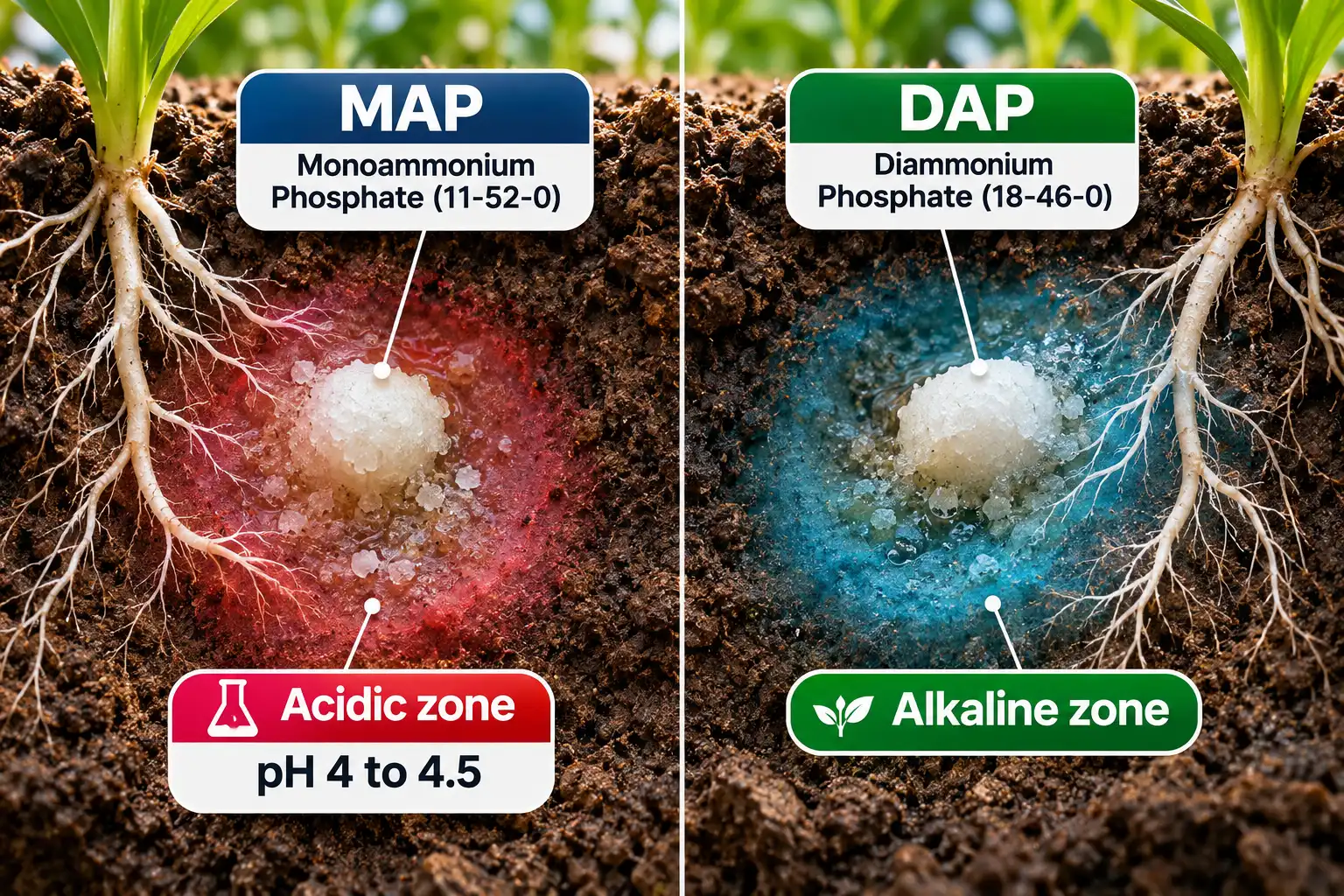
| MAP | 11-52-0 | Acidic, pH 4 to 4.5 | Lower ammonia, less injury risk | Starter bands, seed-placed P, dry blends |
| DAP | 18-46-0 | Alkaline | Higher ammonia, can injure germinating seed | Broadcast, when the extra N is useful |
| TSP | 0-46-0 | Strongly acidic, pH 1 to 3 | No nitrogen | Fall phosphorus without N |
The pH figures and yield expectations come from University of Minnesota Extension. The seed-row contrast comes from Michigan State University Extension, which notes that DAP’s higher ammonia content can injure germinating seed in direct contact, while MAP is less likely to.
Does MAP Work Better on High-pH Soil?
In theory, yes. In field trials, rarely by much. MAP creates an acidic zone around each granule, which should free more phosphorus in calcareous soil. Still, University of Minnesota Extension reports little difference in crop performance between the two. It also sees no reason for growers on soils above pH 7.5 to hunt for MAP when DAP is what the local dealer stocks.
Compare Cost per Pound of Phosphate
Price per ton tells you little by itself, because the two products carry different amounts of phosphate. Instead, divide the price per ton by the pounds of P2O5 in that ton:
- MAP: price per ton divided by 1,040
- DAP: price per ton divided by 920
Then credit the nitrogen if your crop needs it. A ton of MAP carries 220 lb of N, while a ton of DAP carries 360 lb. Pick the source with the lower cost for the nutrients you actually plan to use.
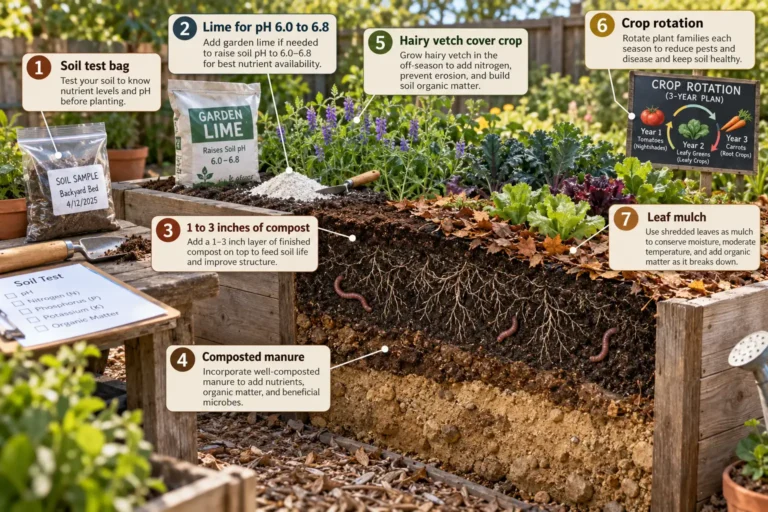
Is 11-52-0 Fertilizer Good for Gardens?
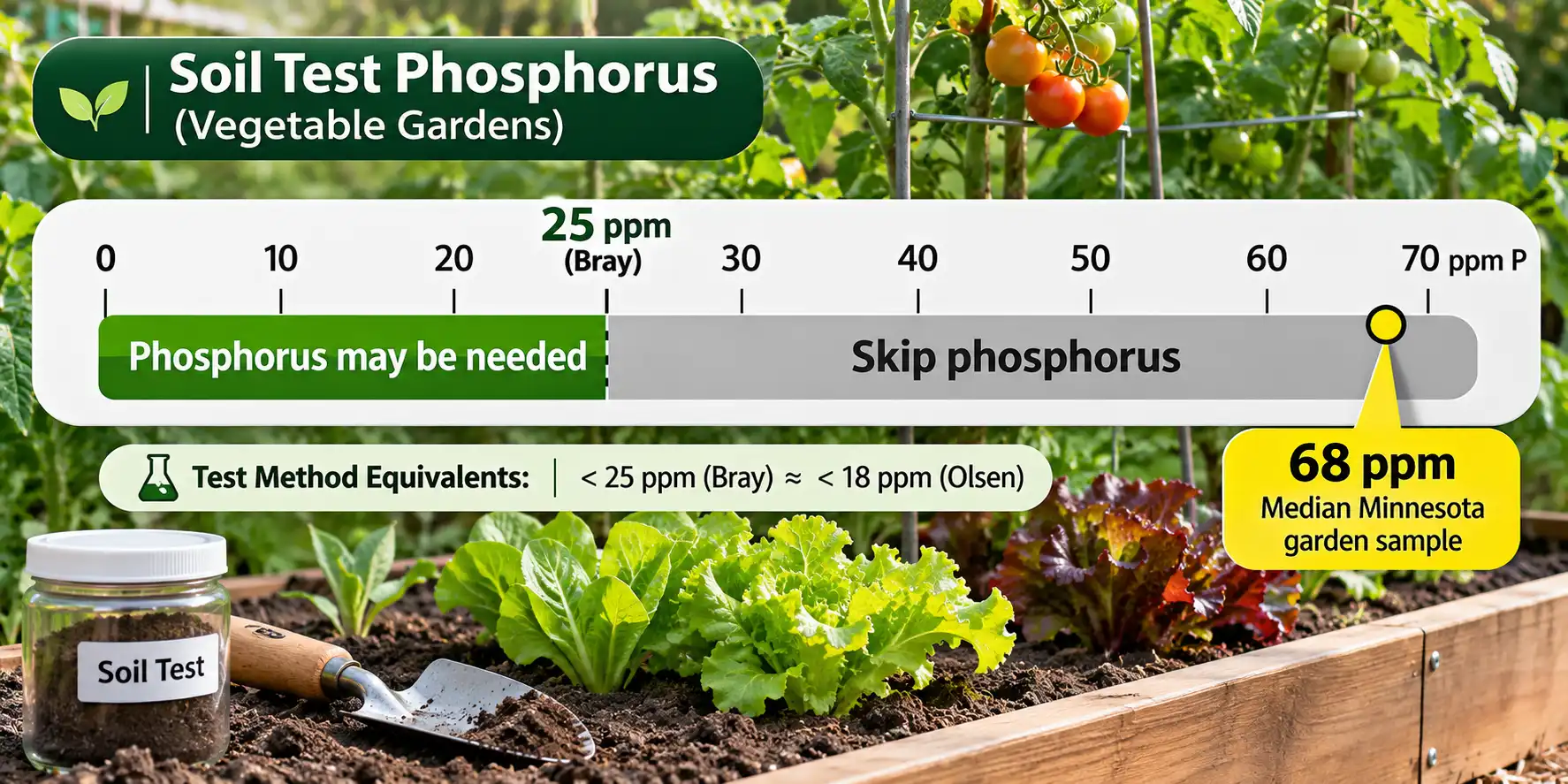
Only when a soil test shows the garden is short on phosphorus, and most established gardens are not. University of Minnesota Extension reviewed lawn, garden, and farm soil tests from its lab between 1988 and 2021. The median lawn and garden sample read 68 ppm phosphorus (Bray), while farm fields came in at 26 ppm. Yet 20 ppm is enough for vegetables.
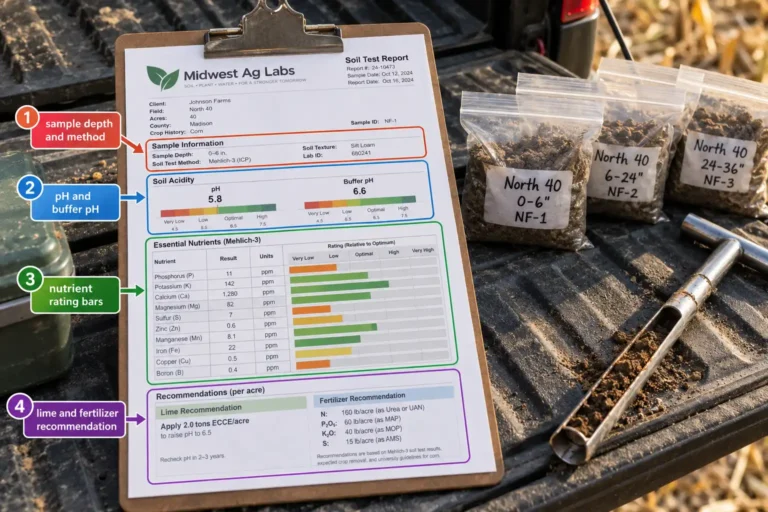
So UMN Extension advises skipping phosphorus fertilizer for a few years once a garden tests above 25 ppm Bray or 18 ppm Olsen. Labs use the Bray test on soils at pH 7.4 or lower and the Olsen test above that, so check which method your report used. If the report is new to you, start by reading your soil test results line by line.
Does High Phosphorus Mean More Blooms?
No. NDSU Extension horticulturist Esther McGinnis points to studies showing that high phosphorus rates do not increase flower numbers. By that standard, even a balanced 10-10-10 wastes phosphorus in most home landscapes. Worse, a surplus ties up iron and zinc, and garden phosphorus levels fall slowly, often over several years. Runoff that carries the excess also feeds algae in lakes and rivers.
Where MAP Fits in a Garden
Use 11-52-0 when your test reads low or very low and you can meet nitrogen needs separately. Work it into the bed before planting, because phosphorus barely moves through soil. For lawns, check your state’s rules first. Minnesota, for example, bars phosphorus on established turf unless a soil or tissue test shows a need or the lawn is in its first year from seed or sod, as UMN Extension notes. That law does not cover vegetable or flower gardens.
How Much 11-52-0 Fertilizer to Apply
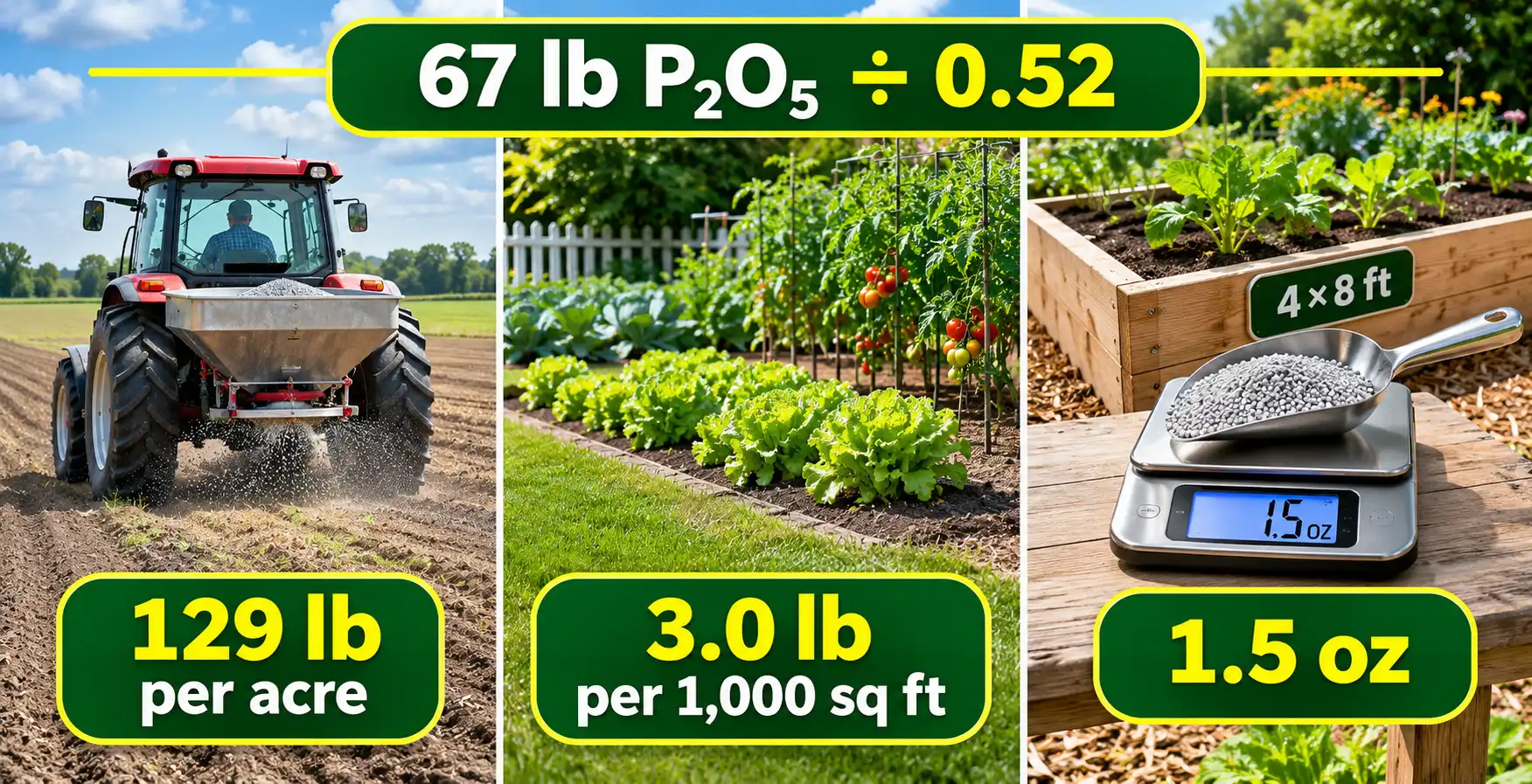
Divide the pounds of phosphate (P2O5) your soil test recommends by 0.52. The answer is pounds of 11-52-0. Then multiply that product weight by 0.11 to see how much nitrogen comes along with it.
Pounds of 11-52-0 = pounds of P2O5 recommended ÷ 0.52
Iowa State University Extension’s PM 1688 (revised 2023) gives a clear example for corn grain. The table converts its phosphate rates into product, from a field down to a 4 by 8 raised bed.
| Soil-test P (Bray-1 or Mehlich-3) | P2O5 to apply (lb/acre) | 11-52-0 per acre | Per 1,000 sq ft | Per 4 by 8 bed | N supplied (lb/acre) |
|---|---|---|---|---|---|
| Very low, 0 to 9 ppm | 120 | 231 lb | 5.3 lb | 2.7 oz | 25 |
| Low, 10 to 17 ppm | 85 | 163 lb | 3.7 lb | 1.9 oz | 18 |
| Optimum, 18 to 25 ppm | 67 | 129 lb | 3.0 lb | 1.5 oz | 14 |
| High or very high, 26 ppm and up | 0 | None | None | None | 0 |
The optimum-category rate replaces what the crop removes. Iowa State figures removal at 0.32 lb P2O5 per bushel, so scale it to your own yield. For example, a 180 bushel crop removes about 58 lb P2O5, which works out to 111 lb of 11-52-0 per acre.
Garden-Scale Example
Garden soil reports usually give phosphate per 100 sq ft. For instance, the University of Minnesota Soil Testing Laboratory’s sample vegetable garden report calls for 0.2 lb P2O5 per 100 sq ft. Divided by 0.52, that comes to 0.38 lb (about 6 oz) of 11-52-0 per 100 sq ft. So a 4 by 8 bed needs about 2 oz.
The UMN soil lab also notes that 2 cups of dry fertilizer weigh about 1 lb, which makes 2 oz roughly a quarter cup. Still, a kitchen scale is more accurate. Also note that 6 oz of MAP supplies only 0.04 lb of nitrogen, well short of the 0.15 lb N per 100 sq ft on that report. Plan a separate nitrogen source.
Count the Nitrogen in Field Rates
On corn, 129 lb of MAP adds 14 lb of N per acre. Subtract it from your total so the field doesn’t get more than it needs. Your corn fertilizer rate per acre still sets the target, and a later sidedress nitrogen pass can supply most of the balance.
How to Apply 11-52-0 Fertilizer
Put it where roots will find it: mixed into the soil before planting, or banded near the seed row. Phosphorus moves very little in soil, so granules left on the surface do the crop less good and wash off more easily.
Broadcast and Work It In
For gardens, University of Minnesota Extension says to till phosphate 4 to 6 inches into the soil before planting. On fields, Iowa State University Extension expects about the same crop response from broadcast, planter-band, and deep-band phosphorus in most tillage systems. On small acreage, a tow-behind broadcast spreader gives even coverage, but check its spread rate with a catch test before the first pass.
Band It as a Starter
A band near the row gives early roots fast access to phosphorus. Iowa State says a banded starter may pay off on poorly drained or cool soils, under heavy residue, or with late planting. However, it rarely raises yield on soils that already test very high. Simplot, for its part, markets its MAP as a starter for small grains, row crops, tree crops, and forages.

Seed-Placed (In-Furrow) Limits
Seed contact is where MAP’s lower ammonia earns its keep, but rates still have a ceiling. For corn, Iowa State limits seed-furrow fertilizer to about 10 lb of N plus K2O per acre, cut in half on sandy or dry soils. With MAP alone, that equals about 90 lb of product, or 45 lb on sandy or dry ground.
Wheat tolerates more. K-State Research and Extension sets these maximums for fertilizer in direct seed contact, with no urea in the mix:
| Row spacing | N + K2O, medium to fine soils | N + K2O, sandy or dry soils | Max 11-52-0, medium to fine | Max 11-52-0, sandy or dry |
|---|---|---|---|---|
| 15 in | 16 lb | 11 lb | 145 lb | 100 lb |
| 10 in | 24 lb | 17 lb | 218 lb | 154 lb |
| 6 to 8 in | 30 lb | 21 lb | 272 lb | 190 lb |
The product columns assume MAP is the only fertilizer in the furrow. In practice, the phosphorus rate you need usually sits well below these ceilings. K-State also found that wheat seed mixed with MAP or DAP can sit in the hopper overnight without harm. Keep humidity below 70%, though, or the mix takes up moisture and gums up.
Blending With Other Fertilizers
Simplot describes its MAP as a good fit for custom dry blends. A common broadcast pairing is MAP with potash and 46-0-0 urea. Still, keep any urea-containing blend out of the seed row, because K-State advises against urea in direct seed contact.
Dissolving It for Drip, Foliar, or Hydroponic Use
Skip agricultural granules for these jobs. They leave residue that can clog drip emitters and spray tips. Instead, buy a fully soluble 12-61-0 grade. Also, never combine concentrated MAP with calcium nitrate in the same stock tank, since the two form insoluble calcium phosphate.
Common 11-52-0 Mistakes and How to Fix Them
Most problems with MAP come from using it where the soil doesn’t need it, or placing it where roots can’t reach it.
| Mistake | What happens | Fix |
|---|---|---|
| Applying without a soil test | Phosphorus builds up and ties up iron and zinc (NDSU Extension) | Test every few years; skip P above 25 ppm Bray or 18 ppm Olsen (UMN Extension) |
| Reading 52 as elemental phosphorus | Rate math runs off by about 2.3 times | Recommendations come in P2O5, so divide by 0.52 |
| Ignoring the 11% nitrogen | The field gets more N than planned | Subtract 0.11 x product pounds from your N rate |
| Leaving granules on the surface | Less root uptake and more runoff to water | Work it 4 to 6 inches into beds, or band it |
| Adding urea to seed-row MAP | Ammonia injures seedlings | Keep urea out of seed contact (K-State) |
| Dissolving farm-grade granules for drip | Residue clogs emitters | Use a soluble 12-61-0 grade |
| Storing open bags in a damp shed | Granules take up moisture and cake above about 70% humidity (K-State) | Seal bags and store them dry, off the floor |
| Expecting more flowers | No gain in bloom count (NDSU Extension) | Correct phosphorus only where it tests low |
Simplot MAP and Bulk 11-52-0 for Field Use
Simplot MAP is the J.R. Simplot Company’s 11-52-0, sold for farm use in bulk and 50 lb bags. The Boise, Idaho company positions it as a starter for small grains, row crops, tree crops, and forages, and as a base for custom dry blends. Its 50 lb bag label is marked for professional use. Instead of printing rates, the label directs growers to a certified crop adviser, an agronomist, or a university extension publication.
Simplot also sells SSP 11-52-0 coated with AVAIL, a maleic itaconic copolymer. According to the company’s data sheet, it goes on at the same rates as uncoated 11-52-0. For acreage, compare any dealer’s bulk MAP on cost per pound of P2O5, using the divide-by-1,040 rule above.
Best 11-52-0 Fertilizer Products for Gardens and Small Acreage
Answer three questions before you pick a bag:
- How much area? At the UMN sample garden rate of 0.38 lb per 100 sq ft, a 4 lb pouch covers about 1,000 sq ft, a 20 lb bag about 5,200 sq ft, and a 25 lb bag about 6,500 sq ft.
- Soil or water? Granular 11-52-0 belongs in soil. For drip lines or hydroponics, buy a 12-61-0 soluble grade.
- Does the label agree with itself? The bag should state 52% available phosphate (P2O5). Copy that says “52% phosphorus” or quotes other grades deserves a closer look at the actual label.
We don’t test products. The notes below rest on manufacturer documentation and patterns in verified buyer reviews.
1. Cz Garden 11-52-0 MAP Fertilizer (4 lb): Best Small Bag for Home Gardens
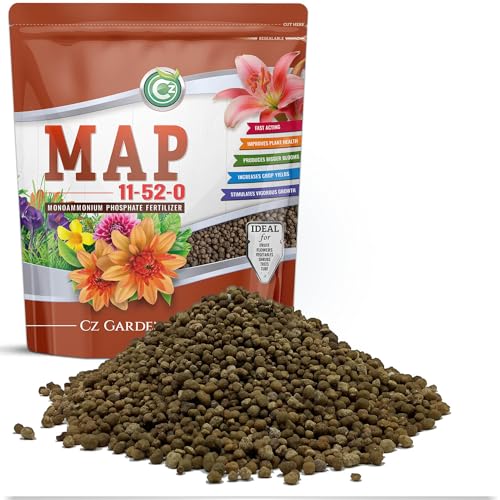
- PREMIUM QUALITY INGREDIENTS – Cz Garden 11-52-0 is a high purity, premium MAP fertilizer for all indoor/outdoor flowers,…
- POWERFUL FERTILIZER promotes vigorous growth and bigger blooms in your home garden
- RESEALABLE, EASY POUR PACKAGING: Cz Garden 11-52-0 MAP fertilizer comes sealed in a heavy duty resealable 4LB pouch. Pou…
Cz Garden packs its USA-made MAP in a heavy-duty, resealable 4 lb pouch. At a typical garden rate, that covers about 1,000 sq ft, so the bag rarely sits half-used for years. Package directions give a soil drench of 1 to 2 tablespoons per gallon of water, or a side dress of 1 cup per 100 feet of row. Owner reports consistently note easy spreading and strong results on tomatoes and flowers, along with advice to keep rates light.
Pros
- Resealable heavy-duty pouch
- Made in the USA
- Clear package directions
- Right size for beds
Cons
- Owners report it isn’t readily water soluble, which undercuts the drench directions
- Brand copy mentions organic gardens, but MAP isn’t an organic input
Specs
- Analysis: 11-52-0 (MAP)
- Form: granules
- Size: 4 lb pouch
- Listed uses: flowers, lawns, vegetables, shrubs, trees
2. Lancaster Agriculture Monoammonium Phosphate (20 lb): Best for Market Gardens and Small Acreage

- For Use On: Ideal for vegetable gardens, fruiting plants, flowers, row crops, and pastures; supports healthy establishme…
- Contains: Monoammonium Phosphate (MAP) 11-52-0, a concentrated source of phosphorus and nitrogen in an easy-to-apply dry…
- Benefits: Boosts strong root development, flowering, and fruiting; provides sustained nutrition that improves plant grow…
Lancaster Ag, in business since 1988, sells its 11-52-0 in 20 lb and 5 lb bags for vegetable gardens, fruiting plants, flowers, row crops, and pastures. The 20 lb bag covers about 5,200 sq ft at a typical garden rate. Directions say to apply it directly or blend it, and to follow soil test recommendations rather than a printed rate. That’s sound advice, but you’ll need your own numbers. Owner feedback is thin so far: two reviews, both positive, one noting the granules mix easily with water.
Pros
- Larger 20 lb bag
- 5 lb size available
- Blends with other fertilizers
- Soil-test-based directions
Cons
- No printed application rates
- Very few owner reports yet
Specs
- Analysis: 11-52-0 (MAP)
- Form: granules
- Size: 20 lb (5 lb option)
- Package: 16 by 10 by 5 inches
3. Greenway Biotech Monoammonium Phosphate 11-52-0: Best Range of Bag Sizes
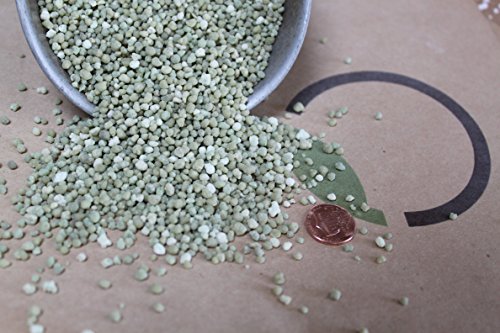
- 11% NITROGEN AND 52% PHOSPHORUS: Our Monoammonium phosphate 11-52-0 plant fertilizer contains a high concentration of ni…
- ENHANCES GROWTH AND BLOOMING: This Monoammonium phosphate growing crystal has been specially formulated to promote healt…
- SUITABLE FOR HYDROPONICS AND SOIL USE: Our hydroponic fertilizer for vegetables and plants is versatile and can be used …
Greenway Biotech sells granular 11-52-0 in 2, 5, 10, and 25 lb bags, with all nitrogen in ammonium form. Its own product page states the phosphate plainly as 52% P2O5, or 22.7% elemental phosphorus, and lists rates by soil test. Go by that page rather than the sales copy, though. Some copy promotes hydroponic and foliar use and quotes 12-61-0 figures, while Greenway’s product page calls this granular grade soil-only. Consistent owner feedback isn’t available to summarize yet.
Pros
- Four bag sizes
- Ammonium nitrogen only
- Rate table by soil test
- Clear P2O5 labeling
Cons
- Sales copy claims hydroponic and foliar use that the manufacturer’s page rules out
- Mixed analysis figures in product copy
Specs
- Analysis: 11-52-0 (MAP)
- Form: granules
- Sizes: 2, 5, 10, and 25 lb
- Actual phosphorus: 22.7% (per manufacturer)
FAQs About 11-52-0 Fertilizer
Is 11-52-0 fertilizer water soluble?
Mostly, but agricultural granules don’t dissolve completely, and owners often find grit left in the can. For drip lines, foliar sprays, or hydroponics, buy a fully soluble 12-61-0 technical grade instead.
Will 11-52-0 burn plants or seeds?
It can if you overdo it in the seed row, though it carries less ammonia than DAP. Iowa State University Extension limits seed-furrow fertilizer for corn to about 10 pounds of N plus K2O per acre.
Can you use 11-52-0 on tomatoes?
Yes, if a soil test shows low phosphorus; work it in before transplanting. It won’t prevent or cure blossom-end rot, which traces to calcium supply and uneven watering rather than phosphorus.
Is MAP fertilizer allowed in organic gardening?
No, MAP is a manufactured salt made from ammonia and phosphoric acid. Certified organic growers typically use approved phosphorus sources such as bone meal or rock phosphate, after checking with their certifier.
Should you apply 11-52-0 in fall or spring?
Either works for the phosphorus, which stays put in most soils. The 11% nitrogen can be lost over winter, so University of Minnesota Extension suggests a P-only source like triple superphosphate when fall N isn’t needed.
Can you mix 11-52-0 with urea or potash?
Yes, MAP blends well with urea and potash in dry mixes, and Simplot markets it for custom blends. Keep any urea-containing blend out of direct seed contact, per K-State Research and Extension.
How long does 11-52-0 last in storage?
Kept dry and sealed, MAP stores well from one season to the next, because humidity, not age, is what ruins it. K-State notes MAP mixes take up moisture and cake above about 70% relative humidity.
Bottom Line for Your Field
Treat 11-52-0 as a phosphorus correction, not an all-purpose plant food. Test the soil first. If phosphorus reads low, divide the P2O5 recommendation by 0.52, work the product into the root zone or band it near the row, and count its nitrogen. If phosphorus reads high, leave the bag on the shelf and put the money toward whatever nutrient the test does flag.