When to Plant Buck Forage Oats: Regional Dates and Frost Math
Buck Forage Oats grow fast and draw deer early, but only when the timing is right. Deciding when to plant Buck Forage Oats comes down to two dates. One is the week summer heat breaks. The other is your average first fall frost.
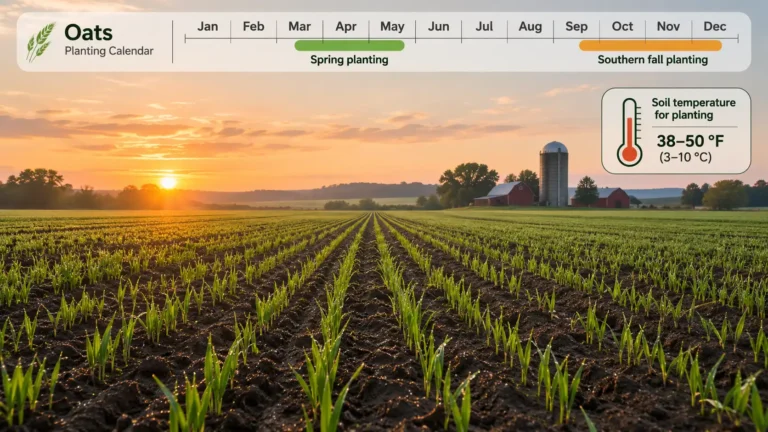
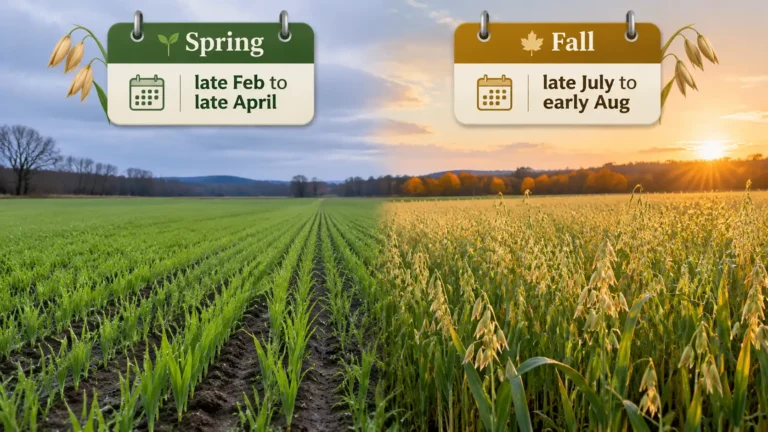
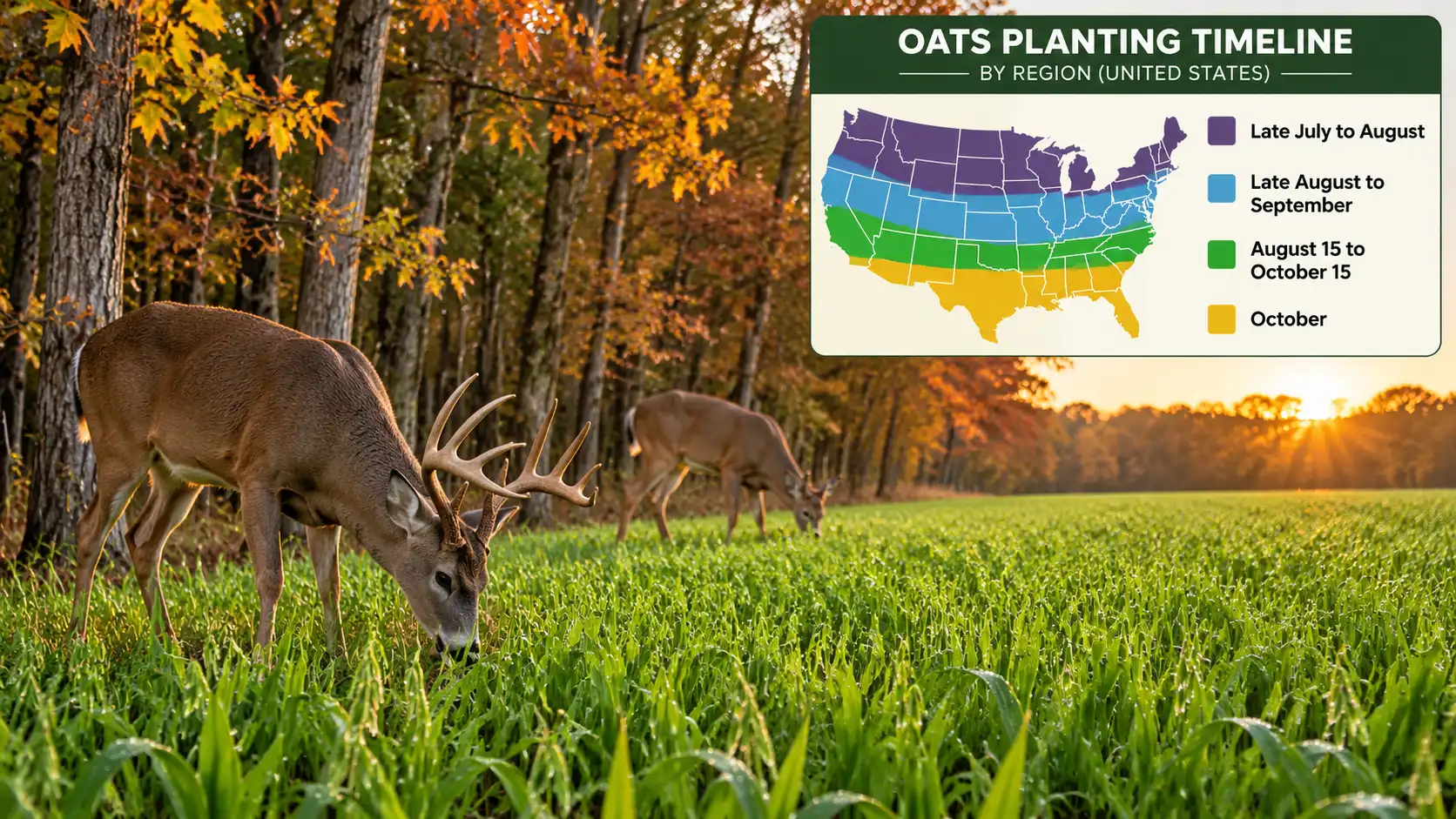
Plant Buck Forage Oats 6 to 8 weeks before your average first fall frost, per Penn State Extension. In practice, that means late July through August in the North, mid-August to mid-October in the Southeast, and October in north Florida.
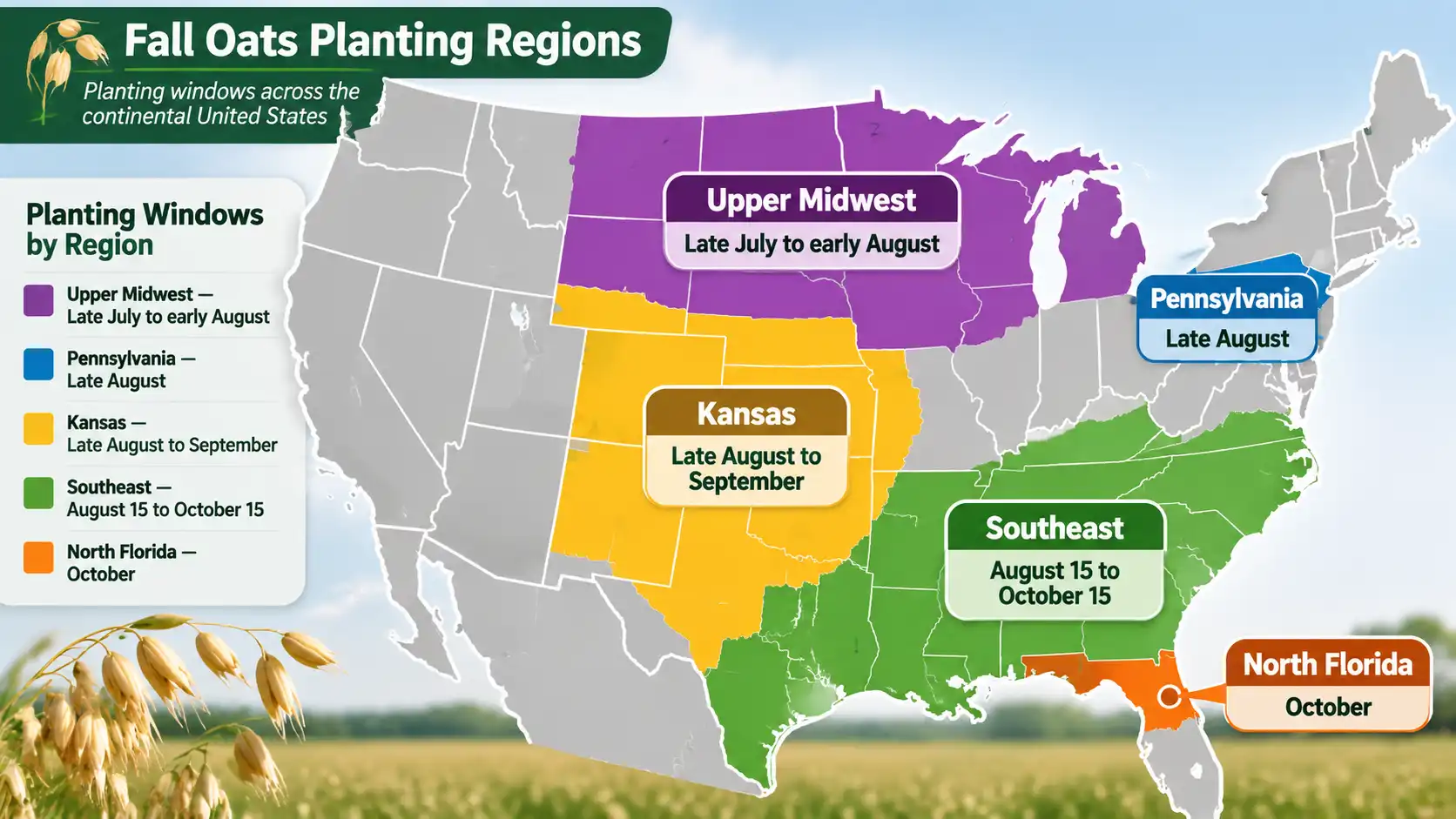
When to Plant Buck Forage Oats by Region
Buck Forage Oats go in during late summer in the North and during fall in the Deep South. Each extension service sets its window by local frost and heat. As a result, the dates shift by roughly two months between Wisconsin and Florida.
| Region | Planting window | Source |
|---|---|---|
| Upper Midwest (Wisconsin and similar latitudes) | Mid-July through the first week of August for top yield; yields drop sharply after mid-August | University of Wisconsin Extension |
| Mid-Atlantic (Pennsylvania) | 6 to 8 weeks before first frost; late August to early September where frost lands near October 15 | Penn State Extension |
| Central Plains (Kansas) | Late August through late September | K-State Research and Extension |
| Southeast (Mississippi and neighboring states) | August 15 through October 15 | Mississippi State University Extension |
| North Florida | October 1 through November 15, first half preferred | UF/IFAS Extension |
Most of these windows come from trials on oats in general, not this brand. The exception is the Mississippi State University Extension Deer Lab. It lists Buck Forage by name among its recommended oat varieties for the August 15 through October 15 window.
The Wisconsin and Penn State windows aim at livestock tonnage. A deer plot does not need peak tonnage, though. It needs green, tender growth when the season opens, so the frost countdown below matters more than the yield peak.
Why Your First Frost Date Sets the Deadline
Oats need several weeks of growth before deer can use them, and hard freezes end that growth. K-State Research and Extension says oats are ready to graze 6 to 8 weeks after planting with adequate moisture. Penn State Extension uses the same span and recommends planting 6 to 8 weeks before the first fall frost.
The freeze is the hard stop. K-State notes that spring oats die after the first hard freeze in the mid-20s °F. Similarly, UF/IFAS Extension points out that oats are less cold hardy than rye or wheat. Farther north, University of Wisconsin Extension states that all oat plants winterkill in Wisconsin. Grazing has to happen before winter.
So the useful season runs from about six weeks after planting until a hard freeze. Plant too late, and that gap shrinks to nothing.
Is Buck Forage a Winter Oat? What the Cold Data Shows
Buck Forage Oats are sold as a winter oat with more cold tolerance than common spring oats. Product descriptions credit the line to Dr. James C. Kroll’s deer forage preference trials and call it extremely winter-hardy.
However, independent data on this variety’s kill temperature is thin. Mississippi State lists Buck Forage among recommended oats but publishes no separate cold rating for it. Extension trials that measure the exact temperature at which Buck Forage stands die are hard to find.
That gap should shape your plan. In the Southeast, treat any extra hardiness as a bonus that may stretch grazing into winter. In the Upper Midwest, plan for winterkill anyway. Then add cereal rye or wheat so the plot stays green after the oats are gone.
When Is It Too Early to Plant?
It is too early while nights stay warm. Product descriptions for Buck Forage Oats advise planting once nighttime temperatures stay consistently below 65°F.
Heat also brings disease. UF/IFAS Extension warns that planting before mid-October under warm temperatures raises disease incidence in north Florida, especially in oats. It also ties rust incidence partly to planting date.
Early planting can cost quality, too. University of Wisconsin Extension found that grain-type oats planted early matured too fast to harden off before cold weather. With mid-August plantings, by contrast, every cultivar stayed immature and built sugar, which pushed total digestible nutrients to about 70%.
Soil moisture matters as much as the calendar. UF/IFAS notes that October is one of the driest months in north Florida. For that reason, the best week to plant is often the one just ahead of a forecast rain.
How to Time a Buck Forage Oats Plot to Hunting Season
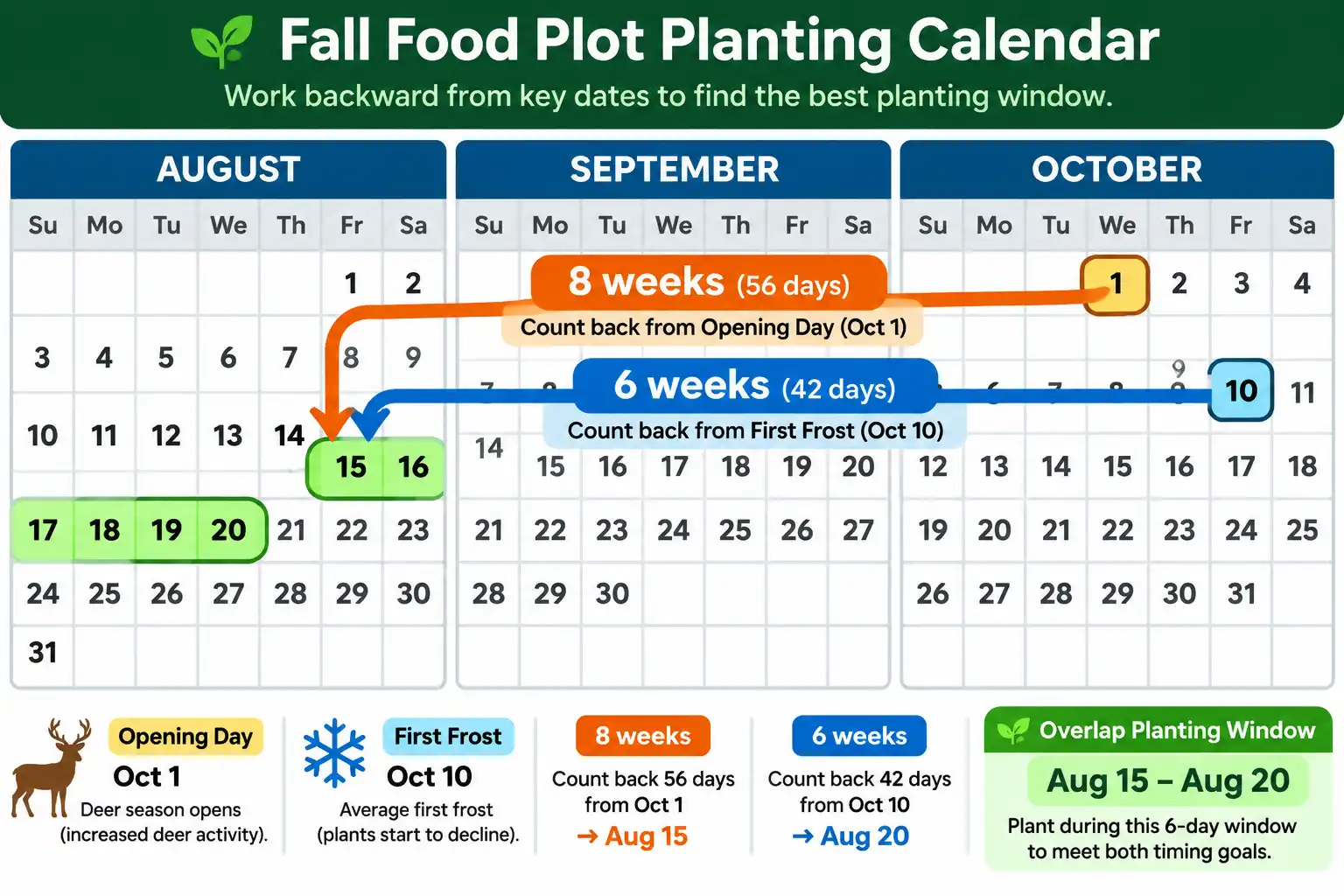
Work backward from two dates: your average first frost and your season opener. Then plant in the week where both countdowns overlap.
- Find your average first fall frost. Your county extension office or the NOAA climate normals list it by location.
- Count back 6 to 8 weeks from that frost date. This follows the Penn State Extension frost rule.
- Count back 6 to 8 weeks from opening day. K-State puts grazing readiness at 6 to 8 weeks after planting. Plant by then, and the plot has forage on opening day.
- Take the overlap. Planting in that window gives tender growth on opening day and still leaves time before the freeze.
- Check the heat. If nights still run above 65°F, wait for the first cool front.
Worked Example
Say your average first frost is October 10 and archery season opens October 1.
- Frost countdown: 8 weeks back is August 15, and 6 weeks back is August 29.
- Opener countdown: 8 weeks back is August 6, and 6 weeks back is August 20.
- Overlap: August 15 to August 20.
If a front with rain arrives on August 18, that is your planting day. On the other hand, if the overlap lands in a heat wave, choose the later end of it.
Seeding Rate, Depth, and Fertilizer
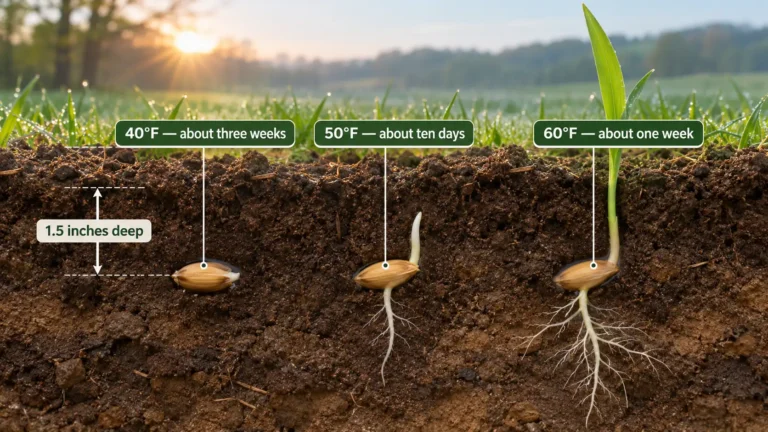
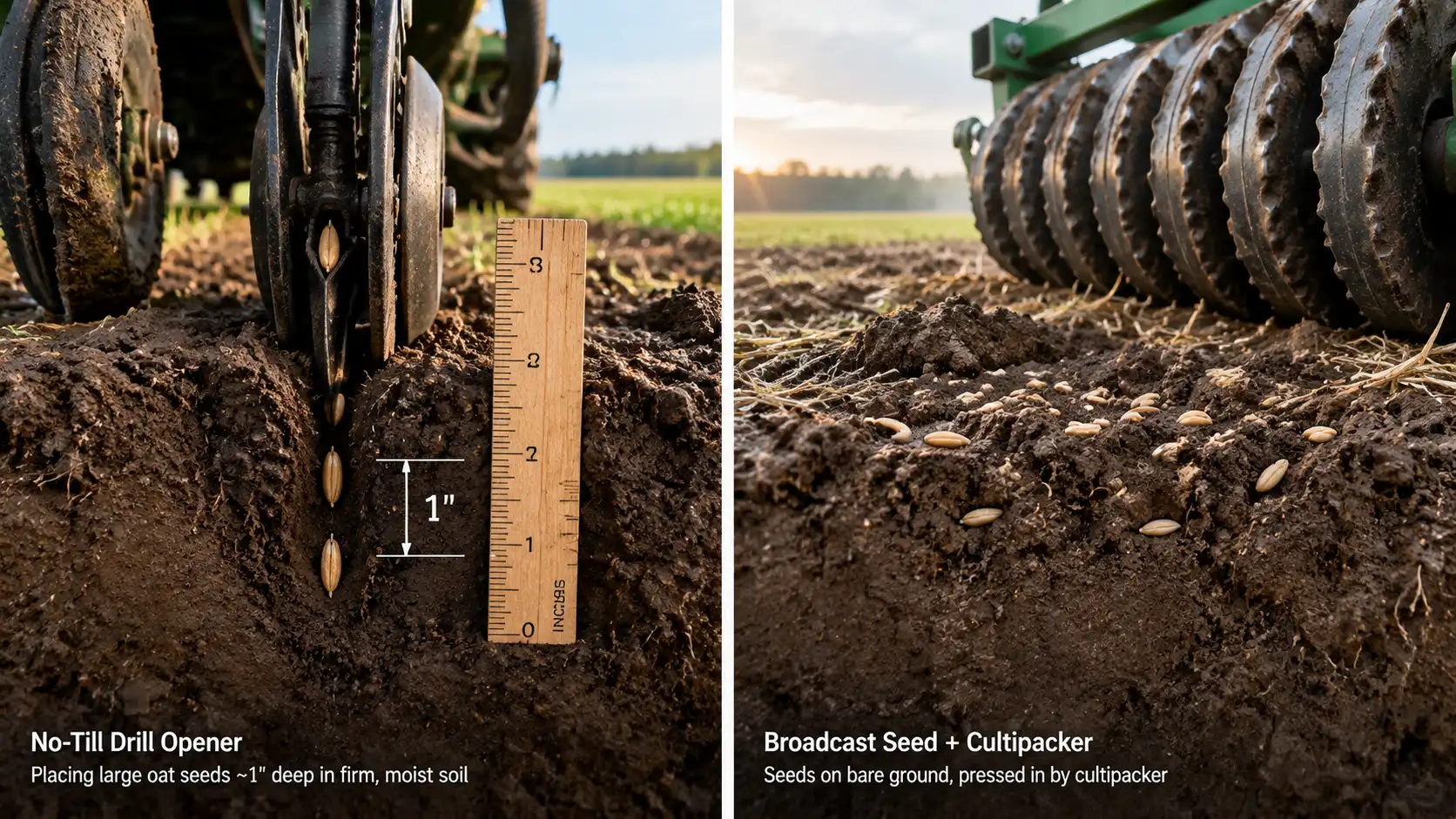
Mississippi State University Extension recommends drilling oats at 90 pounds per acre or broadcasting at 120 pounds per acre. Place the seed 1 inch deep in a firm, well-prepared seedbed. Aim for a soil pH of 5.8 to 6.5.
For fertilizer, Mississippi State advises following a soil test. Without one, apply 100 pounds per acre of 8-24-24 at planting. Then topdress with 100 pounds of 34-0-0 about 30 days after emergence. If you already have results, take a few minutes to read your soil test report before you buy lime or fertilizer.
Product descriptions for Buck Forage Oats give slightly different figures. One lists 100 pounds per acre at 1/2 inch, or 50 pounds of oats with 50 pounds of forage peas. Others give 100 to 120 pounds per acre at 1/2 to 1 1/2 inches. They also list a pH range of 5.5 to 7.
These figures overlap more than they conflict. The bag rates use one number for every method, while Mississippi State splits drill and broadcast. So read the bag tag for germination percentage, then use the extension rate that matches your method. If you spread with a tow-behind broadcast spreader, drag or cultipack the seed in afterward. For seedbed and drill setup, the same steps used for planting oats as a grain crop apply here.
Rates for Small Plots
Most food plots are smaller than an acre. The table below scales Mississippi State’s per-acre rates down to common plot sizes.
| Plot size | Seed, drilled (90 lb/acre) | Seed, broadcast (120 lb/acre) | 8-24-24 at planting | 34-0-0 at 30 days |
|---|---|---|---|---|
| 1,000 sq ft | 2.1 lb | 2.8 lb | 2.3 lb | 2.3 lb |
| 1/4 acre (10,890 sq ft) | 22.5 lb | 30 lb | 25 lb | 25 lb |
| 1/2 acre (21,780 sq ft) | 45 lb | 60 lb | 50 lb | 50 lb |
| 1 acre (43,560 sq ft) | 90 lb | 120 lb | 100 lb | 100 lb |
To size your seed order, a 50-pound bag drills about 0.55 acre, or 24,200 square feet. Broadcast at 120 pounds per acre, the same bag covers about 0.42 acre, or 18,150 square feet.
Mixing Buck Forage Oats With Other Seed
A mix works well in most regions. Oats feed deer early, while hardier partners carry the plot after the oats fade.
Mississippi State lists Austrian winter peas, clovers, vetch, rye, triticale, and wheat as companions for oats. Penn State Extension suggests a 50/50 forage oat and pea mix planted at 100 pounds per acre. For cereal blends, K-State recommends seeding oats at 50% of their normal rate and the winter small grain at its full rate.
Applied to Mississippi State’s drill rates, that rule gives 45 pounds of oats and 90 pounds of wheat or rye. Before picking a partner grain, it helps to see how wheat and oats compare as crops.
Mixing also lowers disease pressure. UF/IFAS Extension reports that mixed wildlife plots tend to show less disease when susceptible varieties are part of the planting.
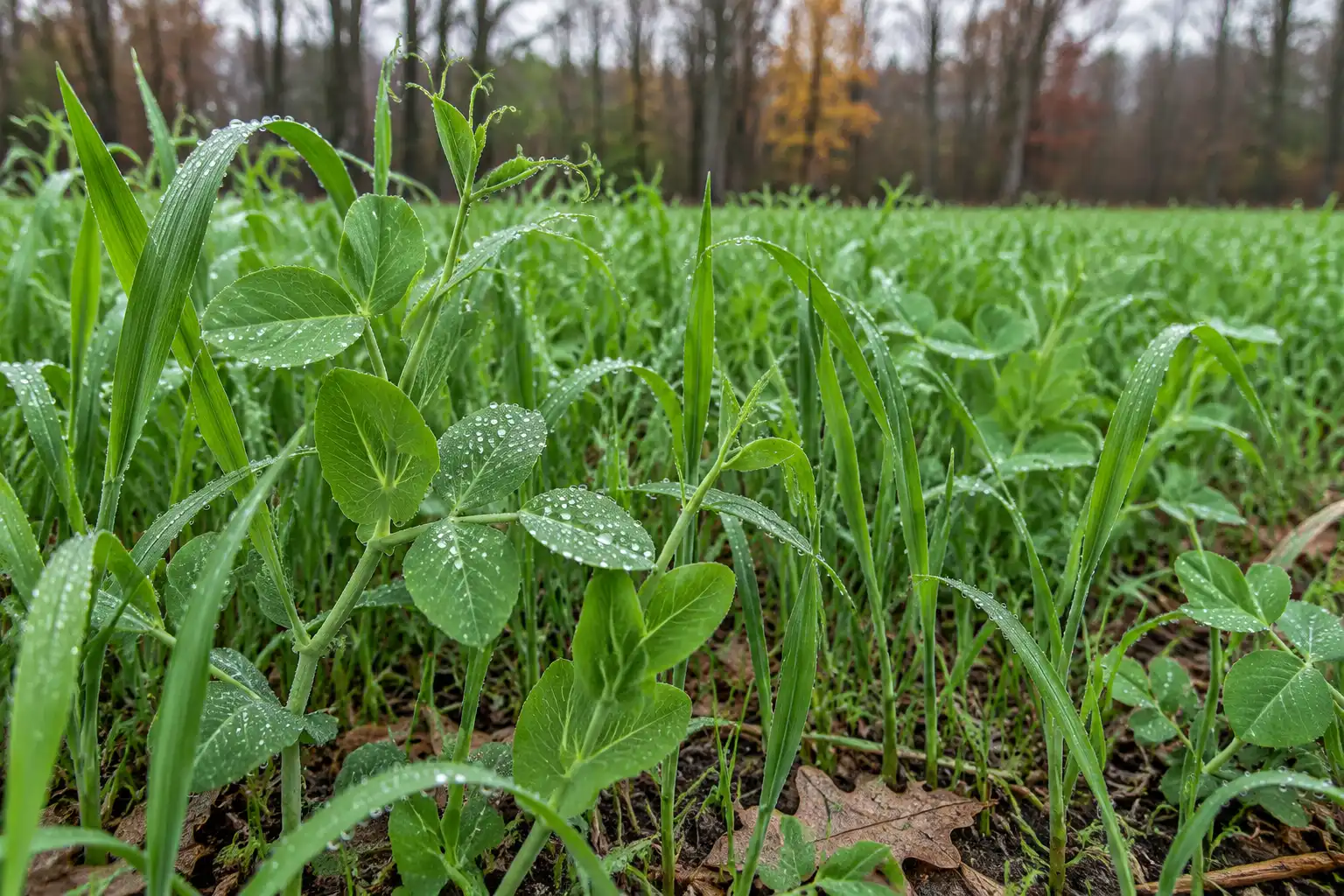
Can You Plant Buck Forage Oats in Spring?
Yes, product descriptions list both spring and fall planting. Spring stands behave differently, however.
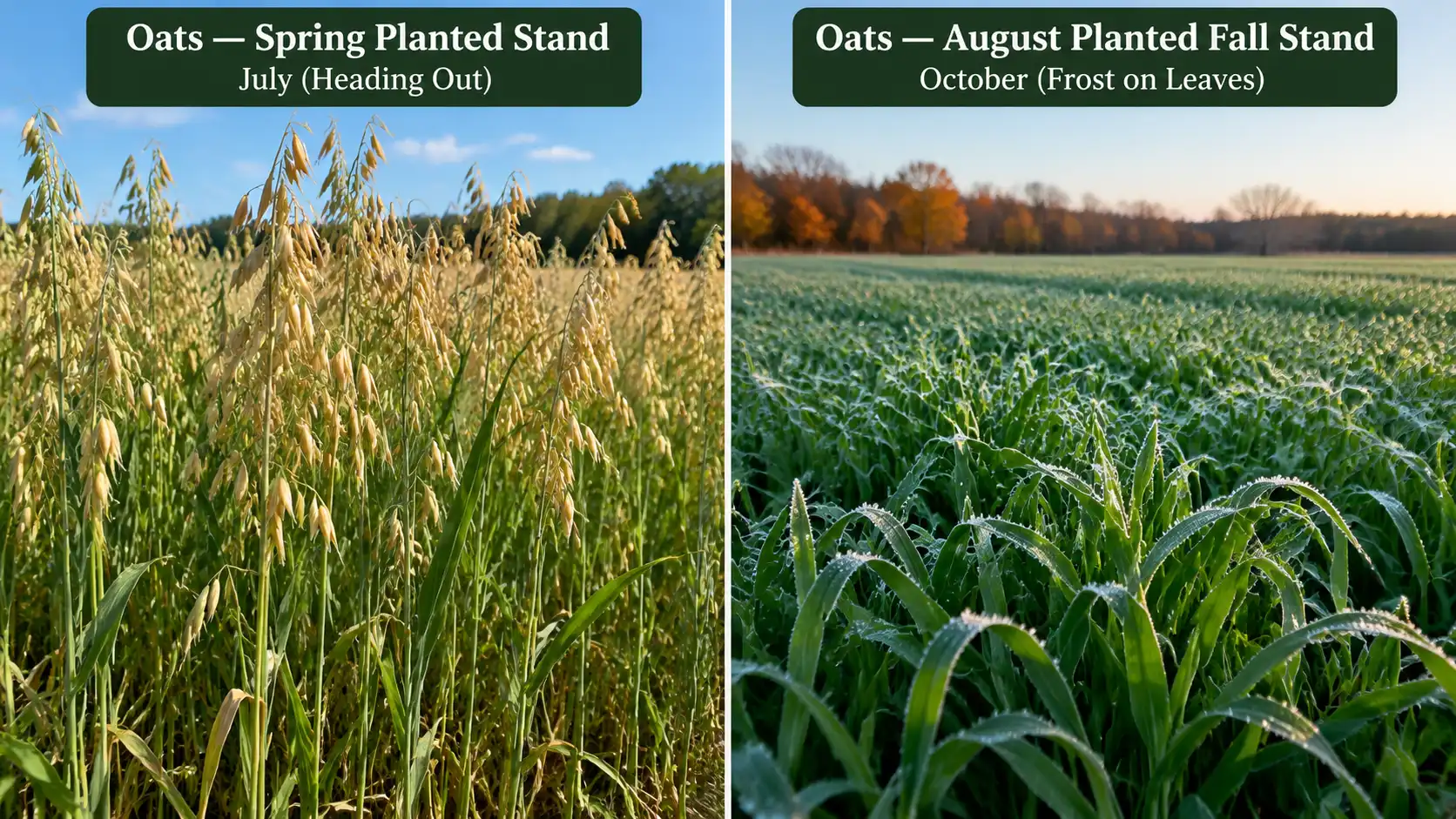
Penn State Extension gives April 15 to May 10 as the usual spring oat planting dates in Pennsylvania. It adds that soil above 45°F speeds germination.
Spring stands also race to maturity. University of Wisconsin Extension found that April-planted oats reached the milk stage 77 days after planting. Fall stands, by contrast, stay leafy because late-summer planting disrupts the oat’s long-day flowering requirement.
That difference shows up in sugar. Wisconsin research measured sugars 61% higher in leaves and 330% higher in stems after August planting than after April planting. Sweeter forage is a likely reason fall oats draw deer so well.
For summer forage, a warm-season crop fits better than oats. Timing soybeans for deer follows its own soil temperature rules, and the plot can return to oats in late summer.
How Late Can You Plant Buck Forage Oats?
The cutoff depends on your region. In Wisconsin, University of Wisconsin Extension found that fall oat yields fall sharply once planting slips into mid-August or later. Mississippi State’s window closes October 15, while UF/IFAS runs to November 15 in north Florida.
A late plot still grows, just less. Once fewer than six weeks remain before your average first frost, time runs out. The stand cannot reach the 6 to 8 weeks of growth K-State ties to grazing readiness.
At that point, switch crops. For October plantings in Kansas, K-State Research and Extension names cereal rye as the likeliest source of ample forage. That makes rye the practical fallback when the oat window has closed.
Troubleshooting a Poor Oat Stand
Check these five causes first when a stand comes up thin, yellow, or not at all.
- Herbicide carryover. K-State warns that oats are fairly susceptible to atrazine. Fields coming out of corn or sorghum carry a real risk of seedling kill.
- Disease after warm planting. UF/IFAS links rust incidence to planting date. Planting later and mixing species both lower the risk.
- Seed left on the surface. Mississippi State sets depth at 1 inch. Broadcast seed that never gets covered dries out or feeds birds.
- Dry seedbed. Seed in dry soil sits idle until rain comes. UF/IFAS flags October as one of the driest months in north Florida.
- Low pH. Mississippi State targets 5.8 to 6.5 for oats. Test well ahead of planting so lime has time to work.
Frequently Asked Questions
Do deer still eat Buck Forage Oats after a frost?
Yes, as long as the leaves stay green. University of Wisconsin Extension found fall-grown oats store far more sugar than spring oats, which helps them stay palatable until a hard freeze kills the foliage.
Can you broadcast Buck Forage Oats without tilling?
You can, but the seed must end up covered. Mississippi State University Extension calls for a 1-inch depth in a firm seedbed, so drag or cultipack broadcast seed into the soil after spreading.
Will Buck Forage Oats come back next year?
No, oats are annuals, so plan to replant each fall. K-State notes that in very mild winters, much of a fall-planted oat stand can survive in southern Kansas, but that is the exception.
How much ground does a 50-pound bag of Buck Forage Oats cover?
Roughly half an acre or a little less. At Mississippi State’s drill rate of 90 pounds per acre, one bag covers about 24,200 square feet, or about 18,150 square feet broadcast at 120 pounds.
Should you plant Buck Forage Oats before a rain?
Yes, planting just ahead of a forecast rain gives seed the moisture it needs to germinate. UF/IFAS Extension notes that October is one of the driest months in north Florida, so rain timing is especially important there.
Do Buck Forage Oats need nitrogen after planting?
Yes, a nitrogen topdress helps fall growth. Mississippi State University Extension recommends 100 pounds of 34-0-0 per acre about 30 days after emergence, which supplies 34 pounds of actual nitrogen.
What to Check Before You Plant
Start with your average first frost date and your season opener. Then plant in the overlap of their 6 to 8 week countdowns. Wait until nights drop below 65°F and rain is in the forecast.
Drill at 90 pounds or broadcast at 120 pounds per acre, and get the seed 1 inch deep. In the North, add cereal rye or wheat so the plot outlasts the oats. Finally, if your county extension office publishes a local food plot calendar, trust its dates over any regional average.