When to Plant Oats: Spring and Fall Dates by Region

Oats yield best when they tiller and fill grain in cool weather. That makes timing the first decision you make. Below, find when to plant oats for grain, forage, or cover by region, plus what each week of delay costs.
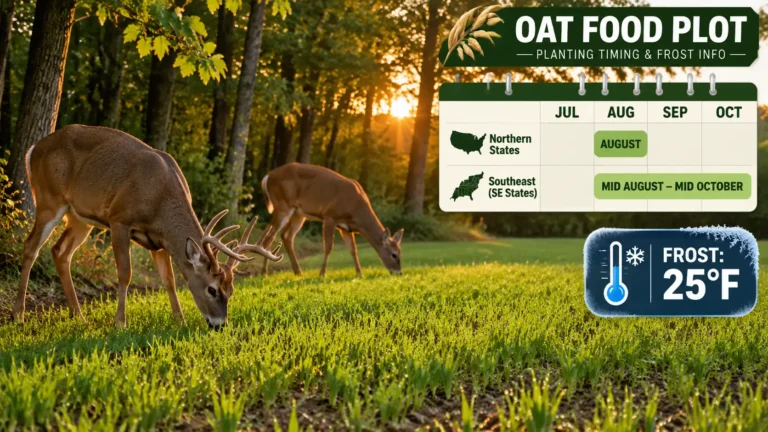
For anyone deciding when to plant oats, soil beats the calendar. Seed spring oats once soil nears 40°F, from late March in Iowa to early May near the Canadian border. Southern winter oats go in late September to early December.
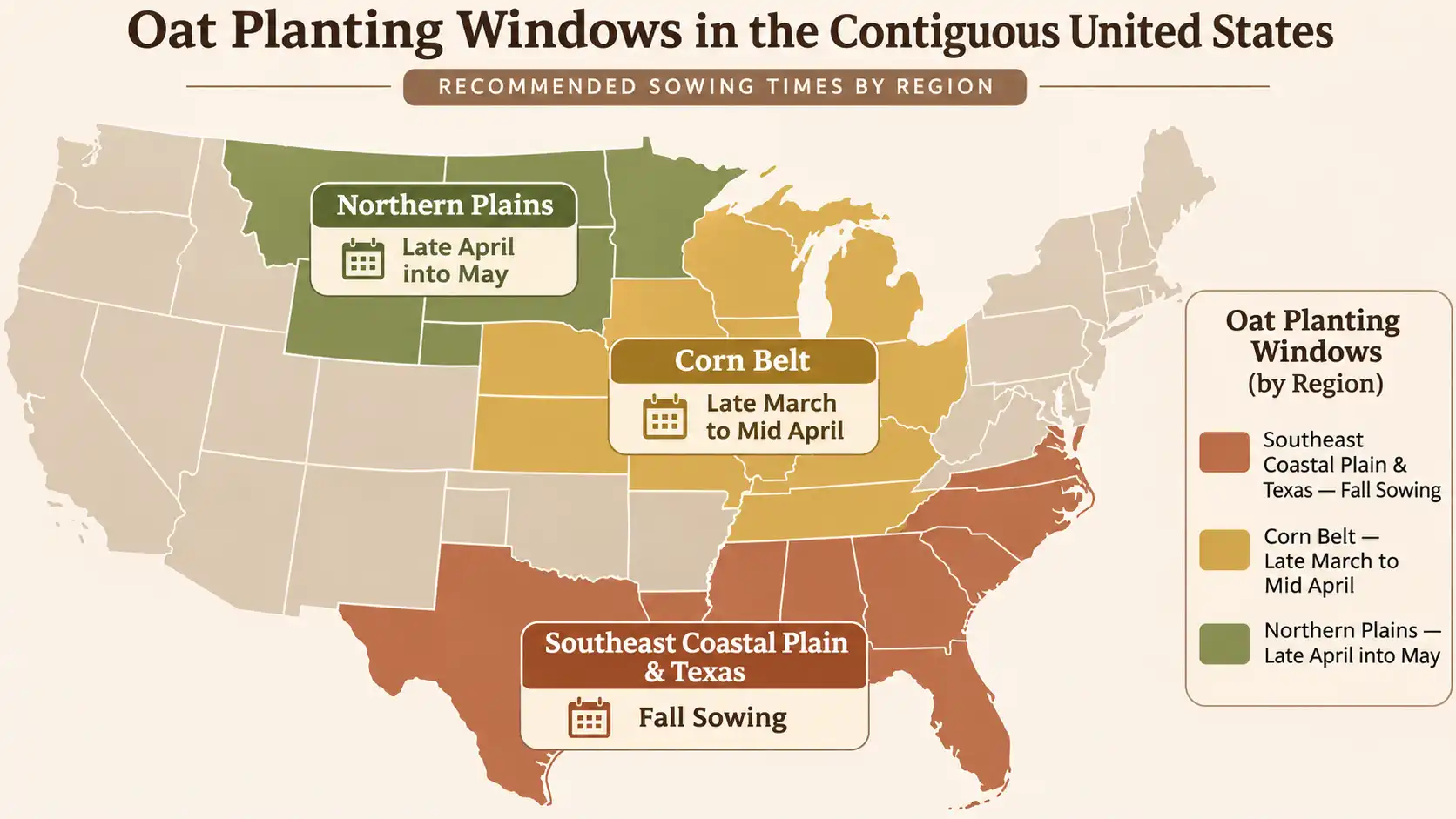
Oat Planting Dates by Region
Your winter decides which season you plant in. Spring oats are the standard across the Corn Belt, the Northern Plains, and the Northeast. In contrast, fall-sown winter oats fit the Southeast and much of Texas. Winters there stay mild enough for the crop to survive.
Spring Planting Windows
| Purpose | Region | Planting window | Source |
|---|---|---|---|
| Spring grain | Central Iowa | Before April 15 | Iowa State |
| Spring grain | Southern Minnesota (south of US Highway 12) | Optimum first week of April; last date first week of May | University of Minnesota |
| Spring grain | Minnesota and North Dakota near the Canadian border | Optimum first week of May; last date first week of June | University of Minnesota |
| Spring grain | North Dakota | Before end of April (south); before May 15 (north) | NDSU |
| Spring grain | Pennsylvania | April 15 to May 10 | Penn State |
| Spring hay | Texas High Plains | First week of February (lower South Plains) to late February (northern Panhandle) | Texas A&M AgriLife |
Fall Planting Windows
| Purpose | Region | Planting window | Source |
|---|---|---|---|
| Fall grain | Georgia Limestone Valley | September 25 to October 15 | UGA |
| Fall grain | Georgia Piedmont | October 7 to November 1 | UGA |
| Fall grain | Georgia Coastal Plain | November 7 to December 1 | UGA |
| Fall forage | Texas | September to mid October | Texas A&M AgriLife |
| Fall cover crop | Minnesota | By September 12 (south); by September 7 (north) | University of Minnesota |
Treat each window as a target. Soil temperature and field moisture set the actual day, as the sections below explain. Spring wheat runs on a similar northern calendar. If you grow both, compare the spring wheat planting window before you book drill time.
Why Oats Reward Early Planting
Oats are a cool-season crop. So the goal is to finish tillering and flowering before summer heat arrives.
NDSU Extension explains that early-planted oats produce more tillers and larger panicles. Early planting also helps the crop dodge late-season heat stress, which shrinks seed size. It can help you avoid some diseases that build late in the season, too.
The University of Minnesota Extension makes the same point for all spring small grains. They are most productive when they grow and develop during cool weather. Every week of delay pushes grain fill closer to July heat.
That heat shows up as lower test weight, not just fewer bushels. Light oats can miss milling standards even when yield looks fine. For milling oats, NDSU lists a test weight of 38 pounds per bushel or greater as the quality target.
To track tillers and panicles in your own stand, see what oats look like as they grow.
How Much Yield Late Planting Costs
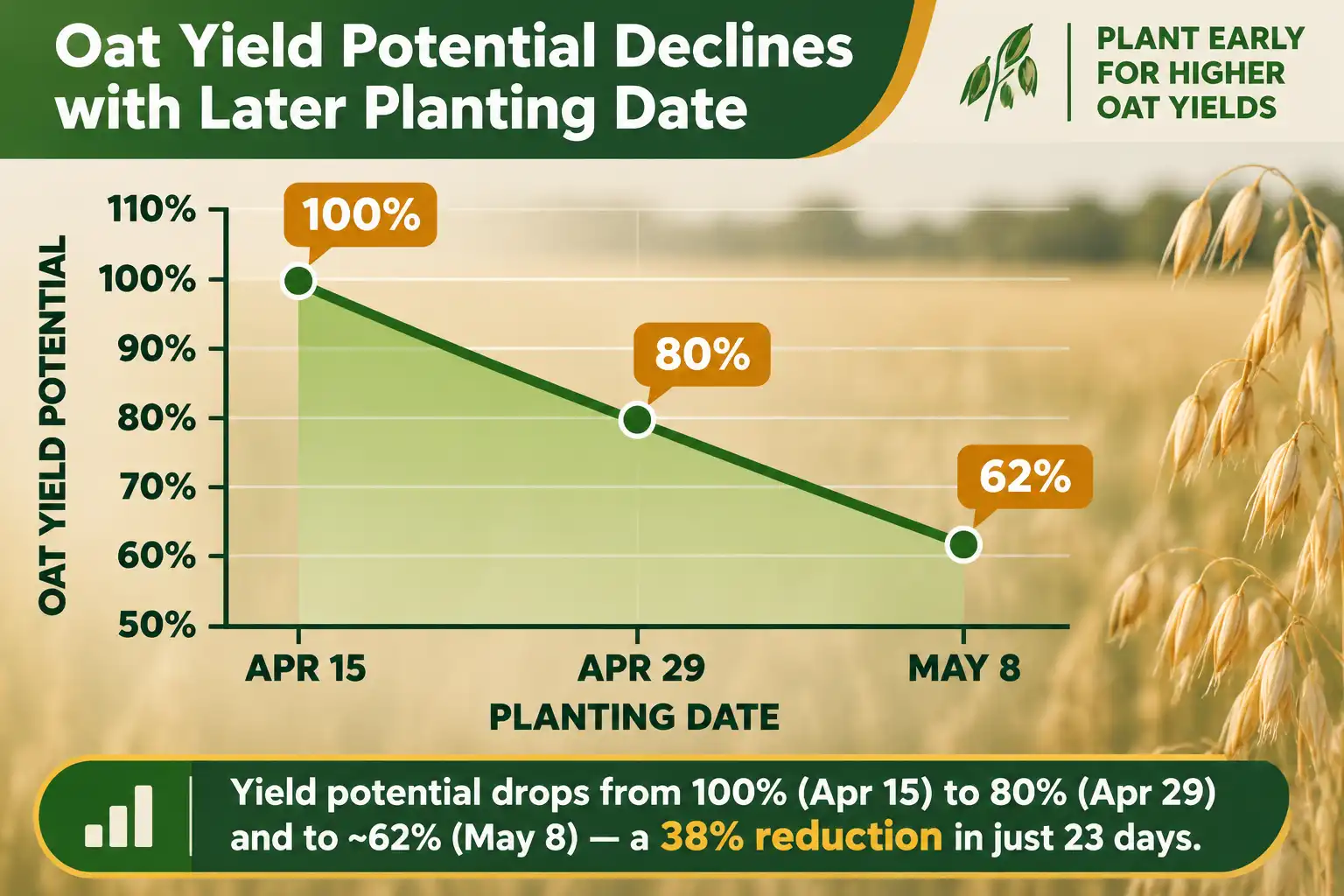
Late-planted oats lose roughly 1 to 2 percent of yield potential per day, depending on region. Iowa State University Extension puts the loss at about 10 percent per week after April 15. Once planting slips past May 1, the decline steepens to roughly 15 percent per week.
Other services report a gentler slope. The University of Minnesota and Penn State Extension both cite about 1 percent per day past the optimum. Penn State also summarizes New York research: about 1 bushel per acre lost per day after April 18.
So which number fits your field? The steeper Iowa rate likely reflects hotter July weather during grain fill in central Iowa. Farther north, the 1 percent rule is the closer guide.
Here is how the Iowa State rule plays out on a field with 100 bushel potential:
| Planting date | Share of top yield | Expected yield |
|---|---|---|
| April 15 | 100% | 100 bu/acre |
| April 22 | About 90% | About 90 bu/acre |
| April 29 | About 80% | About 80 bu/acre |
| May 8 | About 62% | About 62 bu/acre |
These figures apply a rule of thumb. They are not a field forecast.
Estimate the Cost on Your Own Field
Use this formula: lost bushels = yield goal × daily loss rate × days past optimum.
For example, take a 110 bushel yield goal in southern Minnesota. There, the University of Minnesota puts the optimum in the first week of April. Planting 12 days late at 1 percent per day costs 110 × 0.01 × 12 = 13.2 bushels.
As a result, expected yield falls to about 97 bushels per acre. Then multiply the lost bushels by your local cash bid to see the cost per acre.
Soil Temperature for Planting Oats
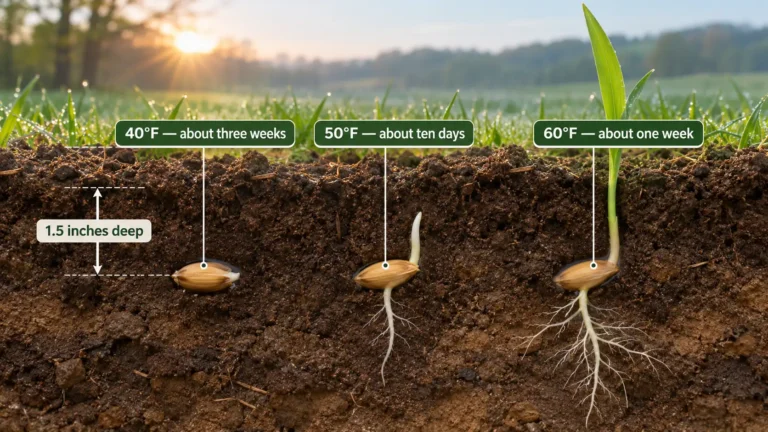
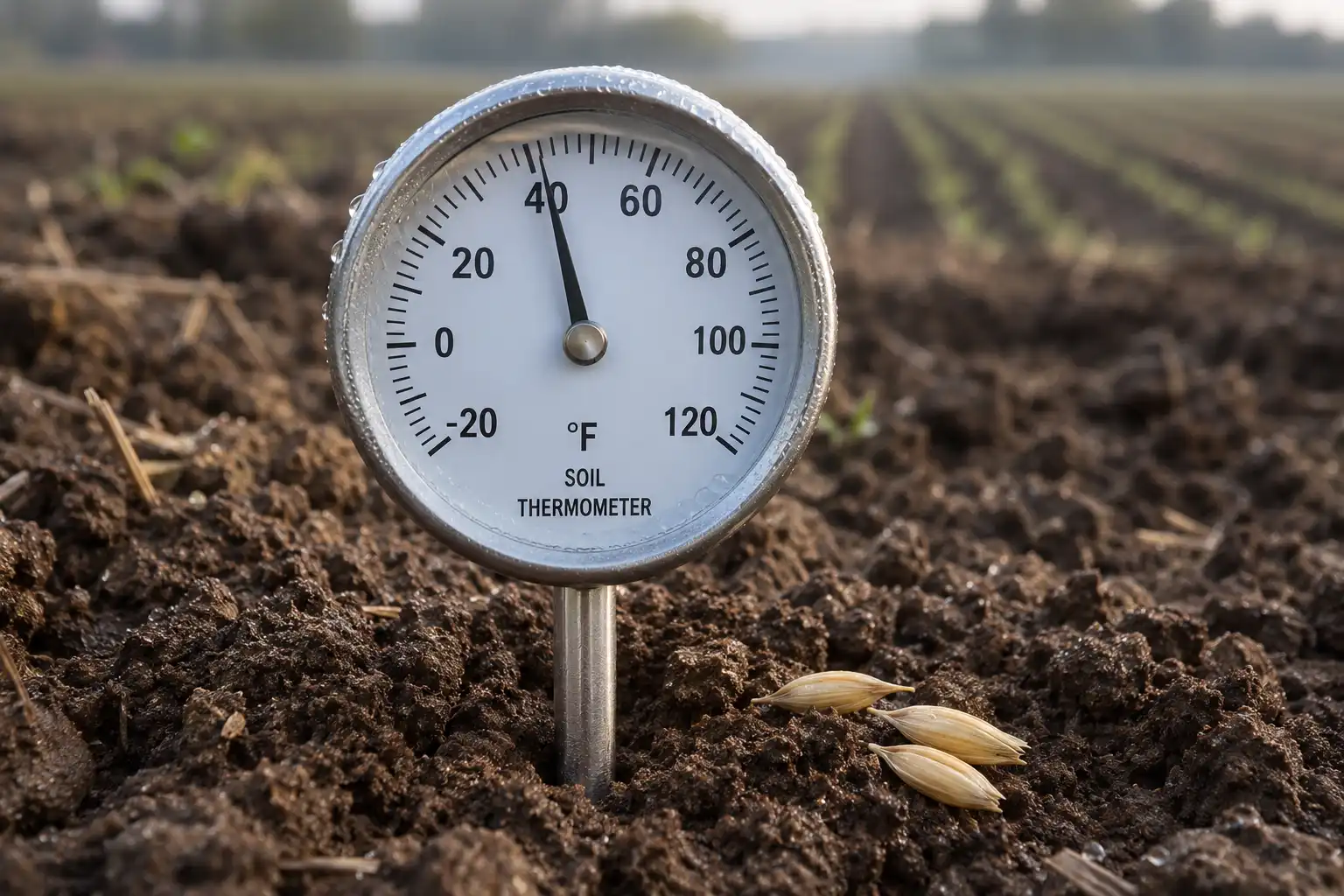
Published germination thresholds for oats run from 35°F to 50°F, and the services do not agree. Penn State Extension says oats need at least 35°F to germinate. For a vigorous stand, though, it advises waiting until soil holds 45°F or warmer for about two weeks.
The University of Minnesota Extension says germination begins in earnest at 40°F. With daytime highs in the 60s and nights near 40°F, oats emerge in 8 to 10 days. In contrast, Texas A&M AgriLife agronomist Calvin Trostle sets a higher bar for the South Plains. He calls for a 45 to 50°F average daily soil temperature for good stands.
These figures measure different things. The low number marks when a seed can start growing. The higher numbers mark when a stand comes up fast and even. That speed matters, because slow emergence raises the risk of Pythium damping off and common root rot, per Minnesota.
Here is how to use the range:
- Northern Corn Belt and Northern Plains: plant at 40°F when the 10-day forecast is warming.
- Southern Plains: oats go in during late winter, so wait for 45 to 50°F to cut the risk of seed rot.
- Everywhere: check soil, not air. Penn State suggests a thermometer that reads 30 to 65°F, set 1.5 to 2 inches deep.
How Early Can You Plant Oats?
You can plant oats as soon as the soil is dry enough to work, even with frost in the forecast. Young oats handle cold well.
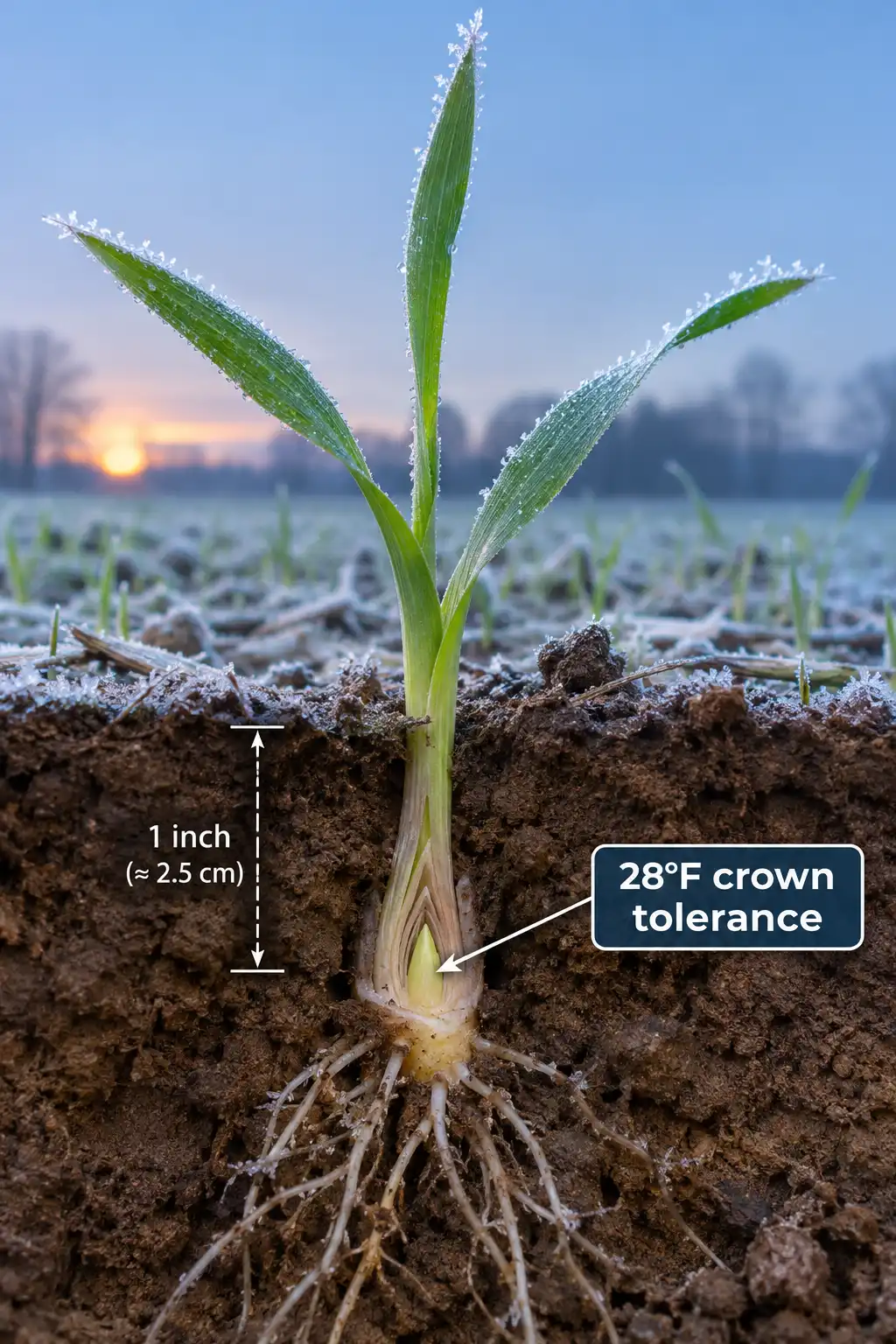
The University of Minnesota Extension notes that the growing point stays about an inch underground. That holds until roughly the 5-leaf stage. The crown survives 28°F and possibly brief dips to 22°F. Frozen leaves alone do not kill the plant if the crown is undamaged.
Still, hard cold is not rare. Minnesota records from 1981 to 2010 cover April 1 to May 15. In that span, 25 percent of days fell below 28°F, and 9 percent fell below 22°F.
Penn State Extension flags three risks with very early seeding in March:
- Cold damage after a warm spell pushes growth
- Seed rot in wet, cold soil
- Earlier maturity that can complicate harvest timing
Field moisture is often the harder limit. Squeeze a handful of soil from seeding depth. If it crumbles, the field is ready. If it smears or forms a ribbon, wait. Drilling into wet ground compacts the seed zone and invites rot.
How Late Can You Plant Oats?
For grain, the University of Minnesota Extension sets last planting dates about four weeks after each optimum. That runs from the first week of May in southern Minnesota to early June near the Canadian border. Planting after the last date is not advised, because heat stress cuts both yield and test weight.
NDSU Extension sets the optimum before the end of April in southern North Dakota. Up north, the target is May 15. Past those dates, late planting can reduce yield significantly.
If you miss the window, you have two options. Switch the field to another crop, or plant oats for forage instead of grain.
Raise the Seeding Rate for a Late Start
Late oats tiller less, so the stand needs more main stems. The University of Minnesota recommends raising the seeding rate 1 percent for every day past the optimum window. NDSU Extension uses 1 million pure live seeds per acre as its base, roughly 60 to 90 pounds.
To turn a seed target into pounds, divide target seeds by (seeds per pound × germination × purity).
For example, you plant 12 days late, so your target rises 12 percent to 1,120,000 seeds. Your seed tag shows 15,000 seeds per pound, 92 percent germination, and 98 percent purity. That works out to 1,120,000 ÷ (15,000 × 0.92 × 0.98), or about 83 pounds per acre.
For drill setup, depth, and seedbed prep, follow the guide to planting oats step by step.
When Waiting Makes Sense
Wild oat pressure is one reason to plant late on purpose. NDSU Extension notes that seeding after the first wild oat flush emerges and is controlled can reduce wild oat severity. The trade-off is a likely yield loss. To offset it, NDSU suggests seeding above 1 million seeds per acre so the crop competes better.
Planting Winter Oats in the South
In the Southeast, oats are sown in fall and harvested in late spring. The University of Georgia Extension planting guide sets grain oat windows by region:
- Limestone Valley: September 25 to October 15
- Piedmont: October 7 to November 1
- Coastal Plain: November 7 to December 1
UGA expects harvest from late May to late June, with seed at 60 to 75 pounds per acre.
The Coastal Plain window opens last for a reason, and UGA Extension in Colquitt County explains why. Seedling diseases such as Pythium and Rhizoctonia thin stands in warm September and October plantings in South Georgia.
Planting too late carries its own risk. Oats are less winter hardy than wheat or rye, and UGA’s forage team reports substantial yield loss below 20°F. Larger plants handle cold better than seedlings, so hitting the window gives the crop time to harden. For a wider look at hardiness and end use, see how oats and wheat compare.
Variety type matters as much as date. Texas A&M AgriLife names TAMO 606 as a winter oat suited to forage in Central and Northeast Texas. It also warns that longer-maturity spring oats, such as Hytest and Goliath, should not be fall planted.
Planting Oats for Grazing or Hay
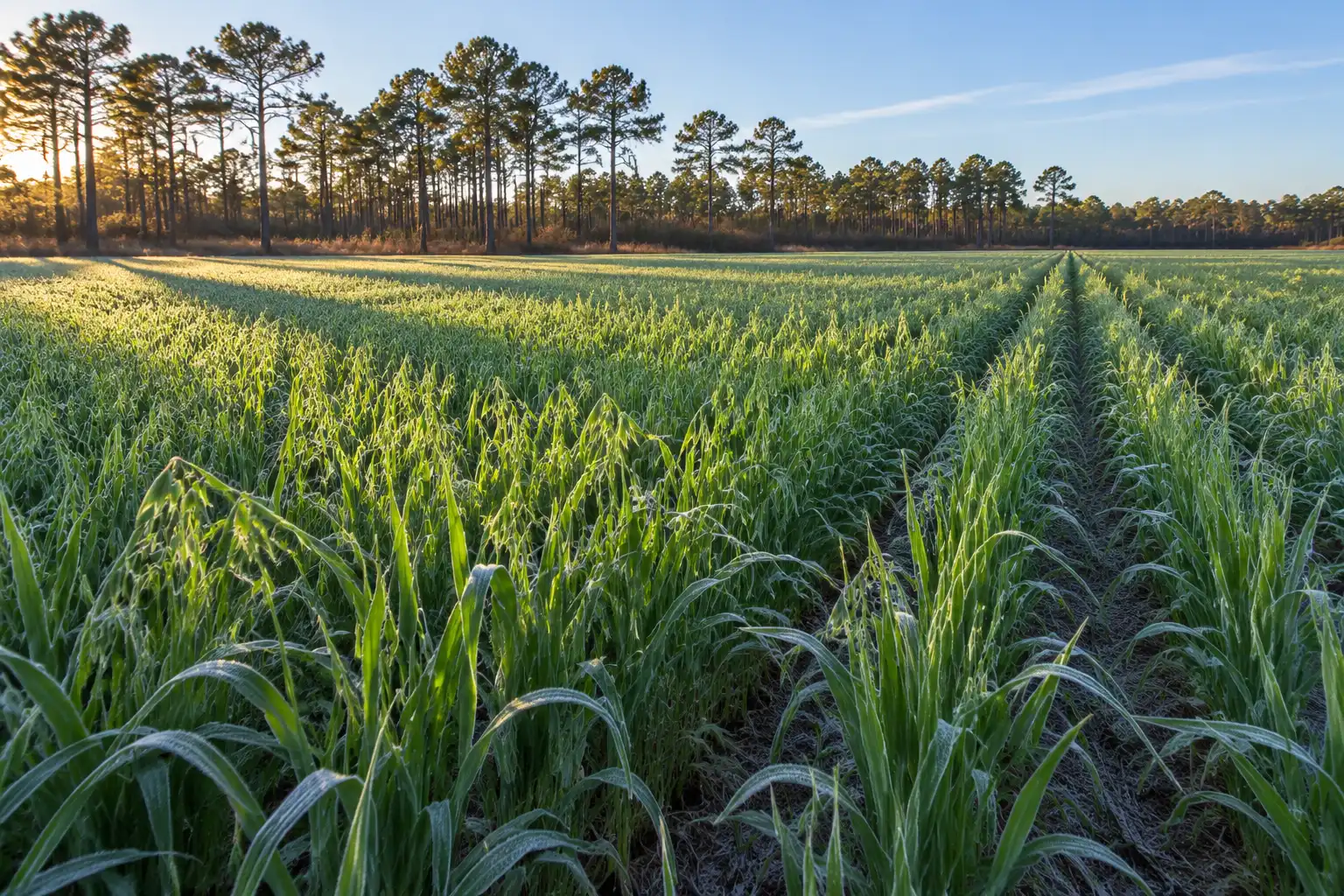
Forage oats follow a different clock than grain oats. In Texas, AgriLife forage specialist Vanessa Corriher-Olson favors September to mid October. That timing fits oats and other small grains grown for winter forage. She suggests seeding about six weeks before your average first frost. Waiting past the frost date reduces forage yield potential.
On the Texas High Plains, Texas A&M AgriLife suggests late-winter seeding of medium to long maturity oats for hay. That window opens the first week of February in the lower South Plains. It closes near the end of February at the top of the Panhandle. However, Trostle notes that oats planted this late have almost no grain yield potential. Treat them as forage only.
Farther north, oats for hay or as a companion crop go in with the spring grain window. If you are underseeding alfalfa or clover, Iowa State University Extension suggests finishing cool-season forage seeding before May 1. Also, NDSU Extension suggests two-thirds of the normal oat rate for a companion crop seeded early. Use the full rate when seeding late.
Planting Oats as a Fall Cover Crop
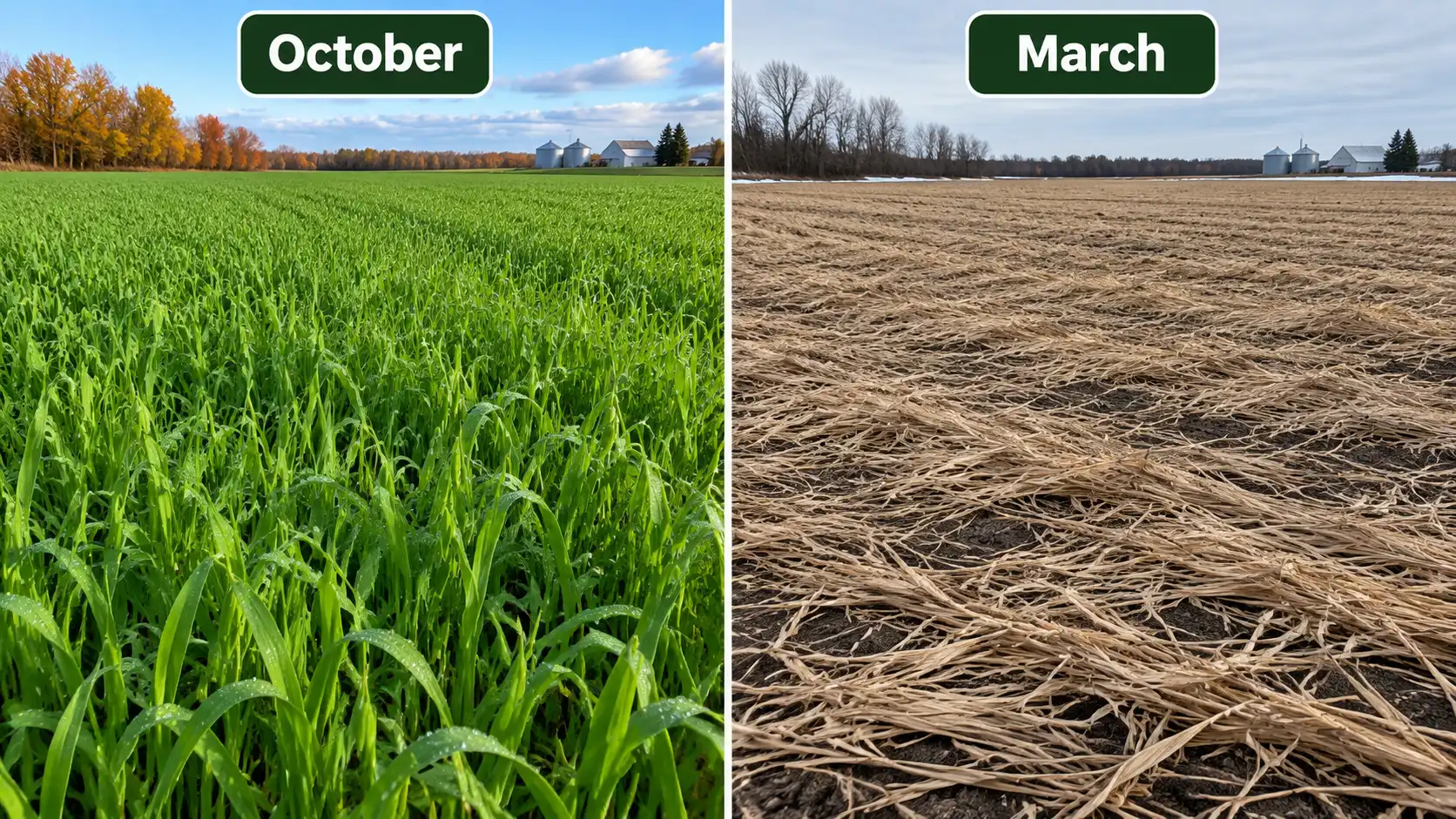
Across the North, oats make a convenient fall cover because they winterkill. The University of Minnesota Extension says oats tolerate light frosts but die below 5°F. That means no spring termination pass.
Timing is tight, though. Minnesota Extension says oats can be fall-seeded reliably until September 12 in southern Minnesota. In the north, the cutoff is September 7. Seeding several weeks later is possible, but a freeze or dry soil may cut establishment.
Minnesota’s suggested seeding rates are:
- Drilled: 30 to 50 pounds per acre
- Broadcast: 40 to 70 pounds per acre
- Aerial: 53 to 88 pounds per acre
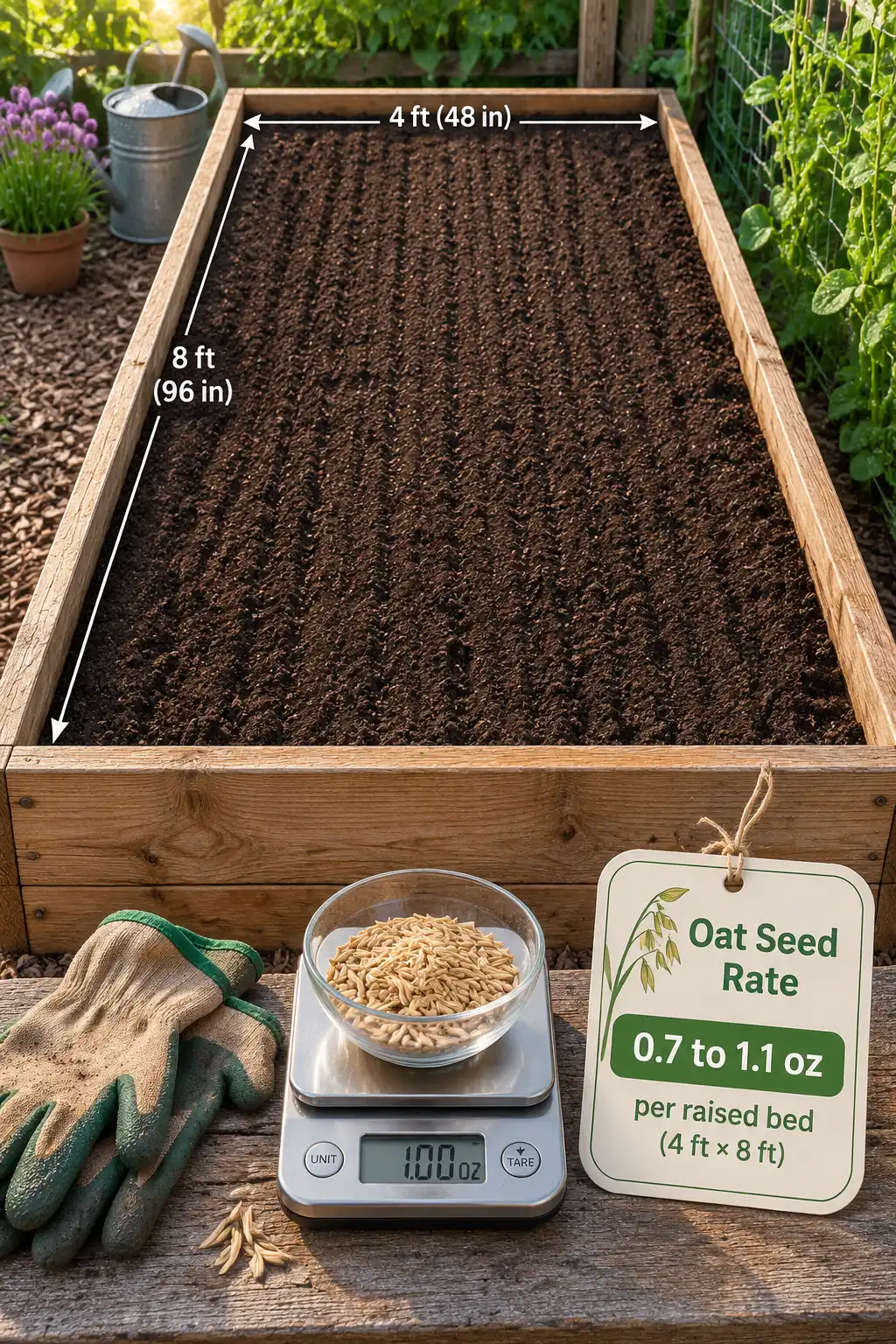
For a garden, the broadcast rate equals about 0.9 to 1.6 pounds per 1,000 square feet. On a 4 by 8 foot raised bed, that is roughly 0.5 to 0.8 ounces of seed.
Because the cover dies over winter, it suits fields headed for spring planting. Penn State Extension notes that winterkilled covers such as oats suit fields going to spring-seeded alfalfa, grass, or oats. No herbicide is needed.
Planting Oats in a Garden or Small Plot
Small plots follow the same timing as fields. Plant once the soil crumbles in your hand and holds near 40°F at 2 inches deep.
Next, scale the field rate to your space. NDSU’s grain rate of 60 to 90 pounds per acre equals about 1.4 to 2.1 pounds per 1,000 square feet. On a 4 by 8 foot bed, that comes to about 0.7 to 1.1 ounces of seed.
Counting seeds works, too. NDSU’s base of 1 million seeds per acre is about 23 seeds per square foot. That is roughly 735 seeds across a 4 by 8 bed.
Then cover the seed 1.5 to 2.5 inches deep, as NDSU Extension recommends. Firm the soil for good seed contact.
Frequently Asked Questions
Can you plant oats in March?
Yes, if the soil is workable and holds near 40°F at seeding depth for several days. Penn State warns that early March seeding risks cold damage, seed rot, and awkward harvest timing.
Is it too late to plant oats in June?
For grain, yes, except near the Canadian border, where the University of Minnesota’s last date is early June. Elsewhere, June oats make sense only as forage or a soil-holding cover crop.
Will a frost kill emerged oats?
Usually not, because the crown stays below ground until about the 5-leaf stage. The University of Minnesota reports it survives 28°F and possibly brief dips to 22°F, so frosted leaf tips regrow.
Can you plant oats in the fall up north?
Only as a cover crop or late forage, because oats winterkill in northern states. Fall-seeded oats protect the soil until a hard freeze, then die before they can make grain.
How long do oats take to emerge?
Oats emerge in about 8 to 10 days when highs reach the 60s and nights stay near 40°F. That figure comes from the University of Minnesota, which notes colder soil slows emergence and raises damping off risk.
What soil temperature do oats need?
Oats can germinate at 35 to 40°F, according to Penn State and the University of Minnesota. For fast, even stands, Penn State suggests waiting until soil holds 45°F or warmer for about two weeks.
Do fall-planted oats need a special variety?
Yes, fall-sown oats need a winter type such as TAMO 606, per Texas A&M AgriLife. AgriLife specifically warns against fall planting longer-maturity spring types such as Hytest and Goliath in Texas.
What to Check Before You Plant
First, check soil temperature at 2 inches for several mornings, and make sure the field crumbles rather than smears. Then find your region’s optimum and last dates in the table above, and count how many days late you are. If you are past the optimum, raise the seeding rate about 1 percent per day. And if the field is new to oats, read your soil test report before you set fertilizer rates.