When to Plant Oats for Hay: Spring and Late-Summer Dates by Region
Deciding when to plant oats for hay sets tonnage, feed value, and whether the crop dries before frost. Below are regional spring and late-summer dates, variety matches, and a way to work back from your cutting date.
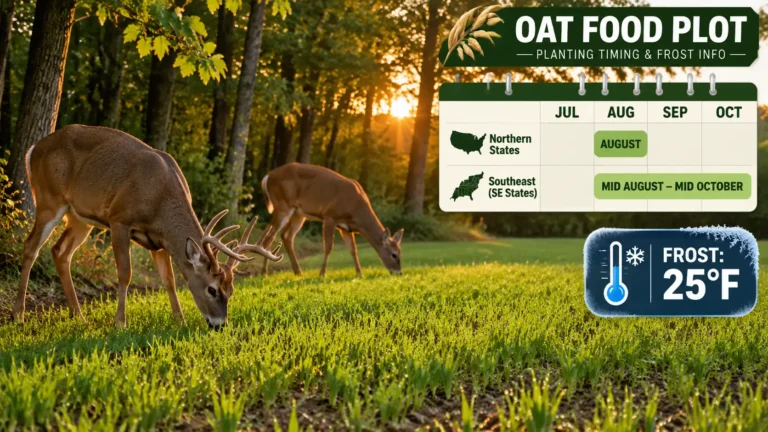
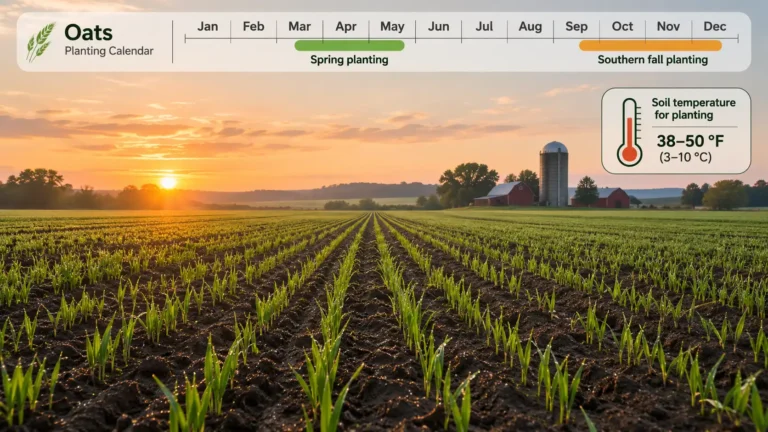
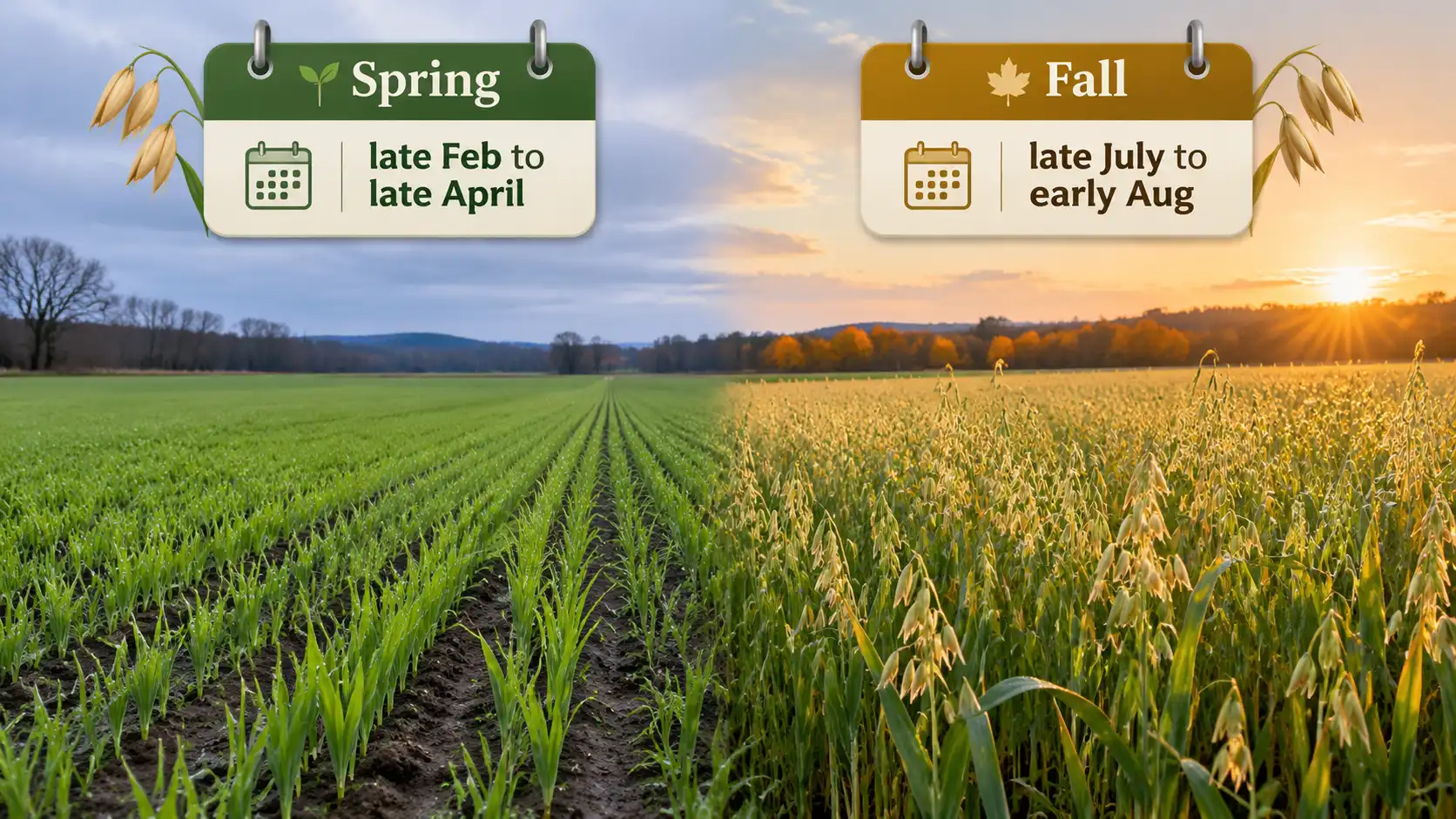
Two windows answer when to plant oats for hay. Plant in early spring, from late February in the South to late April in the North. Or plant from late July through early August for a fall cut.
When to Plant Oats for Hay: The Two Windows
Oats for hay fit two planting windows: early spring and late summer. Oats are a cool-season grain, so they grow best in mild weather. A spring seeding starts cool and finishes in early summer heat. A late-summer seeding does the reverse. It starts warm and finishes in cool fall weather.
Each window serves a different need. Spring oats give a hay cut in May, June, or July, depending on latitude. They often fill the gap before perennial hay is ready, or they nurse a new alfalfa seeding. Late-summer oats usually follow wheat harvest, corn silage, or a failed crop. They give one cut before hard frost.
The two crops also differ in feed value. University of Wisconsin Extension found fall-grown oats far higher in sugar than April-seeded oats. So the same bag of seed can make two very different hays. The sections below cover each window by region, then how to time the cut.
Spring Planting Dates for Oat Hay by Region
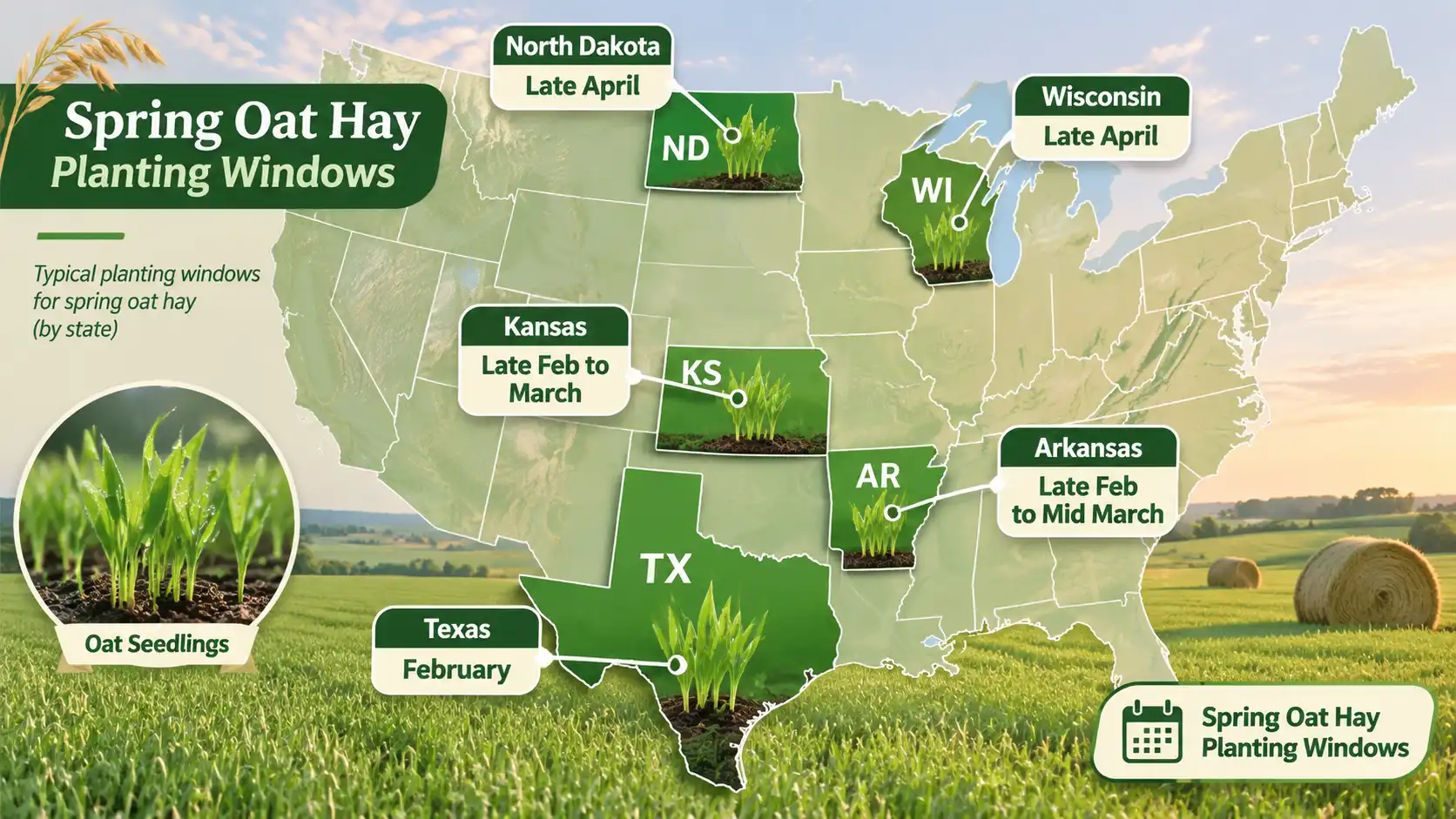
Plant spring oats for hay as soon as the soil can be worked. K-State Research and Extension states plainly that spring oats must go in early when grown for forage. Published windows run from February in Texas to late April on the northern Plains.
| Region | Spring planting window | Source |
|---|---|---|
| Texas High Plains, lower South Plains | First week of February | Texas A&M AgriLife |
| Texas Panhandle, northern edge | Near the end of February | Texas A&M AgriLife |
| Arkansas | Late February to mid-March | University of Arkansas |
| Southeast Kansas | Feb. 20 to March 15 | K-State |
| Northwest Kansas | First week of March to March 31 | K-State |
| Wisconsin | Mid-April on; April 29 gave the most milk per acre | University of Wisconsin |
| North Dakota | As early as possible; April 29 in trials | NDSU |
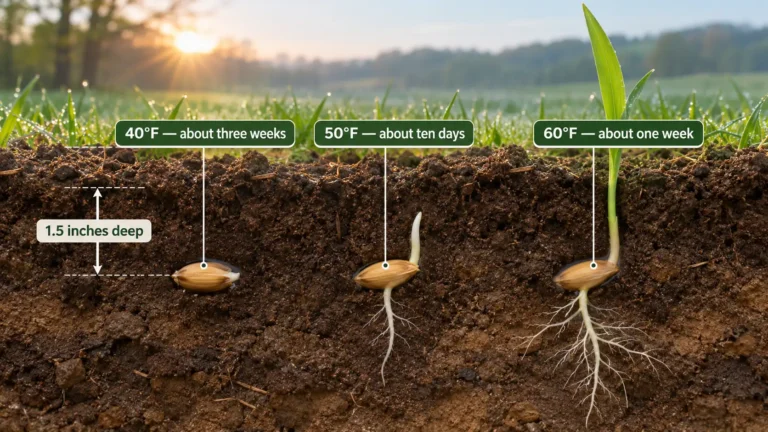
A few limits sit inside those ranges. K-State says most of Kansas should not plant spring oats later than April 10. The University of Arkansas advises north Arkansas growers to use the later part of its range. Texas A&M AgriLife adds that oats need average daily soil temperatures of 45 to 50°F for good stands.
Why Early Spring Planting Pays Off
Early seeding gives oats more cool weeks to grow leaf before heat pushes them to head. Late seeding still produces tonnage, but that hay feeds fewer pounds of milk or gain.
University of Wisconsin Extension planting-date trials from 1992 to 1995 show the pattern:
| Planting date | Oat yield (tons DM per acre) | Milk per acre (lb) |
|---|---|---|
| April 29 | 2.1 | 1,716 |
| May 14 | 1.8 | 1,526 |
| May 28 | 2.3 | 1,531 |
| June 10 | 2.0 | 1,318 |
| June 24 | 1.7 | 1,166 |
| July 12 | 1.6 | 1,148 |
Tonnage barely moved through June. Milk per acre, however, fell by about a third between the April and July seedings. That loss is forage quality, not yield, so it is easy to miss if you only count bales.
Southern trials show a sharper yield penalty. The University of Arkansas found that late-March plantings produced about two-thirds the dry matter of late-February or mid-March plantings. In other words, a delay of a few weeks can cost a third of a southern crop.
Late-Summer Planting Dates for Fall Oat Hay
For fall hay, plant oats from mid-July through early August in the North. Southern windows shift later, into September and early October.
| Region | Late-summer window | Source |
|---|---|---|
| Wisconsin | Mid-July through the first week of August | University of Wisconsin |
| Ohio | About Aug. 1, within the first half of August | Ohio State |
| Kansas | By early August for full tonnage | K-State |
| Arkansas | Late August to early September | University of Arkansas |
| East Texas | About six weeks before average first frost | Texas A&M AgriLife |
Ohio State University Extension has worked with summer-planted oats since 2002. That work found Aug. 1 the best date for forage yield. It also gave the most total TDN per acre. K-State reports 1 to 2 tons per acre under good conditions, with less tonnage as planting slips past early August.
The penalty for waiting grows fast. In University of Arkansas trials, moving planting from Aug. 31 to Sept. 22 cut fall dry matter by about half. Waiting until Oct. 13 halved it again.
Southern fall dates come mainly from grazing and dual-purpose recommendations. The Arkansas and Texas guidance cited here covers fall forage in general, not hay alone. So use those windows as a starting point, and confirm local timing with your county extension office.
Why August Oats Grow Differently
Oats need long days to flower. University of Wisconsin Extension explains that a late-summer planting disrupts that long-day trigger, so plants mature more slowly. Days shorten while the crop grows, which keeps it leafy longer.
The effect is large. After an Aug. 1 planting, the early grain-type oat Dane showed a seedhead by Oct. 1. Meanwhile, the forage-type ForagePlus never moved past boot stage through mid-November.
Fall oats also store more sugar. In Wisconsin research, August-planted oats carried 61% more water-soluble sugar in leaves and 330% more in stems than April-planted oats. That sugar lifts energy value. Early-August ForagePlus, for example, held about 66% TDN from Oct. 1 to Nov. 15. Dane and Ogle settled near 55%.
There is a catch. UW notes that oats already too mature when cold weather arrives will not build that sugar. Its rule of thumb is boot stage around Oct. 15, though the date shifts with cultivar and year.
Match the Oat Variety to the Planting Date
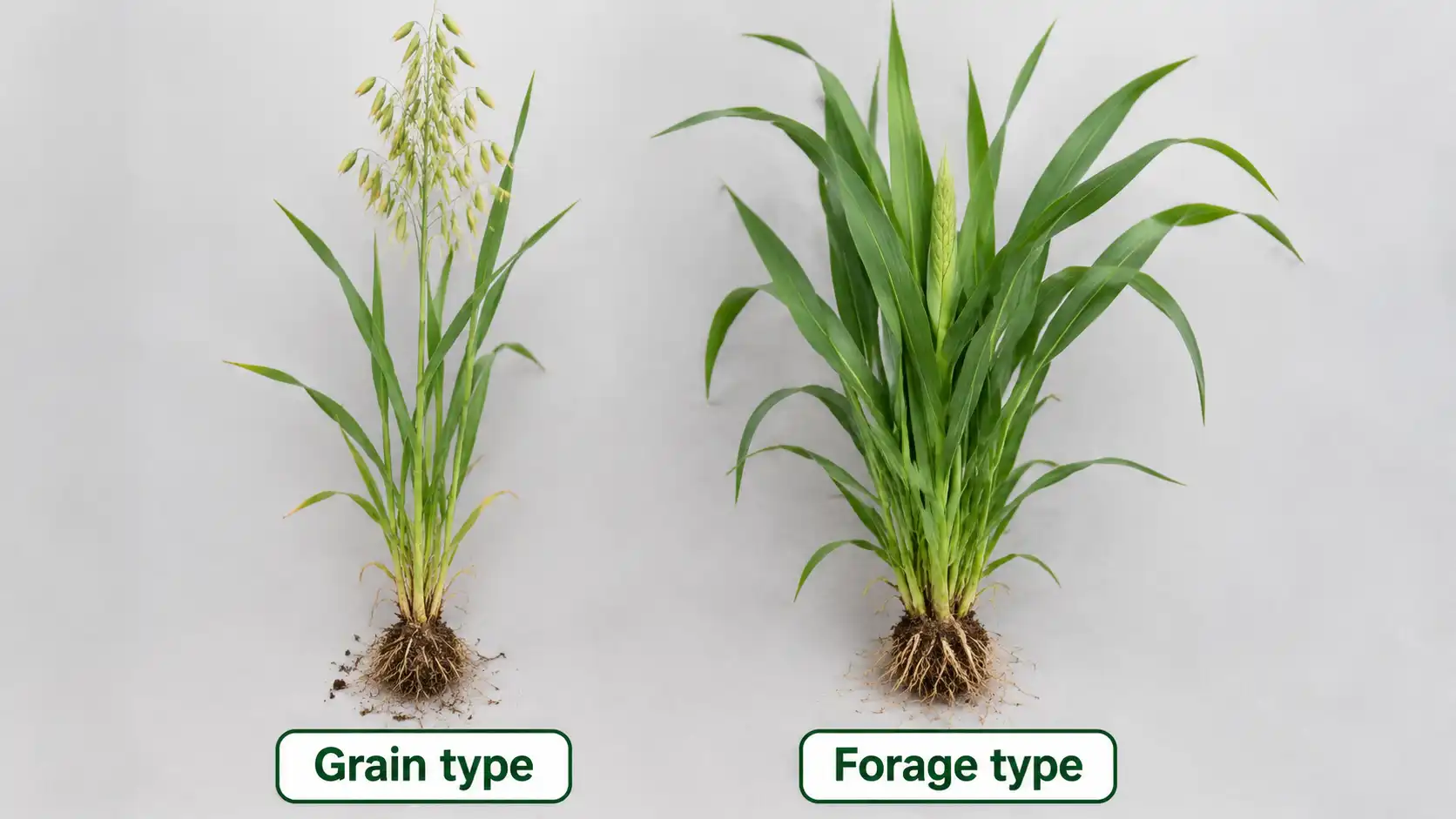
Variety choice changes with the calendar. A late-maturing forage oat wins early, but an early grain oat wins once planting runs late.
| Planting situation | Variety type | Named examples | Source |
|---|---|---|---|
| Mid-July to first week of August, Upper Midwest | Very late-maturing forage type | ForagePlus | University of Wisconsin |
| After the first week of August, Upper Midwest | Earlier-maturing grain type | Dane, Ogle | University of Wisconsin |
| Late-winter seeding for hay, Texas High Plains | Longer-maturity spring oats | Hytest, Goliath, EverLeaf 126, Harrison | Texas A&M AgriLife |
Wisconsin research found ForagePlus likely maximizes yield when planting runs as late as the first week of August. Past that point, earlier grain types will likely yield more, since a slow-maturing oat runs out of warm days.
Texas A&M AgriLife adds a clear warning about its longer-maturity spring oats: do not plant them in the fall. In Lubbock testing, longer-maturity varieties yielded more forage, especially for a one-time hay harvest.
How to Work Back From Your Cutting Date
Pick the week you want to cut, then count backward. That way, harvest lands where your labor and equipment are free.
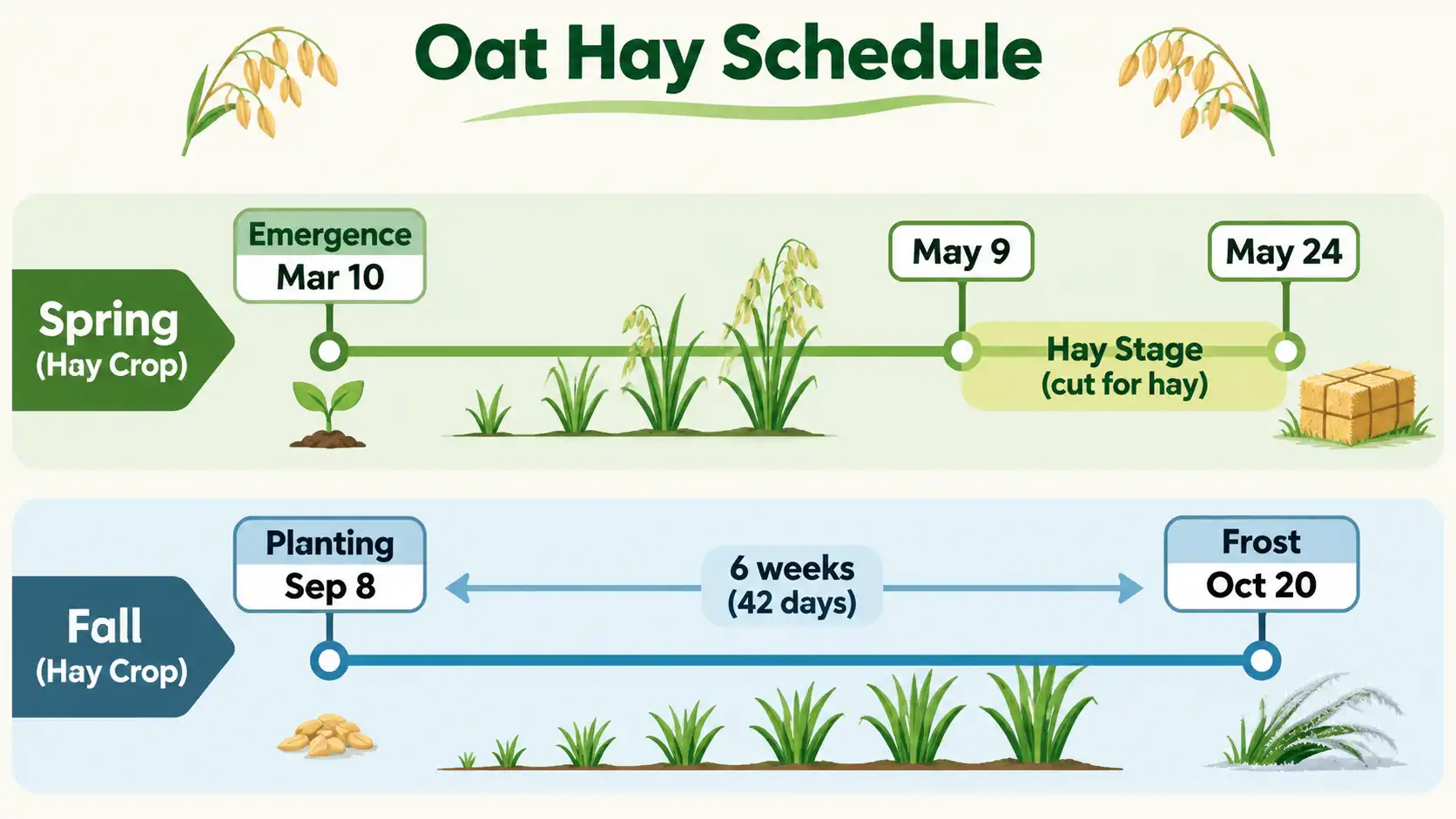
Spring calculation. The University of Arkansas says spring-planted stands mature 60 to 75 days after germination. It recommends cutting hay at late boot to early heading.
- Choose your target cutting week.
- Subtract 60 to 75 days to find the emergence date you need.
- Plant early enough to reach that emergence date.
For example, oats that emerge March 10 reach that point between about May 9 and May 24.
Northern crops can run a little longer, especially to soft dough. In NDSU Extension’s Minot oat hay trials, an April 29 planting reached soft dough on July 19, 81 days later. A May 28 planting reached soft dough Aug. 11, after 75 days. Boot stage comes earlier than either date.
Fall calculation. Texas A&M AgriLife recommends planting cool-season forages about six weeks before your average first frost. In East Texas, where frost averages near Nov. 15, that puts planting in early October.
For example, an average first frost of Oct. 20 points to planting near Sept. 8. However, the six-week rule comes from East Texas. Northern growers should use the Wisconsin and Ohio dates instead.
Seeding Rate and Fertility for Oats Grown as Hay
Seed oats for hay heavier than for grain. K-State recommends a rate 25 to 50% above the grain rate when the crop goes for hay or silage.
Published forage rates differ by region and method:
- University of Wisconsin Extension: 70 to 90 lb per acre, or about 2.2 to 2.8 bushels at 32 lb per bushel. Use the low end early and the high end after mid-May.
- Ohio State University Extension: 80 to 100 lb per acre, no-tilled in late summer.
- University of Arkansas: 90 to 120 lb per acre.
These figures do not conflict. The higher rates come from late and fall seedings, and NDSU Extension notes that oats tiller less when seeded late. Also, cut the rate by about 30% if you underseed alfalfa, per UW.
Nitrogen depends on what grows with the oats:
- UW: 40 lb N per acre seeded alone, 20 lb as a companion crop, and none after a manure application.
- Ohio State: 40 to 50 lb per acre for late-summer oats.
- University of Arkansas: 60 lb per acre at planting for fall oats.
Base the final rate on a soil test. Reading your soil test report shows what the field already holds before you buy fertilizer. For the N itself, 46-0-0 urea is a common, simple source. Keep in mind that extra N also raises nitrate risk, covered below.
Seed and Nitrogen for a Small Plot or Raised Bed
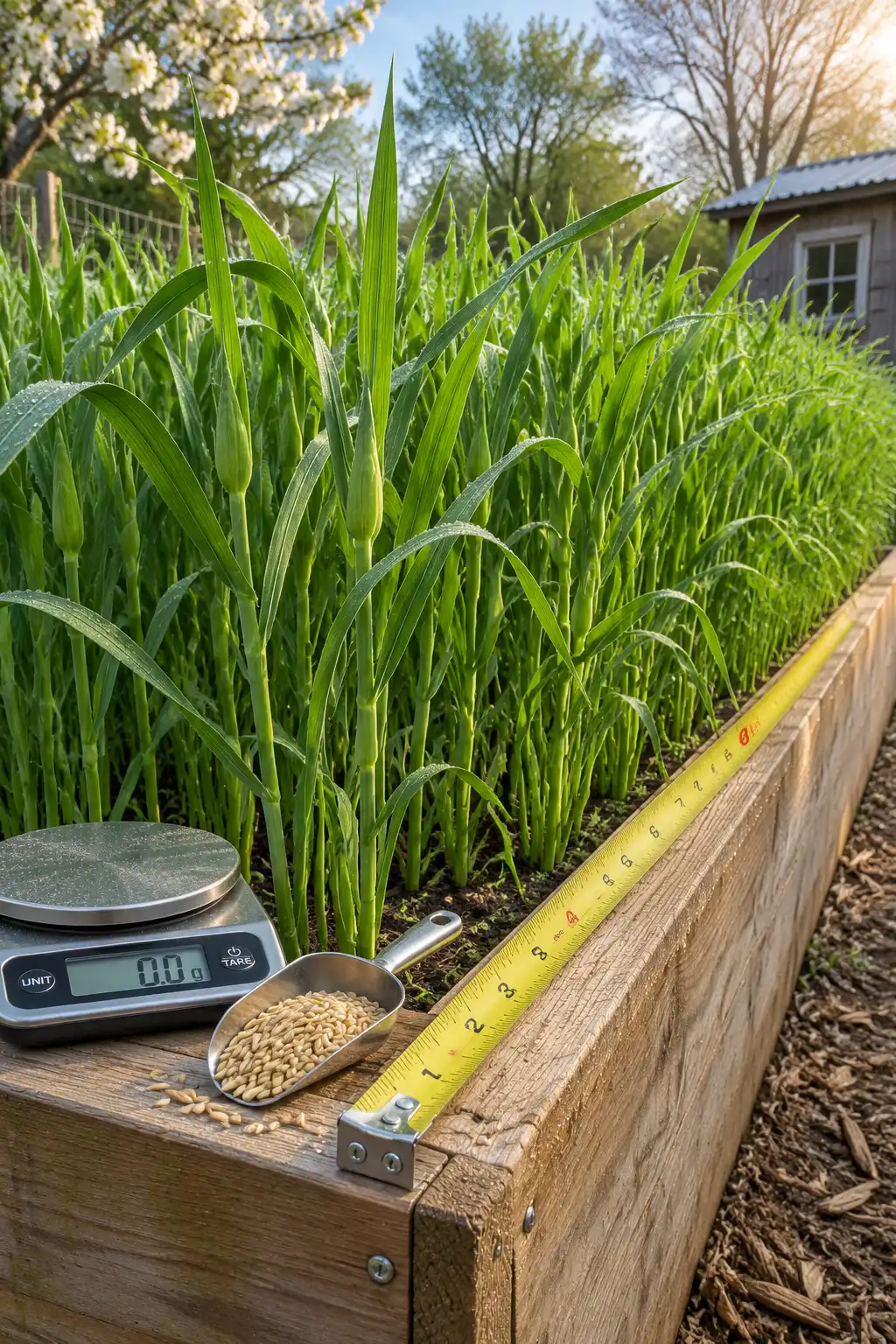
Per-acre rates mean little on a backyard plot. Here is the Wisconsin rate scaled down:
| Area | Oat seed (70 to 90 lb per acre) | N at 40 lb per acre | As 46-0-0 urea |
|---|---|---|---|
| 1 acre | 70 to 90 lb | 40 lb | 87 lb |
| 1,000 sq ft | 1.6 to 2.1 lb | 0.9 lb | 2.0 lb |
| 4 by 8 ft bed | 0.8 to 1.1 oz | 0.5 oz | 1.0 oz |
UW’s late-boot yield is 1.5 to 2.5 tons of dry matter per acre. On 1,000 square feet, that comes to roughly 70 to 115 pounds. Compare that figure with what your animals eat before you size the plot.
When to Cut Oats for Hay: Boot, Heading, or Dough
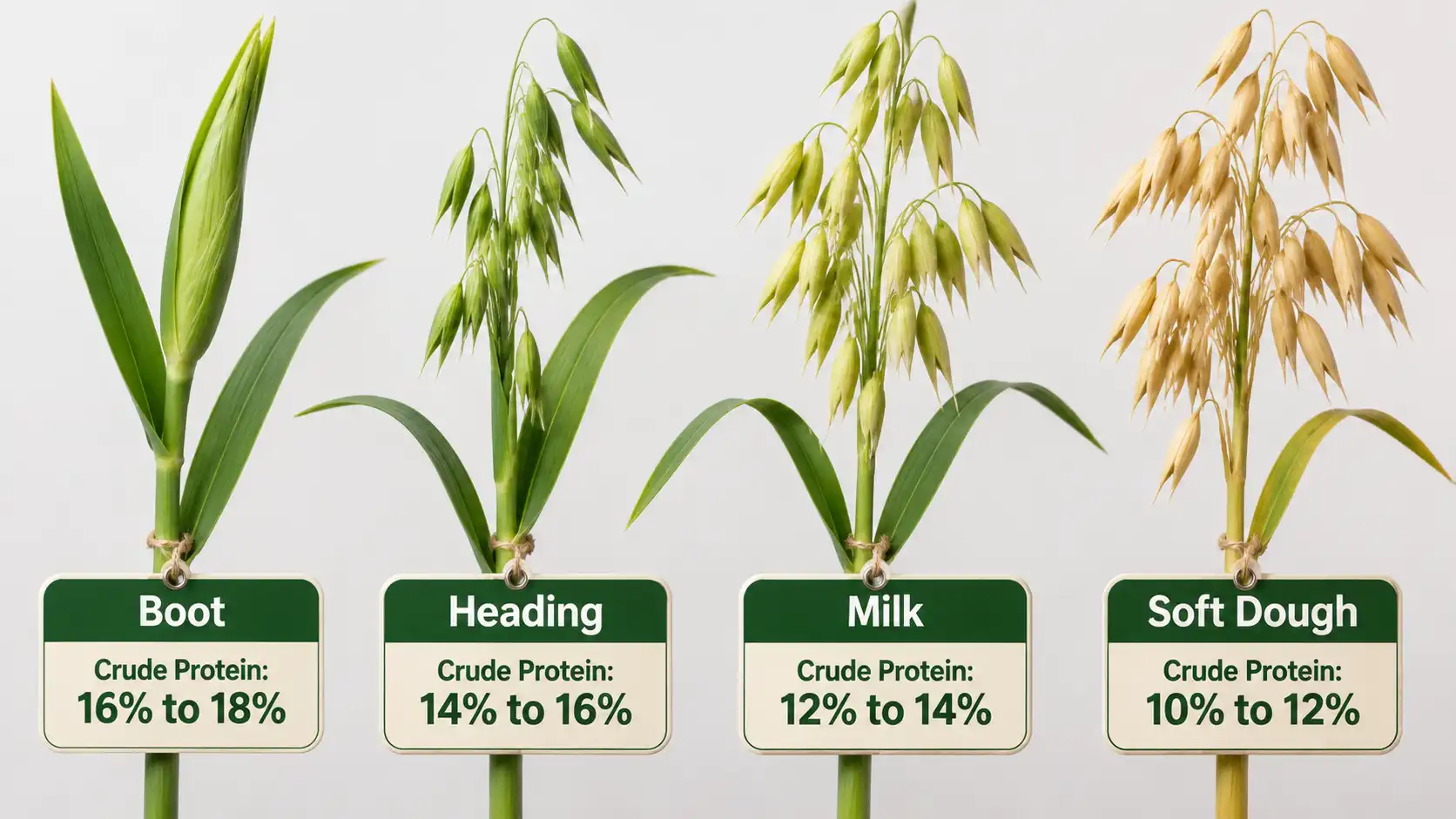
Cut at late boot for top feed value, or at soft dough for the most tonnage. K-State calls late boot the highest-quality stage, though early milk is a popular cutting time.
University of Wisconsin Extension lists these oat forage values by stage:
| Harvest stage | Crude protein | NDF |
|---|---|---|
| Boot | 16 to 18% | 52 to 54% |
| Heading | 14 to 16% | 56 to 58% |
| Milk | 12 to 14% | 59 to 61% |
| Dough | 10 to 12% | 59 to 61% |
Yield moves the other way. UW puts late-boot yields at 1.5 to 2.5 tons of dry matter per acre. Milk and dough stages reach 3.0 to 4.0 tons.
So match the stage to the animal. UW recommends late boot for lactating dairy cows. For heifers, dry cows, and beef cattle, its oat and pea guidance moves the cut to soft dough. For reference, K-State lists dough-stage oat hay at 54 to 58% TDN and 10 to 12% crude protein.
Watch the field closely. UW notes that oats can move from mid-boot to milk in under two weeks. If the stages are new to you, check how oat heads emerge and mature. That helps you spot boot before heads show.
Drying Fall Oat Hay Before Frost
Fall oats stay wet, so dry hay is harder to make in October. University of Wisconsin Extension found that oats planted Aug. 1 at Marshfield stayed below 30% dry matter until Nov. 1. That means the standing crop held more than 70% moisture well into fall.
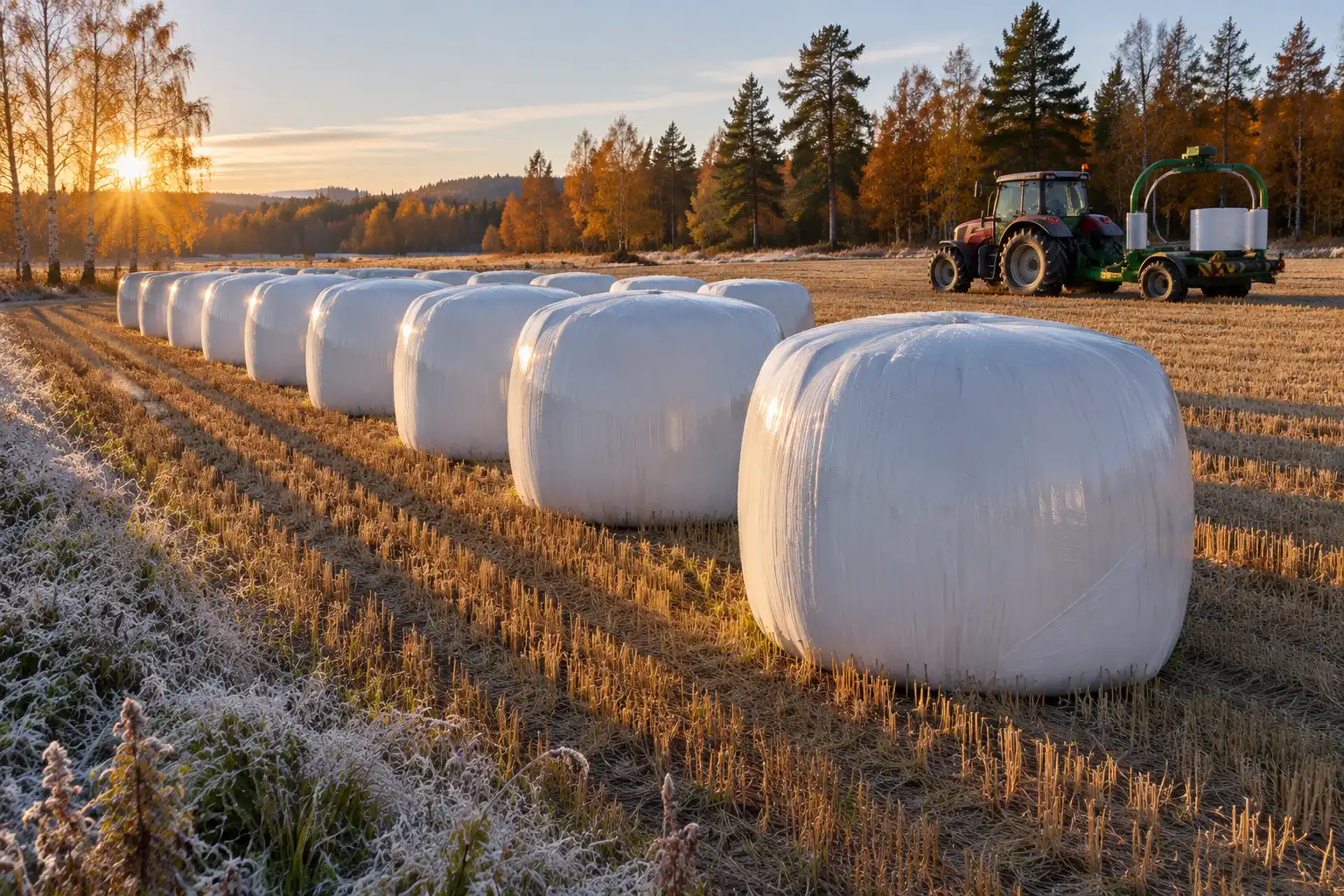
Short, cool days slow curing on top of that. If drying weather looks thin, baleage or silage is the safer plan. Ohio State notes that late-summer oats work for grazing, baled hay, or silage. For ensiling, UW advises wilting small-grain forage to 55 to 65% moisture, depending on storage type.
Frost sets the outer limit. University of Arkansas data show unhardened oat leaves freeze at 28°F. After four weeks of cold hardening, spring oats took severe damage at 18°F. The same publication says most references cite prolonged temperatures at or below 20°F as the injury point. Spring oats winterkill in cold weather, which is one way oats differ from wheat as a fall-seeded crop.
Arkansas also notes that late-summer oats with visible heads by mid to late November can serve as standing hay. That gives you a grazing fallback when baling weather never comes.
Nitrate Risk in Oat Hay
Oat hay can carry toxic nitrate, so test it before feeding. K-State Research and Extension says oat hay is more likely to run high in nitrate than other small-grain hays. Drought, hail, and late frosts are the usual triggers.
Fertility adds to the risk. Ohio State University Extension notes that nitrogen fertilizer or manure raises nitrate in forage, especially when growth is slow. Nitrate levels also change little as hay dries. So the level at mowing is the level in the bale.
NDSU Extension suggests diluting oat hay with low-nitrate feed when tests show 1,500 to 3,500 ppm nitrate nitrogen. In its example, 2,500 ppm oat hay fed as one-fourth of the ration brings the ration to 625 ppm.
Two field habits help. First, Ohio State reports that mowing late in the afternoon on a sunny day can lower nitrate levels. Second, use the hay N rates above rather than a rate built for a grain crop.
Planting-Date Mistakes That Cost an Oat Hay Crop
Each of these mistakes shows up in extension guidance on oat forage.
Planting after atrazine. K-State warns that oats are fairly sensitive to atrazine. Carryover after corn or sorghum can kill seedlings, which matters most for August seedings. Check the prior herbicide label for rotation intervals.
Missing the spring cutoff. Late spring seedings head in summer heat. In Kansas, K-State advises against planting spring oats after April 10.
Seeding into dry August soil. K-State notes spring oats are not drought tolerant and establish poorly in very dry soil. Wait for moisture rather than dusting seed in.
Using a forage oat in mid-August. UW data show slow-maturing forage types lose their edge after early August. Switch to an early grain type instead.
Fall-planting long-maturity spring oats in Texas. Texas A&M AgriLife says not to fall-plant its suggested longer-maturity hay oats.
Cutting too late. Oats move from mid-boot to milk in under two weeks, per UW. As a result, a rainy week can drop a dairy-quality crop to beef quality.
Seedbed prep, depth, and drill settings are covered in planting oats step by step.
FAQs
Can you plant oats for hay in June?
Yes, but expect lower feed value. In University of Wisconsin trials, a June 10 seeding still made 2 tons per acre, but milk per acre fell 23% below an April 29 seeding.
How late can you plant oats for fall hay?
In the Upper Midwest, aim for the first week of August, since UW Extension found yields drop sharply by mid-August. Farther south, University of Arkansas guidance runs later, into early September.
Will fall-planted oats survive the winter?
Usually not, so plan on a single fall cut. Spring oats winterkill in cold weather, per the University of Arkansas, though K-State notes some fall-planted spring oats may survive very mild winters in southern Kansas.
How long after planting can you cut oats for hay?
Plan on about 60 to 75 days from germination, the maturity window the University of Arkansas gives for spring oats. NDSU Extension trials at Minot, North Dakota, reached soft dough 75 to 81 days after planting.
Should you plant peas with oats for hay?
Peas raise protein but seldom add yield, according to University of Wisconsin Extension. UW suggests 30 to 45 pounds of oats per acre with about 4 pea seeds per square foot, roughly 50 pounds of Trapper peas.
How much hay does an acre of oats make?
Expect 1.5 to 2.5 tons of dry matter per acre at late boot, rising to 3 to 4 tons at milk or dough, per UW Extension. K-State puts fall oats at 1 to 2 tons.
Putting This Into Practice
Pick your window first, then your variety. For spring hay, plant as soon as the field can be worked and count 60 to 75 days to harvest. For fall hay in the North, plant near Aug. 1. Use a forage type only through the first week of August. In the South, plant about six weeks before first frost. Before seeding, check the field’s herbicide history. After cutting, test the hay for nitrate before you feed it.