When to Plant Wheat in Texas: Dates by Region and End Use
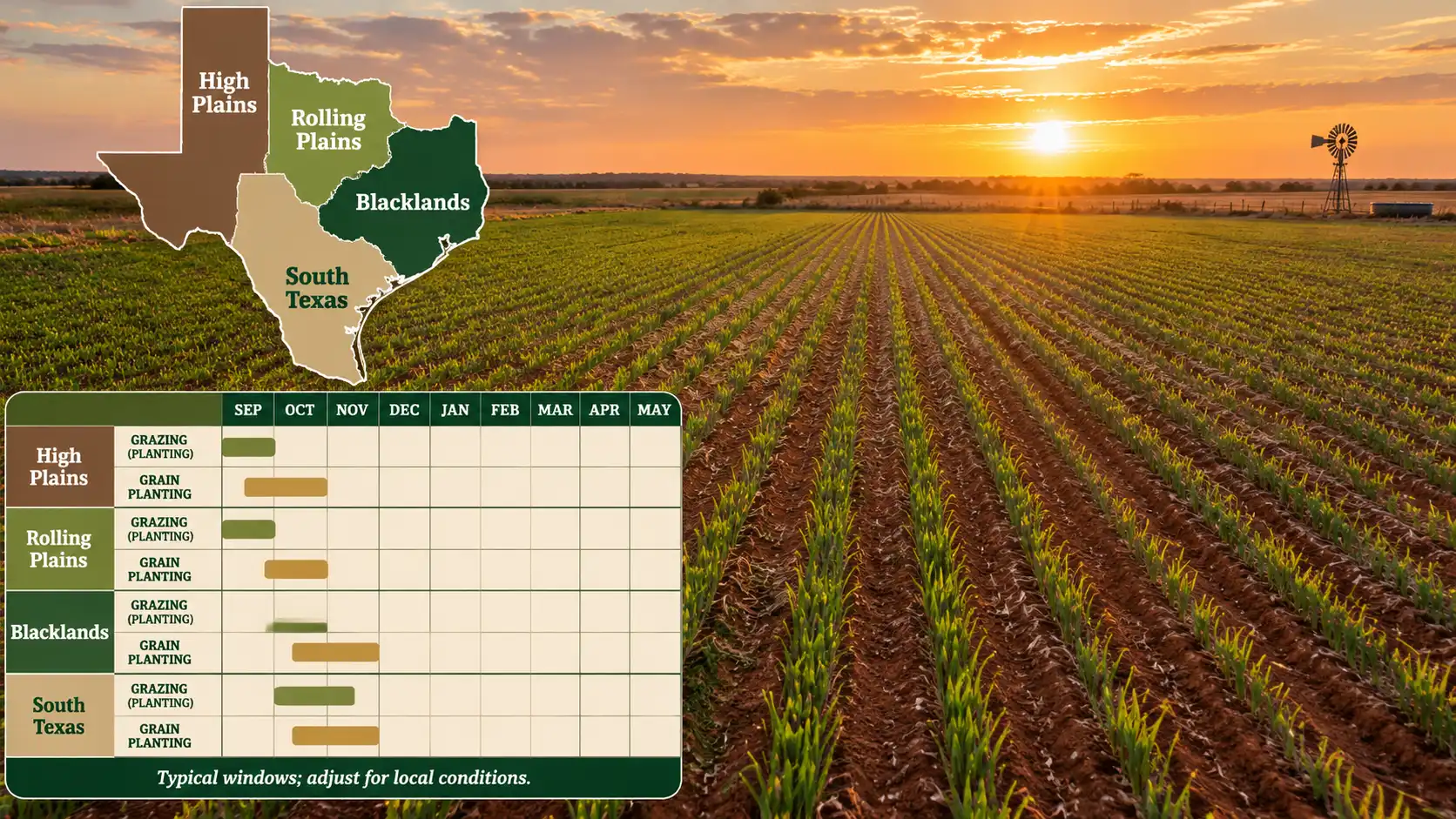
Texas spans four wheat regions, and each one plants on its own clock. So the answer to when to plant wheat in Texas depends on two things: where your field sits, and whether the crop is headed for grain, grazing, or both.
Plant wheat in Texas for grain from early October in the Panhandle to mid-November in the Blacklands and South Texas, per Texas A&M AgriLife Extension. Grazing wheat goes in four to six weeks earlier, from late August into early October.
Texas Wheat Planting Dates by Region
Grain planting dates move about six weeks later from the northern Panhandle to South Texas. The table below gathers windows published by Texas A&M AgriLife Extension specialists Calvin Trostle, Clark Neely, and Brandon Gerrish.
| Region | Grazing or dual-purpose | Grain only | Getting late |
|---|---|---|---|
| Northern Panhandle (above the Canadian River) | Sept. 1 to 15 | Around Oct. 1, irrigated | Early December, at about 75% of yield potential |
| Northwest High Plains (Muleshoe, Hereford) | Sept. 1 to 15 | Oct. 7 to 10 | Early December |
| South Plains (Lubbock area) | Sept. 1 to 15 | Around Oct. 20 | After Nov. 15 in some years |
| Rolling Plains | About 6 weeks before grain dates | Mid-October to mid-November | After Dec. 1 |
| Blacklands and Central Texas | About 6 weeks before grain dates | Mid-October to mid-November | After late November |
| South Texas | By early October | Early to mid-November | After late November |
Trostle’s High Plains grain dates assume irrigated wheat that will not be grazed. For dryland fields, he also targets Oct. 20. Neely gives the mid-October to mid-November grain range for the Rolling Plains and Blacklands. Gerrish supplies the South Texas figures.
Jourdan Bell, AgriLife agronomist in Amarillo, calls the Panhandle window broad. Growers there plant from late August for grazing to early December for grain.
Why Grain Wheat and Grazing Wheat Get Different Dates
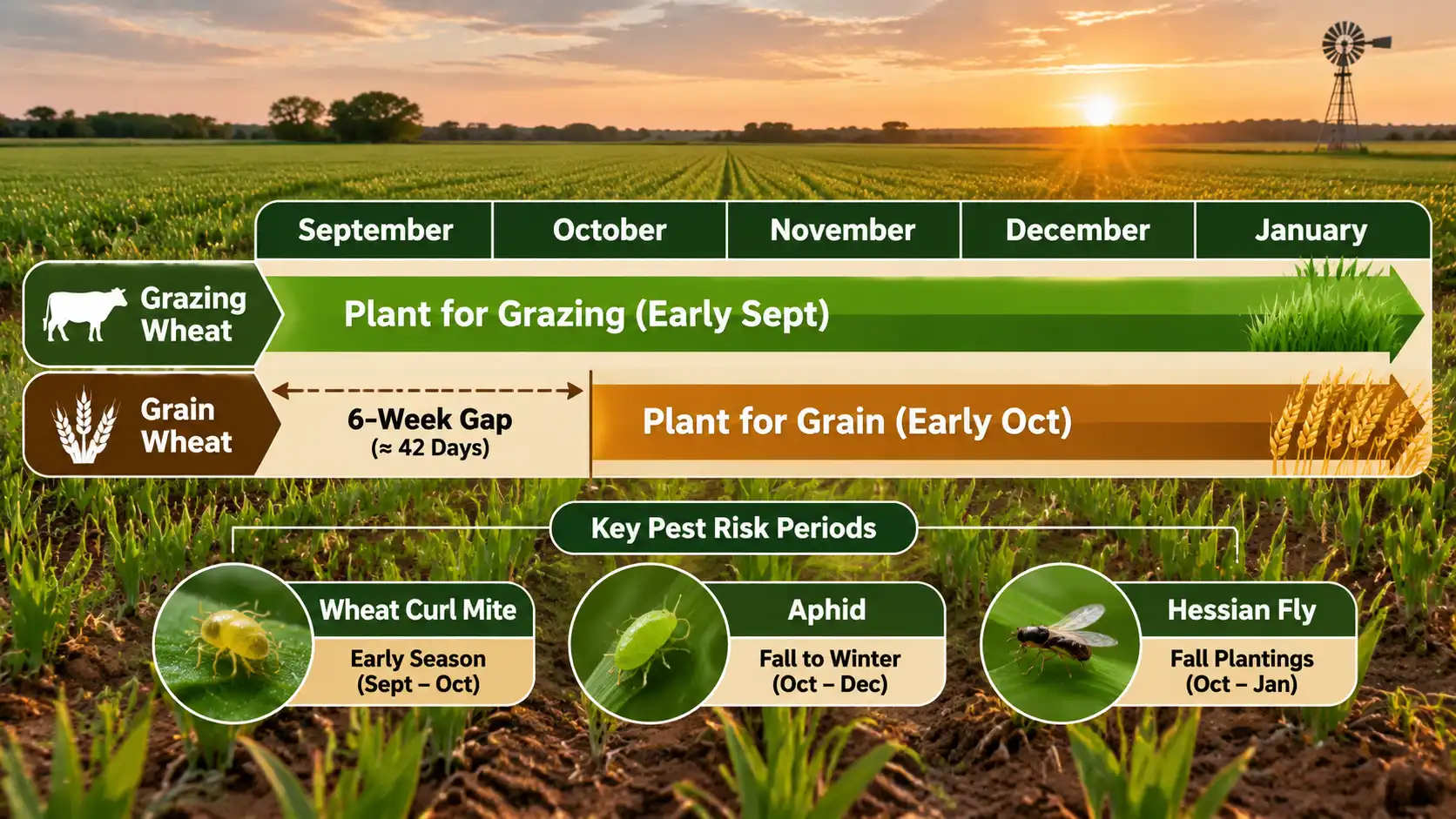
Grazing wheat needs fall growth, while grain wheat needs to dodge fall pests. AgriLife’s Winter Wheat Management Calendar puts forage and dual-purpose planting about six weeks ahead of grain-only wheat. Trostle uses a range of four to six weeks.
That head start has a cost. The same calendar flags two virus risks in early-planted forage wheat. Wheat curl mites spread wheat streak mosaic, and aphids spread barley yellow dwarf. Early seeding also raises the risk of Hessian fly and fall armyworm damage.
Heat makes it worse. Charlie Rush, an AgriLife Research plant pathologist in Amarillo, found a related problem. Bred-in wheat streak mosaic resistance can break down above 75°F. As a result, an early September seeding may lose the very trait you paid for.
Hay and silage wheat follow grain dates, according to Trostle. Dual-purpose wheat follows grazing dates instead. The same trade-off shapes winter wheat planting windows farther north, where Kansas uses a fixed pest-management date.
Grazing Cutoff for Dual-Purpose Fields
Pull cattle when the first stem joint appears. AgriLife’s calendar ties that point to Feekes 6. Grazing past it can remove the growing point and drop that stem’s grain yield to zero, Trostle warns.
In the High Plains, growers usually stop grazing around March 15 to go to grain. However, that date comes earlier the farther south and east you farm, he notes.
High Plains and Panhandle Windows
Plant High Plains grain wheat in October, and plant later as you move south. Trostle sets Oct. 1 as the target for irrigated grain wheat above the Canadian River. Around Muleshoe and Hereford, he moves it to Oct. 7 to 10. In Lubbock County, his single best date is Oct. 20.
Dryland fields follow moisture more than the calendar. Trostle’s ideal dryland date is Oct. 20. Still, if a good rain arrives around Sept. 25 after a dry stretch, he says planting in late September or early October can make sense.
Grazing wheat goes in much earlier. High Plains growers typically plant from Sept. 1 to 15 to get cattle onto winter forage, per Trostle.
Two regional quirks matter here. First, Hessian fly is absent from the High Plains, according to AgriLife’s Picks List, so it does not push dates back. Second, grasshoppers can. In heavy grasshopper years, AgriLife agronomists have advised waiting until after the first one or two freezes before planting.
Rolling Plains Windows
Most Rolling Plains grain wheat goes in between mid-October and mid-November, according to Neely. Even so, many growers here run dual-purpose or grazing-only systems, the AgriLife calendar notes, so September seeding is common.
Soil temperature often sets the real start date. The calendar warns that germination can be poor when wheat goes in before fall soils cool, especially in the Rolling Plains. For example, AgriLife agronomist Emi Kimura of Vernon saw this in one hot, dry fall. Soil temperature was not right for planting until the first week of October.
Hessian fly also shapes timing in parts of this region. Gerrish notes that concern over the pest pushes the best date later here and in the Blacklands. So if you plant early for grazing, choose a variety with Hessian fly resistance.
Blacklands and Central Texas Windows
Grain wheat in the Blacklands belongs in the late October to mid-November slot. Neely gives mid-October to mid-November as the usual range. However, AgriLife Extension IPM agent David Drake recommends that grain growers wait until late October or November. Later planting gives Hessian flies less chance to lay eggs.
The evidence is local. Planting date studies near Waco and Hillsboro back this up, Gerrish reports. Wheat planted the first week of October had significantly more flies per tiller than wheat planted the first week of November.
Unlike Kansas, Texas has no Hessian fly-free date. Instead, three tools carry the load: later planting, resistant varieties, and rotation. Drake advises against planting wheat after wheat in the same field. Among recent AgriLife releases, Amigos and GoWheat 9216H carry Hessian fly resistance.
Neely does not consider Blacklands wheat late until late November.
South Texas Windows
South Texas plants last. Gerrish says growers here aim for early October when they want fall forage, and early to mid-November for grain only. Neely puts the late threshold at late November. Even then, he notes, growers can plant winter wheat for spring production until mid to late December.
Mild winters raise a second question: will the crop vernalize? AgriLife small grains specialist Fernando Guillen notes that warm early growth can impede vernalization. That is the cold accumulation that pushes wheat into its reproductive stage.
That is one reason hard spring wheat appears on AgriLife’s Picks List, with entries such as LCS Trigger and Expresso. Hard red spring wheat made up 5.5% of Texas wheat acres in 2026, per USDA NASS. Spring types follow different rules, covered in our guide to spring wheat timing.
Check Soil Temperature and Moisture Before the Calendar
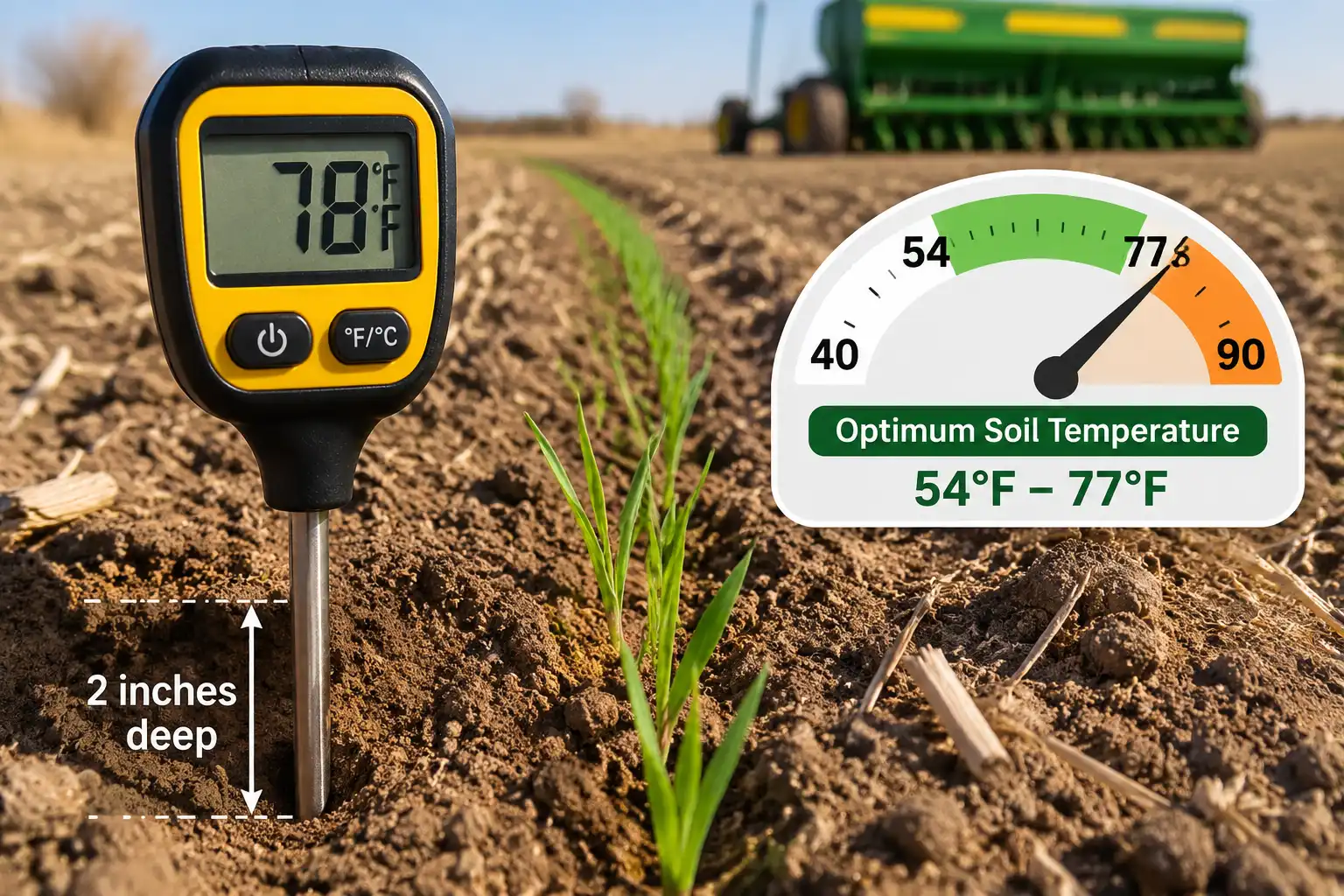
A calendar date only works if the soil cooperates. Oklahoma State University Extension puts wheat’s germination range at 40 to 99°F, with an optimum of 54 to 77°F. In western Oklahoma, it adds, soils often stay above 80 to 85°F until mid-September.
Hot soil hurts in two ways. First, some varieties hold dormancy longer in heat, a trait OSU calls high-temperature germination sensitivity. Second, Gerrish warns that planting too early into hot soils reduces germination.
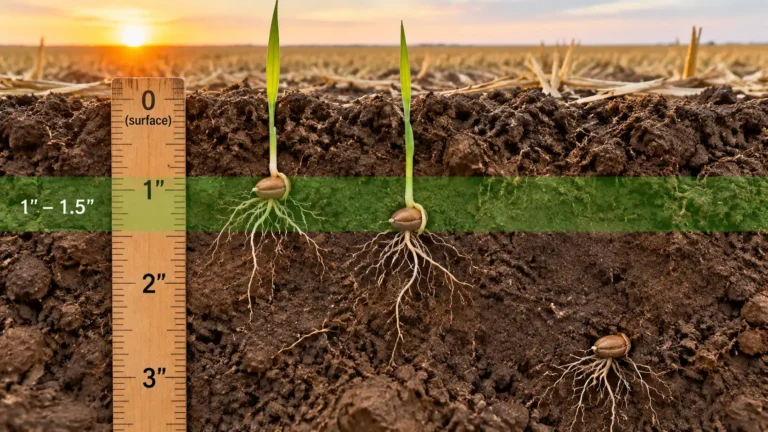
Also, do not chase moisture too deep. Most wheat varieties are semi-dwarfs with short coleoptiles, so Guillen does not recommend deep planting.
OSU offers a better fix for early fields. Dust the seed in and wait for a cool rain. That approach often gives more even emergence than planting deeper to reach moisture.
How Late Can You Plant Wheat in Texas?
You can plant winter wheat into early January in the Rolling Plains and Blacklands, per Neely. It still gets enough chill to vernalize. From late January on, he advises switching to spring wheat.
Late seeding costs yield, though. Trostle estimates that High Plains wheat drilled in early December carries about 75% of the yield potential of October-planted wheat. Late wheat also tillers less, so stands need more seed.
Crop insurance sets a hard stop. Neely has listed these final plant dates:
- Oct. 31 for most of the western Panhandle and Southern High Plains
- Nov. 30 for the eastern Panhandle
- Dec. 15 for the Blacklands and most of the Rolling Plains
- Jan. 15 for most of South Texas
Those dates can change by crop year and county. So confirm yours in the USDA Risk Management Agency actuarial documents, or with your agent, before you plant. For the national picture, see our guide to late-planted winter wheat.
Seeding Rates by Region, and When to Raise Them
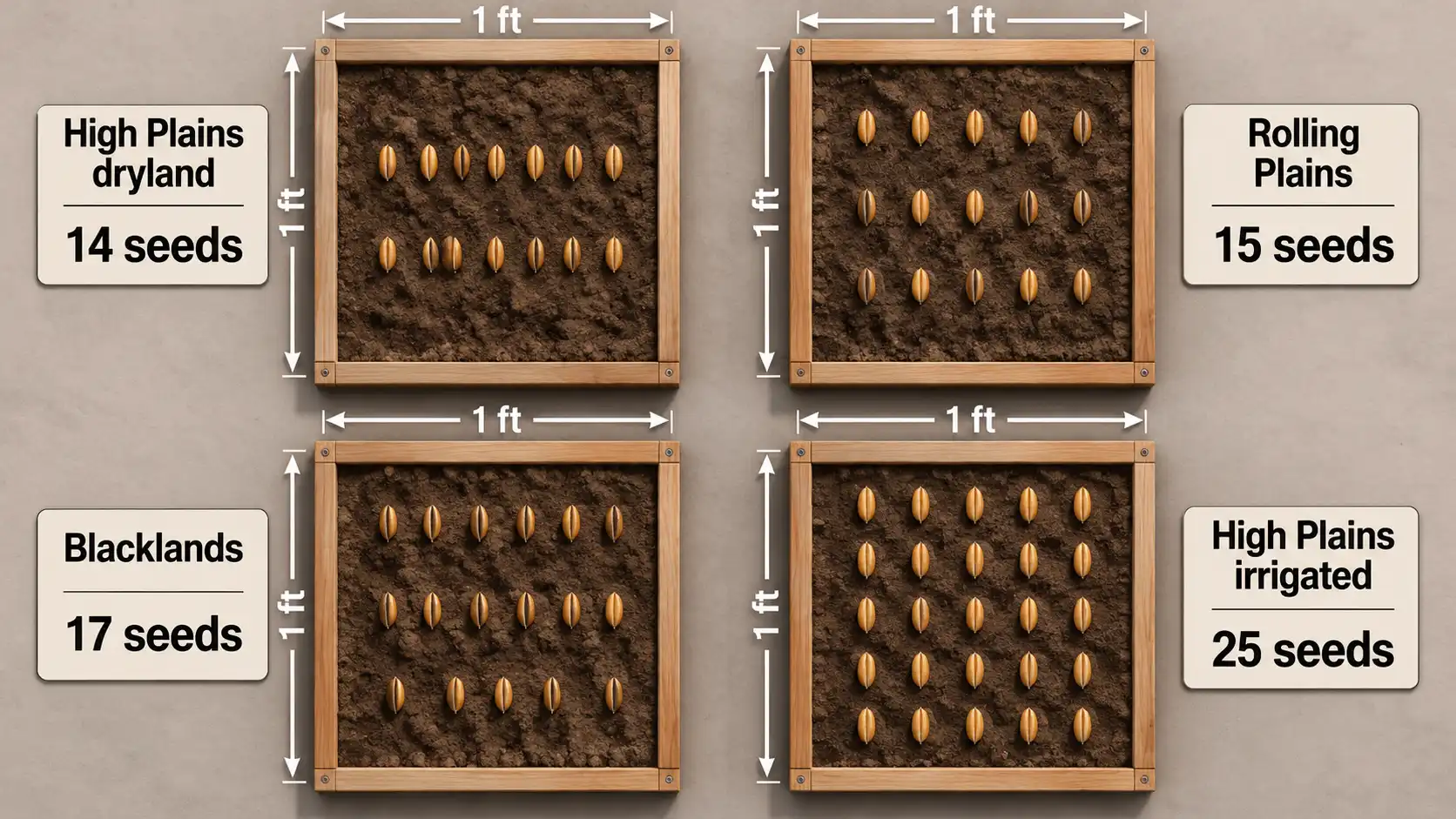
AgriLife now gives wheat seeding rates in seeds per acre rather than pounds. Gerrish lists 600,000 for dryland High Plains, 1.1 million for irrigated High Plains, 650,000 for the Rolling Plains, and 750,000 for the Blacklands.
| Region | Seeds per acre | Seeds per square foot | Pounds per acre at 15,000 seeds per pound |
|---|---|---|---|
| High Plains, dryland | 600,000 | About 14 | About 40 |
| High Plains, irrigated | 1,100,000 | About 25 | About 73 |
| Rolling Plains | 650,000 | About 15 | About 43 |
| Blacklands | 750,000 | About 17 | About 50 |
Seed size swings the pounds column. K-State Research and Extension puts the normal range at 14,000 to 16,000 seeds per pound. Some lots fall below 10,000 or top 18,000, so read the bag tag.
Late and Dual-Purpose Seeding Rates
AgriLife specialists agree that late or dual-purpose wheat needs more seed. But they differ on how much:
- Gerrish calls for at least 25% more.
- Neely suggests 30 to 60% more for late planting.
- Trostle uses about 50% more when planting slips from Oct. 20 to early December.
In practice, the low end fits dual-purpose fields planted on time. The high end fits December seeding.
Work the Late-Planting Rate for Your Field
Here is the math for a Blacklands field drilled Dec. 5, using a 50% increase:
- Start with the base rate: 750,000 seeds per acre.
- Add 50%: 750,000 × 1.5 = 1,125,000 seeds.
- Divide by germination, here 90%: 1,125,000 ÷ 0.90 = 1,250,000 seeds.
- Divide by seeds per pound from the tag, here 14,000: 1,250,000 ÷ 14,000 = about 89 pounds per acre.
Smaller plots scale the same way. On a 4 by 8 foot bed, the on-time Blacklands rate works out to about 550 seeds. At 15,000 seeds per pound, that is roughly 0.6 ounce of seed. AgriLife’s stand target is 10 to 25 plants per square foot, so expect 320 to 800 plants on that bed.
Prep Work Before the Drill Rolls
Kill the green bridge first. Gerrish advises destroying volunteer wheat and weeds two weeks before planting. Those plants harbor the wheat curl mites and aphids that spread wheat streak mosaic and barley yellow dwarf.
Next, soil sample about a month ahead, per AgriLife’s calendar, and sample nitrate to 24 inches. If the lab report is new to you, start with reading your soil test before you set rates.
The calendar sets nitrogen at 1.5 pounds per bushel of yield goal for grain-only wheat and 2 pounds for dual-purpose. Apply one-third at planting and the rest during or just before jointing. For a 50 bushel grain goal, that means 75 pounds of N, with 25 pounds at planting. On a 4 by 8 bed, 25 pounds per acre equals about 0.3 ounce of actual N. That is roughly 0.6 ounce of 46-0-0 urea.
Finally, pick the variety before you lock the date, because the variety can shift it. AgriLife releases its regional Picks List by early August. In 2026, TAM 204 became the most planted Texas variety at 6.1% of acres, per USDA NASS. Texas growers seeded an estimated 5.6 million acres of winter wheat for that crop, according to the NASS January seedings report.
Timing Mistakes and How to Spot Them
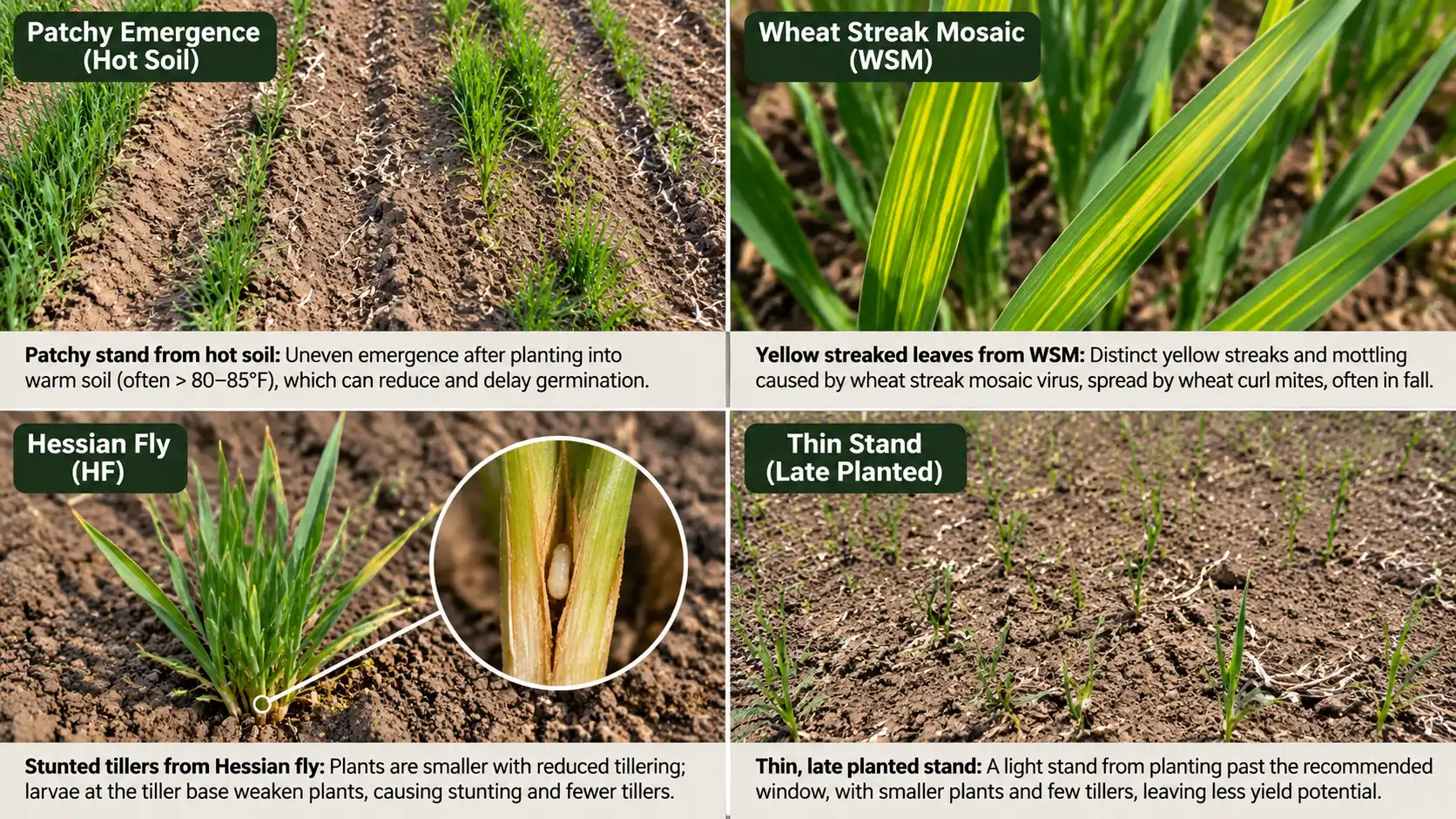
Most wheat stand problems in Texas trace back to the planting date. Here is how each one shows up:
- Patchy emergence after a September seeding. Hot soil or lingering seed dormancy is the likely cause. Neely suggests considering a replant only when stands fall below 50% of the target.
- Yellow streaked, stunted plants in fall. Suspect wheat streak mosaic, especially in early fields next to volunteer wheat.
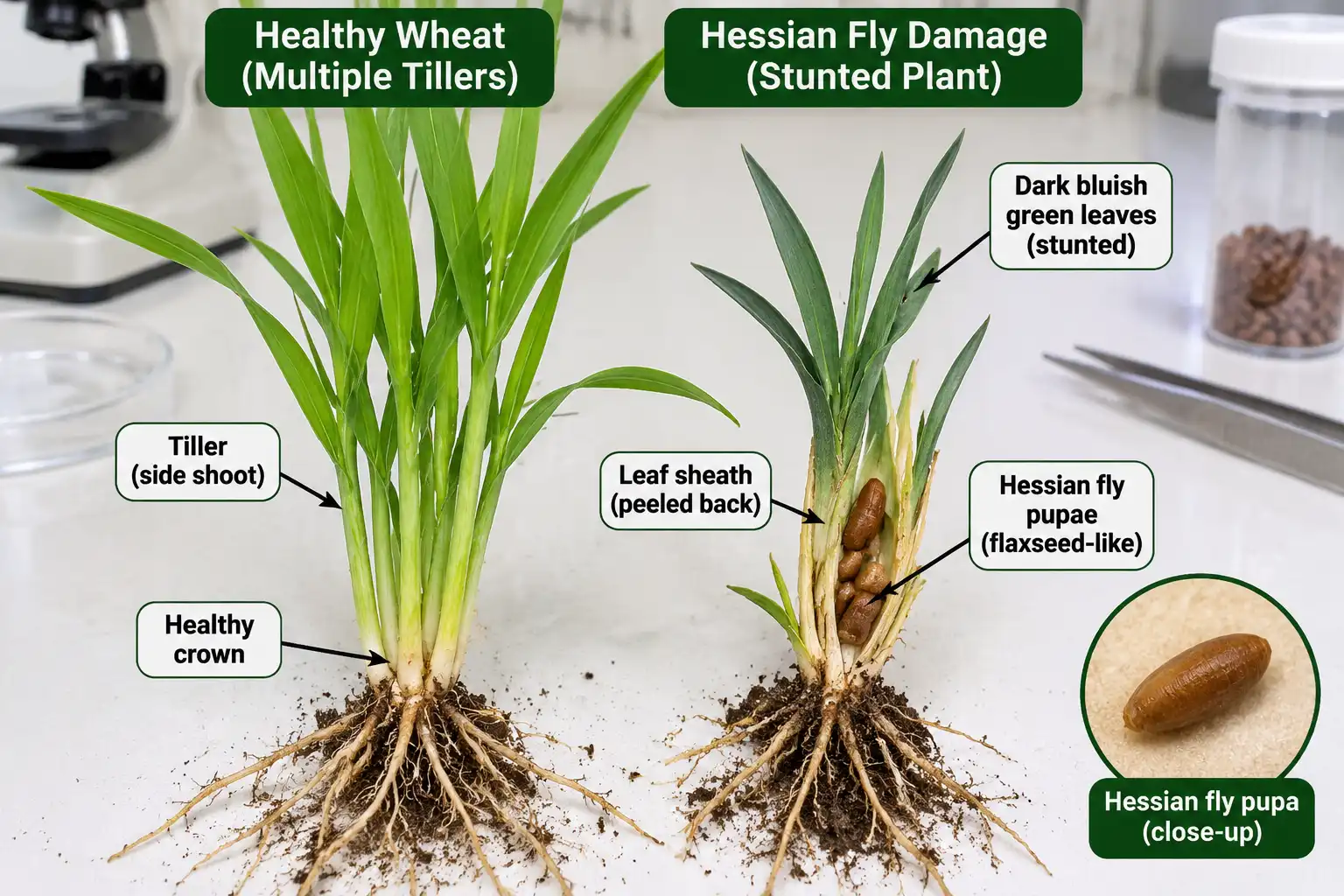
- Dead young tillers, stunting, or lodging in the Blacklands. Drake lists these as Hessian fly symptoms. Prevention is the only fix, so adjust next season’s date and variety.
- Thin, low-tiller stands in December wheat. The seeding rate was not raised enough for the late date.
- Weak grain yield on grazed fields. Cattle stayed on past the first joint and removed growing points.
For care after emergence, from tillering through harvest, see our full guide to growing wheat.
Frequently Asked Questions
Is mid-November too late to plant wheat in Texas?
Not in the Blacklands, Rolling Plains, or South Texas, where mid-November still falls inside the grain window, per Texas A&M AgriLife. In the High Plains, expect some yield loss and raise your seeding rate.
Can you plant winter wheat in Texas in January?
Yes, early January plantings in the Blacklands and Rolling Plains usually still get enough cold to vernalize, according to AgriLife’s Clark Neely. From late January on, he recommends planting a spring wheat variety instead.
Does Texas have a Hessian fly-free date?
No, Texas has no Hessian fly-free date. Still, AgriLife studies near Waco and Hillsboro found far fewer flies per tiller in wheat planted in early November than in early October.
Should I plant wheat before or after a rain?
Plant into moisture when you can, but not too deep. AgriLife’s Calvin Trostle notes that a good late-September rain can justify planting dryland wheat a few weeks ahead of his Oct. 20 target.
When should cattle come off dual-purpose wheat in Texas?
Pull cattle when the first stem joint appears, around Feekes 6, per Texas A&M AgriLife. In the High Plains that usually means around March 15, and earlier as you move south and east.
How many wheat seeds per acre should I plant in Texas?
AgriLife recommends 600,000 seeds per acre for dryland High Plains wheat, 1.1 million irrigated, 650,000 in the Rolling Plains, and 750,000 in the Blacklands. Raise rates at least 25% for late or dual-purpose fields.
What wheat variety is planted most in Texas?
TAM 204 ranked first in 2026, planted on 6.1% of Texas wheat acres, per USDA NASS. Choose from AgriLife’s regional Picks List, though, since the best variety for Waco differs from Amarillo.
What to Check Before You Plant
Start with end use, because grazing and grain wheat run about six weeks apart. Then find your region’s grain window in the table above. Before the drill rolls, check that soils have cooled toward 54 to 77°F. Kill volunteer wheat two weeks ahead, too.
Drilling after Dec. 1? Raise the seeding rate and confirm your county’s insurance final plant date. Your county AgriLife Extension agent can tell you how this season’s moisture and pest pressure shift the dates locally.