Is Milo the Same as Sorghum? Key Differences Explained

In U.S. agriculture, milo usually means grain sorghum. However, sorghum also includes plants grown for animal forage, sweet stalks, and other purposes. Understanding these names helps you identify the crop, choose suitable seed, and avoid confusing different sorghum products.
Yes, milo is grain sorghum, a cereal crop scientifically known as Sorghum bicolor. However, sorghum is a broader term that includes grain, forage, and sweet-stalk types. Therefore, all milo is sorghum, but not all sorghum is milo.
Is Milo the Same as Sorghum in Agriculture?
Milo and grain sorghum usually refer to the same commercial crop in the United States.
The University of Kentucky’s grain crops program identifies milo as grain sorghum (Sorghum bicolor), grown for its harvested kernels.
The difference is how broadly the terms are used.
- Milo: The common U.S. agricultural name for grain sorghum, especially in livestock feed and grain marketing.
- Grain sorghum: The descriptive crop name for sorghum varieties cultivated primarily for their grain.
- Sorghum: The broader name covering grain, forage, sweet, and other cultivated types.
Historically, milo also described a particular group of grain sorghum varieties. Other traditional groups included kafir and durra.
The University of Wisconsin’s grain sorghum guide explains that modern grain hybrids developed from these older groups, including crosses between milo and kafir.
Today, U.S. agricultural terminology commonly treats milo and grain sorghum as interchangeable.
The practical distinction is the crop’s intended use, not simply its name.
Which Types of Sorghum Are Not Milo?
Sorghum includes several crop types developed for different agricultural purposes. Grain sorghum is only one of them.
| Sorghum type | Main characteristic | Primary use |
|---|---|---|
| Grain sorghum (milo) | Relatively short plants with grain-bearing heads | Livestock feed, food, ethanol |
| Forage sorghum | Tall plants producing substantial stems and leaves | Silage and livestock forage |
| Sweet sorghum | Thick stalks containing sugary juice | Sorghum syrup, biofuel |
| Sorghum-sudangrass hybrids | Leafy plants with regrowth potential | Grazing, hay, green chop |
| Broomcorn | Long, stiff seedhead branches | Traditional broom production |
According to University of Wisconsin Extension, grain sorghum generally grows about 3 to 5 feet tall, while many forage sorghums reach 8 to 13 feet.
These heights vary with genetics and growing conditions.
Forage growers may also encounter brown midrib (BMR) sorghum, developed for improved fiber digestibility rather than grain production.
These distinctions matter because buying forage sorghum seed will not produce the same crop as a commercial milo hybrid.

What Does Milo Look Like?
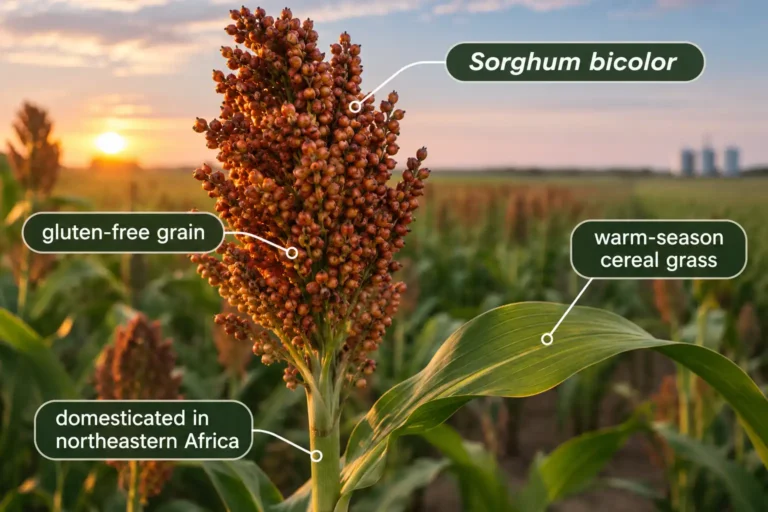
Milo resembles a shorter corn plant, but it produces grain in a seedhead at the top of its stalk.
The plant has long, narrow leaves and a thick, upright stem. Its grain develops in a branched cluster called a panicle.
You can recognize mature grain sorghum by these characteristics:
- Plant height: Commonly 3 to 5 feet, depending on the hybrid.
- Seedhead: A compact or somewhat open cluster containing numerous small kernels.
- Grain color: White, cream, yellow, bronze, red, or brown.
- Leaves: Long, flat, and similar in appearance to corn leaves.
- Harvest: A combine removes the mature grain heads.
Unlike field corn, which develops kernels on ears along the stalk, milo carries its grain in terminal seedheads.
Plant appearance alone cannot reliably separate modern grain sorghum hybrids by their original breeding groups.
For identification, examine the mature seedhead and confirm the hybrid’s name or intended use.
Is Red Milo the Same as White Sorghum or Millet?
Red milo and white grain sorghum belong to the same cultivated sorghum species. Millet is a different cereal crop.
The grain color is largely determined by genetics.
Red and bronze grain sorghum commonly appear in livestock feed and birdseed. White-grained sorghum is also grown for food and other markets.
However, color does not establish whether a grain sample is food-grade or suitable for planting.
Millet introduces another common naming problem.
The Cornell Lab of Ornithology’s birdseed guide identifies milo or sorghum separately from red millet and other millet seeds.
Proso millet and pearl millet are distinct crops. They have different growth characteristics and management requirements from grain sorghum.
For accurate identification, check the species name and seed label rather than relying on kernel color.

What Is Milo Used For?
Milo is primarily a grain crop in the United States. Its major uses include animal feed, human food, and ethanol production.
Livestock feed
Grain sorghum supplies starch and energy in cattle, swine, and poultry rations.
Kansas State University’s swine nutrition guidance explains that milo can replace some or all of the corn in properly formulated swine diets.
However, processing methods and nutrient differences affect feeding value. It should not be substituted pound for pound without considering the complete ration.
Human food
Food-grade sorghum kernels can be cooked whole, popped, or milled into flour.
Sorghum is naturally gluten-free. Penn State Extension includes it among the grains suitable for gluten-free diets.
Use grain marketed and handled for human consumption rather than untreated planting seed or birdseed.
Ethanol and birdseed
Grain sorghum also supplies starch for ethanol production.
In birdseed mixtures, the word “milo” commonly identifies small, round sorghum kernels, especially reddish varieties.
Sorghum syrup
Sorghum syrup generally comes from sweet sorghum, not commercial milo.
Sweet sorghum is selected for sugar-rich stalks. Grain sorghum is selected mainly for harvested kernels.
Does the Name Matter When Buying Sorghum?
Yes. The label determines whether you’re buying seed for grain production, forage, feed, or another purpose.
| Label | What it usually means |
|---|---|
| Milo or grain sorghum seed | Seed intended for a grain-producing crop |
| Grain sorghum or milo feed | Harvested kernels for livestock or bird feed |
| Food-grade sorghum | Grain handled for human food production |
| Forage sorghum seed | Tall sorghum varieties for whole-plant harvesting |
| Sweet sorghum seed | Varieties developed for sugary stalks |
| Sorghum-sudangrass seed | Forage hybrids grown for grazing or cutting |
Read the complete seed tag before purchasing.
A forage sorghum hybrid might produce grain, but its production objective differs from commercial milo. Similarly, grain sold for animal feed is not necessarily suitable as planting seed.
For livestock, also distinguish mature harvested grain from green forage.
Sorghum foliage can accumulate dangerous prussic acid under certain conditions, particularly following frost or drought stress. Penn State Extension explains these risks in its guidance on warm-season annuals after frost.
Where Does Milo Grow Best in the United States?
Grain sorghum is particularly well adapted to warm growing seasons and regions with limited rainfall.
Major production regions include Kansas, Texas, Oklahoma, and parts of Nebraska and Colorado.
Milo can withstand periods of water stress better than corn in many production systems. However, drought tolerance does not guarantee strong grain yields without adequate moisture.
Regional differences also affect planting decisions.
Great Plains
Grain sorghum is an established option in semiarid cropping systems.
In western Kansas, lower plant populations help limit competition for scarce soil moisture. Wetter eastern areas can support higher populations.
Eastern and southeastern states
Grain sorghum can provide an alternative to corn where summer drought risk or later planting opportunities influence crop selection.
However, profitability still depends on yield potential, grain markets, and production costs.
Northern states
Cool soils and shorter frost-free seasons limit grain sorghum production.
Choose an appropriately early-maturing hybrid. Many grain sorghum hybrids require approximately 90 to 120 days to mature, although actual maturity varies with genetics and temperature.
Before planting, compare local growing conditions and market access when choosing crops for your farming system.
How Is Milo Planted, and How Much Seed Is Needed?
Grain sorghum requires warm soil, suitable planting depth, and a seeding rate matched to the field’s moisture conditions.
For germination, University of Wisconsin Extension recommends soil temperatures around 60 to 65°F. K-State’s spring crop planting guidance uses a warmer 65 to 70°F threshold.
The difference reflects regional guidance. Soil moisture, warming trends, and hybrid characteristics also influence emergence.
K-State Research and Extension’s 2025 grain sorghum planting recommendations identify 1 to 2 inches as a suitable planting depth.
Its Kansas seeding recommendations also vary considerably with rainfall:
| Average annual rainfall | Suggested seed rate |
|---|---|
| Less than 20 inches | 30,000 to 35,000 seeds/acre |
| 26 to 32 inches | 50,000 to 80,000 seeds/acre |
| More than 32 inches | 70,000 to 125,000 seeds/acre |
These are regional guidelines, not universal planting prescriptions.
For a smaller planting, use the same area-based calculation.
Example: A 100-foot row with 30-inch row spacing represents 250 square feet.
At 50,000 seeds per acre:
50,000 × (250 ÷ 43,560) = approximately 287 seeds per 100-foot row.
That is a seed count, not a guaranteed final stand. Emergence losses must be considered.
Sorghum still needs nutrients and available water. Use your soil test results to assess fertilizer needs and account for crop water requirements before setting yield expectations.
Does a Bushel of Milo Weigh the Same as Sorghum?
Yes. Milo and grain sorghum use the same standard U.S. bushel conversion because they are the same marketed grain.
The USDA Economic Research Service specifies:
STANDARD GRAIN SORGHUM CONVERSION
1 bushel = 56 lb
Used for U.S. grain marketing and production calculations
For example, a harvest weighing 2,800 pounds equals 50 standard bushels of milo.
The 56-pound conversion is a standard commercial measure. An individual grain sample’s measured test weight can differ.
This distinction helps when comparing elevator reports, feed inventories, and grain yield records.
FAQs About Milo the Same as Sorghum
Is red milo different from regular sorghum?
Red milo is a color form of grain sorghum, not a separate crop species. Other grain sorghum hybrids produce white, cream, or bronze kernels, and their intended uses can overlap.
Is milo the same as millet?
No. Milo is grain sorghum, while millet refers to several different cereal grasses, including proso and pearl millet. They may appear together in birdseed mixtures, but their seeds and growing characteristics differ.
Can humans eat milo?
Yes. Food-grade milo can be cooked whole, ground into flour, or used in cereal-based foods. Choose grain intended for human consumption because untreated planting seed and livestock feed may not meet food safety requirements.
Does milo contain gluten?
No. Sorghum grain is naturally gluten-free and can be used in gluten-free foods. People with celiac disease should choose appropriately labeled products to reduce the risk of gluten cross-contact during handling or processing.
Can you make syrup from milo?
Commercial milo is not the usual choice for sorghum syrup because it is bred for grain production. Sweet sorghum has sugar-rich stalks specifically suited to extracting and concentrating juice into syrup.
Is milo better than corn for dry conditions?
Grain sorghum generally tolerates water stress better than corn, making it attractive in some dryland systems. However, corn can outperform sorghum under favorable moisture conditions, so local yields and market prices still matter.
Choosing the Right Sorghum for Your Field
Milo is the familiar U.S. name for grain sorghum. The name changes, but the harvested grain is the same crop.
If your goal is grain production, select a grain sorghum hybrid suited to local rainfall, growing-season length, and markets.
For silage, grazing, or syrup, choose the sorghum type developed for that purpose. The seed label and intended harvest product matter more than the common name.