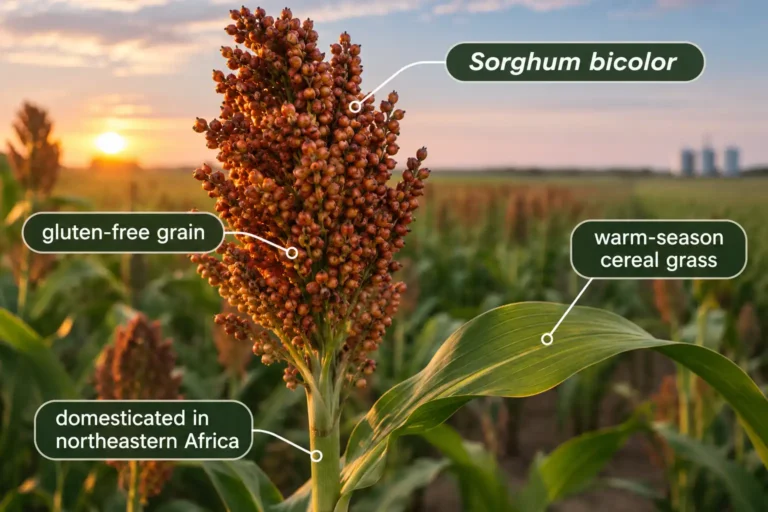
What Is Onyx Sorghum? The Black Grain Hybrid Explained
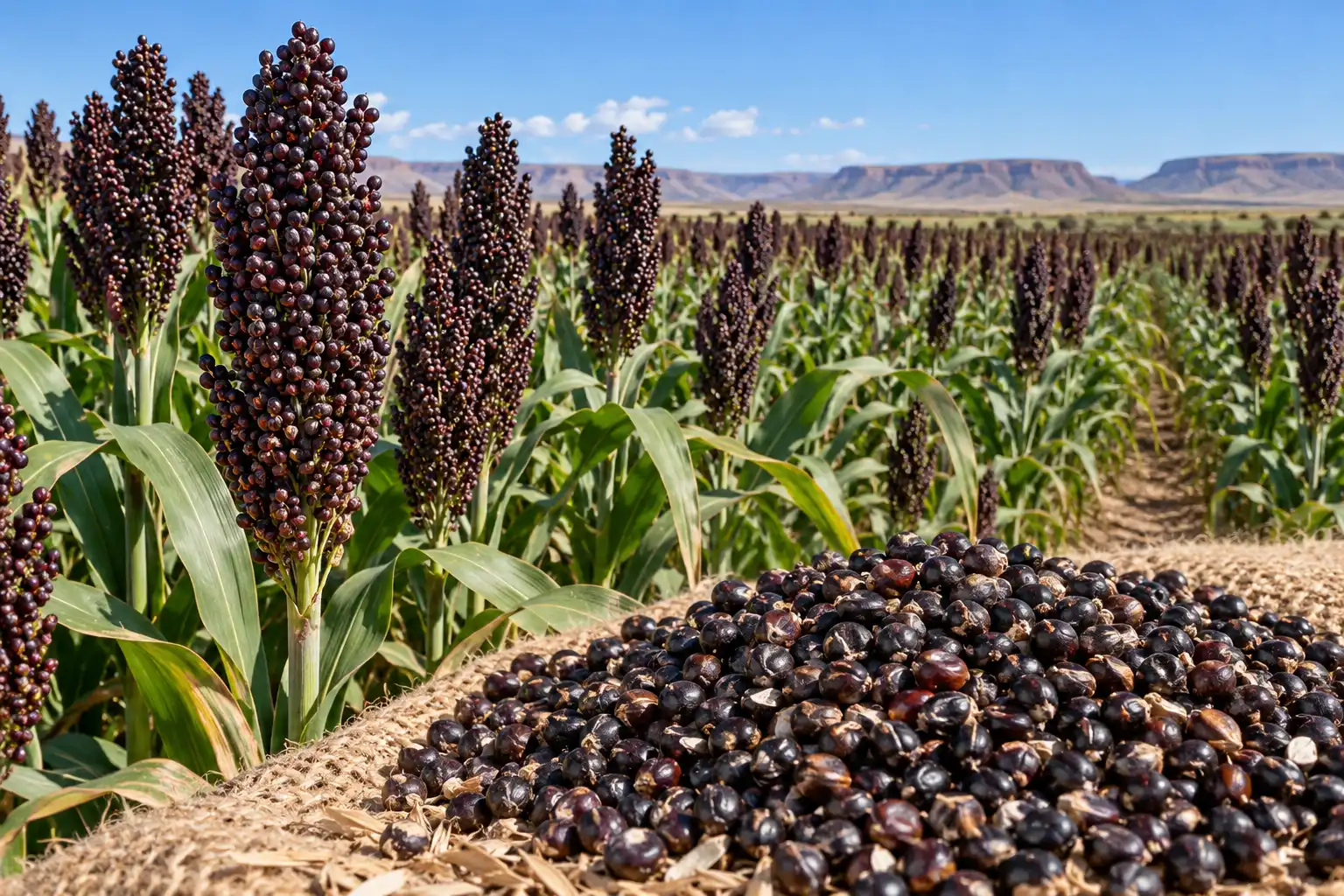
Onyx sorghum is a specialty grain recognized for its nearly black kernels and unusually high concentrations of certain antioxidant compounds. Developed by Texas A&M researchers, it differs from conventional sorghum in its breeding, grain composition, and intended food uses.
Onyx sorghum is a black-grain hybrid of Sorghum bicolor developed by Texas A&M AgriLife in 2012. Its dark outer grain layers contain antioxidant-related compounds, particularly 3-deoxyanthocyanins and tannins. It is primarily used in specialty food products.
What Is Onyx Sorghum, and Where Did It Come From?
Onyx is a conventionally bred grain sorghum hybrid developed for the human food market.
It belongs to the same species as ordinary grain sorghum, Sorghum bicolor. However, researchers selected its breeding material for unusually dark kernels and high concentrations of phenolic compounds.
The hybrid was developed by Dr. William Rooney and the sorghum breeding program at Texas A&M AgriLife Research.
According to the USDA Agricultural Research Service’s germplasm registration, the original breeding combination involved two sorghum lines:
- ATx3363: The female seed parent used to produce the black-grain hybrid.
- RTx3362: The male parent contributing genetic characteristics associated with dark grain pigmentation.
This conventional breeding approach combined desirable grain traits without genetic engineering.
Texas A&M developed the original Onyx hybrid in 2012. Its commercial development later brought the grain into breakfast cereals and other specialty food applications.
What Is Onyx2 Sorghum?
Onyx2 is a newer hybrid developed to improve grain production while maintaining Onyx’s distinctive characteristics.
In a 2019 Texas A&M AgriLife report, the breeding program reported approximately 25% higher yields from Onyx2 compared with the original Onyx hybrid.
That figure describes the reported breeding improvement, not a guaranteed field yield across growing regions.
Both hybrids were developed for the specialty food market.
Why Is Onyx Sorghum Black?
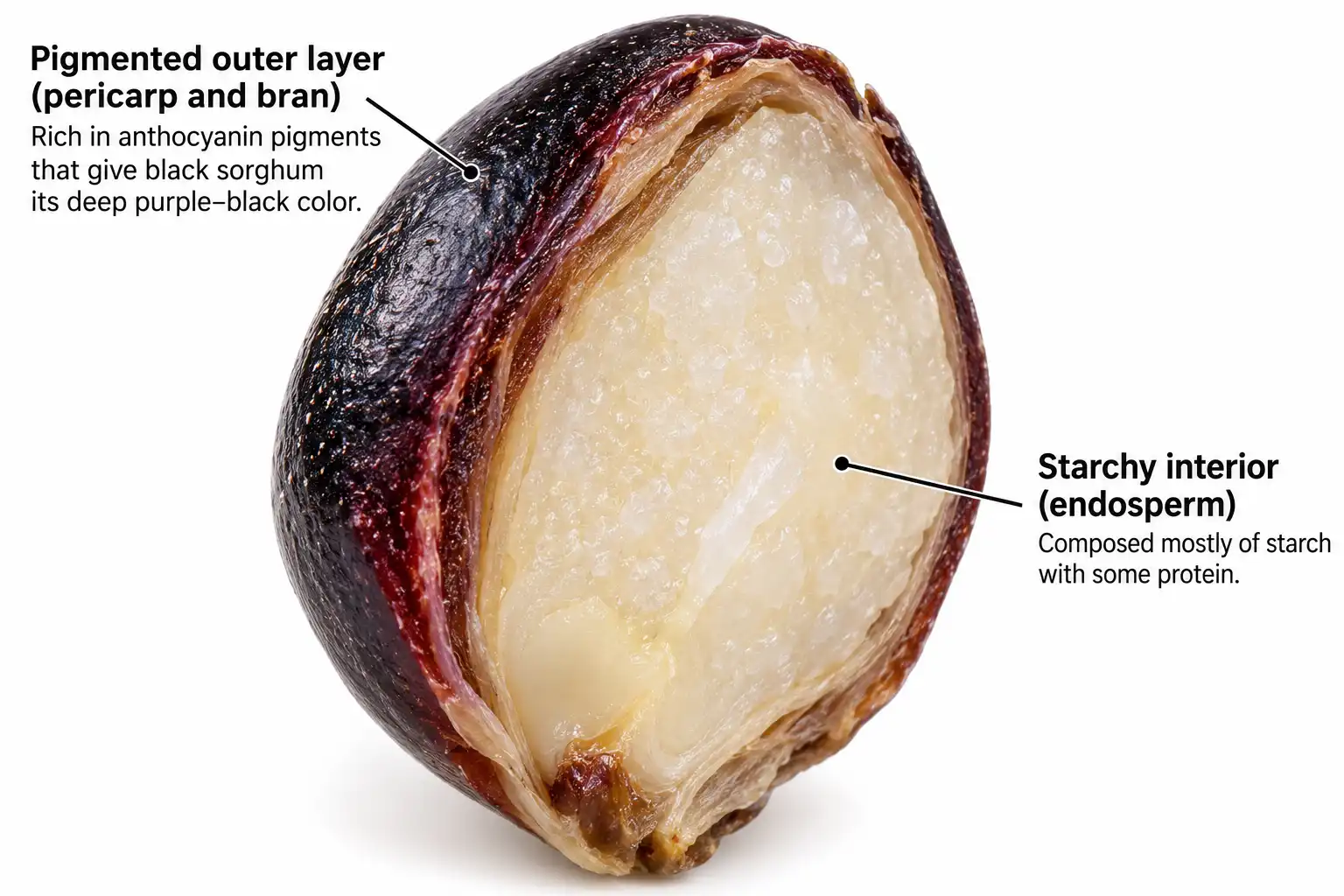
Onyx sorghum gets its dark appearance primarily from pigments concentrated in the grain’s outer layer, called the pericarp.
Unlike conventional white or tan sorghum, Onyx contains high levels of 3-deoxyanthocyanins, a specialized group of plant pigments belonging to the broader family of phenolic compounds.
The USDA Agricultural Research Service identifies these compounds as responsible for the dark coloration associated with the original breeding lines.
Three grain characteristics help explain Onyx’s appearance and composition.
1. Dark outer bran
The bran contains much of the pigmentation. It surrounds the lighter, starch-rich interior of the kernel.
2. Specialized antioxidant compounds
The grain’s 3-deoxyanthocyanins contribute to its antioxidant activity in laboratory measurements. These compounds are also relatively stable during food processing.
3. Tannin content
Onyx also contains tannins, another group of phenolic compounds associated with antioxidant activity.
Tannins are not responsible for all the grain’s black coloration. They are a separate feature of its chemical composition.
How Is Onyx Sorghum Different From Regular Sorghum?
Onyx differs mainly in grain pigmentation, tannin characteristics, and its use in specialty food ingredients.
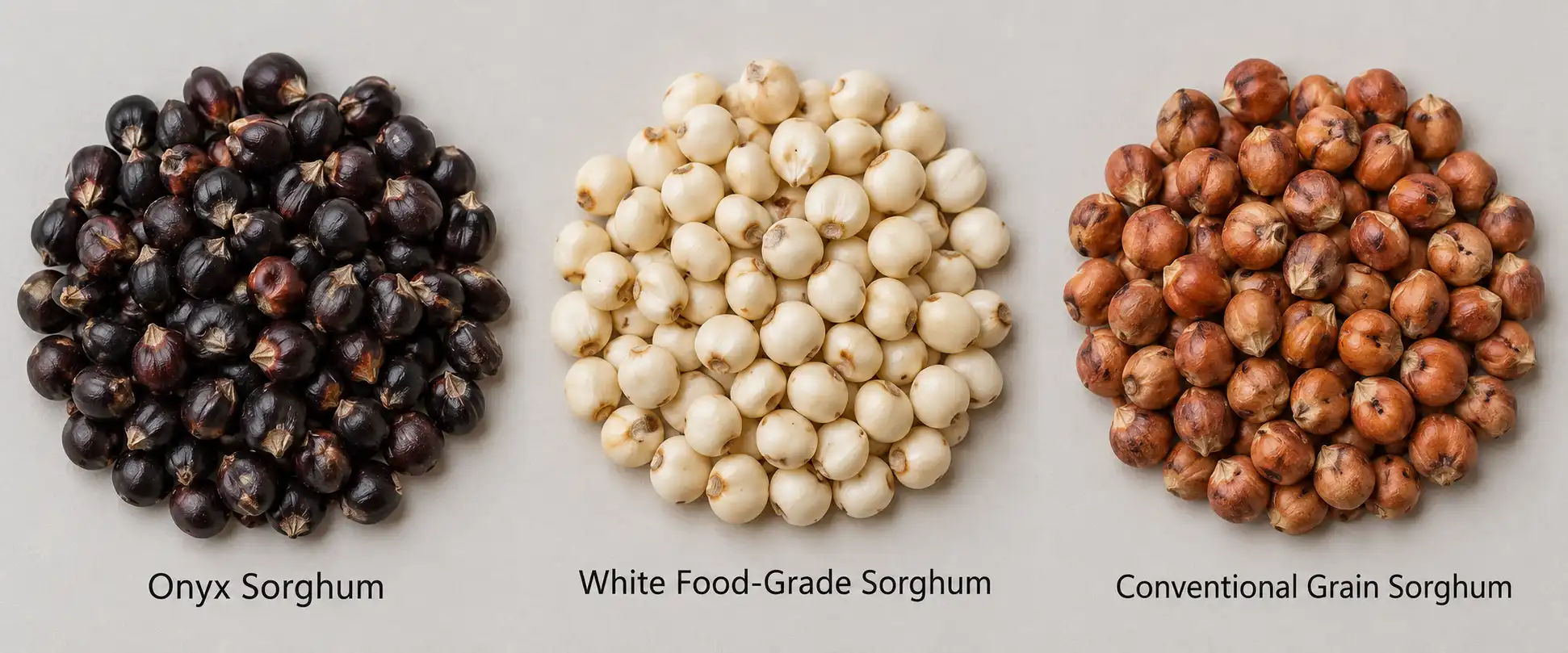
The United Sorghum Checkoff Program explains that sorghum color depends on the outer pericarp, the presence of a pigmented testa, and the underlying endosperm.
| Sorghum type | Grain appearance | Main distinction |
|---|---|---|
| Onyx sorghum | Nearly black | Named hybrid selected for dark pigments and high-tannin food applications |
| White food-grade sorghum | White to cream | Commonly selected for light-colored flour and low tannin content |
| Red or bronze sorghum | Red to reddish brown | Conventional grain types with varying pigment and phenolic profiles |
| Other black sorghum | Dark brown to black | May contain substantial phenolics but does not necessarily have Onyx genetics |
The important difference is that not every black sorghum is Onyx.
Black grain color alone cannot confirm a particular hybrid, its antioxidant concentration, or its breeding origin.
Two sorghum hybrids with similar-looking kernels may have different nutritional compositions.
What Is Onyx Sorghum Used For?
Onyx sorghum is primarily used in specialty foods where its dark bran and phenolic compounds are desirable.
Breakfast Cereals and Grain Ingredients
One documented commercial application is its inclusion in Grain Berry breakfast cereals.
Texas A&M AgriLife reported that the original hybrid was licensed for commercial production and incorporated into these products.
Manufacturers may use whole grain or bran-rich ingredients to introduce Onyx’s characteristic compounds into cereal formulations.
Flour and Baking Ingredients
Onyx grain can be milled into flour. The resulting color and phenolic content depend partly on how much of the outer bran remains.
Whole-grain flour retains more of the pigmented outer layers than heavily refined flour.
The darker grain also has potential as a source of natural food coloring.
Whole-Grain Cooking
Food-grade whole sorghum can be prepared similarly to other cereal grains.
The Sorghum Checkoff’s cooking guidance recommends approximately three cups of water for every cup of whole grain, simmered for 40 to 55 minutes.
However, this is general whole-sorghum guidance, not a verified cooking specification for Onyx. Dedicated retail availability of whole Onyx grain should not be assumed.
Onyx is a grain sorghum, not a sweet sorghum grown primarily for syrup from its stalks.
Is Onyx Sorghum Healthier Than Regular Sorghum?
Onyx contains high concentrations of certain phenolic compounds, but that does not establish that it produces better clinical health outcomes than other sorghum varieties.
Its nutritional interest centers on two groups of compounds.
3-Deoxyanthocyanins
These pigments have antioxidant activity in laboratory research.
Their presence helps explain why dark-grain sorghums attract interest from food scientists.
Tannins
Tannins also contribute to antioxidant activity. However, higher tannin content has potential disadvantages.
The Sorghum Checkoff’s food-grade grain guidance notes that tannins can reduce protein digestibility.
Consequently, more tannins do not automatically mean better overall nutrition.
A 2024 systematic review published in the Journal of Food Science evaluated sorghum-related findings from 22 cell studies, 20 animal studies, and seven human studies.
The review addressed numerous sorghum types, rather than establishing medical benefits specifically for Onyx.
Current evidence does not establish that eating Onyx prevents or treats diabetes, cancer, or cardiovascular disease.
Its antioxidant composition is a legitimate research interest, but laboratory antioxidant measurements should not be treated as proof of disease prevention.
Where Is Onyx Sorghum Grown?
Commercial Onyx production has been documented in the Texas High Plains, where warm summers support grain sorghum cultivation.
Texas A&M AgriLife described the original hybrid’s seed increase and commercial production in that region.
Like other grain sorghums, Onyx belongs to a warm-season crop species suited to full sunlight and relatively high temperatures.
However, publicly available Onyx-specific guidance is limited. Planting dates, maturity, yield potential, and water requirements should not be assumed identical to those of every conventional grain sorghum hybrid.
How Do Growing Conditions Change Sorghum Planting Decisions?
Rainfall and irrigation influence the plant population that a field can support.
The Kansas State Extension Crop Planting Guide provides these general grain sorghum targets:
| Growing conditions | Target established plants per acre |
|---|---|
| Dryland, under 20 inches annual rainfall | 24,000 |
| Dryland, 20 to 26 inches | 35,000 |
| Dryland, 26 to 32 inches | 45,000 |
| Dryland, over 32 inches | 70,000 |
| Fully irrigated | 100,000 |
These are regional grain sorghum recommendations, not verified Onyx-specific planting rates.
For perspective, a target of 45,000 established plants per acre equals approximately 103 plants per 100 square feet.
Using Kansas State’s illustrative assumption of 65% field emergence, this requires approximately 160 seeds per 100 square feet.
That corresponds to roughly 3-inch seed spacing in 30-inch rows.
Kansas State generally lists May through June planting windows for sorghum across its growing zones. Local weather and hybrid maturity still determine the appropriate dates.
Before planting any specialty sorghum, use soil test results to plan nutrients and estimate irrigation requirements according to actual field conditions.
Is Onyx Sorghum a Good Crop for Farmers?
Onyx can be attractive where a specialty buyer values its grain composition. However, it should not be evaluated solely on its dark color or potential nutritional benefits.
Three considerations affect the production decision.
1. Seed and Buyer Availability
Onyx was developed and licensed as a specialty hybrid.
Before planning acreage, confirm access to authentic seed, its current licensing conditions, and an interested grain buyer.
A generic packet labeled black sorghum does not verify Onyx identity.
2. Yield and Market Value
The original Onyx had lower yield potential than conventional commercial hybrids, according to Texas A&M AgriLife’s 2019 report.
Onyx2 was developed partly to address that limitation.
A premium market must justify any difference in seed expenses, production costs, grain quality requirements, and expected yield.
3. Local Production Risks
Hot, dry production regions may offer suitable growing conditions, but grain sorghum still needs sufficient water during sensitive growth stages.
In humid regions, grain mold can also threaten food-grade quality, especially around flowering and before harvest.
When evaluating specialty grain production, compare crop profitability and market requirements before committing field acreage.
FAQs About Onyx Sorghum
Is Onyx sorghum genetically modified?
No. Onyx was developed through conventional sorghum breeding using selected parent lines, rather than genetic engineering. Its dark grain color is inherited through those breeding materials, but that does not automatically make the resulting crop certified organic.
Is Onyx sorghum gluten-free?
Pure Onyx sorghum is naturally gluten-free because sorghum does not contain wheat, barley, or rye gluten. However, Grain Berry confirms that its cereals containing Onyx are not gluten-free, so check the complete product label.
What does Onyx sorghum taste like?
Onyx grain may have a more astringent taste than low-tannin sorghum because tannins can contribute bitterness and a drying sensation. Its actual flavor depends on processing, bran content, and the other ingredients used in a food.
Can you save Onyx sorghum seeds for replanting?
Saved seed will not reliably reproduce all the characteristics of the original Onyx hybrid. Subsequent generations can vary in grain color, maturity, and other traits, while licensing agreements may also restrict saving or replanting seed.
Is Onyx sorghum the same as sweet sorghum?
No. Onyx is a specialty grain sorghum developed for its dark kernels and food-related compounds. Sweet sorghum is primarily selected for sugar-rich stalk juice, which can be processed into syrup and other products.
What to Remember About Onyx Sorghum
Onyx is a distinct, conventionally bred black-grain sorghum hybrid valued for its unusual grain pigmentation and phenolic compounds.
Its dark appearance does not automatically establish superior nutrition, and not all black sorghum is Onyx.
For food use, check ingredients and gluten labeling. For commercial production, verify authentic seed, regional suitability, and buyer requirements before planting.