When to Start Lettuce Indoors: Spring and Fall Planting Guide
Knowing when to start lettuce indoors helps you establish healthy plants before spring temperatures rise. The right timing depends on your local frost dates, lettuce variety, and outdoor growing conditions. A simple backward calculation works for both spring and fall planting.
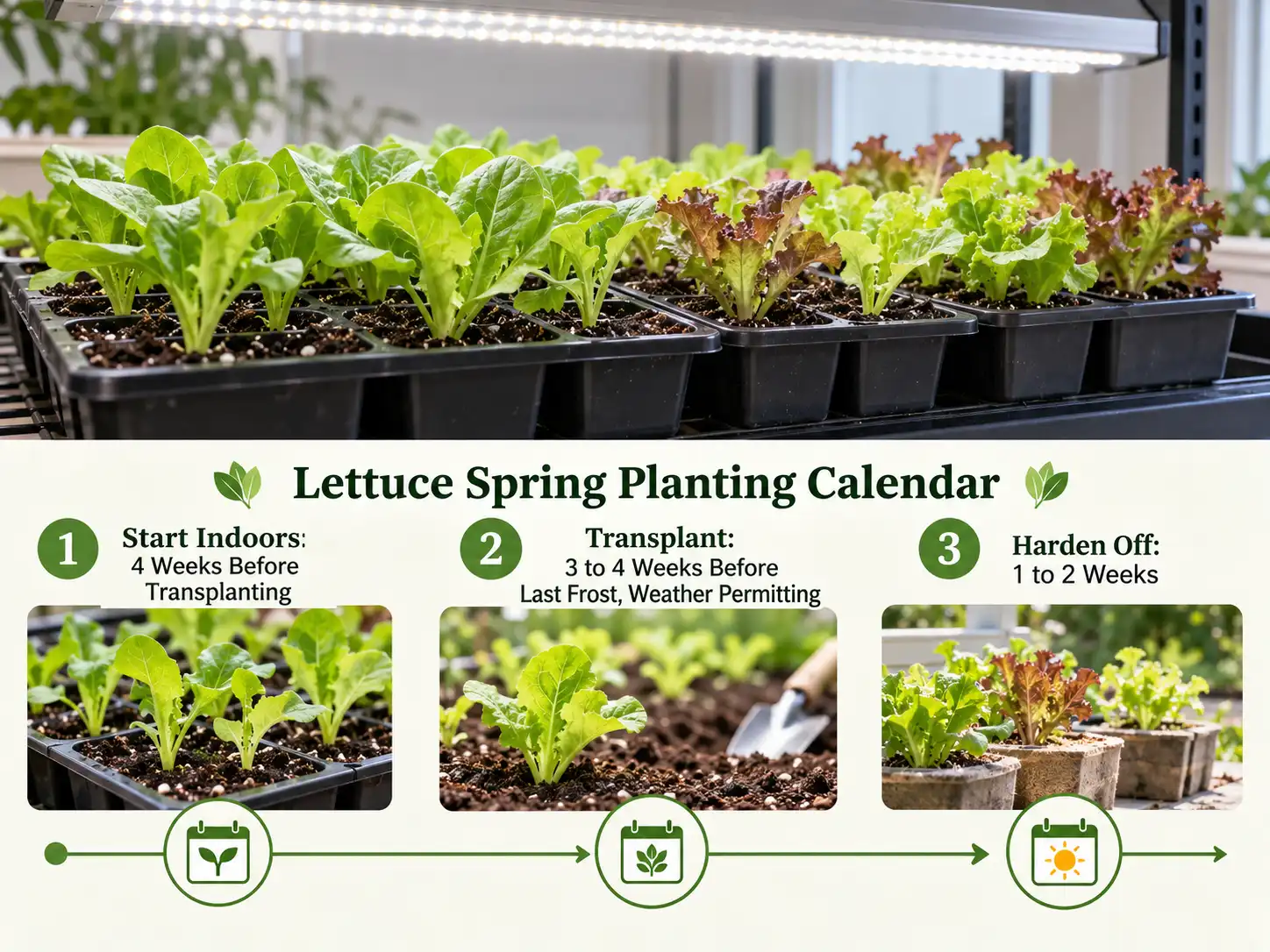
When to start lettuce indoors depends on your transplant date: sow about four weeks beforehand. In spring, hardened seedlings can go outside three to four weeks before the average last frost when conditions allow. For fall, start another batch during summer.
When to Start Lettuce Indoors Before the Last Frost
For most spring gardens, start lettuce seeds indoors about four weeks before the planned outdoor transplant date.
Lettuce grows well in cool weather. Unlike tomatoes and peppers, it does not need to wait until all danger of frost has passed.
According to University of New Hampshire Cooperative Extension, lettuce transplants generally need four to five weeks indoors. They can be planted outside three to four weeks before the average last spring frost.
However, indoor growing recommendations vary:
- University of Maryland Extension: Two to four weeks indoors for leafy greens.
- K-State Research and Extension: Four to six weeks indoors for lettuce transplants.
- University of New Hampshire Extension: Four to five weeks from sowing to transplanting.
These recommendations reflect differences in seedling growth, growing conditions, and transplant size. They should not be combined into an average.
For practical scheduling, four weeks is a useful starting point. Adjust according to seedling development and the weather forecast.
Lettuce tolerates light frost, but heavy freezing can damage plants. Delay transplanting or use appropriate cold protection if severe weather is expected.
How to Calculate Your Lettuce Seed-Starting Date
Start with your intended outdoor transplant date, then count backward about four weeks.
Follow these steps:
- Find your average last spring frost date. Use local cooperative extension records rather than relying on a USDA hardiness zone alone.
- Choose a transplant date. Aim for three to four weeks before the average last frost if the soil is workable.
- Count backward four weeks. Mark that date for sowing lettuce seeds indoors.
- Check the forecast. Adjust transplanting if unusually cold or wet conditions develop.
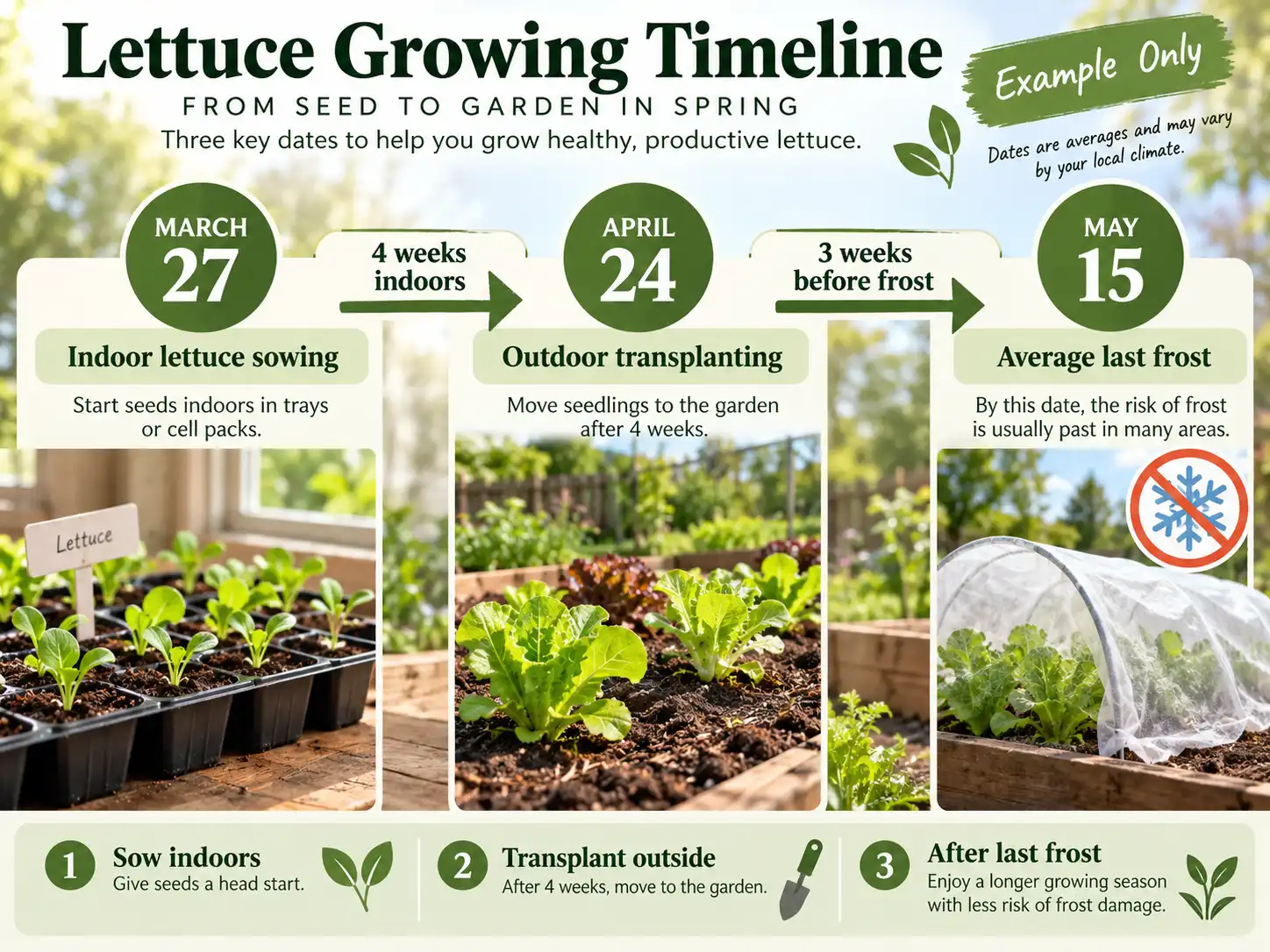
Example: Last Frost on May 15
| Growing stage | Date |
|---|---|
| Start lettuce seeds indoors | March 27 |
| Begin gradual outdoor hardening | April 10 to 17 |
| Transplant lettuce outdoors | April 24 |
| Average last spring frost | May 15 |
In this example, sowing starts seven weeks before the last frost. That provides four weeks of indoor growth before an early outdoor transplant.
The dates are illustrative, not a recommendation for every location.
Lettuce Indoor Starting Dates by U.S. Region
Indoor sowing dates vary substantially between northern, central, and warm-winter growing regions.
The following examples come from regional extension planting recommendations.
| Region | Approximate indoor starting period | Outdoor transplanting |
|---|---|---|
| Upper Midwest, Minnesota | Early April | Late April to early May |
| Central Plains, Kansas | Early February to early March | Mid-March to early April |
| Mid-Atlantic, Maryland | March | April |
| Central and South Florida | Late August through January, for successive crops | September through February |
The Kansas indoor range is calculated from K-State’s lettuce planting guidance, which recommends starting four to six weeks before transplanting.
University of Minnesota Extension recommends early April indoor sowing for late-April or early-May planting.
University of Maryland Extension recommends March indoor sowing for spring head lettuce.
In warm-winter areas, timing shifts. The UF/IFAS Florida Vegetable Gardening Guide lists September through February as the outdoor lettuce planting period for Central and South Florida. The indoor range in the table assumes approximately four weeks of seedling growth.
These are regional examples, not fixed dates for entire states or USDA zones.
When Should You Start Lettuce Indoors for Fall?
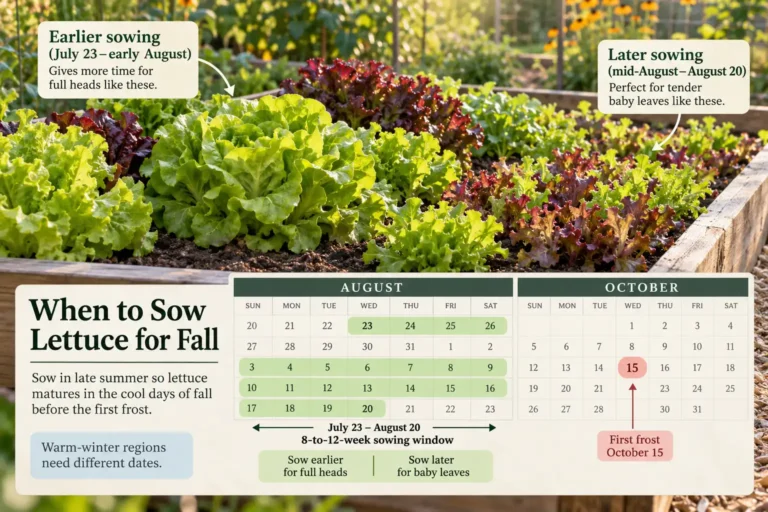
Start fall lettuce indoors about four weeks before your planned late-summer or fall transplant date.
Fall timing requires a different approach from spring. Summer heat, decreasing daylight, and the arrival of freezing weather all influence planting decisions.
In Minnesota, extension guidance recommends starting fall lettuce indoors in July for transplanting during August.
Maryland Extension recommends starting fall head lettuce during the first two weeks of July, followed by August transplanting.
For a simple calculation, an August 20 transplant target gives an indoor sowing date around July 23.
However, your first fall frost date alone cannot determine the correct sowing date. Check the variety’s days to maturity and whether the packet counts from sowing or transplanting.
Lettuce seeds also struggle in excessively warm growing media. Starting them indoors in a cooler location can improve summer germination.
If summer conditions remain hot, wait for a suitable outdoor planting window rather than setting transplants directly into heat stress. Choosing appropriate planting dates also helps with preventing lettuce from bolting.
How to Start Lettuce Seeds Indoors Successfully
Use shallow sowing, cool germination temperatures, steady moisture, and strong overhead lighting.
Utah State University Extension reports that lettuce germinates best at approximately 55 to 65°F. Seedlings commonly emerge within seven to ten days. Germination declines at temperatures above 80°F.
Follow this process:
- Prepare containers. Use clean seed-starting cells with drainage holes and a lightweight, moistened potting mix.
- Sow shallowly. Place one or two seeds per cell. Press them into the surface and cover very lightly, around 1/8 inch.
- Maintain moisture. Keep the mix consistently damp during germination without saturating it.
- Provide strong light. After emergence, use overhead grow lights for approximately 14 to 16 hours daily.
- Thin crowded seedlings. Keep one healthy plant per cell so roots develop without competition.
University of Maryland Extension notes that lettuce seeds can remain uncovered or receive a very light covering. Its seed-starting guidance also recommends strong artificial lighting to prevent weak, stretched seedlings.
A heat mat is generally unnecessary when the growing medium already stays within lettuce’s preferred germination range.

When Are Lettuce Seedlings Ready to Transplant?
Lettuce seedlings are ready when they have healthy roots, several true leaves, and sufficient tolerance for outdoor conditions.
K-State Research and Extension recommends transplanting lettuce with approximately four to six true leaves.
Check the following before planting:
- Seedlings have sturdy, upright stems.
- The root system holds the growing mix together.
- Leaves show healthy growth without severe yellowing.
- Roots are not excessively crowded inside their cells.
- Outdoor soil is workable rather than frozen or waterlogged.
How Long Should You Harden Off Lettuce?
Hardening guidance differs by method and local conditions.
University of Maryland Extension recommends one to two weeks of gradual outdoor exposure. Minnesota Extension describes a shorter two- to three-day adjustment involving reduced water and temperature.
For seedlings raised entirely indoors, allow the longer period when transitioning to an exposed garden.
Begin with short periods outdoors in sheltered shade. Increase sunlight and exposure gradually.
Bring seedlings indoors during freezing weather or when temperatures fall below 45°F during initial hardening.
After transplanting, water the root zone thoroughly. For larger beds, calculating crop water needs can help plan subsequent irrigation.
Is It Better to Start Lettuce Indoors or Direct Sow?
Indoor starting is useful for early harvests, but direct sowing often works well for loose-leaf lettuce.
Lettuce types differ in their growing habits and need for cool weather.
| Lettuce type | Example variety | Planting recommendation |
|---|---|---|
| Loose-leaf | Black Seeded Simpson | Direct sow or start indoors for earlier cutting |
| Butterhead | Buttercrunch | Either method; transplant for earlier heads |
| Romaine | Cimmaron Red Romaine | Direct sow in cool weather or transplant for a head start |
| Crisphead | Iceberg type | Indoor starts are particularly useful where spring cool weather is limited |
Utah State University Extension identifies these named leaf, butterhead, and romaine varieties. Maryland Extension’s lettuce guide explains why crisphead lettuce can be difficult to grow where temperatures rise quickly.
Use direct seeding when the soil is workable and temperatures are suitable.
Choose indoor transplants when you want an earlier harvest, more control over establishment, or a fall crop started during summer heat.
How Many Lettuce Seedlings Should You Start?
Calculate your seedling count from the planting area and spacing, then allow extras for losses.
For example, consider a 4-foot-wide by 25-foot-long bed planted with loose-leaf lettuce at 8-inch spacing in both directions.
The bed contains 100 square feet.
At 8-inch centers, each plant occupies approximately 0.444 square feet.
Therefore:
100 ÷ 0.444 = approximately 225 lettuce plants.
Allowing about 10% extra means starting roughly 250 seedlings. Four standard 72-cell trays provide 288 planting positions.
At the same density, one acre of continuous planted bed surface holds approximately 98,010 positions. Actual field-acre populations are lower when paths and unplanted areas are included.
These figures are a planning example, not a universal spacing recommendation. Larger lettuce heads require more room.
If preparing a new transplant bed, interpreting your soil test results can help you determine whether additional nutrients are needed.
Common Problems When Starting Lettuce Indoors
Most lettuce seed-starting problems involve temperature, lighting, excess moisture, or keeping seedlings indoors too long.
Seeds Fail to Germinate
Check the temperature of the growing medium.
Temperatures above 80°F can reduce germination. Move trays to a cooler location and maintain even moisture.
Seedlings Become Tall and Thin
Insufficient light commonly produces stretched seedlings.
Position an appropriate grow light overhead and adjust its height as the plants grow. Avoid starting seeds much earlier than necessary.
Seedlings Collapse at the Soil Line
Sudden collapse may indicate damping-off disease.
Overly wet media, contaminated containers, and poor airflow increase the risk. Discard affected seedlings and restart using clean equipment and fresh mix.
Transplants Stop Growing After Planting
Poor hardening, cold saturated soil, or root damage can delay establishment.
Transplant during suitable weather, preserve the root plug, and keep the soil moist without waterlogging it.
Lettuce Bolts Before Producing a Good Harvest
High temperatures and increasing day length can encourage flowering before an adequate harvest develops.
Adjust spring planting earlier or schedule fall planting so most growth occurs during cooler weather.
FAQs about Start Lettuce Indoors
Can I Start Lettuce Indoors in January?
Yes, but only if your local growing schedule supports an early transplant or you have a protected growing space. In colder regions, January sowing may produce oversized seedlings long before outdoor conditions become suitable.
Is April Too Late to Start Lettuce Indoors?
Not necessarily. April is suitable in many northern locations where outdoor temperatures remain cool. In warmer regions, direct sowing may be more practical, or you may need to wait for fall planting.
Do Lettuce Seeds Need a Heat Mat?
Usually not. Lettuce germinates well in cooler conditions, particularly around 55 to 65°F. A heat mat can push the growing medium above the preferred range, reducing germination when temperatures become excessive.
Can I Keep Lettuce Seedlings Indoors Longer Than Four Weeks?
Yes, provided the plants have enough light, root space, and appropriate temperatures. However, holding them too long in small cells can cause crowding, restricted roots, and reduced transplant quality.
Can I Grow Lettuce Indoors Without Transplanting It?
Yes. Lettuce can produce harvestable leaves indoors under adequate lighting. However, growing full-sized heads generally requires more space and a longer growing period than producing seedlings for outdoor transplanting.
Choose the Right Lettuce Starting Date
Plan lettuce sowing around the weather your plants will experience after transplanting. Use four weeks indoors as your initial schedule, adjust for seedling growth and regional conditions, and prioritize cool outdoor growing periods over fixed calendar dates.