How to Keep Lettuce From Bolting: 7 Steps Before Highs Hit 80°F
Lettuce bolts when heat, long days, or dry soil switch it from making leaves to making seed. Once the stalk rises, the leaves turn bitter. You can keep lettuce from bolting by managing four things: planting date, variety, heat exposure, and water.
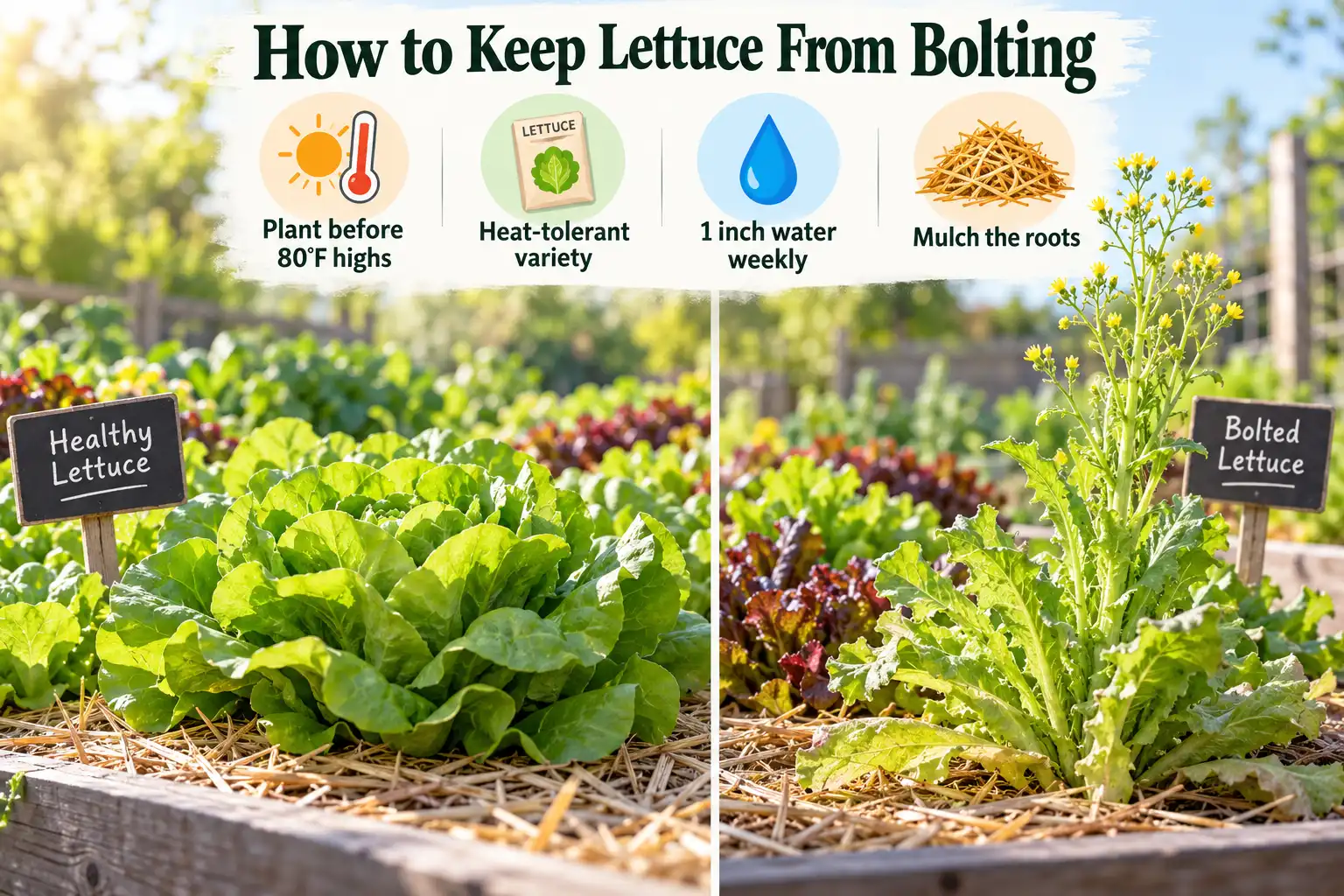
To keep lettuce from bolting, plant so it matures before daytime highs reach 80°F, and choose a heat-tolerant variety. Then water about 1 inch a week, mulch the roots, and harvest young, since bolted leaves stay bitter.
Why Lettuce Bolts
Lettuce bolts because flowering is its natural response to summer, according to Oregon State University Extension. Warm temperatures stretch the central stem, which then flowers and sets seed. Once that starts, the plant puts little energy into new leaves, and those leaves may taste bitter.
Iowa State University Extension names three triggers: high temperatures, long periods of intense light, and drought. That is why bolting peaks in early summer, when days grow both longer and warmer.
Sources disagree on the exact heat threshold. An Oregon State salad greens guide says lettuce may send up a flower stalk once the weather runs above 80°F. Meanwhile, University of Delaware Cooperative Extension says temperatures around 85°F promote bolting, with best growth at 59 to 68°F. Plan around 80°F, the more cautious figure.
Heat seems to matter more than day length. In a 2012 University of Delaware trial of 43 varieties, nearly all made marketable heads when transplanted on March 30. Yet 83% bolted fully or partly when transplanted on August 15. Those fall plants grew while days were getting shorter, so late summer heat is the likely driver.
How to Tell Lettuce Is Starting to Bolt
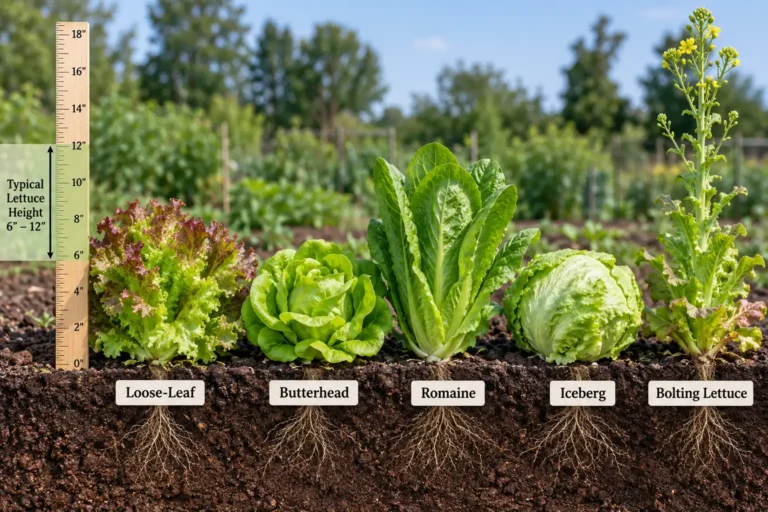
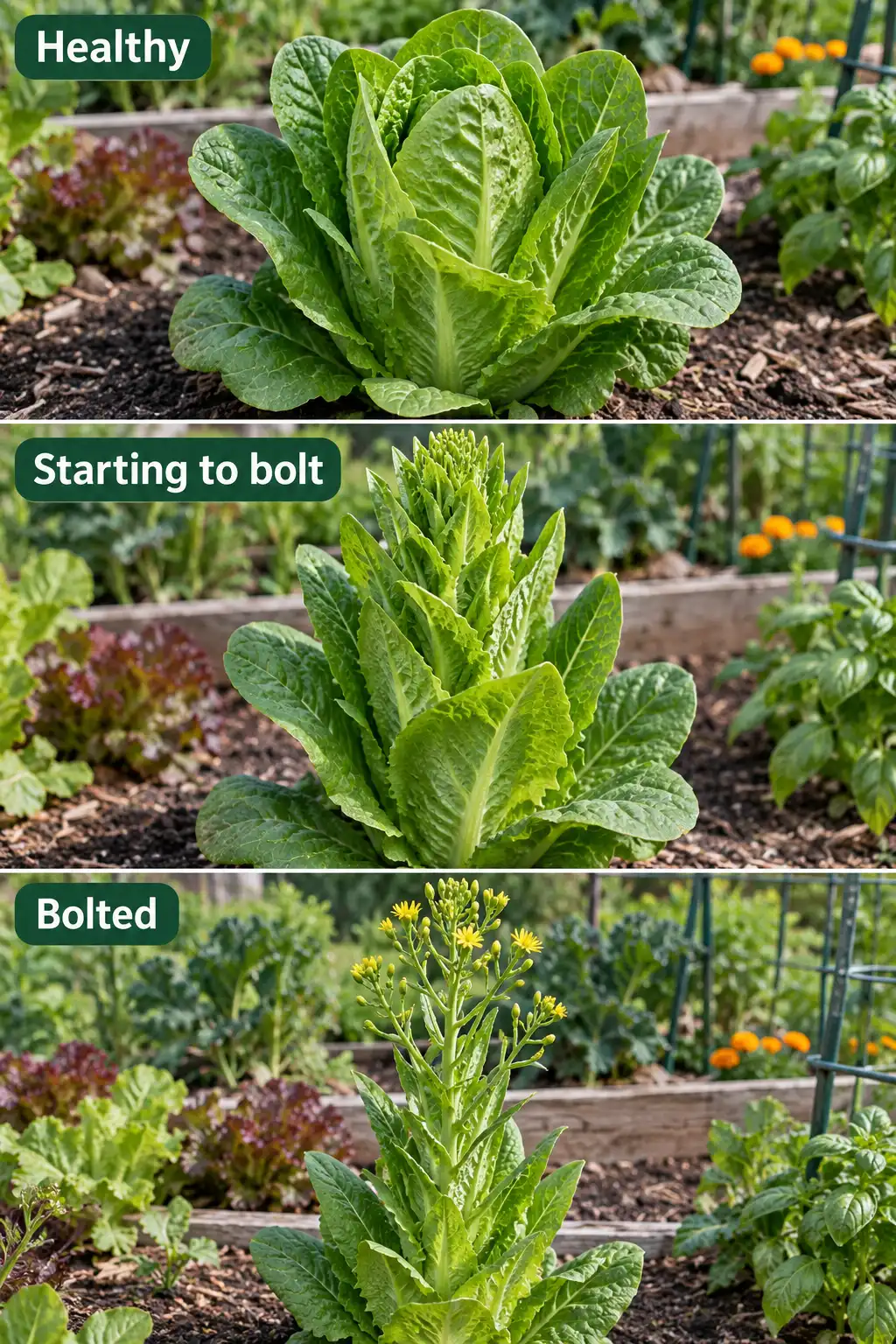
The first sign is a rising center. As the stem stretches between leaves, the plant grows taller and looser. Then the leaves change shape and taste. Watch for these signs:
- The center pushes above the outer leaves, giving the plant a cone shape.
- Head lettuce stretches upward and loosens instead of firming up.
- New leaves on the stalk come in smaller, narrower, and more pointed.
- Leaves turn bitter and tough, as Iowa State notes.
- Buds cluster at the top of the stalk, then open into small yellow flowers.
Bitterness can also arrive before the stalk does. University of Delaware trials found that some varieties stay slow to bolt but still turn bitter. So taste an outer leaf whenever a heat wave hits, and harvest while it is still mild.
How to Keep Lettuce From Bolting: 7 Steps
Each step targets one trigger: heat, light, drought, or slow growth. Combine several, because no single step covers every trigger.
1. Count Back From Your First 80°F Day
Time the crop so it finishes before average highs reach 80°F. Use this formula:
Latest planting date = the date normal highs reach 80°F, minus the variety’s days to maturity
Look up that date in NOAA’s 1991 to 2020 U.S. Climate Normals, which give daily normal highs for more than 7,300 weather stations. Days to maturity come from the seed packet. As a baseline, the Mississippi State University Extension planting guide lists about 50 days for leaf lettuce. For head lettuce, it lists 80 days from transplants and 80 to 115 days from seed.
Here is a worked example. Say your nearest station’s normal high reaches 80°F on June 1:
- Leaf lettuce, 50 days from seed: sow by April 12.
- Head lettuce, 80 days from transplants: set plants out by March 13.
If March 13 is too early for your ground, grow a leaf type or a heat-tolerant head instead. Either way, treat the date as a deadline, not a target, because heat waves can arrive early.
2. Pick a Variety Bred for Heat
Variety matters more than any other step. University of Delaware trials across several seasons found variety was the biggest factor in both bolting and bitterness. In those trials, heat-sensitive varieties still bolted and turned bitter on light-colored plastic mulch.
| Variety | Type | What the source reports |
|---|---|---|
| Muir | Batavia (summer crisp) | Most heat tolerant in University of Delaware summer trials, 2023 and 2024 |
| Nevada | Batavia (summer crisp) | Named with Muir as most heat tolerant in the same trials |
| Skyphos | Red butterhead | No bolting or bitterness in a June 5, 2023 University of Delaware planting |
| Jericho | Romaine | No bolting or bitterness in the same planting |
| Red Sails | Red leaf | Rated slow to bolt by Mississippi State |
| Salad Bowl | Green leaf | Rated slow to bolt by Mississippi State |
| SloBolt | Green leaf | Long-standing Grand Rapids type, per Mississippi State |
| Great Lakes | Crisphead | Rated slow bolting by Mississippi State |
Match the variety to the season. Leaf lettuce matures faster than head lettuce, per Mississippi State, so a slow-bolting leaf type suits late spring. For a July or August harvest, University of Delaware calls an extremely heat-tolerant variety vital. Its most consistent performers were Muir and Nevada. Oregon State adds that some evidence points to red-leaf types bolting more slowly.
3. Start Transplants Indoors
Transplants buy weeks of cool growth. Iowa State recommends starting seed indoors two to three weeks ahead, then hardening plants off for 5 to 7 days. In Iowa, that puts lettuce in the garden in early April, so it can mature before summer heat.
Head lettuce needs the longest lead. University of Delaware advises Delaware growers to seed heads in March and transplant them by mid-April. Farther south, Mississippi State’s planting dates cut off head lettuce about a month before leaf lettuce.
4. Water About 1 Inch a Week
Dry soil is a direct trigger. Oregon State warns that letting lettuce dry out too much can induce bolting and bitter flavor. Iowa State puts the need at 1 inch of water per week, counting rain.
One inch over one square foot equals about 0.62 gallons. So multiply your planting area by 0.62:
| Planting size | Water per week for 1 inch |
|---|---|
| 4 by 8 foot raised bed (32 sq ft) | About 20 gallons |
| 100 foot row, 2 feet wide (200 sq ft) | About 125 gallons |
| 1 acre (43,560 sq ft) | About 27,150 gallons |
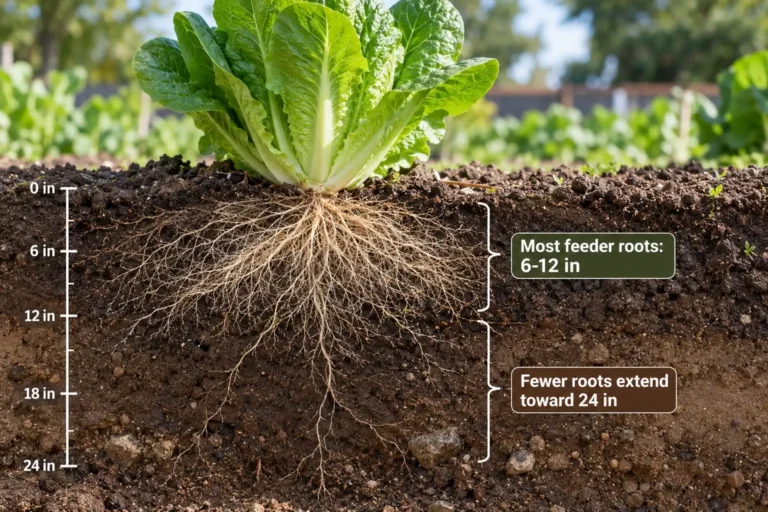
Mississippi State notes that lettuce roots are small and shallow, and advises keeping the soil moist for steady growth. In practice, that means two or three lighter waterings a week rather than one heavy soak.
5. Mulch the Root Zone
Mulch keeps shallow roots cool and moist. Iowa State recommends grass clippings, clean straw, or coco mulch to conserve moisture and moderate soil temperature. Oregon State suggests mulching once seedlings establish.
For larger plantings, light-colored plastic mulch is another option. In University of Delaware trials, silver mulch grew the largest, least bitter lettuce, and white mulch also improved flavor. In a July planting, 75% of varieties bolted less on white mulch than on silver. Still, heat-sensitive varieties bolted and turned bitter on both colors.
6. Use Shade With Care
Shade protects flavor more reliably than it prevents bolting. University of Delaware trials show why, and their results are more mixed than most shade cloth advice suggests.
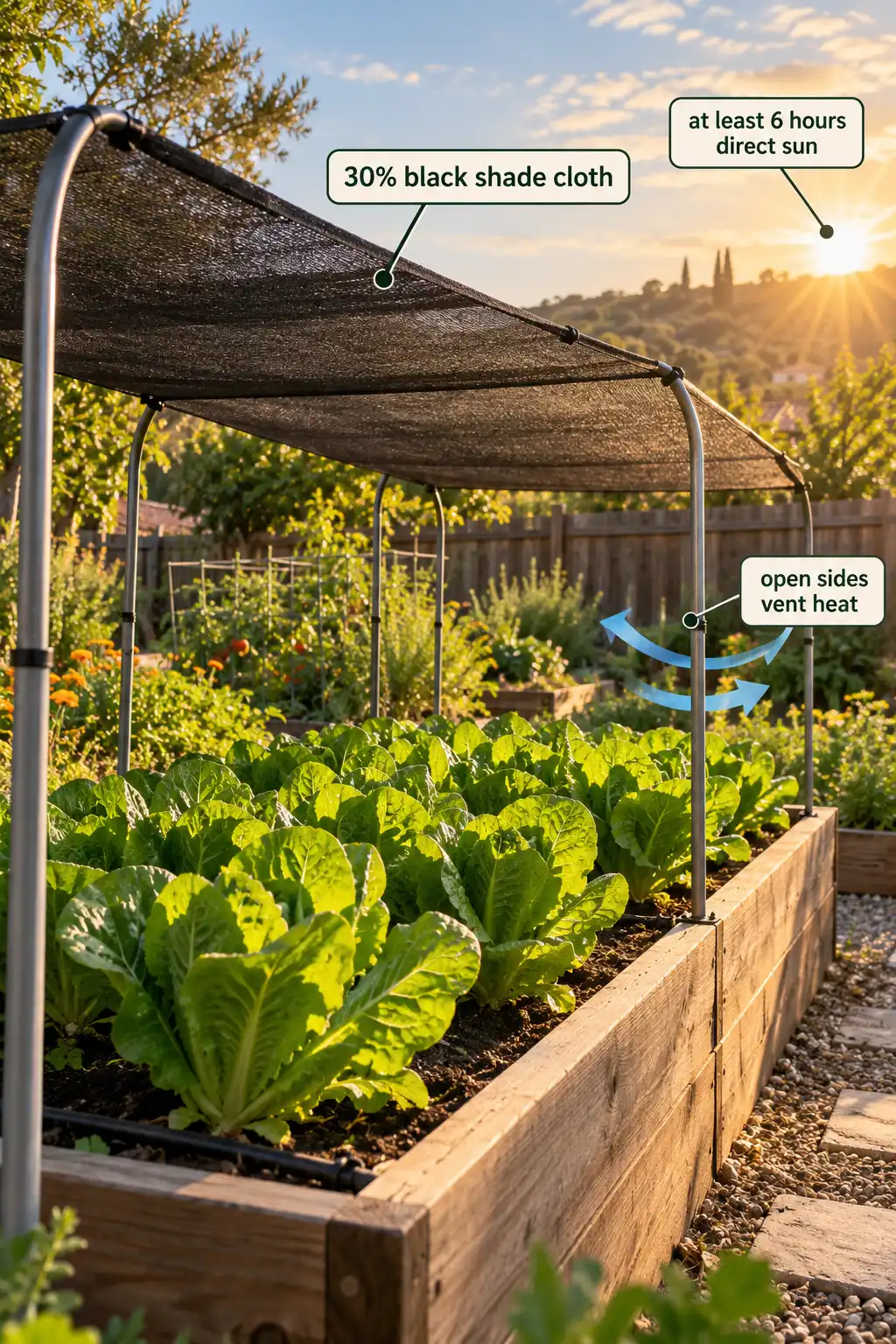
In spring trials, 30% black shade cloth cut bitterness and cooled plants. On a sunny, calm 90°F day, soil under the cloth measured 82°F, against 88°F in the open. Black 30% cloth also beat blue, red, silver, and white cloths at reducing bitterness. However, the same shade increased bolting in heat-sensitive varieties.
Summer results were weaker. In June plantings harvested in July and August, 30% black cloth on low tunnels shrank plants without reducing bitterness. University of Delaware now advises against shade cloth on low tunnels for summer lettuce, since they may trap heat.
If you use shade anyway, follow that reasoning:
- Use it in late spring, on a heat-tolerant variety, to protect flavor.
- Mount it high with open sides so heat can escape, rather than as a low tunnel.
- Keep at least six hours of direct sun, the minimum Iowa State gives for best growth.
7. Thin Early and Harvest Young
Crowded lettuce grows slowly, which keeps it in the ground longer as heat builds. Mississippi State notes that plants with room develop faster than those in a crowded seed row. So thin leaf lettuce to at least 4 inches, butterheads to 6, and crisphead types to 10 to 12.
Then harvest before the heat catches up. Iowa State says leaf lettuce is ready 4 to 6 weeks after seeding, when leaves reach 4 to 6 inches. Iowa State also suggests staggering plantings a week apart for a steady supply. Oregon State’s rule is simpler: harvest well before the plant bolts.
Lettuce Planting Windows by Region
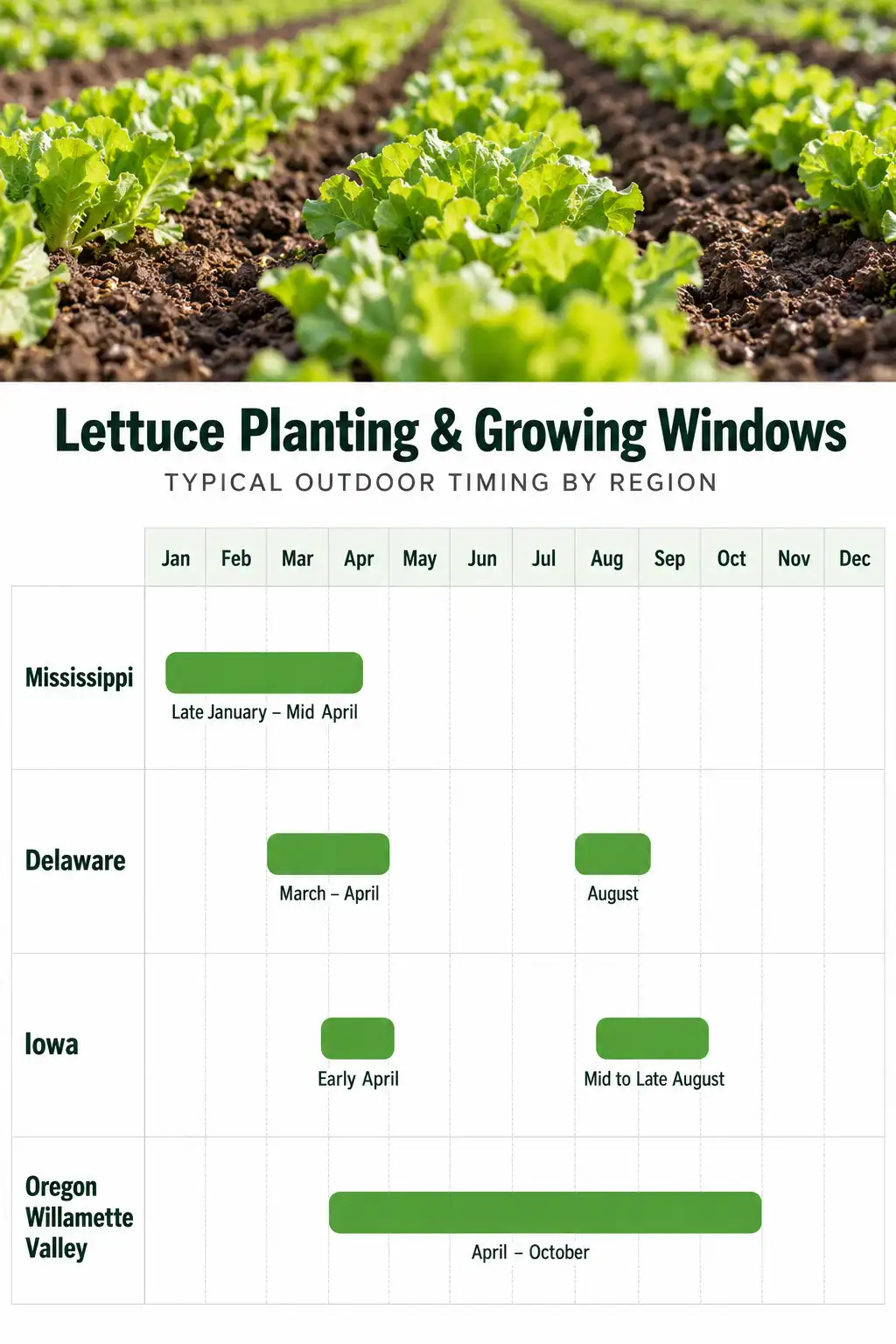
Published planting windows follow one rule everywhere: plant while it is cool, and stop before heat arrives. These dates come from four state extension services in four climates.
| Region (state) | Planting window | Source |
|---|---|---|
| Gulf South (Mississippi) | Spring: start Jan. 20 to Feb. 18 by zone. Stop head lettuce by Mar. 1 to 10 and leaf lettuce by Apr. 1 to 15. | Mississippi State |
| Mid-Atlantic (Delaware) | Spring: March and April, with no May plantings. Fall heads: direct seed Aug. 1 to 20, or transplant Aug. 10 to 30. | University of Delaware |
| Corn Belt (Iowa) | Spring: early April. Fall: sow in mid to late August for an October and November harvest. | Iowa State |
| Pacific Northwest (Oregon) | Coast: February through July. Willamette Valley: April through October. Central and eastern Oregon: April through May. | Oregon State |
Even one state can split three ways. Oregon State gives the Willamette Valley seven months of planting, but central and eastern Oregon only two. For dates that fit your county, check with your local extension office.
What to Do When Lettuce Bolts
You cannot reverse bolting, so act as soon as you see it. Taste a leaf first, then choose:
- Leaves still mild: harvest the whole plant now.
- Leaves bitter: pull the plant. Iowa State advises removing bolted plants and replanting once temperatures cool and days shorten.
- You want seed: let the stalk flower and dry. Oregon State notes you can collect the seed and plant it next year.
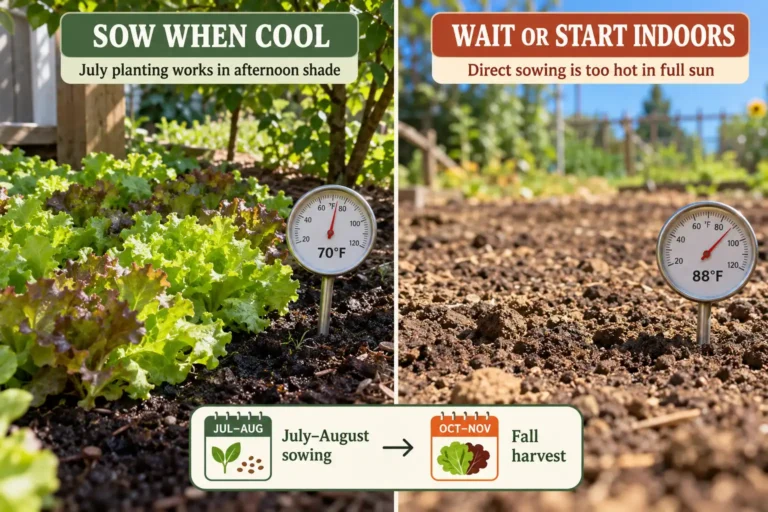
However, midsummer is a poor time to resow. University of Delaware puts the best soil temperature for lettuce germination at 60 to 68°F. It also warns that hot soil can push seed into thermal dormancy, which stops germination. In southern Delaware, average daily soil temperatures typically stay above 80°F through the third week of August.
To start a fall crop anyway:
- Buy primed seed, which University of Delaware says lowers the risk of thermal dormancy.
- Germinate trays in shade or a cool building, then grow seedlings in partial shade.
- Cover seed with only about 1/4 inch of soil, since lettuce needs light to germinate, per Iowa State.
- Choose a heat-tolerant variety, as University of Delaware advises for fall plantings.
FAQs about Lettuce bolting
Can you stop lettuce from bolting once it starts?
No, and cutting off the flower stalk will not bring back sweet leaves. Harvest any leaves that still taste mild, then replant when temperatures cool and days shorten, as Iowa State advises.
Is bolted lettuce still good to eat?
Usually not, because Oregon State says bolted lettuce tastes bitter and is not good for eating. Still, taste a leaf from a plant that is just starting to stretch, and harvest it if mild.
Why is my lettuce bolting in spring?
Spring bolting usually traces to late planting, an early heat wave, or dry soil. Oregon State also flags big day-to-day temperature swings, so cover plants on cold spring nights to keep conditions steady.
Can you grow lettuce in summer without it bolting?
Yes, but only with an extremely heat-tolerant variety like Muir or Nevada, top performers in University of Delaware trials. Even then, Oregon State recommends spring or fall planting for sunny sites and summer planting only for cloudy conditions.
Can you save seed from bolted lettuce?
Yes, Oregon State says you can collect seed from bolted lettuce and plant it next year. Let the stalk dry first, and sow within a year, since Oregon State says the seed keeps about one year.
Key Points for Your Field
Start with the date, not the tools. Find when normal highs reach 80°F, subtract your variety’s days to maturity, and plant before that deadline. For anything maturing near summer, choose a heat-tolerant variety first. Water, mulch, and shade add margin. But in University of Delaware trials, variety mattered more than any of them.