How Tall Does Lettuce Grow? Height by Type and Harvest Stage
Lettuce stays relatively short while producing edible leaves, but its height depends on variety and harvest stage. If you’re wondering how tall does lettuce grow, the useful measurement is its height before flowering, not how tall its seed stalk can become.
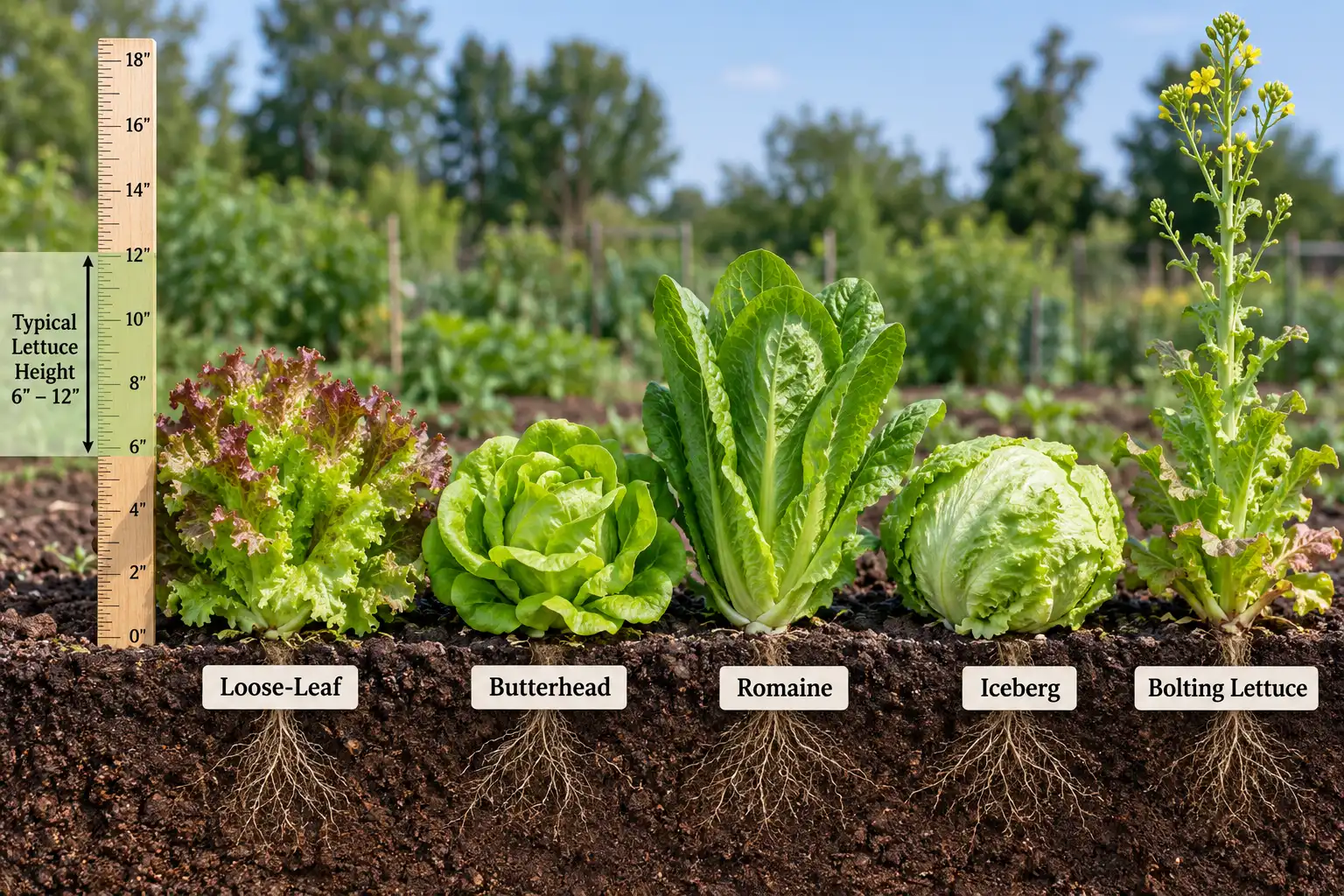
Most lettuce plants stand about 6 to 12 inches tall while growing edible leaves. Loose-leaf lettuce may be picked at 5 to 6 inches; romaine heads commonly become harvestable at 6 to 8 inches. Bolting makes plants much taller.
How Tall Does Lettuce Grow by Type?
Lettuce height varies because each type develops a different leaf structure. Romaine grows upright, butterhead forms soft rounded heads, and loose-leaf varieties spread outward.
NC State Extension describes lettuce as generally reaching 6 to 12 inches in height and width. However, some varieties are ready for harvest at smaller sizes.
| Lettuce type | Height or harvest size | Growth characteristics |
|---|---|---|
| Loose-leaf | Ready for first harvest around 5 to 6 inches; can grow larger | Open, spreading leaves without a tight head |
| Butterhead and Bibb | About 5 to 6 inches in a Florida greenhouse cultivar trial | Soft, rounded, loosely formed heads |
| Romaine (cos) | Ready around 6 to 8 inches; some cultivars approach 11 inches | Tall, upright leaves forming elongated heads |
| Crisphead (iceberg) | No dependable height-based harvest cutoff | Compact, rounded head with tightly overlapping leaves |
The University of Maryland Extension identifies 6 to 8 inches as a useful romaine harvest height.
A UF/IFAS greenhouse cultivar evaluation measured ‘Rex’ butterhead at 4.7 inches and ‘Ridgeline’ romaine at 10.9 inches. These were observational measurements under hydroponic greenhouse conditions, not universal outdoor averages.
Does the lettuce variety make a difference?
Yes. The variety helps determine whether lettuce grows tall, spreads outward, or forms a compact head.
For example, ‘Black-seeded Simpson’ produces loose leaves, while ‘Buttercrunch’ develops a soft head. ‘Jericho’ is an upright romaine, and ‘Salinas’ is a crisphead type.
Miniature lettuce varieties also produce smaller heads naturally. A healthy compact variety does not need to reach 12 inches.
When Is Lettuce Tall Enough to Harvest?
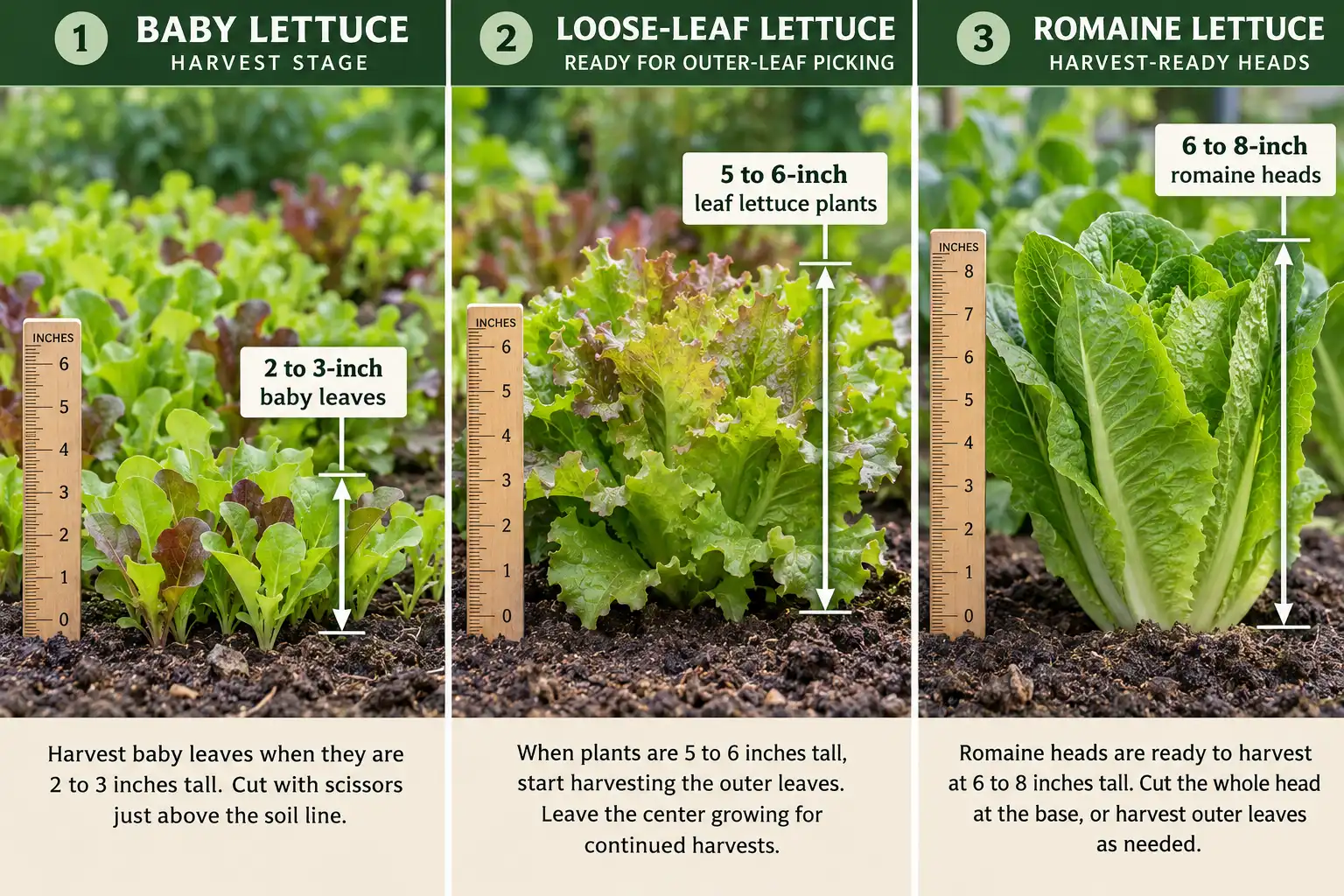
Lettuce is ready when its leaves or head reach the desired eating stage. Height helps, but leaf development is the stronger signal.
The University of Maryland Extension provides these practical harvest indicators:
| Harvest type | When to pick |
|---|---|
| Baby lettuce leaves | Individual leaves about 2 to 3 inches long, according to NC State Extension |
| Loose-leaf lettuce | Plants about 5 to 6 inches tall, with usable outer leaves |
| Butterhead or Bibb | Leaves begin cupping inward into a loose head |
| Romaine | Head about 6 to 8 inches tall and 4 inches wide at the base |
| Iceberg | Leaves overlap into a dense, firm head |
Do not wait for every lettuce plant to reach 12 inches. Smaller plants may already offer their best texture and flavor.
Growth time also varies. NC State Extension gives approximately 50 to 60 days from seeding for leaf lettuce and 70 to 80 days for head lettuce. Weather, cultivar, and harvest size can change these timelines.
Why Is My Lettuce Growing Taller Instead of Wider?
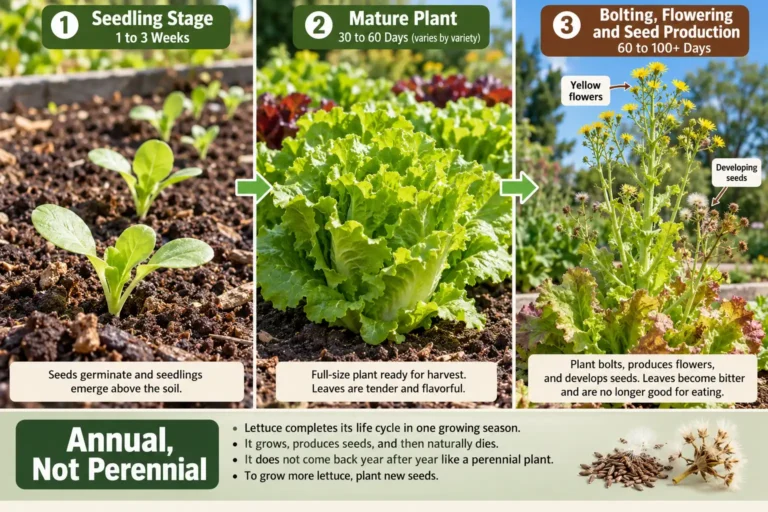
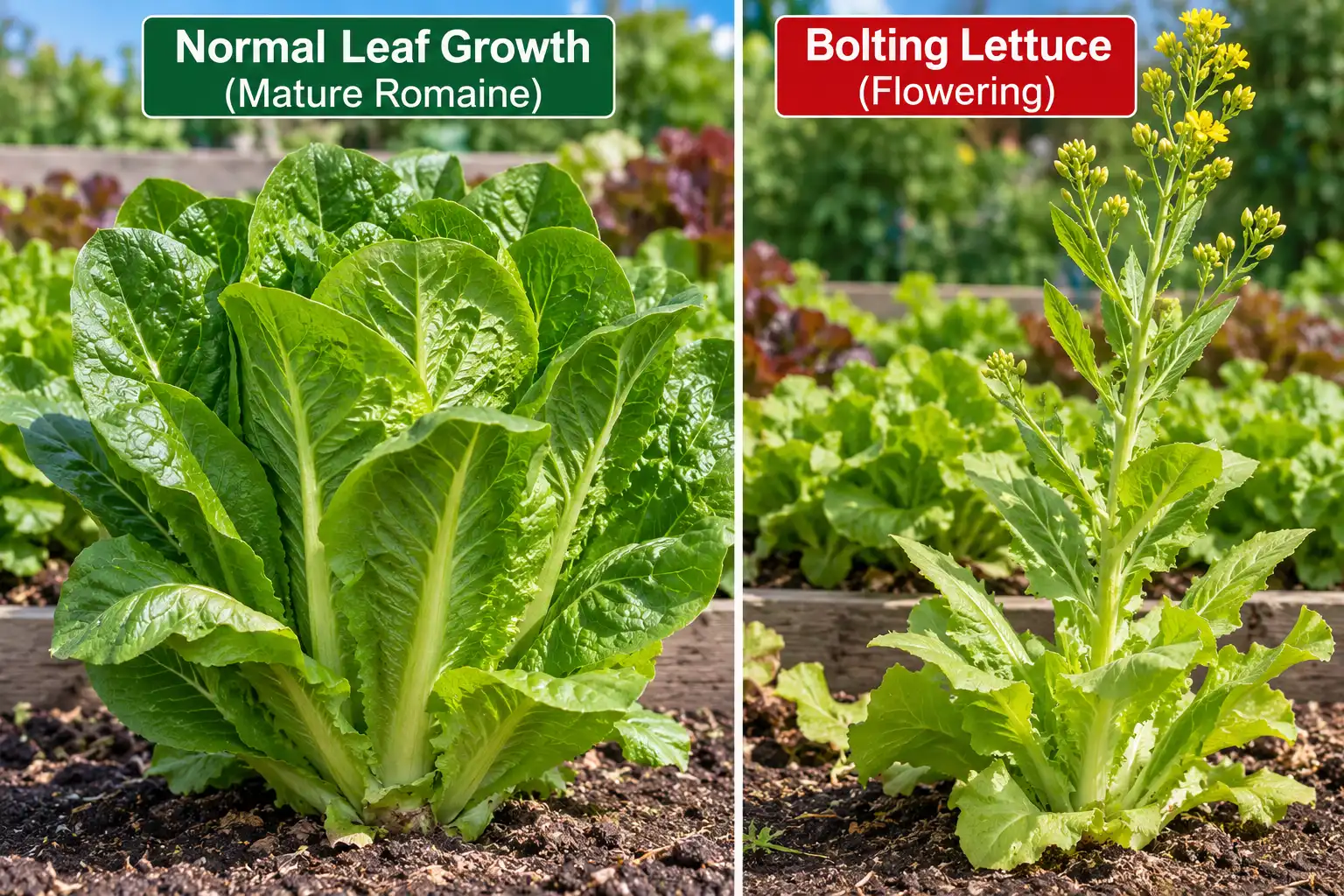
A lettuce plant that suddenly develops a tall central stem may be bolting, which means it is shifting from leaf production to flowering.
This is different from the normal upright growth of romaine.
Normal growth versus bolting
Healthy lettuce produces closely arranged leaves. Romaine leaves naturally grow upward, but the plant still forms a recognizable head.
Bolting lettuce develops a central stalk that continues rising above the original leaves. New leaves may become narrower, and flower buds eventually appear.
University of California IPM explains that high temperatures can stimulate lettuce flower stalk development.
Once bolting begins, leaves often become tougher and more bitter. Harvest any acceptable leaves promptly rather than waiting for the head to grow larger.
For measures that reduce early flowering, see the guide to preventing lettuce from bolting.
What Controls How Tall Lettuce Grows?
Variety determines much of a lettuce plant’s shape. Temperature, sunlight, water, and soil fertility influence how well it develops.
Temperature and sunlight
Lettuce grows best during cool weather. The University of Minnesota Extension identifies approximately 50°F nights and 68°F daytime temperatures as favorable conditions.
Provide good sunlight during cool weather. In warmer conditions, afternoon shade can reduce heat stress and premature bolting.
Moisture and soil fertility
Keep the root zone consistently moist without leaving the soil waterlogged.
University of Minnesota Extension indicates that around 1 inch of rainfall per week can meet lettuce’s water needs under suitable conditions. Sandy soils and hot weather may require more frequent irrigation.
For larger plantings, use crop water requirement calculations to adjust irrigation to weather and soil conditions.
Lettuce also needs sufficient nutrients for steady leaf growth. However, adding fertilizer simply to increase plant height is not a sound approach. Check nutrient availability first using a soil test report.
How Much Space Does Lettuce Need to Reach Mature Size?
Lettuce needs enough horizontal space for its leaves, even when the plant stays short.
University of Minnesota Extension recommends approximately 5 inches between baby-leaf lettuce plants and 10 to 12 inches for full-sized leaf lettuce. Full-sized head lettuce also commonly needs 10 to 12 inches between plants.
Spacing affects leaf expansion, airflow, and access during harvesting.
Lettuce spacing for raised beds and larger fields
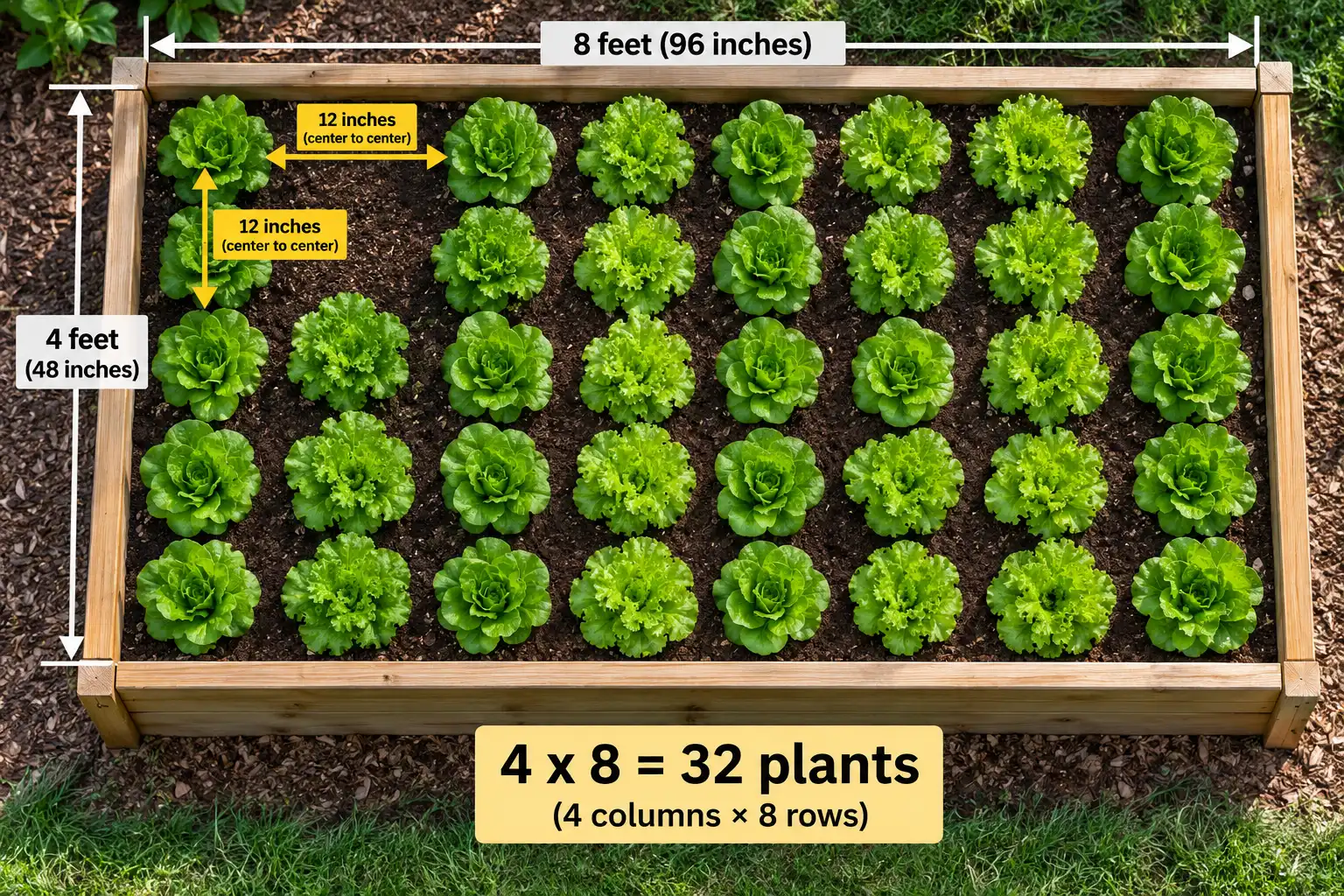
For a 4-foot by 8-foot planted bed with full-sized lettuce positioned 12 inches apart in both directions:
- Bed area: 32 square feet.
- Plants across the width: 4.
- Plants along the length: 8.
- Total planting positions: 32 lettuce plants.
At the same spacing, a theoretical acre of continuous planted surface contains 43,560 planting positions. Actual field populations are lower when access paths, equipment lanes, and unused edges are included.
This calculation applies to 12-inch square spacing, not every lettuce production system.
Does Lettuce Grow Differently in Different US Regions?
Lettuce varieties retain their basic growth habits across regions. However, local temperatures affect how quickly plants mature or begin flowering.
Upper Midwest: University of Minnesota Extension recommends direct seeding in April when the soil becomes workable. July seed starting can provide transplants for August.
Mid-Atlantic: University of Maryland Extension recommends spring and late-summer planting. Lettuce performs best when the main growth period avoids intense summer heat.
Southeast: University of Georgia Extension recommends early spring and early fall. Leaf lettuce is generally easier to grow than iceberg under Georgia’s warm conditions.
Florida: The UF/IFAS Florida Vegetable Gardening Guide lists September through February for outdoor lettuce planting in Central and South Florida.
A USDA hardiness zone alone does not determine lettuce height. Match your planting schedule and variety to seasonal temperatures.
For warmer planting windows, consider cultivars with identified heat or bolting tolerance, such as ‘Jericho’, ‘Buttercrunch’, or ‘New Red Fire’, as described by NC State Extension.
Why Is My Lettuce Too Short, Thin, or Unusually Tall?
A plant’s appearance can help distinguish normal growth from a developing problem.
| What you notice | Possible explanation | What to check |
|---|---|---|
| Small but healthy, compact leaves | Young plant or naturally small cultivar | Variety and expected harvest stage |
| Long, weak, pale seedlings | Insufficient light | Light intensity and seedling spacing |
| Small leaves with slow growth | Dry soil, crowding, or nutrient limitations | Root-zone moisture, spacing, and soil fertility |
| Upright, overlapping leaves | Normal romaine growth | Head development and firmness |
| Tall central stem with narrower leaves | Bolting | Heat exposure and flowering signs |
| Wilting and poor leaf development | Water stress or damaged roots | Soil moisture, drainage, and root condition |
Check moisture and growing conditions before applying fertilizer. Excess fertilizer will not correct bolting or insufficient light.
FAQs about Lettuce Plant Height
Can lettuce grow taller than 12 inches?
Yes. Lettuce can grow beyond 12 inches, especially when it begins developing a flowering stalk. However, height gained during bolting does not indicate a better harvest, because the leaves commonly become bitter and less tender.
How tall should lettuce seedlings be before transplanting?
There is no universal transplant height. Look for several developed true leaves, a healthy root system, and a sturdy stem rather than a specific measurement. Acclimate indoor-grown seedlings gradually before moving them outdoors.
Can lettuce grow in a shallow container?
Yes. NC State Extension indicates that lettuce can grow in containers approximately 6 to 8 inches deep, with sufficient volume and drainage. Choose a container wide enough for the variety, and monitor soil moisture regularly.
Does lettuce keep growing after you cut its leaves?
Yes. Loose-leaf lettuce can continue producing new leaves if you harvest the outer foliage and leave the central growing point intact. Growth eventually slows, particularly as heat and increasing maturity encourage the plant to flower.
Does romaine lettuce grow taller than iceberg lettuce?
Romaine typically has a more upright appearance, while iceberg forms a rounded, compact head. However, specific heights vary by cultivar and growing conditions. Use overlapping leaves to judge romaine maturity and head firmness to judge iceberg.
What Height Should You Aim for Before Harvest?
Expect most mature lettuce to remain within the general 6 to 12-inch range, but harvest according to its type. Start picking usable leaf lettuce around 5 to 6 inches, and check romaine heads around 6 to 8 inches.
Prioritize healthy leaves and developed heads over maximum height. Harvest before a central flower stalk begins extending.