Is Lettuce a Perennial or Annual? What Growers Should Know
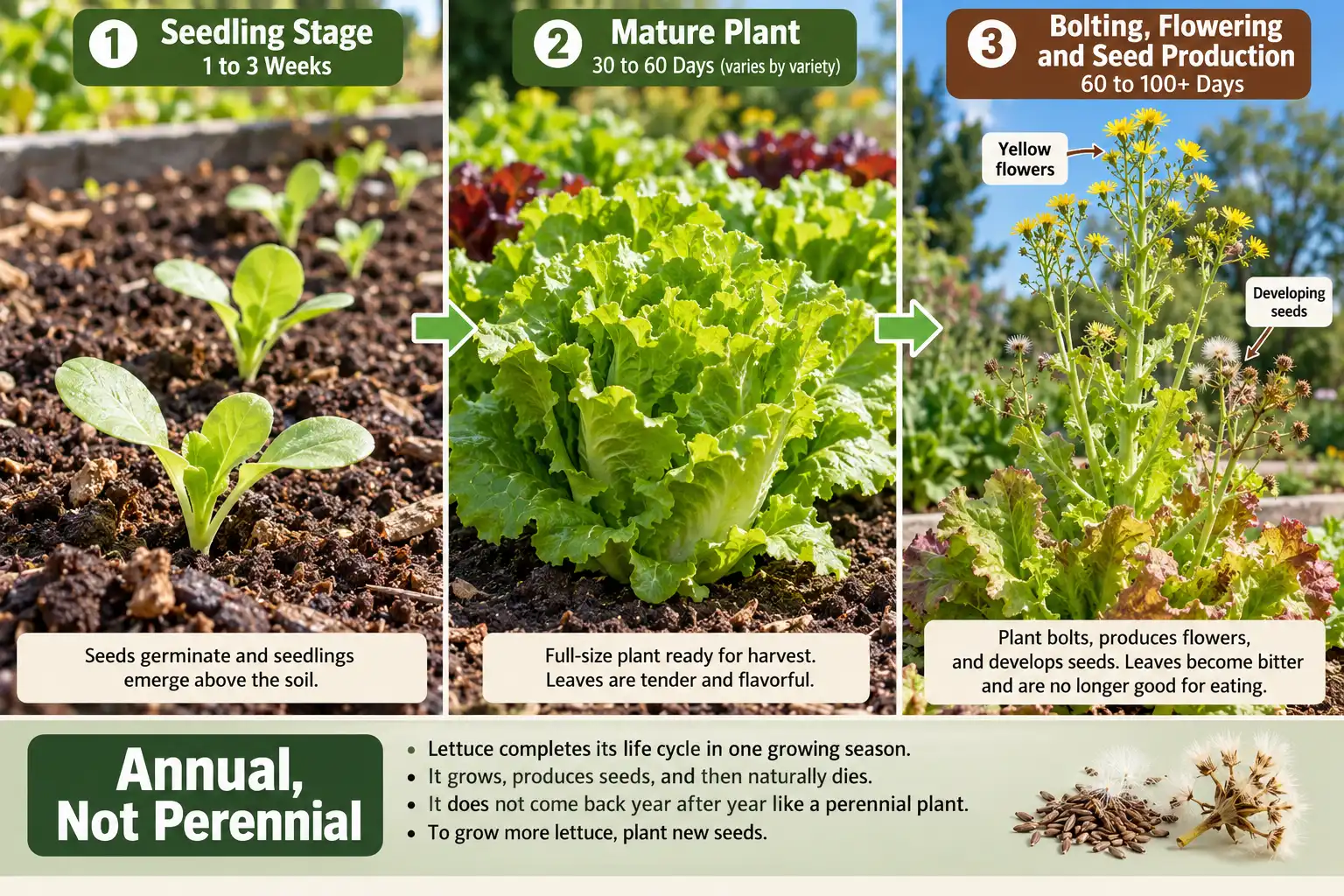
Common garden lettuce completes its life cycle and eventually dies after producing seeds. However, its ability to regrow after harvesting or survive a mild winter can make it seem like a perennial.
Lettuce is an annual, not a perennial. A single plant may provide several leaf harvests or survive a mild winter, but it eventually flowers, produces seeds, and dies. You must grow new plants for future crops.
Is Lettuce a Perennial or Annual in Botanical Terms?
Common garden lettuce (Lactuca sativa) is classified as an annual crop. It grows from seed, develops edible leaves, produces flowers and seeds, and eventually dies.
North Carolina State Extension identifies garden lettuce as an annual. However, the Royal Horticultural Society lists it as annual or biennial. This reflects differences in how long plants can survive under favorable conditions.
The terms have different meanings:
- Annual: Completes its life cycle within one growing season.
- Biennial: Typically grows leaves during its first season and flowers during its second.
- Perennial: Lives for multiple years and can produce new growth repeatedly.
Lettuce may occasionally survive across two growing seasons. However, it does not develop the persistent, long-lived growth habit of a true perennial.
All common garden lettuce types, including romaine, iceberg, butterhead, and loose-leaf, follow this pattern.
What Happens During the Lettuce Life Cycle?
Lettuce produces edible leaves before shifting its energy toward flowering and seed production.
Its life cycle follows five stages:
- Germination: Lettuce seeds absorb moisture and begin developing roots and shoots.
- Leaf development: The plant produces increasingly larger leaves, sometimes forming a compact head.
- Harvest maturity: Leaves or heads become ready for harvesting. The University of Maryland Extension reports approximately 40 to 80 days to maturity, depending on lettuce type.
- Bolting and flowering: The central stem elongates and develops small yellow flowers, eventually producing seeds.
- Plant death: After completing seed production, the plant naturally declines and dies.
The time spent in each stage depends on variety, temperature, and growing conditions.
Most growers harvest lettuce during its leafy stage, long before the plant completes its entire biological life cycle.
Why Does Lettuce Stop Producing Leaves?
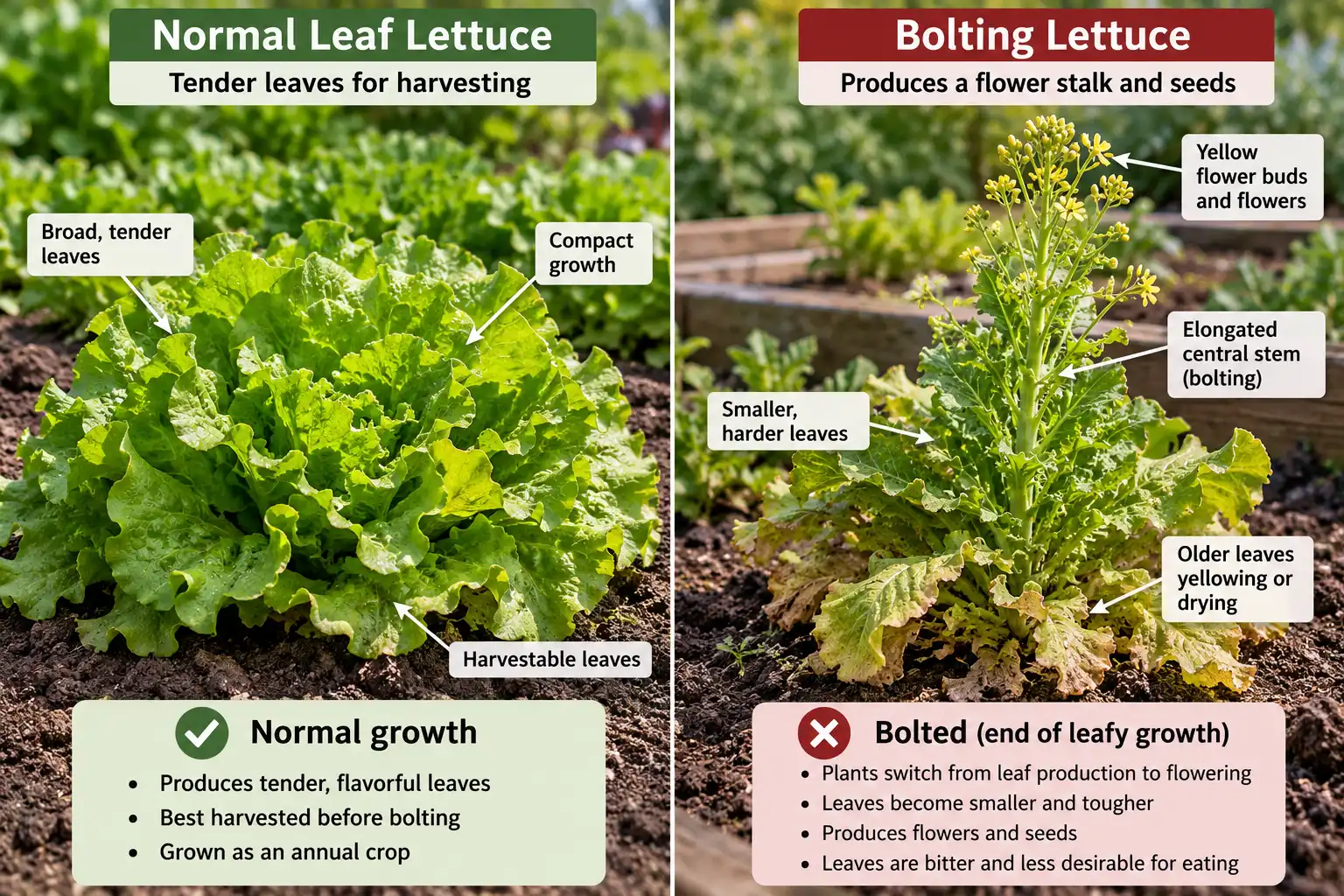
Lettuce eventually stops making harvestable leaves because it enters its reproductive stage, a process called bolting.
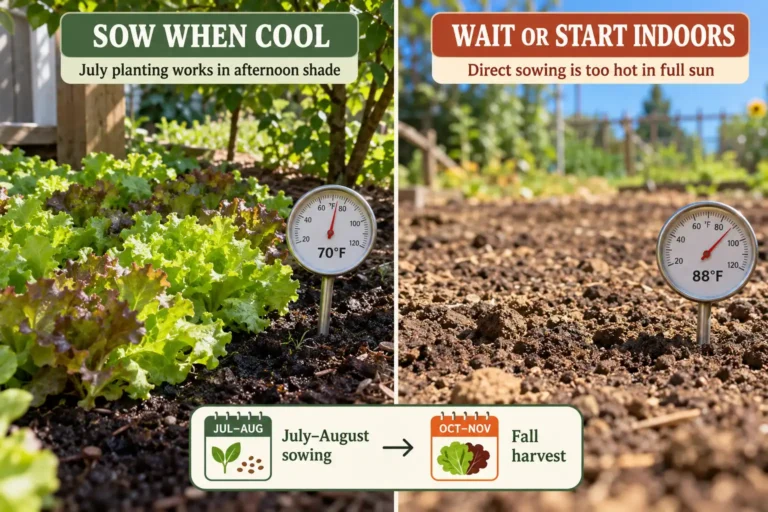
Heat and long daylight hours can accelerate bolting. Dry soil can also increase plant stress.
According to North Carolina State Extension, temperatures around 70 to 80°F can contribute to early bolting, particularly when soil moisture is insufficient.
You can recognize bolting through these changes:
- The plant develops a taller central stem.
- Leaves become smaller, tougher, or more bitter.
- Flower buds appear at the top.
- Leaf production slows as flowering progresses.
Once a substantial flower stalk develops, removing it usually does not restore normal leafy growth.
If warm weather regularly ends your harvests, use methods to reduce premature lettuce flowering before your next planting.
Does Lettuce Grow Back After Harvesting?
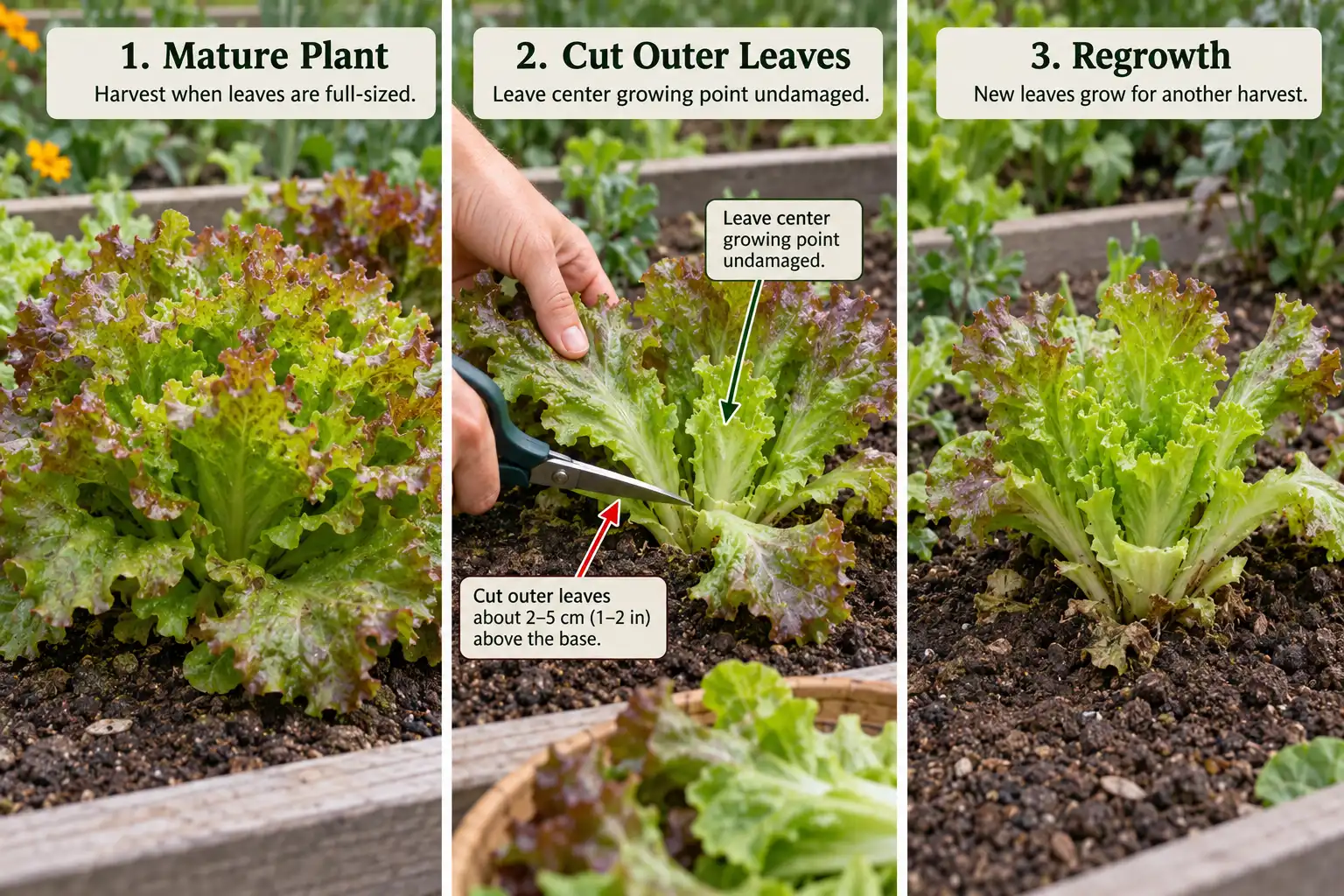
Yes. Lettuce can produce new leaves after harvesting, provided its growing point remains intact and conditions support further growth.
This is known as cut-and-come-again harvesting.
For loose-leaf lettuce, remove the larger outer leaves while leaving the central leaves undamaged. The plant can continue producing additional foliage.
The University of Maryland Extension also describes cutting young salad greens just above ground level. Under suitable conditions, a second cutting may be ready approximately two to three weeks later.
However, repeated harvesting does not make lettuce perennial. The same plant eventually ages, bolts, and stops producing useful leaves.
Which Lettuce Types Regrow Best?
Different lettuce types offer different harvesting opportunities.
| Lettuce type | Harvesting method | Regrowth potential |
|---|---|---|
| Loose-leaf | Pick outer leaves or cut young greens | Good for repeated harvests |
| Butterhead | Remove outer leaves before head maturity | Can continue growing if the center remains |
| Romaine | Harvest outer leaves or the mature head | Additional leaves possible before final harvest |
| Iceberg | Harvest the complete, mature head | Usually grown for one main harvest |
UF/IFAS explains that leaf, butterhead, and romaine lettuce can produce additional harvests when inner growing tissues remain. Iceberg is generally harvested as a single head.
For repeated harvesting, loose-leaf cultivars such as ‘New Red Fire’ and ‘Black Seeded Simpson’ are useful choices. ‘Buttercrunch’ is another option when you want tender leaves and a loose head.
Can Lettuce Survive Winter and Return in Spring?
Yes, some lettuce plants can survive winter and resume growing in spring. However, this does not make them perennials.
Lettuce tolerates light frost, but prolonged freezing weather can damage or kill exposed plants.
The University of Maryland Extension explains that certain varieties can overwinter when young transplants become established in fall and receive winter protection.
Examples include:
- ‘Winter Density’
- ‘Arctic King’
- ‘Winter Marvel’
- ‘Black Seeded Simpson’
Cold frames, low tunnels, and floating row covers can improve survival, depending on local winter conditions.
A lettuce plant that survives from November into March is still the same aging plant. It may produce an early spring harvest before bolting as temperatures and day length increase.
Winter survival is not the same as perennial growth. The plant does not reliably return for several years from a permanent root crown.
Why Does Lettuce Sometimes Appear Again the Next Year?
Lettuce can occasionally reappear because seeds from an earlier crop germinate naturally.
If you allow plants to flower and produce mature seeds, some seeds may fall onto nearby soil. Suitable moisture and temperature can then trigger germination.
This process is called self-seeding.
The new lettuce seedlings are separate plants, not new growth from the original plant’s roots.
There is also a botanical distinction worth knowing. Some wild relatives genuinely are perennial. For example, Royal Botanic Gardens Kew classifies Lactuca perennis, a European species, as a perennial. It is different from ordinary garden lettuce, Lactuca sativa.
Therefore, neither volunteer seedlings nor perennial wild relatives change the classification of common salad lettuce.
When Should You Replant Lettuce in Different US Regions?
Plant lettuce during the cooler parts of your growing season rather than expecting an established plant to produce leaves indefinitely.
The planting window varies considerably across the United States.
| US region | Main planting periods | Growing considerations |
|---|---|---|
| Northern states, including Minnesota | Early spring and mid-to-late summer for fall harvest | Short growing windows and summer heat can limit production |
| Mid-Atlantic states, including Maryland | Spring and late summer | Spring and fall crops perform well; protected overwintering is sometimes possible |
| Southern states, including Florida | Fall through winter | Cooler months are generally more suitable than summer |
The University of Minnesota Extension recommends sowing spring lettuce when soil becomes workable. For fall crops, it suggests planting approximately three months before the average first fall frost.
Meanwhile, UF/IFAS recommends Florida’s cooler winter season for lettuce production. Lettuce generally performs well around 50 to 75°F.
Choose planting dates according to local temperatures and frost dates, not USDA hardiness zones alone.
How to Keep Harvesting Lettuce Without Perennial Plants
You can maintain a steady supply of lettuce by combining repeated leaf harvesting with successive plantings.
1. Sow Small Batches Regularly
Instead of sowing all your lettuce at once, plant a small batch about every two weeks during suitable weather.
This creates overlapping crops at different maturity stages. Once older lettuce bolts, younger plants can replace it.
2. Leave Enough Room for Growth
Plant lettuce seed approximately 1/4 to 3/8 inch deep.
For full-size leaf lettuce, spacing plants about 10 to 12 inches apart provides room for development. Smaller baby-leaf crops can be grown closer together.
At 12-inch spacing in both directions, a 4-by-8-foot planted bed accommodates approximately 32 plants. A fully planted acre would theoretically hold 43,560 plants, although paths and field access reduce actual capacity.
3. Maintain Even Soil Moisture
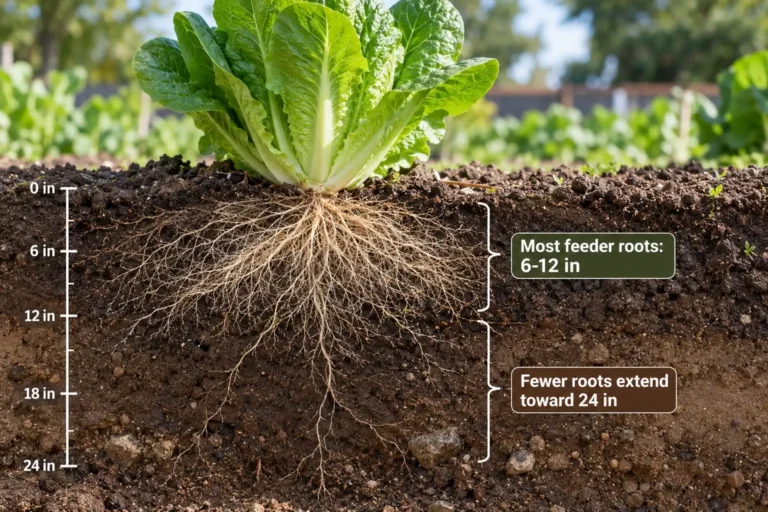
Lettuce has relatively shallow roots and responds poorly to prolonged dryness.
Water enough to maintain consistently moist, well-drained soil. For larger plantings, estimate crop irrigation requirements according to weather, soil, and crop development.
Avoid prolonged saturation because it can encourage root diseases.
4. Replace Aging Plants Promptly
Remove plants when they become bitter, heavily bolted, diseased, or unproductive.
Before replanting, check soil condition and nutrient availability. A soil test report can help you choose appropriate fertilizer amendments instead of applying unnecessary nutrients.
Fresh plantings generally provide better eating quality than trying to keep severely bolted lettuce producing leaves.
FAQs about Lettuce a Perennial or Annual
Is Romaine Lettuce Annual or Perennial?
Romaine lettuce is an annual, just like iceberg and loose-leaf lettuce. You can remove individual outer leaves for additional harvests, but the plant eventually bolts and dies instead of returning as a perennial.
Does Lettuce Die Immediately After Bolting?
No. A bolted lettuce plant can remain alive while flowering and producing seeds. However, its leaves often become bitter and tough, making the plant less useful for fresh salads and regular harvesting.
Can You Eat Lettuce After It Flowers?
Yes, flowering lettuce is not automatically unsafe to eat. However, the leaves usually become increasingly bitter and less tender, so harvesting before the flower stalk develops produces better eating quality.
Can Lettuce Grow Year-Round Indoors?
Yes, lettuce can be produced throughout the year indoors with suitable light, temperatures, and nutrients. However, individual plants still have limited lifespans, so continuous production requires periodic harvesting and replacement with new seedlings.
Does Lettuce Grow Back From a Store-Bought Stump?
A lettuce stump may produce some new leaves if enough living stem and growing tissue remain. However, this regrowth is limited and does not turn the stump into a perennial or guarantee another full-sized head.
Can You Save Seeds From Annual Lettuce?
Yes. Allow healthy lettuce plants to flower and develop mature, dry seeds before collecting them. Open-pollinated varieties are generally preferable for maintaining recognizable cultivar characteristics, while hybrid offspring may differ from their parents.
What to Remember for Your Next Lettuce Planting
Treat lettuce as an annual crop, even when a plant provides several harvests or survives winter.
Choose loose-leaf varieties for repeated cutting, plant during cool weather, and sow replacement crops before older plants bolt. Fresh plantings, rather than permanent lettuce roots, are the dependable way to maintain a continuous harvest.