Is It Too Late to Plant Lettuce in July? Regional Advice
Often, no. July can be the start of a fall crop, but seeds may fail in hot soil and mature plants may turn bitter. The useful cutoff depends on temperature, harvest size, and your first fall frost.
No, it is not always too late to plant lettuce. In July, sow where soil stays cool or start fall transplants indoors. In hot regions, wait for cooler weather and compare maturity days with first frost.
Can You Plant Lettuce in July?
Yes, you can plant lettuce in July, especially for a fall harvest. However, July planting is much easier in cooler regions than in areas with prolonged summer heat.
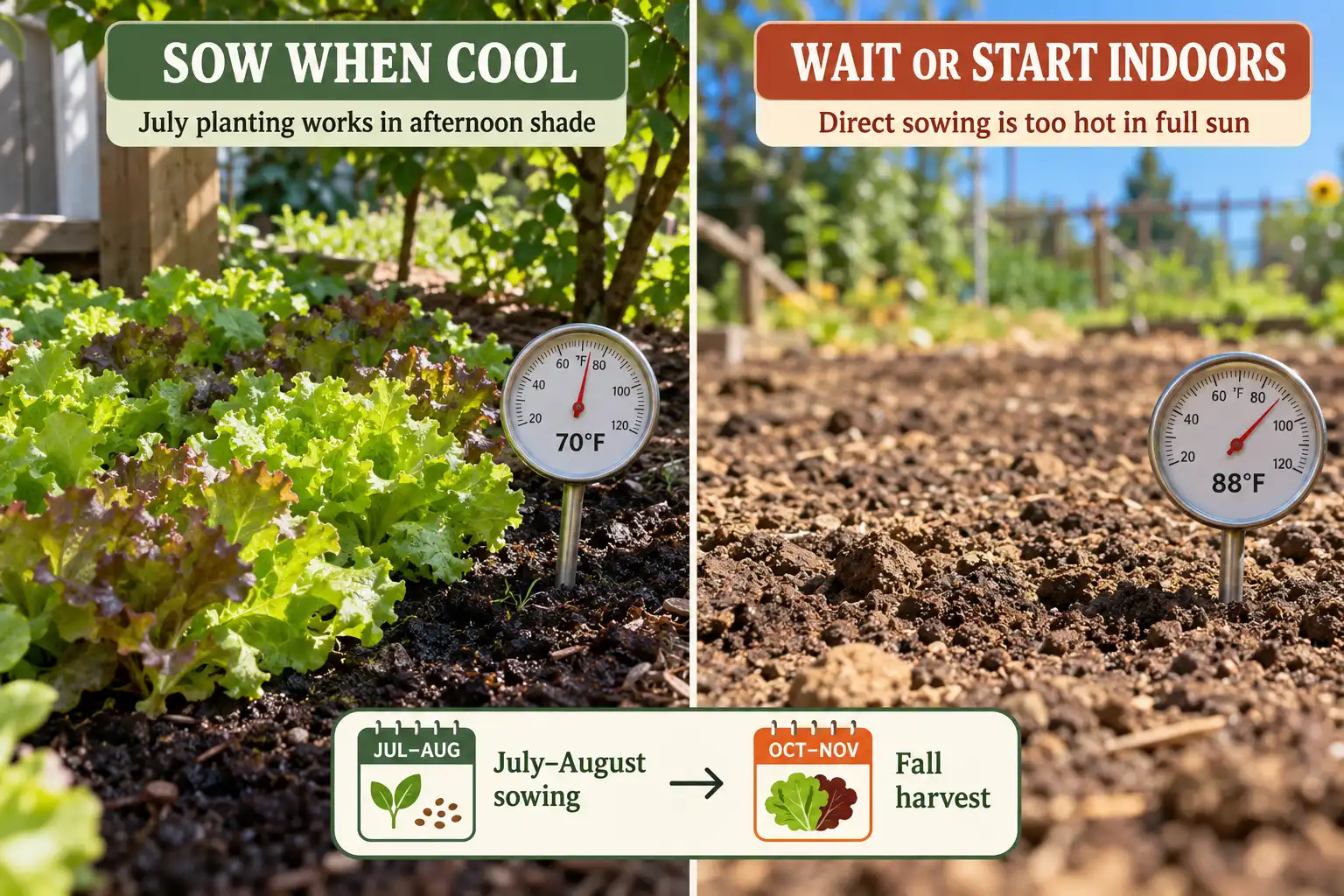
The biggest challenge is soil temperature, not the calendar.
According to Utah State University Extension, lettuce seeds germinate best at soil temperatures of 55 to 65°F. Germination declines above 80°F.
Use these conditions to make your planting decision:
| Growing condition | July planting decision |
|---|---|
| Soil stays below 75°F | Direct sowing is generally reasonable |
| Soil reaches 75 to 80°F | Germination becomes less dependable |
| Soil frequently exceeds 80°F | Start seeds in a cooler location or wait |
| Cool weather arrives in August | Begin a fall planting when soil temperatures allow |
| Frost approaches before maturity | Grow baby leaves or consider protected growing |
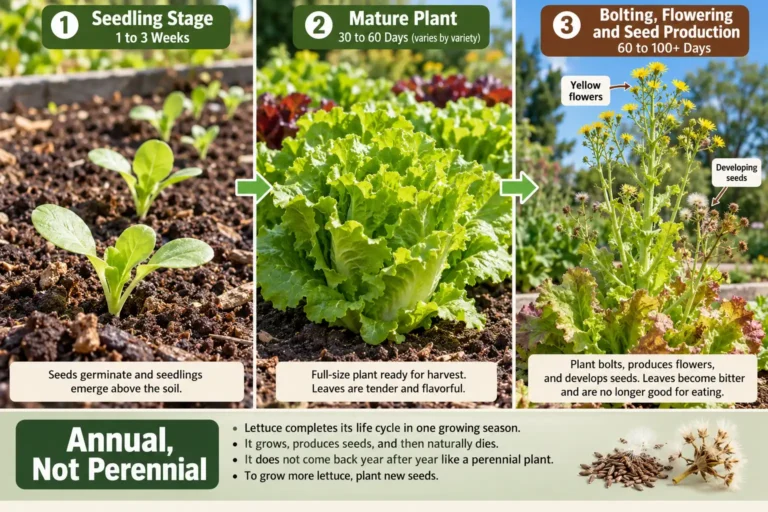
Lettuce can also bolt in summer. Bolting happens when a plant produces a flowering stalk, often causing its leaves to become bitter.
Afternoon shade and steady moisture reduce heat stress, but they cannot eliminate bolting. For additional prevention methods, see ways to keep lettuce from flowering early.
When Can You Plant Lettuce in July Across the United States?
July is a suitable lettuce planting month in some regions. In hotter locations, August or September usually provides better conditions.
The regional differences are supported by university planting calendars.
| US region | Is July too late? | Recommended approach |
|---|---|---|
| Pacific Northwest, parts of Oregon | No | Sow lettuce during July where summer temperatures remain manageable |
| Upper Midwest, Minnesota | No, for fall starts | Start seeds indoors in July and transplant in August |
| Midwest, Iowa | Usually too hot, not too late | Plan for fall leaf lettuce sowing from early August into early September |
| Mid-Atlantic, central Maryland | No | Direct sow leaf or romaine lettuce from mid-July through August |
| Southeast, Georgia | Usually too hot for direct sowing | Wait for cooler fall conditions, often September or later |
Oregon State University Extension includes lettuce among midsummer crops for fall and winter harvests.
Meanwhile, University of Minnesota Extension recommends starting fall lettuce indoors in July for August transplanting.
University of Maryland Extension recommends early July indoor starts for fall head lettuce, followed by August transplanting. Its calendar also allows mid-July direct sowing of leaf and romaine lettuce.
Farther south, University of Georgia Extension lists September 1 through October 15 for fall leaf lettuce. Its separate home gardening guide allows late July head lettuce planting in cooler mountain areas.
These dates differ because summer temperatures, elevations, lettuce types, and frost timing differ.
For more detailed fall scheduling, see lettuce planting dates for the autumn season.
When Is It Too Late to Plant Lettuce for Fall?
It becomes too late when your remaining growing season cannot support the harvest you want.
The calculation starts with your average first fall frost date and the seed packet’s days to maturity.
Iowa State University Extension lists 45 to 60 days for leaf lettuce. It also recommends accounting for slower growth as autumn temperatures decline.
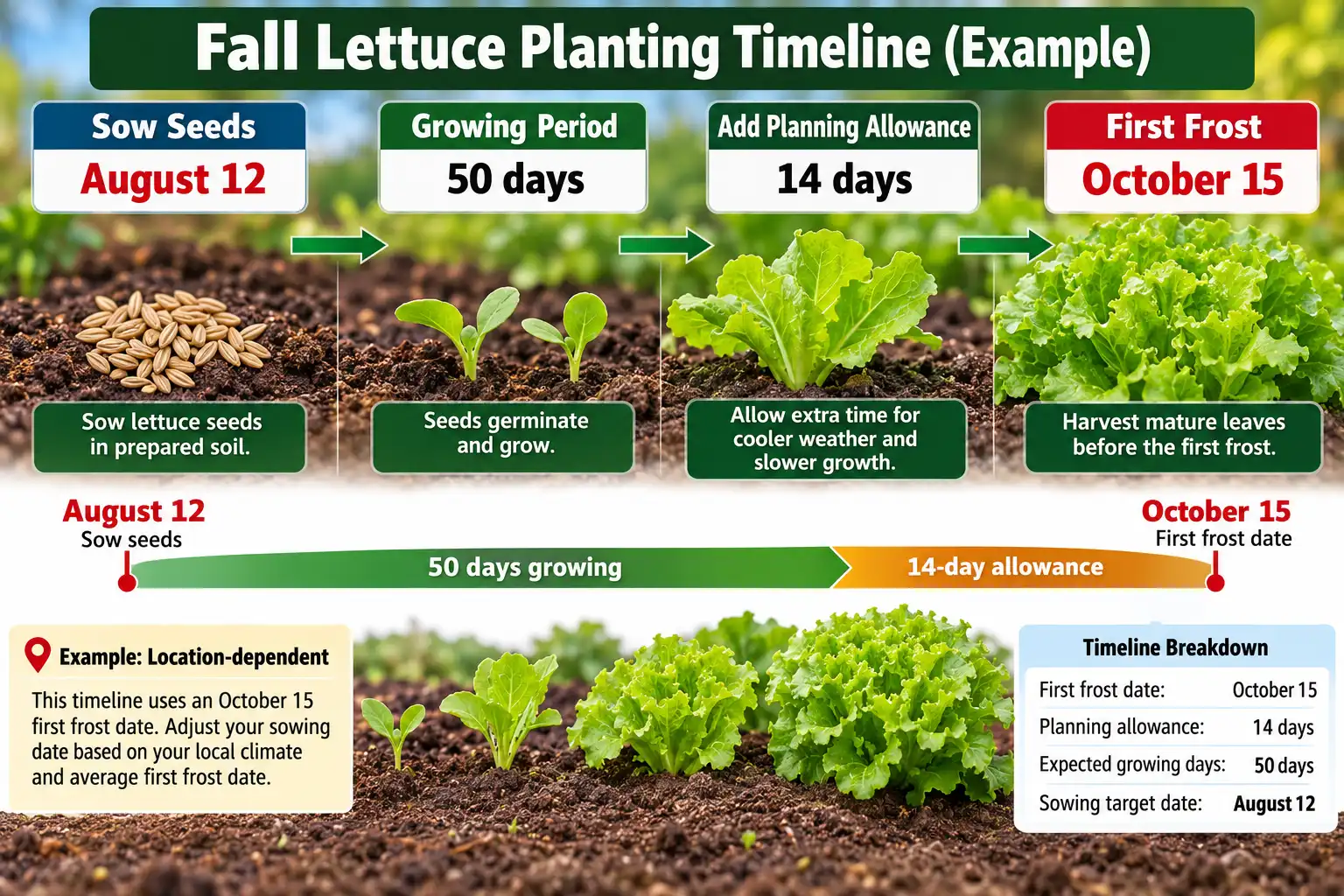
Calculate your latest practical sowing date
Suppose your average first fall frost occurs on October 15. Your chosen lettuce variety takes 50 days from sowing to harvest.
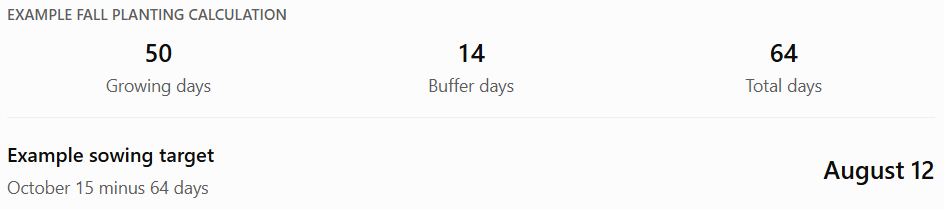
The additional 14 days provide a cautious allowance for slower fall growth and harvesting. This is a planning example, not a universal cutoff.
Lettuce tolerates light frost, so later crops sometimes succeed. However, hard freezes and short days can prevent further growth.
If time is limited, baby leaves may be a better option. University of Maryland Extension reports that mixed baby salad greens can reach harvest size in approximately 25 to 40 days under suitable conditions.
Which Lettuce Varieties Are Better for Late Planting?
Loose-leaf lettuce is usually the most practical choice when planting late because you can harvest leaves before the plant reaches full maturity.
Head-forming varieties generally require a longer period of favorable growing conditions to produce their intended harvest.
| Lettuce type | Named varieties | Late-season suitability |
|---|---|---|
| Loose-leaf | Red Sails, Salad Bowl, Slobolt | Good for baby leaves and repeated harvesting |
| Romaine | Cimmaron Red Romaine, Green Towers | Suitable for fall crops with enough cooling time |
| Butterhead | Buttercrunch, Esmeralda | Better when temperatures become consistently mild |
| Crisphead | Summertime, Great Lakes | Less forgiving when heat or frost limits head development |
Utah State University Extension lists these lettuce selections in its recommended varieties guide. Individual varieties still differ in heat tolerance.
Red Sails and other loose-leaf varieties offer flexibility because outer leaves can be picked while smaller leaves continue growing.
For July sowing, prioritize varieties described as slow-bolting or heat-tolerant. Those descriptions are useful selection signals, not guarantees during extreme heat.
How to Plant Lettuce in July Successfully
Successful July planting depends on getting seeds established without exposing young plants to excessive heat.
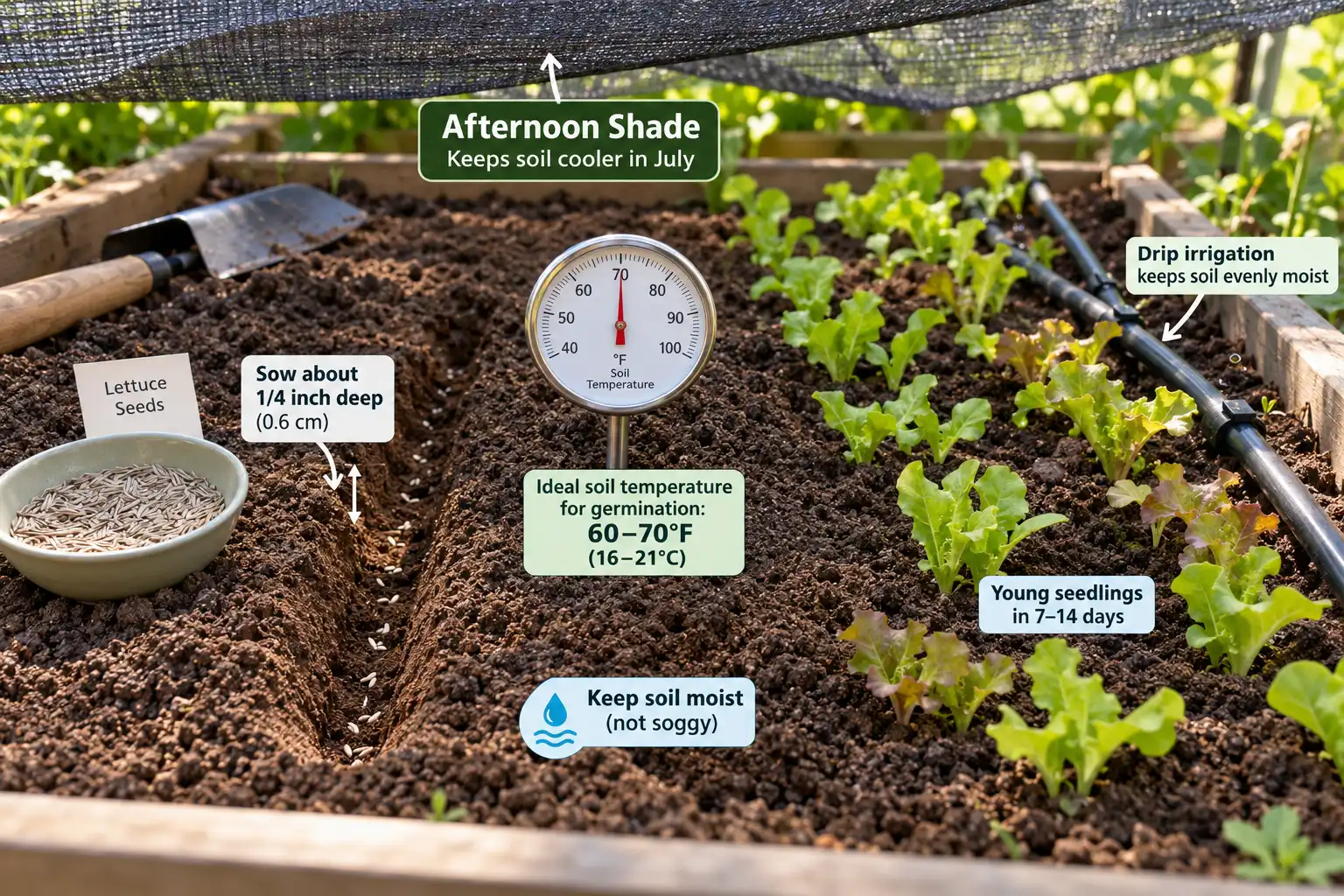
1. Check soil temperature. Measure near seed depth. If soil repeatedly exceeds 80°F, germinate seeds in a cooler place or delay direct sowing.
2. Choose a partially shaded location. Aim for morning sunlight and relief from intense afternoon sun. Lettuce can grow with four to six hours of direct light during hot weather.
3. Plant seeds shallowly. Sow approximately 1/4 to 1/2 inch deep in loose, moist soil. Cover lightly and avoid compacting the surface.
4. Keep moisture consistent. Water gently whenever the seedbed begins drying. Avoid saturated soil. Once seedlings emerge, water near their roots and use light mulch between rows.
5. Thin or transplant seedlings. For individual leaf lettuce plants, allow approximately 4 to 8 inches between plants. Give larger heading varieties additional room according to their seed packets.
For indoor germination, provide adequate light immediately after emergence. Acclimate seedlings gradually before transplanting into outdoor conditions.
A separate guide to starting lettuce seedlings indoors explains how seed-starting dates fit the outdoor growing season.
How much lettuce fits in a garden bed?
For individual leaf lettuce plants, consider a 4-foot-wide by 10-foot-long bed.
Three rows, each 10 feet long and spaced 12 inches apart, provide approximately 45 planting positions when plants are 8 inches apart.
For larger plantings, repeating these beds with 18-inch walkways gives approximately 792 beds per acre. That represents about 35,600 plant positions per acre before edge losses.
These are spacing calculations, not expected plant survival or yield figures. Wider spacing is necessary for larger heads.
What Problems Can Affect Lettuce Planted Too Late?
Late lettuce plantings can fail from summer heat, autumn cold, or poor establishment. The symptoms help identify which problem needs attention.
Seeds are not germinating
Hot soil is a likely cause when seeds remain dormant despite adequate moisture.
Check soil temperature before reseeding. Lettuce seeds exposed to excessive heat may germinate once conditions cool, but some may lose reliable germination after prolonged exposure.
Plants grow tall instead of producing leaves
A rapidly elongating central stalk usually indicates bolting.
Heat and long days can trigger this response. Removing the flower stalk does not reliably return the plant to productive leafy growth.
Leaves taste bitter
Bitterness often develops when lettuce experiences heat stress or begins bolting.
Harvest remaining usable leaves promptly. For later production, plant another crop in cooler conditions rather than expecting established bitter plants to recover.
Young seedlings wilt after transplanting
Sudden sun exposure, drying soil, and root disturbance can cause transplant stress.
Move seedlings outdoors gradually before planting. Transplant during cooler hours and water the root zone immediately.
Leaves suffer frost damage
Light frost may cause limited damage, but repeated hard freezes can destroy tender growth.
Use row covers when appropriate and harvest mature plants before severe freezing conditions.
FAQs about Late to Plant Lettuce for Fall
Is August too late to plant lettuce?
No. August is a common fall planting month across much of the Midwest and Mid-Atlantic. Choose varieties with enough time to mature and wait until soil temperatures permit dependable germination.
Can lettuce grow in 90°F weather?
Established lettuce may survive brief hot periods, but 90°F weather increases the risk of stunted growth, bitterness, and bolting. Shade and irrigation reduce stress but cannot guarantee high-quality growth during prolonged heat.
Can I plant lettuce in containers during July?
Yes. Containers let you move lettuce into morning sun and afternoon shade as conditions change. However, potting mix can become hot or dry quickly, so check moisture and temperature frequently.
Is September or October too late to plant lettuce?
Not necessarily. September and October can offer suitable growing conditions in mild southern climates. In colder northern regions, late sowings may require protection or may not mature before prolonged freezing weather.
Does lettuce survive the first fall frost?
Established lettuce usually tolerates light frost, although exposed leaves may suffer some injury. Repeated hard freezes can kill plants, so harvest promptly or use appropriate covers when temperatures are expected to fall sharply.
Key Points for Your Lettuce Planting Schedule
July is not automatically too late for lettuce. It can be an excellent starting point for fall production.
Check soil temperature before sowing, choose a lettuce type suited to your harvest goal, and calculate the remaining growing days before frost. In hot regions, waiting for cooler weather often produces better results than forcing an exposed summer planting.