When to Plant Potatoes: 45°F Soil, About 3 Weeks Before Frost
Deciding when to plant potatoes comes down to soil warmth and the season’s end. Plant too soon and seed rots in cold, wet ground. Plant too late and tubers stall in summer heat or run out of time before fall frost.
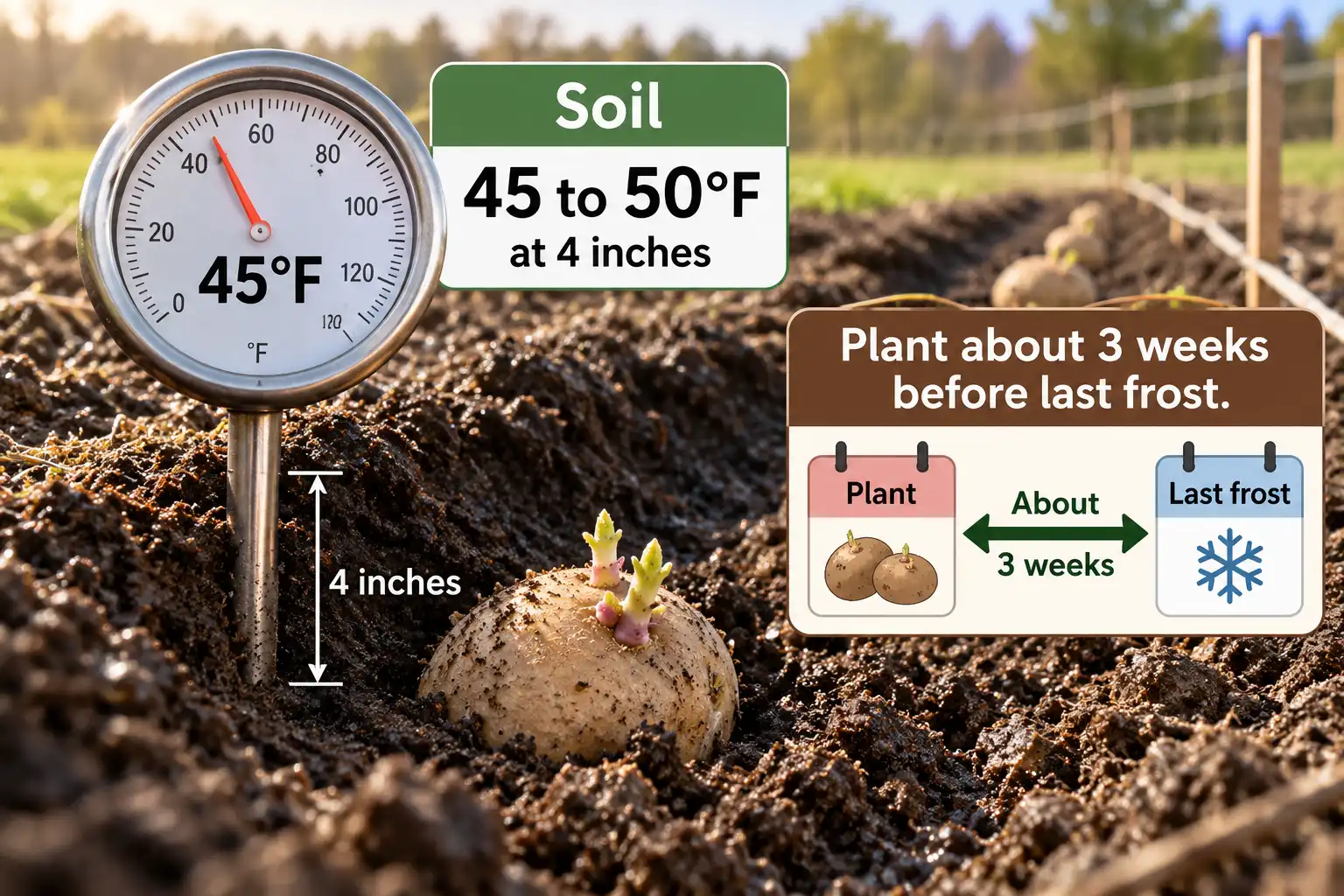
Plant potatoes once soil 4 inches deep reaches 45 to 50°F, about three weeks before your last spring frost. Your region shifts when to plant potatoes: Florida plants in fall and winter, northern states in April or May.
What Soil Temperature Do Potatoes Need?
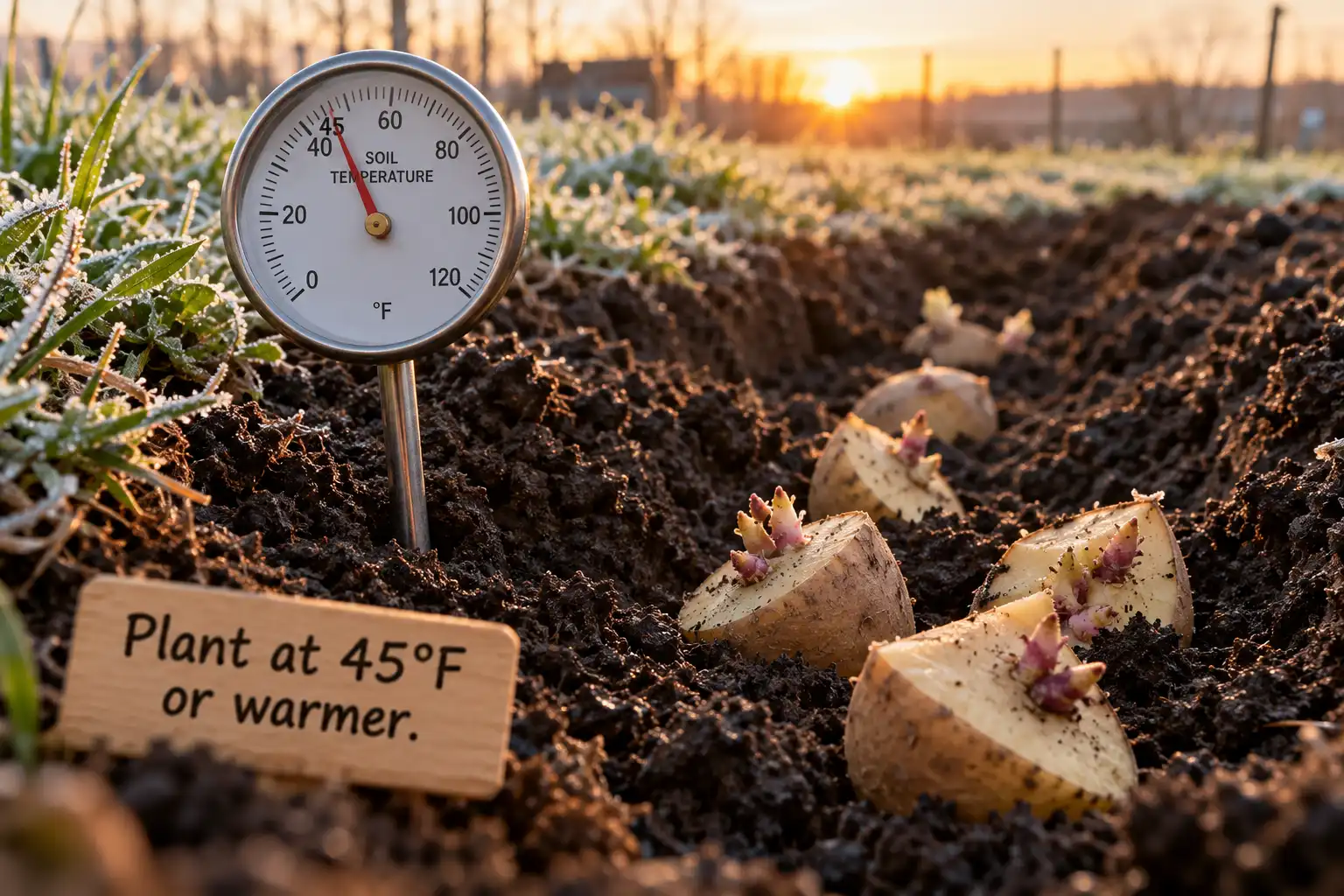
Potatoes need soil at 45°F or warmer, and they come up best near 50°F. UGA Extension says you can plant at 45°F, though potatoes emerge once soil reaches about 50°F. Texas A&M AgriLife sets its mark at about 50°F, 4 inches deep. So treat 45°F as the floor and 50°F as the target.
Cold soil costs more than time. Iowa State University Extension warns that seed pieces can decay in cool, wet soil. Likewise, UGA Extension notes that potatoes planted too early sit in cold soil and tend to rot.
To check, push a soil thermometer 4 inches deep and read it early in the morning, when soil runs coldest. Then wait until several mornings in a row hold at 45°F or above. Also wait for ground that has thawed and is no longer muddy, as University of Minnesota Extension advises.
How Many Weeks Before the Last Frost Should You Plant Potatoes?
Plant about three weeks before your average last spring frost, Texas A&M AgriLife advises, once soil nears 50°F. That head start works because potatoes come up slowly. For example, K-State Research and Extension notes that Kansas plantings made in March often emerge in mid- to late April. So shoots tend to break ground near the frost-free date.
To set your date, count back 21 days from the average last frost for your area. Your county extension office can supply that average. An April 20 frost date, for instance, points to planting around March 30, if the soil reading agrees.
If Frost Hits After Shoots Emerge
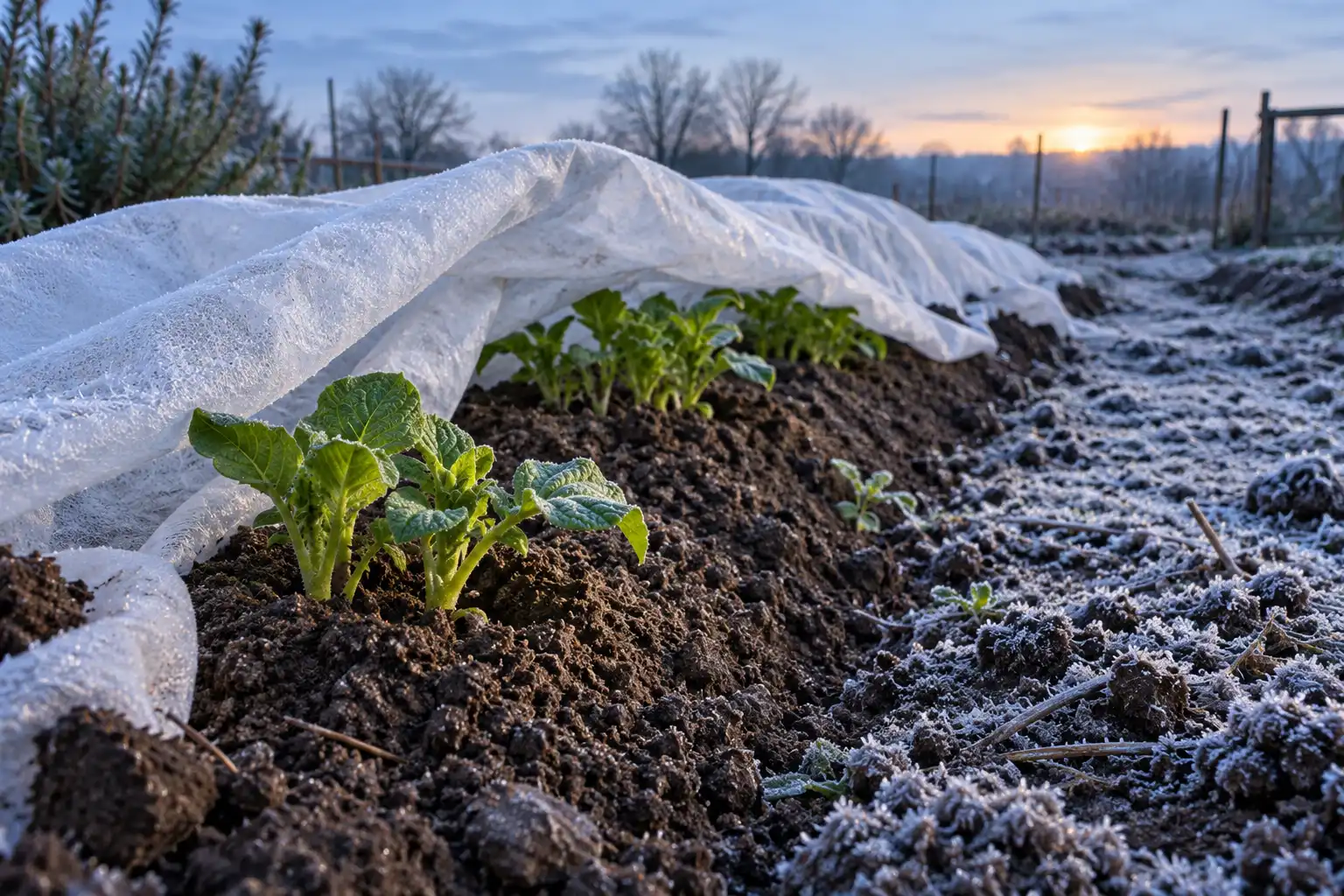
University of Minnesota Extension says potatoes can handle a little frost. Texas A&M AgriLife is stricter, warning that the tops cannot withstand frost. It adds that frost-killed plants will not come back if the seed piece has rotted. So when forecasts call for a hard freeze, cover emerged shoots overnight or hill loose soil over them.
At Field Scale
Texas A&M AgriLife’s commercial potato guide sets a later date: about 2 weeks after the last freeze, with soil above 50°F. That runs about five weeks behind its garden advice. The likely reason is practical: you can cover a garden bed on a cold night, but not a 40-acre field.
When to Plant Potatoes by Region
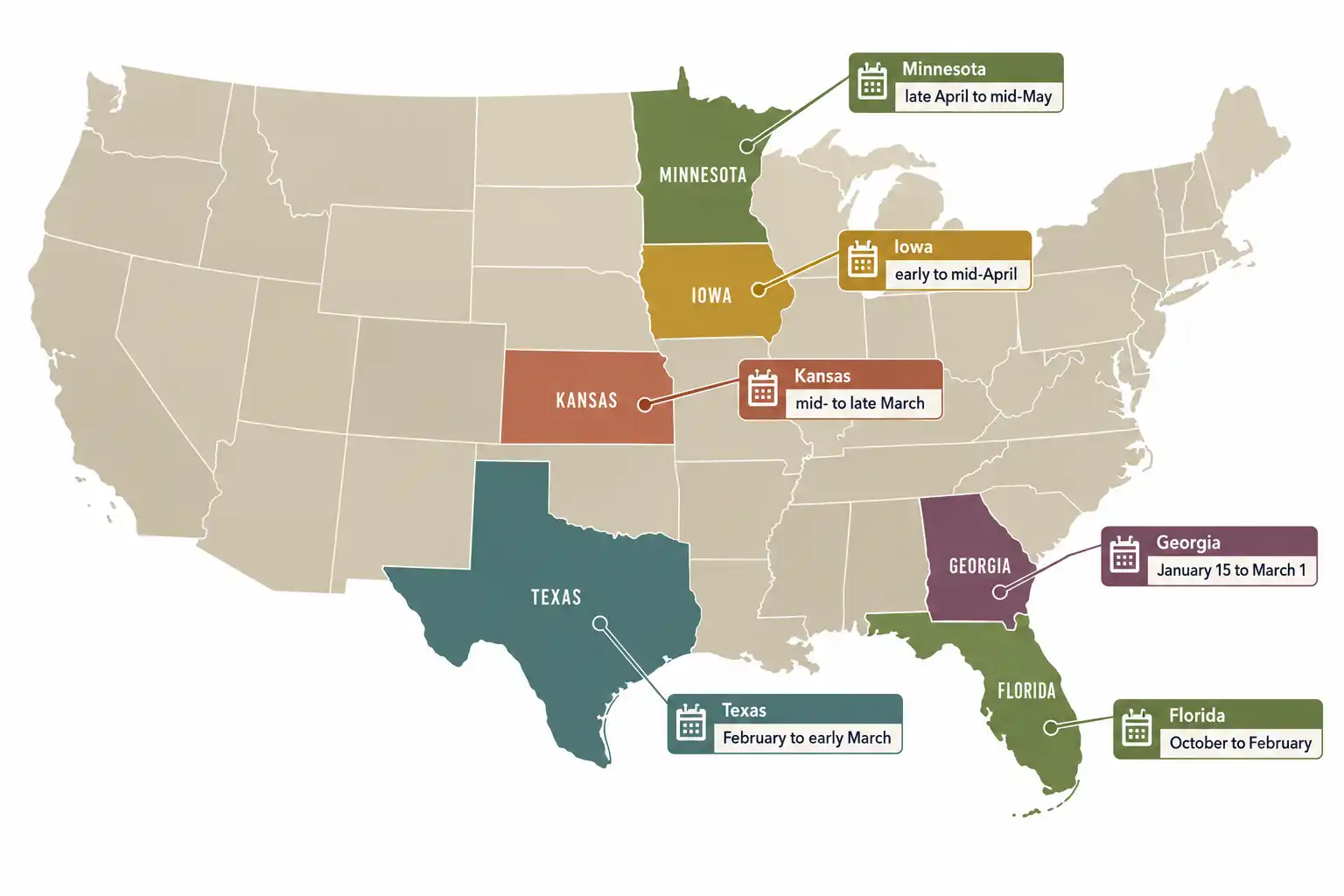
Published planting windows run from October in South Florida to mid-May in Minnesota. Each row below comes from that state’s extension service. So start with the row nearest your conditions, then confirm with a soil reading.
| Region | Planting window | Timing notes | Source |
|---|---|---|---|
| Minnesota | Late April to mid-May | Once soil thaws and is no longer muddy | University of Minnesota Extension |
| Iowa | Early to mid-April | Central Iowa; a week earlier in the south, a week later in the north | Iowa State University Extension |
| Kansas | Mid- to late March | Plants often emerge in mid- to late April | K-State Research and Extension |
| Texas, most areas | February to early March | Fall crop around mid-August | Texas A&M AgriLife Extension |
| Middle Georgia | January 15 to March 1 | About 2 weeks later in north Georgia, 2 weeks earlier in south Georgia; fall crop August 1 to 15 | UGA Extension |
| Florida | October to February | South October to January, central November to February, north January to February | UF/IFAS Extension |
In the South, planting starts in midwinter because summer heat, not frost, ends the season. That is also why month charts keyed to USDA hardiness zones can mislead. Zones reflect average extreme winter lows, which say little about spring soil or summer heat.
How Late Can You Plant Potatoes?
Plant no later than the date your season ends, minus your variety’s days to maturity. Heat ends the season in the South, while frost ends it in the North.
Heat keeps tubers from forming, though sources set the limit at different temperatures. UGA Extension says tuber formation stops once soil passes 80°F. By contrast, Texas A&M AgriLife’s commercial guide puts the slowdown at 68°F and a full stop above 85°F. It also estimates yield drops about 4% for each degree the season’s mean air temperature runs above 65°F.
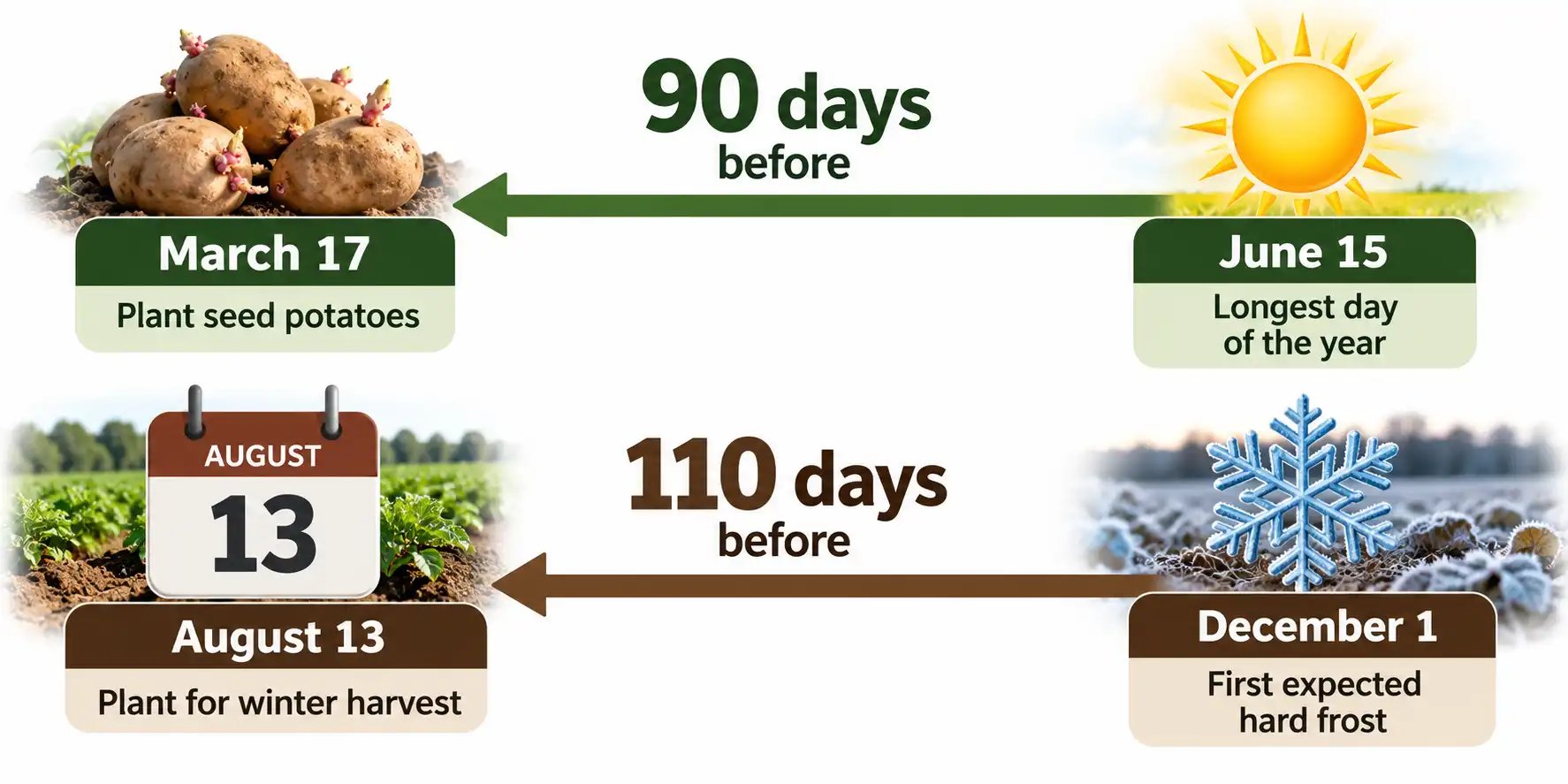
So in the South, the crop has to finish before the heat. UGA Extension’s Bartow County office notes that northwest Georgia potatoes not mature by mid-June come out small. A 90-day variety therefore needs planting by about March 17, which matches that office’s early to mid-March window.
Farther north, frost sets the outer limit instead. Texas A&M AgriLife notes that tubers keep enlarging until the vines die, and frost kills the vines. So run the same count back from your first fall frost to find your last workable date. Still, a late planting bulks its tubers in midsummer heat, so expect a smaller harvest.
Which Potato Varieties Fit a Short Window?
Early varieties fit short windows, since they need the fewest days to mature. Published day counts vary, though. UGA Extension’s planting chart lists 70 to 90 days for Irish potatoes, while Iowa State University Extension puts most cultivars at 90 to 120. When your seed tag gives a figure, use it.
Iowa State groups its suggested cultivars by maturity:
| Maturity | Cultivars Iowa State suggests |
|---|---|
| Early | Red Norland, Red Gold, Yukon Gold, Russet Norkotah |
| Early to mid-season | Superior |
| Mid-season | Goldrush |
| Late | Katahdin, Kennebec, Red Pontiac |
For short Southern windows, UGA Extension’s Bartow County office recommends cultivars that mature in about 90 days or less.
Can You Plant Potatoes in the Fall?
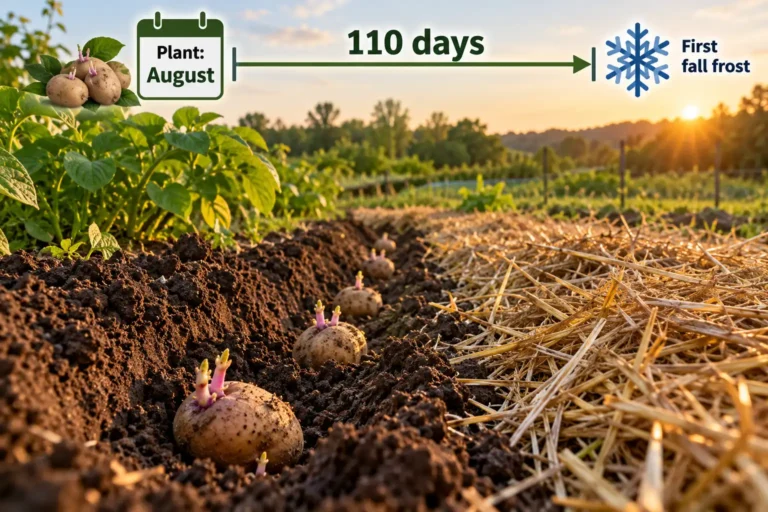
Yes, in the South, where the first frost comes late enough. Texas A&M AgriLife sets fall planting about 110 days before the first frost, around mid-August in most of Texas. UGA Extension’s chart gives August 1 to 15 for middle Georgia.
To find your own date, count back from your first fall frost. UGA Extension’s garden calendar counts back the crop’s days to maturity plus 18 days. For a 90-day potato, that totals 108 days, close to the Texas figure. With a December 1 first frost, 110 days back lands on August 13.
Fall seed needs extra prep, because fresh tubers rest before they sprout. Texas A&M AgriLife recommends small, whole seed potatoes about 1.5 inches across, since uncut seed resists rot in hot weather. To break the rest, hold the seed warm and damp for 2 weeks under moist burlap or mulch in shade. Then plant once small sprouts show. Similarly, UGA Extension suggests sprouting fall seed 2 to 3 weeks ahead.
Seed is also harder to find in late summer, Texas A&M AgriLife notes. So buy extra in spring and store it somewhere cool and humid, such as the bottom of a refrigerator.
Fall crops do not suit every Southern garden, though. UGA Extension’s Bartow County office finds fall soil too warm for reliable potatoes in northwest Georgia.
What to Do Before Planting Day
Three jobs come before planting day, and each has its own lead time.
First, test the soil in late fall or winter, since UGA Extension’s garden calendar advises sampling early so results return in time. Iowa State University Extension notes potatoes prefer slightly acid soil, so read the soil test report before adding any lime.
Next, decide whether to pre-sprout. University of Minnesota Extension calls it unnecessary for spring planting. For Southern fall crops, however, it breaks dormancy, and UGA Extension starts it 2 to 3 weeks ahead.
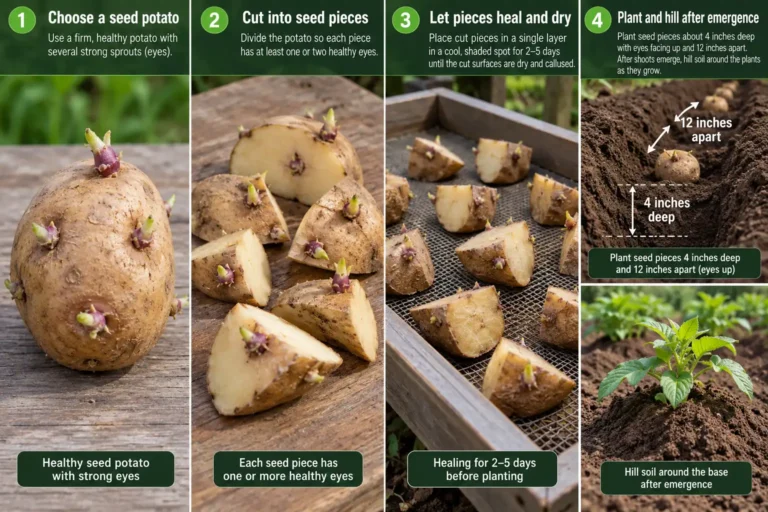
Finally, cut the seed with your soil in mind. Published lead times vary widely. UGA Extension advises planting right after cutting, while K-State Research and Extension says to cut 2 to 3 days ahead. Texas A&M AgriLife allows 5 or 6 days. To heal the cut faces, Iowa State University Extension suggests holding pieces at 60 to 70°F and 85% relative humidity for several days. So the colder and wetter your soil, the more it pays to cure cut seed pieces first.
Signs the Planting Date Was Off
Most timing mistakes leave clear signs, either within weeks of planting or at harvest. The causes below follow the extension guidance cited above.
| What you see | Likely timing cause | What to change next season |
|---|---|---|
| Seed pieces rot and few shoots emerge | Planted into cold, wet soil | Wait for 45 to 50°F at 4 inches and soil that is no longer muddy |
| Shoots blacken after a cold night | Frost hit the emerged tops | Plant about three weeks before last frost, and cover shoots when frost threatens |
| Few or small tubers at harvest | Tubers set in hot soil | Plant earlier, or choose an early variety |
| Tubers sprout in the ground before harvest | Heat plus rain broke tuber dormancy | Time the crop to finish before midsummer heat |
| Vines frost-killed while tubers are still small | Planted too late for the fall frost | Count back days to maturity from your first frost |
FAQs About Potato Planting Time
Can you plant potatoes in February?
Yes, across much of the South, but not in northern states. Texas A&M AgriLife plants in February or early March in most of Texas, and UGA Extension’s middle Georgia window runs January 15 to March 1.
Should you plant potatoes on Good Friday?
Only if the soil is ready that year, so check it with a thermometer first. Iowa State University Extension notes the holiday moves around, so it can fall too early or too late.
Is St. Patrick’s Day a good time to plant potatoes?
In Kansas, yes, since K-State Research and Extension says mid- to late March works there. Farther north it usually comes too early, as University of Minnesota Extension places Minnesota planting in late April to mid-May.
How long after planting do potatoes come up?
Often about a month in cool spring soil, and sooner once soil warms past 50°F. K-State Research and Extension notes that Kansas plantings made in March often emerge in mid- to late April.
Do raised beds let you plant potatoes earlier?
Yes, by a little, because raised soil drains faster and warms sooner in spring. UGA Extension puts early plantings on raised beds for that reason, but still check for 45°F at 4 inches.
What to Check Before You Plant
Let the soil make the final call: wait for 45°F at 4 inches, and aim for 50°F. Then check your state’s window in the table, since summer heat pulls Southern dates into winter. Finally, count your variety’s days to maturity forward from planting day. Harvest should land before summer heat or fall frost ends the season.