Can You Grow Potatoes in Shade? What Gardeners Should Know
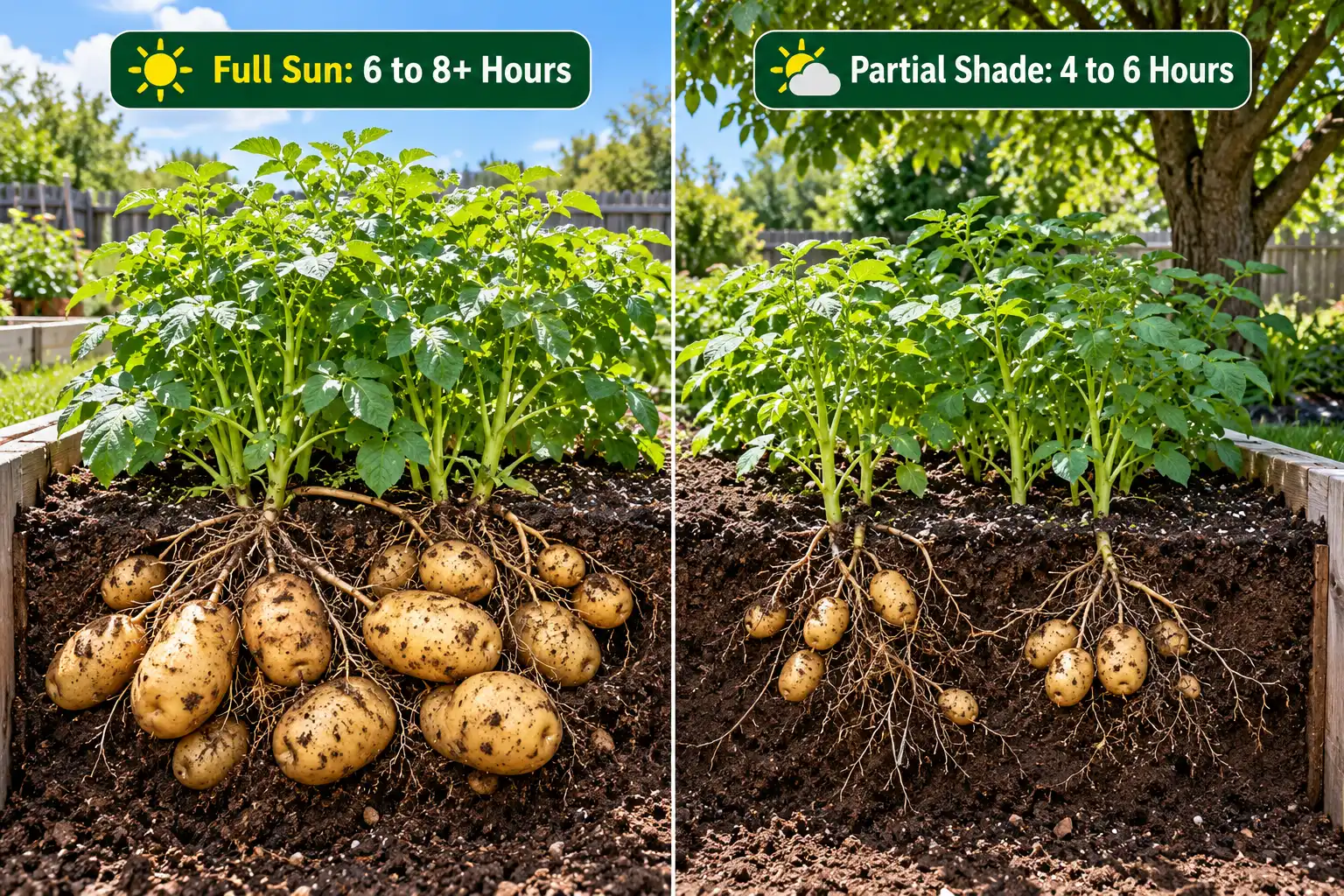
Yes, although the amount of sunlight determines whether you get a worthwhile harvest. Potatoes can tolerate partial shade, but reduced light generally means smaller or fewer tubers. The right planting location and growing conditions can make a considerable difference.
Yes, potatoes can grow in partial shade with 4 to 6 hours of direct sunlight daily, although yields may decrease. For more reliable production, provide at least 6 hours, preferably 8 or more. Deep shade is generally unsuitable.
How Much Sun Do Potatoes Need?
Potatoes grow best with at least 6 hours of direct sunlight daily. A location receiving 8 to 10 hours offers better conditions for dependable tuber production.
The University of Maryland Extension recommends at least 6 hours of direct light and identifies 8 to 10 hours as preferable.
However, receiving less sunlight does not automatically prevent potatoes from growing.
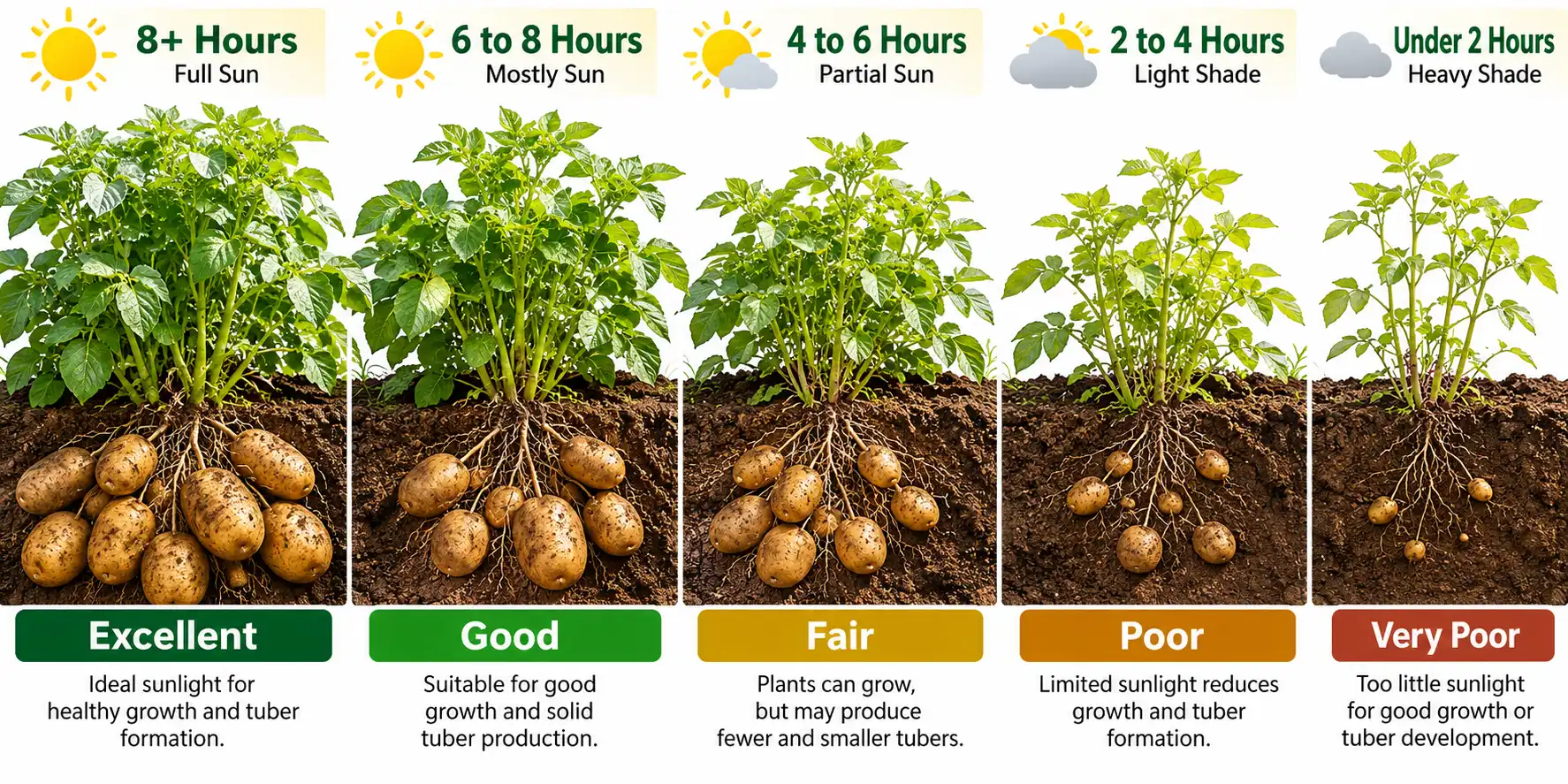
| Daily direct sunlight | Growing potential | Recommendation |
|---|---|---|
| 8 or more hours | Excellent | Preferred for dependable production |
| 6 to 8 hours | Good | Suitable for most potato varieties |
| 4 to 6 hours | Fair | Worth trying, with reduced yield possible |
| 2 to 4 hours | Poor | Expect a small or unreliable harvest |
| Less than 2 hours | Very poor | Choose a sunnier location |
These are practical site-selection guidelines, not guaranteed yield predictions. Actual results depend on light intensity, temperature, variety, and growing conditions.
A garden receiving four hours of intense direct sun may behave differently from one receiving four hours of weak morning sunlight.
How Does Shade Affect Potato Growth and Yield?
Shade reduces the light available for photosynthesis. Potato leaves use sunlight to produce sugars that support growth and fill developing tubers with stored carbohydrates.
When sunlight becomes limited, plants have less energy available for tuber development.
Possible effects include:
- Fewer or smaller potatoes at harvest.
- Slower tuber development.
- Longer time before the crop reaches maturity.
- Tall, stretched stems in heavily shaded conditions.
However, the relationship between shade and yield is not a fixed percentage.
A three-year University of Hohenheim study in southwestern Germany examined potatoes under 12%, 26%, and 50% artificial shading.
At 50% shade, tuber dry matter yields declined by approximately 19% to 44%, depending on the year. Lighter shading produced less consistent effects.
Importantly, 50% shade cloth is not equivalent to receiving half as many hours of direct sunlight.
The findings show why potatoes can produce under some shade but suffer considerable losses when light becomes severely restricted.
How to Measure Light Before You Plant
Measure the actual sunlight reaching your proposed potato bed before deciding whether to plant.
Follow these steps:
- Choose a clear day. Observe the proposed growing location from morning until evening.
- Record direct sunlight hourly. Count the periods when sunlight reaches the area where potato foliage will grow.
- Separate direct sun from filtered light. Sunlight passing through a dense tree canopy does not provide the same energy as unobstructed sunlight.
- Check seasonal changes. Trees gaining leaves and taller neighboring crops can reduce sunlight later in the season.
- Choose the brightest available area. Prioritize locations with at least 6 hours of direct sunlight.
For example, a bed receiving direct sunlight from 9 a.m. until noon and again from 3 p.m. until 5 p.m. receives approximately five hours.
That location may support a modest potato harvest, provided the soil drains well.
When two locations receive similar sunlight, prefer the one without competing tree roots or persistent wet soil.
Can Afternoon Shade Benefit Potatoes in Hot Climates?
Yes, limited afternoon shade can sometimes help potatoes growing under intense heat, but it should not replace the sunlight needed for tuber development.
Potatoes are cool-season vegetables. The University of Maryland Extension reports that soil temperatures above 80°F inhibit tuber development.
Therefore, lowering excessive soil temperatures may help preserve favorable growing conditions.
A 2025 potato field study published in Frontiers in Horticulture found that partially shaded plots between simulated solar panels produced yields comparable to fully exposed plots under deficit irrigation in Iraq. Heavily shaded plots yielded less.
Those findings do not establish that adding shade improves potato production in every climate.
Regional growing considerations
| U.S. region | Recommended approach |
|---|---|
| Upper Midwest and Northeast | Prioritize maximum sunlight during the relatively cool growing season. |
| Pacific Northwest | Choose open locations, particularly where cloudy weather already limits available light. |
| Southeast | Grow during cooler months and retain adequate daily sunlight. |
| Hot inland Southwest | Favor locally recommended cool-season planting dates and use mulch to limit excessive soil heating. |
Regional planting dates matter more than USDA hardiness zones alone.
For example, the UF/IFAS Florida Vegetable Gardening Guide lists potato planting from January through March in North Florida, November through February in Central Florida, and October through January in South Florida.
If your climate regularly exceeds the crop’s preferred temperatures, growing during a cooler season is usually a better first adjustment than removing sunlight.
For timing based on soil temperature and seasonal conditions, see when to plant potatoes.
Which Potato Varieties Are Better for Partial Shade?
Early-maturing varieties are reasonable candidates for a partially shaded garden, especially where the suitable growing season is short.
They can provide harvestable potatoes sooner than late-season varieties.
However, early maturity does not prove shade tolerance. There is insufficient independent evidence to identify a consistently superior shade-tolerant potato variety for U.S. home gardens.
The Utah State University Extension variety guide identifies these maturity differences:
| Potato variety | Maturity group | Practical consideration |
|---|---|---|
| Norland | Early | Suitable for a short growing window |
| Dark Red Norland | Early | Another early red-skinned choice |
| Russet Norkotah | Early | Earlier russet option |
| Yukon Gold | Late in USU’s classification | Allow a longer season for mature tubers |
Norland or Dark Red Norland makes a sensible starting choice when growing potatoes in limited sunlight.
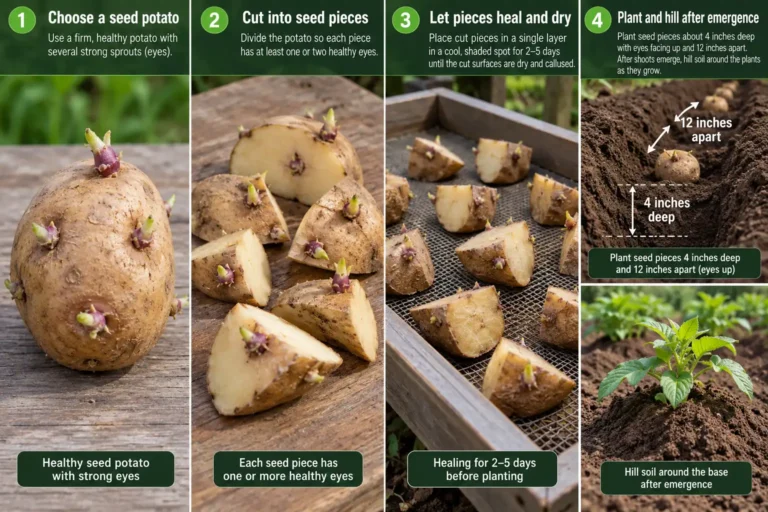
Select certified disease-free seed potatoes rather than supermarket tubers. This reduces the risk of introducing diseases.
Before planting larger seed tubers, follow appropriate seed potato cutting and curing methods.
How to Plant Potatoes in Partial Shade
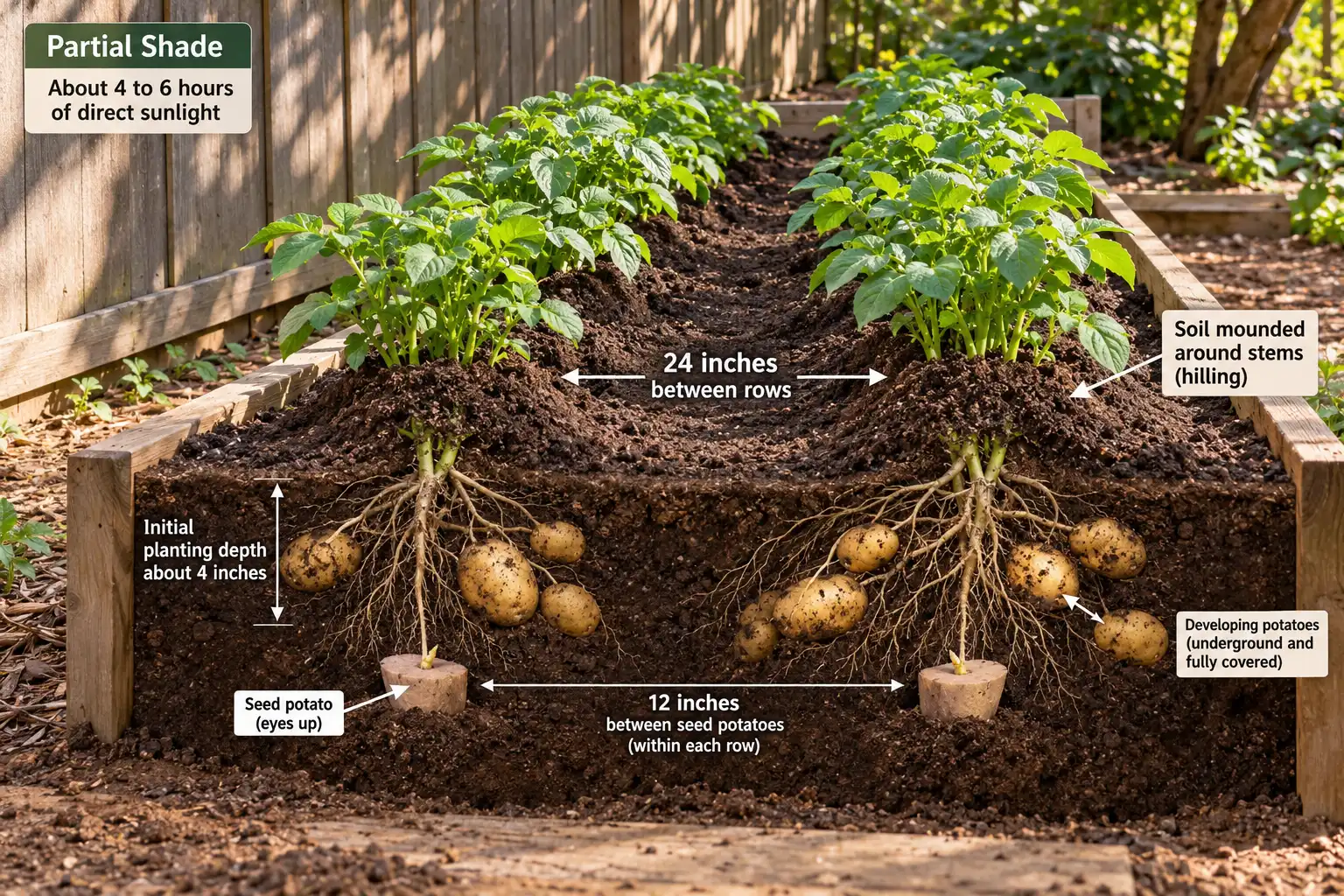
Plant potatoes using normal spacing and depth recommendations. Do not crowd plants to compensate for reduced sunlight.
The University of Minnesota Extension recommends the following planting arrangement:
| Planting requirement | Guideline |
|---|---|
| Soil temperature | At least 45°F before planting, based on Maryland Extension |
| Planting depth | 3 to 5 inches |
| Distance between seed pieces | 10 to 12 inches |
| Distance between conventional rows | 30 to 36 inches |
| Soil conditions | Loose, fertile, and well-drained |
| Soil pH | Approximately 6.0 to 6.5 |
Position the potato rows where leaves will receive the most sunlight.
Leave sufficient space for air movement and soil hilling.
For a small raised bed, two 10-foot rows spaced 24 inches apart can accommodate approximately 20 seed pieces at 12-inch in-row spacing. A 4-foot-wide bed provides room for those rows, although hilling space must be considered.
At field scale, 36-inch rows with 12-inch plant spacing provide approximately 14,520 theoretical planting positions per acre, before accounting for access areas.
Increasing plant density cannot replace missing sunlight.
How to Care for Potatoes Growing in Shade
Partially shaded potatoes require attention to soil moisture, airflow, and tuber coverage.
Water according to soil moisture
Shaded soil may dry more slowly than soil exposed to continuous sunlight. However, nearby trees can compete with potatoes for water.
The University of Minnesota Extension recommends approximately 1 inch of water per week as a useful general guide, with adjustments for soil conditions.
For perspective, 1 inch of water equals approximately:
- 25 gallons across a 4-by-10-foot bed.
- 62 gallons across 100 square feet.
- 27,150 gallons across one acre.
These are water-volume conversions, not automatic irrigation requirements.
Check soil moisture several inches below the surface before watering. Reduce irrigation when rainfall has already supplied sufficient moisture.
Keep developing potatoes covered
Although potato foliage needs sunlight, developing tubers should remain protected from it.
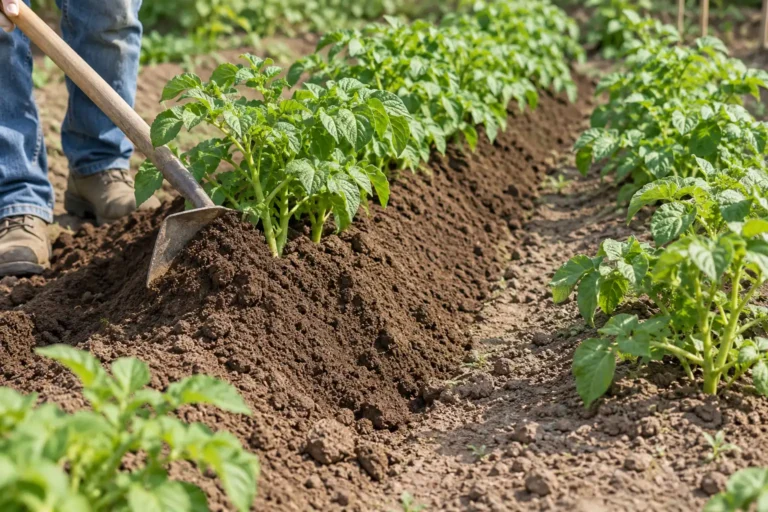
Begin hilling soil around stems as plants grow, leaving enough foliage exposed for photosynthesis.
Tubers exposed to sunlight can develop green skin and elevated glycoalkaloid concentrations.
Continue hilling potato plants whenever expanding tubers approach the soil surface.
Prevent excessive moisture and disease
A shaded garden may retain damp foliage longer, particularly where air movement is restricted.
Water near the soil surface rather than wetting leaves unnecessarily.
Remove weeds that crowd potato stems, and avoid planting repeatedly in poorly drained soil.
Shade alone does not cause late blight, but cool, wet conditions can favor its development.
Common Problems When Growing Potatoes in Shade
Not every problem in a shaded potato bed comes from insufficient sunlight.
Use visible symptoms and soil conditions to narrow the cause.
| Problem | Possible cause | Recommended action |
|---|---|---|
| Tall stems, few tubers | Inadequate light | Move future plantings to a brighter location |
| Healthy foliage, poor tuber development | Shade, excessive soil heat, or nutrient imbalance | Review sunlight, soil temperature, and fertilizer use |
| Yellowing leaves and persistently wet soil | Poor drainage or excessive irrigation | Check below-surface moisture and improve drainage |
| Dark, water-soaked leaf lesions | Possible late blight or another disease | Seek identification promptly through Extension |
| Green potato tubers | Exposure of tubers to light | Maintain adequate soil coverage and discard green tubers |
The University of Maryland Extension’s late blight guidance describes rapidly expanding, dark, water-soaked lesions as a possible symptom of this serious disease.
Avoid assuming every spotted leaf is suffering from shade stress.
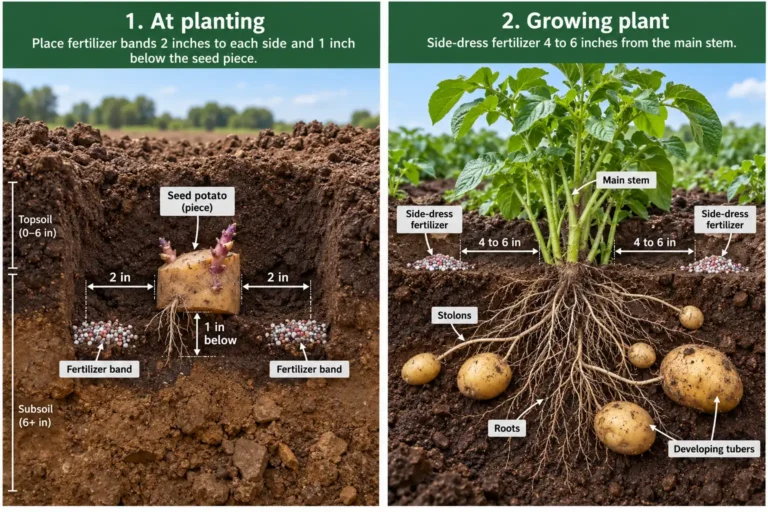
Also, do not apply extra nitrogen simply because potato plants grow slowly. Fertilizer cannot compensate for an inadequate light supply.
Can You Grow Potatoes in Bags in a Shaded Yard?
Yes, provided you can place the bags where plants receive adequate sunlight.
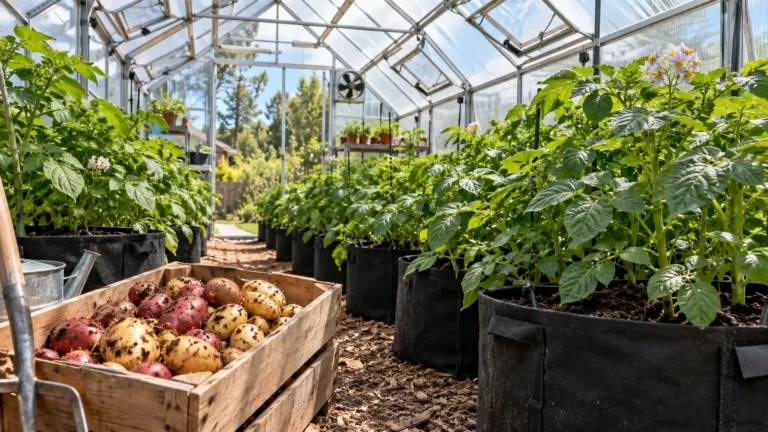
A portable grow bag can help when a permanent garden bed sits beneath a tree or beside a shaded fence.
Choose a container with drainage holes, suitable potting mix, and room for developing tubers. Position it in a location receiving at least 6 hours of direct sunlight whenever possible.
Containers are often heavy after watering, so choose the final location before filling them completely.
The same planting and hilling principles apply to potatoes grown in bags.
A container improves location flexibility. It does not make potatoes less dependent on sunlight.
When Should You Harvest Shade-Grown Potatoes?
Harvest timing depends on tuber development rather than sunlight hours alone.
The University of Maryland Extension indicates that small new potatoes can often be harvested around six to eight weeks after planting.
In partial shade, inspect tuber development instead of relying exclusively on the calendar.
For mature potatoes, allow healthy foliage to continue growing while the crop develops. Harvest storage potatoes after natural vine dieback and appropriate skin development.
Do not mistake foliage collapse caused by disease for normal maturity.
FAQs about Growing Potatoes in Shade
Can potatoes grow with only three hours of sunlight?
Potatoes may survive and form some tubers with three hours of direct sunlight, but production is unreliable. A sunnier location is preferable if your goal is a substantial harvest of mature potatoes.
Can potatoes grow without any direct sunlight?
Potatoes can sometimes develop limited tubers under bright indirect light, but deep shade rarely provides dependable production. Their leaves need sufficient light energy, which ordinary indoor or heavily shaded locations may not supply.
Can I grow potatoes underneath a tree?
Potatoes can grow near trees if enough direct sunlight reaches their leaves and the soil remains adequately moist. However, tree roots compete for water and nutrients, making heavily shaded areas beneath large trees less suitable.
Is morning sun or afternoon sun better for potatoes?
Both contribute to photosynthesis, although their light intensity and associated temperatures differ. Morning sunlight with afternoon shade can be useful in hot regions, while cooler climates usually benefit from maximizing total daily sunlight.
Will extra fertilizer help potatoes grow in shade?
Extra fertilizer cannot replace the energy potatoes receive from sunlight. Apply nutrients according to soil-test recommendations because excessive nitrogen can encourage foliage growth without correcting the light limitation affecting tuber production.
Can potatoes grow beside a north-facing fence?
Potatoes may grow beside a north-facing fence if surrounding buildings and seasonal sun angles allow sufficient direct sunlight. In many Northern Hemisphere locations, however, the fence creates prolonged shade that makes potato production less dependable.
Key Points for Your Potato Bed
Potatoes can grow in partial shade, but full sunlight remains the safer choice for dependable harvests.
If your available bed receives 4 to 6 hours of direct sun, try a small planting of certified early potatoes. Maintain loose soil, sensible spacing, and consistent moisture.
For locations receiving less than four hours, prioritize a brighter bed or movable containers rather than expecting fertilizer or closer spacing to solve the light shortage.