How to Hill Potatoes: First Hilling to Final Ridge
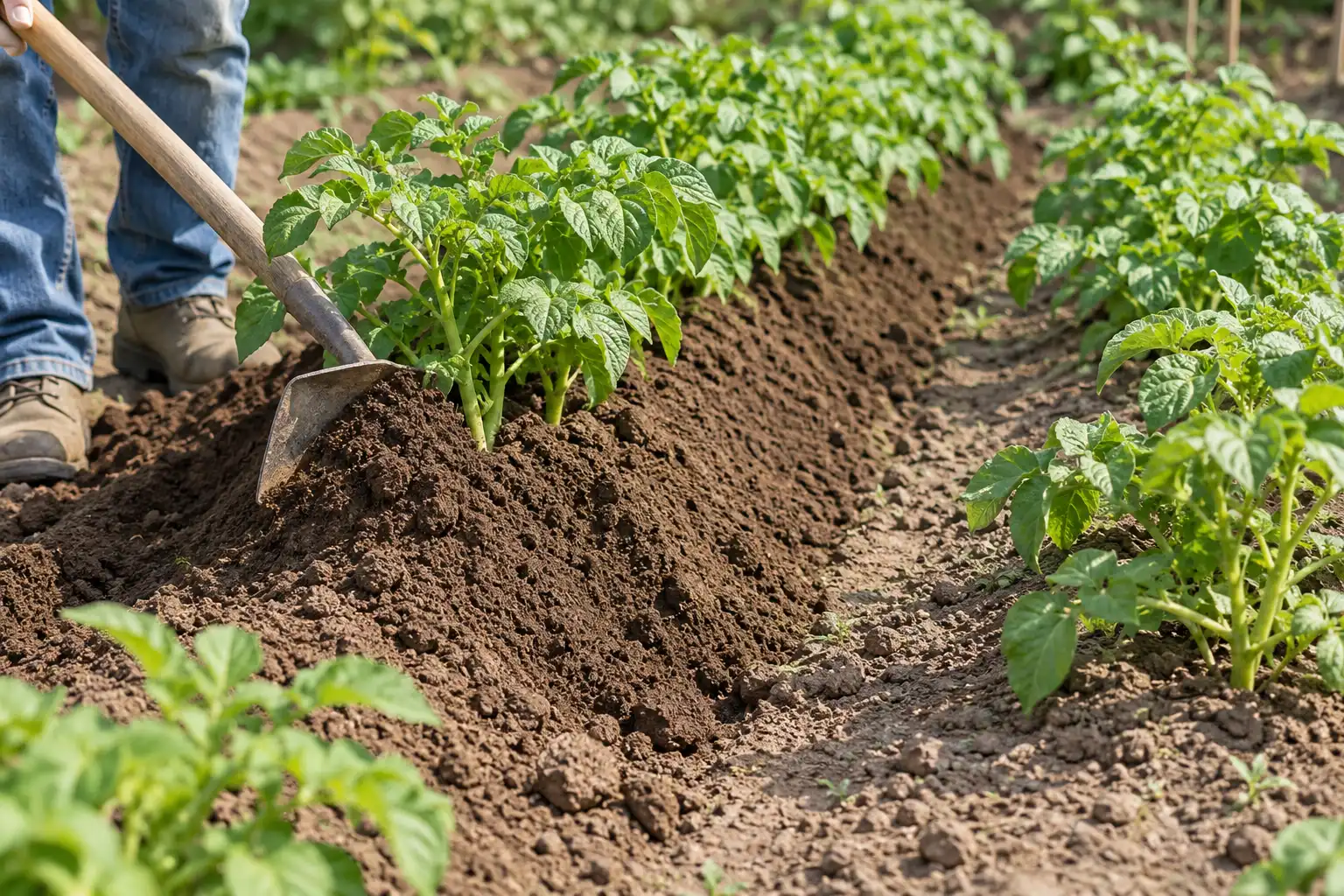
Knowing how to hill potatoes helps keep developing tubers covered without burying healthy foliage. The timing, ridge height, and soil conditions matter more than the calendar. A few careful passes can protect potatoes throughout their growing season.
Start when potato shoots reach 6 to 8 inches tall. Pull loose soil around their lower stems, leaving green leaves exposed. Repeat as the plants grow, building a broad ridge approximately 6 to 8 inches high.
Why Do Potato Plants Need Hilling?
Potato plants need hilling primarily to keep developing tubers out of the light.
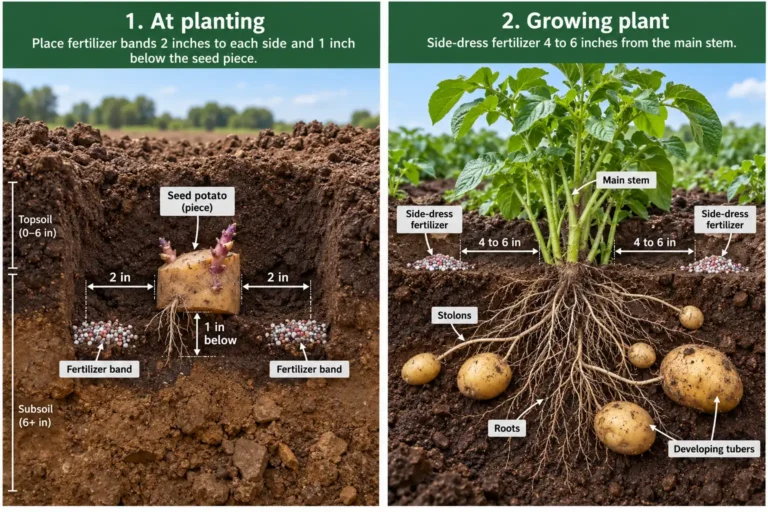
Potato tubers develop on underground stems called stolons, not directly on the roots. The University of Minnesota Extension explains that burying additional stem portions can encourage stolon development.
However, adding more soil does not guarantee more potatoes. The dependable benefits are protecting shallow tubers, creating loose growing space, and controlling young weeds.
When tubers receive light, their skin can turn green. The green pigment itself is chlorophyll, but light exposure can also increase harmful glycoalkaloids, including solanine.
Hilling keeps the potatoes dark while allowing the leafy canopy to capture sunlight.

When Should You Hill Potatoes?
Start hilling when potato plants have enough growth to remain leafy after soil is added.
Extension recommendations differ slightly. The University of Maine Cooperative Extension recommends starting around 6 inches of plant height. Minnesota Extension recommends beginning closer to 12 inches.
Both approaches work toward the same goal: covering developing tubers while preserving healthy foliage.
| Plant growth stage | Hilling action |
|---|---|
| Before shoots emerge | Leave the planting soil undisturbed. |
| Shoots reach 6-8 inches | Begin the first shallow hilling if enough leaves will remain exposed. |
| Roughly 2-3 weeks later | Add more soil if stems have grown and the ridge needs additional coverage. |
| Ridge reaches 6-8 inches | Stop increasing its height unless potatoes become exposed. |
| Foliage fills the row | Avoid further hoe cultivation to protect roots and stolons. |
Typically, one to three hillings are sufficient.
Potato maturity also matters. Maine Extension classifies Red Norland as an early cultivar and Russet Burbank as late-maturing. Early crops harvested for new potatoes may need fewer hillings than longer-season storage crops.
Use regional potato planting dates to schedule planting. Then use plant height and tuber coverage to determine hilling dates.
How to Hill Potatoes Step by Step
You can hill a small potato bed with a hoe and loose garden soil. Work carefully because roots and developing stolons can extend beyond the visible stems.
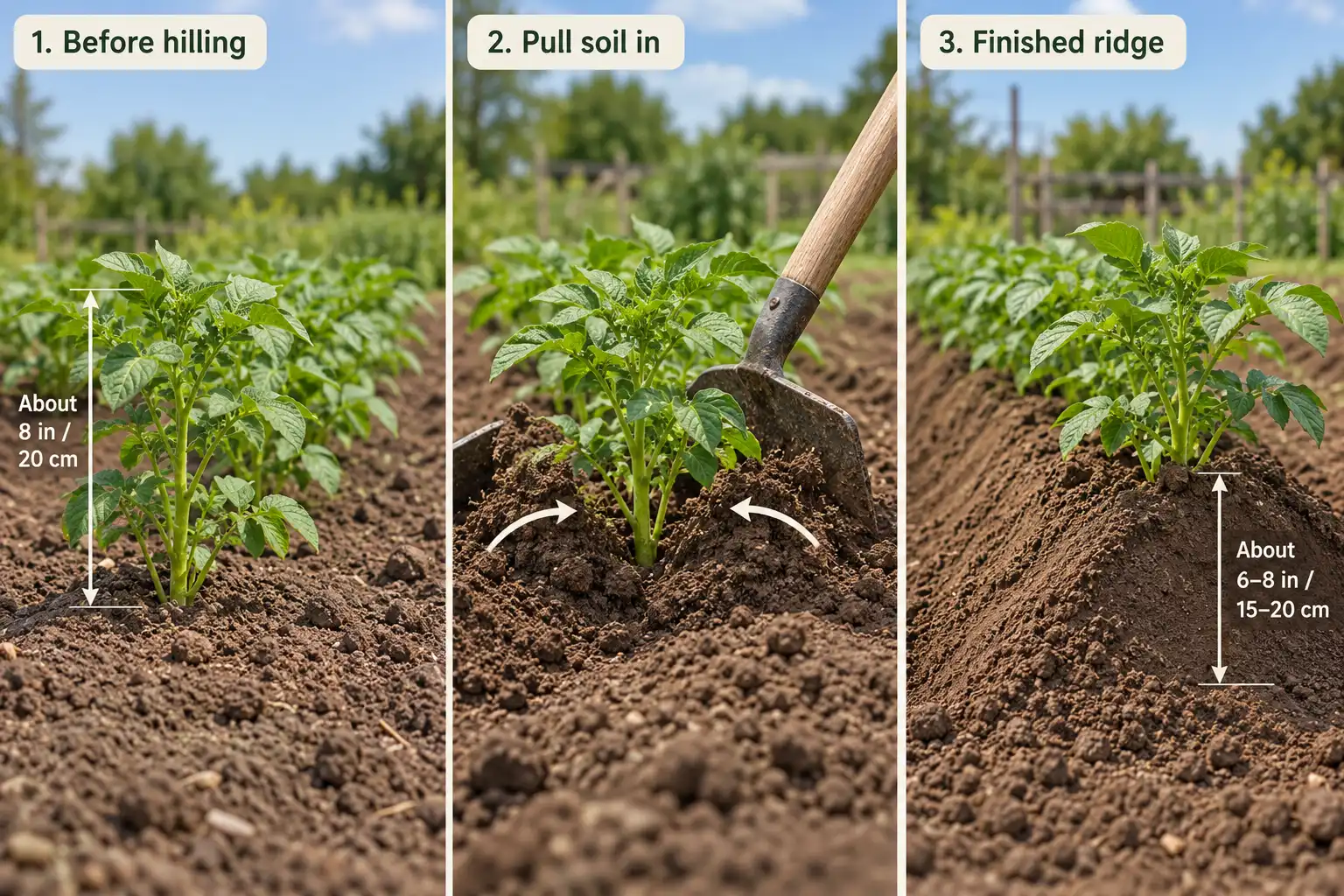
Step 1: Check Soil Moisture
Choose a day when the soil is slightly moist and crumbles easily.
Avoid hilling saturated soil. Wet clay can form hard clumps and reduce air movement around developing tubers.
Step 2: Loosen Soil Between Rows
Use a hoe to loosen the surface soil between potato rows.
The Iowa State University Extension recommends keeping cultivation at 2 inches deep or less to avoid damaging roots and tubers.
Step 3: Pull Soil Toward the Stems
Draw loose soil from both sides of each row.
The Washington State University Extension recommends adding approximately 2 inches of soil during an early hilling pass.
Work gradually around the plants rather than dumping heavy soil directly onto them.
Step 4: Shape a Continuous Ridge
Build a wide, gently sloped mound along the potato row.
Keep green leaves uncovered. Do not pack the soil tightly against the stems or create a narrow, unstable peak.
Step 5: Inspect and Repeat
Check the row after additional growth or heavy rainfall.
Add another shallow layer where needed. Stop using the hoe once the foliage crowds the rows or developing tubers could be damaged.
How High Should You Hill Potatoes?
A finished potato ridge should generally stand about 6 to 8 inches above the surrounding soil.
That is a cumulative height, not the amount to add every time.
The ridge also needs enough width to protect tubers as they expand outward. A narrow, sharply peaked mound may expose potatoes along its sides.
Utah State University Extension recommends broad hills with flatter tops for potato production. Its guidance also emphasizes completing cultivation before plants fill half the row.
Use tuber coverage as the final test. If potatoes remain buried under a stable layer of loose soil, additional height provides little benefit.
Soil, Straw, or Containers: Which Hilling Method Fits?
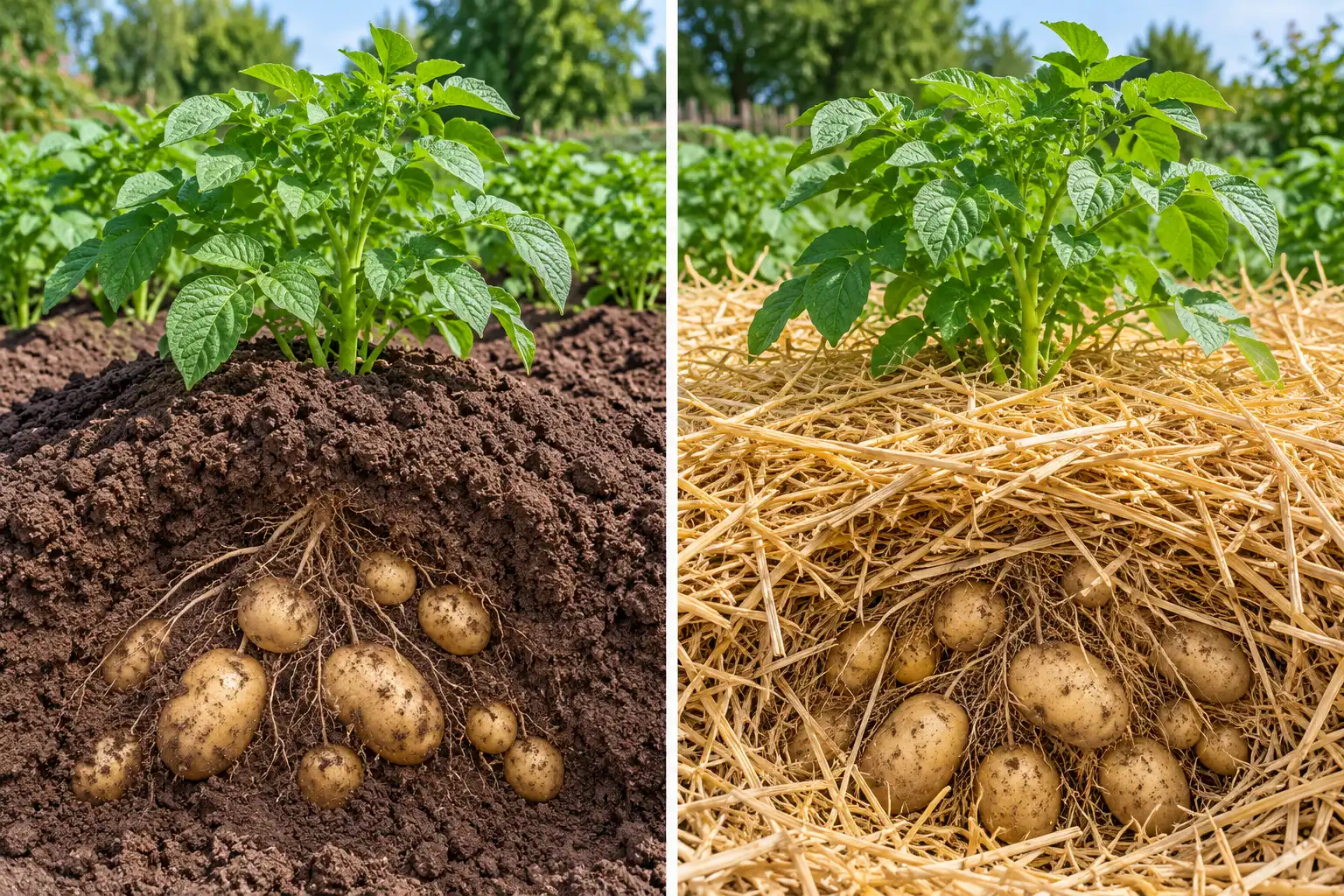
Loose soil is the standard hilling material, but straw and potting mix can also protect developing tubers.
| Growing method | How to provide coverage | Main consideration |
|---|---|---|
| Traditional soil rows | Pull loose soil from the pathways toward plant stems | Avoid cutting shallow roots |
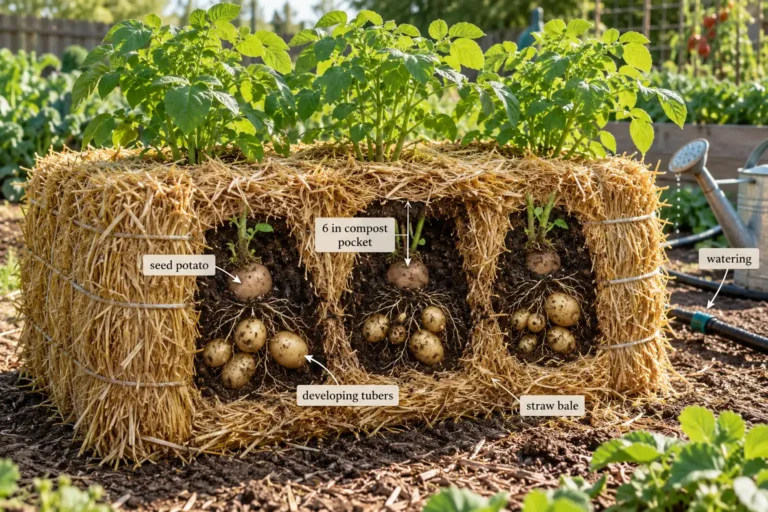
| Straw-grown potatoes | Begin with a thick clean straw layer and add more as shoots emerge | Maintain enough coverage to block light |
| Raised beds | Mound loose soil or finished compost around plants | Do not expose neighboring roots while collecting soil |
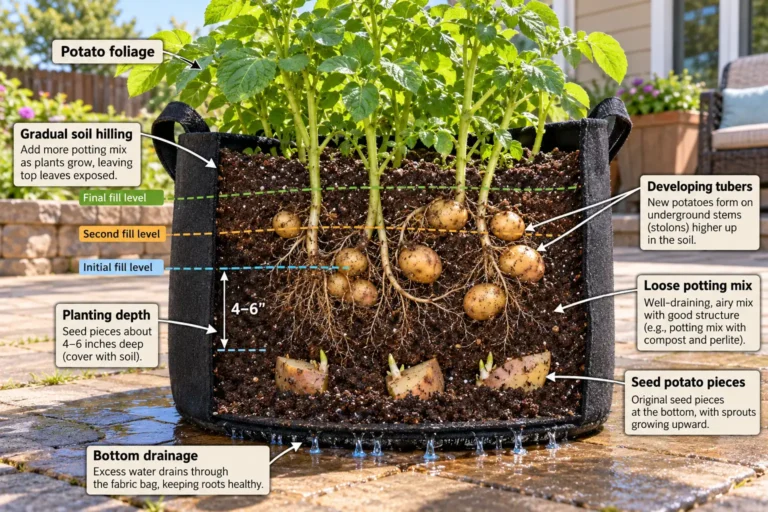
| Grow bags or containers | Gradually add potting mix around growing stems | Keep foliage exposed and drainage unobstructed |
Washington State University Extension describes a straw-growing system that starts with approximately 6 inches of clean straw, followed by additional layers after shoots emerge.
This is different from adding a thin layer of straw over ordinary soil-grown potatoes.
Straw must remain thick enough to block light. It can also settle or shift during windy weather.
Adjust Potato Hilling to Your Region and Soil
The same hilling method needs small adjustments for regional soil and weather conditions.
| Growing conditions | Recommended adjustment |
|---|---|
| Cool, wet spring soils in Maine and the Upper Midwest | Wait until the soil is workable. Avoid building heavy, waterlogged ridges. |
| Warm, humid areas such as Georgia | Use well-drained soil and avoid trapping excessive moisture around stems. |
| Dry western growing regions | Build stable ridges early and check moisture frequently. Straw alone may be unreliable in extremely hot, dry conditions. |
The University of Georgia Cooperative Extension emphasizes well-drained soil and recommends beginning hilling when shoots reach approximately 6 inches.
Water needs also differ. Iowa State’s home-garden guidance uses approximately 1 inch weekly, while Washington State’s guide suggests about 2 inches after emergence, depending on conditions.
These figures reflect different recommendations rather than one universal target. Adjust irrigation for rainfall, soil texture, and weather.
For larger plantings, calculate crop water requirements rather than relying only on weekly watering intervals.
Fall potato crops follow the same growth-stage approach. However, their planting dates depend on local heat and frost conditions, covered in the guide to fall potato planting windows.
How Much Hilling Is Needed for Beds and Larger Fields?
Measure the amount of row you must hill, not simply the number of potato plants.
For example, a 4-by-8-foot raised bed containing two 8-foot potato rows has 16 linear feet of row.
A 100-foot garden row requires 6.25 times as much row coverage as that bed.
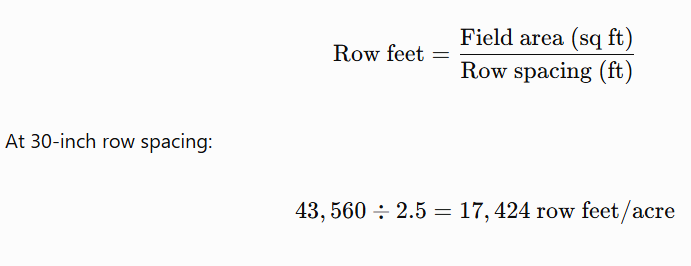
For field-scale planning, use this formula:
| Planting size | Linear row feet | Coverage for two passes |
|---|---|---|
| 4-by-8-foot bed, two rows | 16 | 32 ft |
| One 100-foot row | 100 | 200 ft |
| One acre, 30-inch row spacing | 17,424 | 34,848 ft |
The calculations assume full use of the stated area and exclude turning space. Raised-bed layouts also need allowances for paths.
For larger areas, a tractor-mounted potato hiller or cultivating discs can replace repeated hand hoeing. Adjust equipment to form broad ridges without reaching the seed pieces or developing tubers.
Common Potato Hilling Problems and How to Fix Them
Most hilling failures involve exposed tubers, poor soil structure, or damage from late cultivation.
| Problem | Likely cause | What to do |
|---|---|---|
| Potatoes appearing above soil | Ridge too shallow or washed away | Add loose soil around exposed areas without deep digging |
| Lower foliage yellowing after hilling | Buried leaves or excessive moisture | Keep leaves uncovered and correct drainage |
| Ridge collapsing after rain | Narrow, steep mound | Rebuild a wider ridge once soil is workable |
| Cut roots or damaged tubers | Cultivation too close or too deep | Use shallow hoeing and finish close to stems by hand |
| Dry, cracking hill | Uneven moisture | Water evenly and restore gaps before light reaches tubers |
Avoid adding more soil merely because the plants are growing taller. Once adequate coverage exists, additional disturbance can do more harm than good.
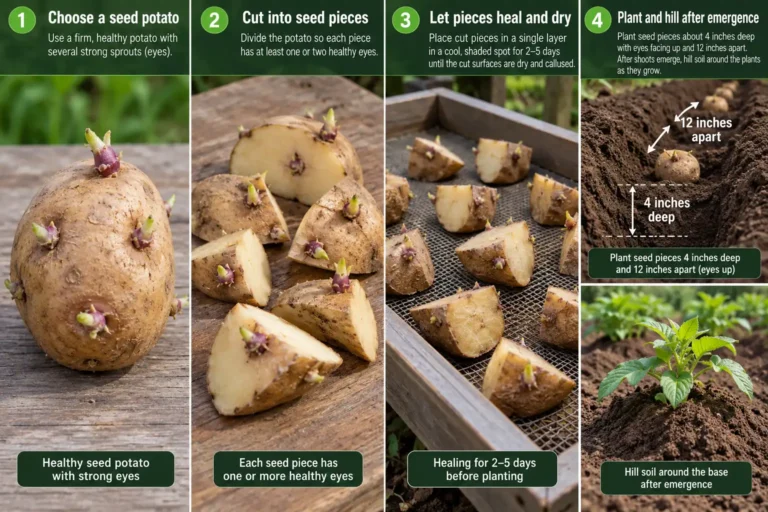
Likewise, hilling cannot correct problems caused by diseased seed potatoes or poor planting conditions. Starting with correctly cut and cured seed potatoes helps reduce avoidable problems before shoots emerge.
FAQs about Hilling Potatoes
Can I hill potatoes after they start flowering?
Yes, but only if you can add cover without disturbing established roots or stems. When foliage fills the row, place loose soil or straw by hand over exposed tubers rather than hoeing between plants.
Will taller potato hills always produce more potatoes?
No, extra height does not guarantee additional tubers. Stolons can arise from buried stems, but cultivar behavior, moisture, and plant health also matter, so stop once a stable, light-blocking ridge is in place.
Do potatoes grown in bags need hilling?
Yes, grow bags need additional covering if tubers approach the surface. Add loose potting mix gradually as shoots grow, leave upper leaves exposed, and keep drainage holes open so water cannot collect around the seed pieces.
Are green potatoes safe after covering them with soil again?
No, covering green potatoes again does not reliably remove the safety concern. Greening signals light exposure that can accompany increased glycoalkaloids, so discard strongly green or bitter potatoes rather than assuming additional soil makes them safe.
Can I skip hilling if seed potatoes were planted deeply?
Sometimes, deep planting leaves enough soil over developing tubers without additional mounding. However, inspect the crop during tuber growth because swelling potatoes, soil cracks, and heavy rainfall can expose shallow tubers.
Keep Potato Hills Wide and Tubers Covered
Start hilling while shoots are young, build the ridge gradually, and preserve the green foliage. Aim for a broad, stable mound rather than maximum height.
Stop aggressive cultivation once the plants spread across the rows. Continue checking for exposed tubers, especially after rainfall, and cover any gaps gently.