What Are Seed Potatoes? Differences, Types, and Planting Tips
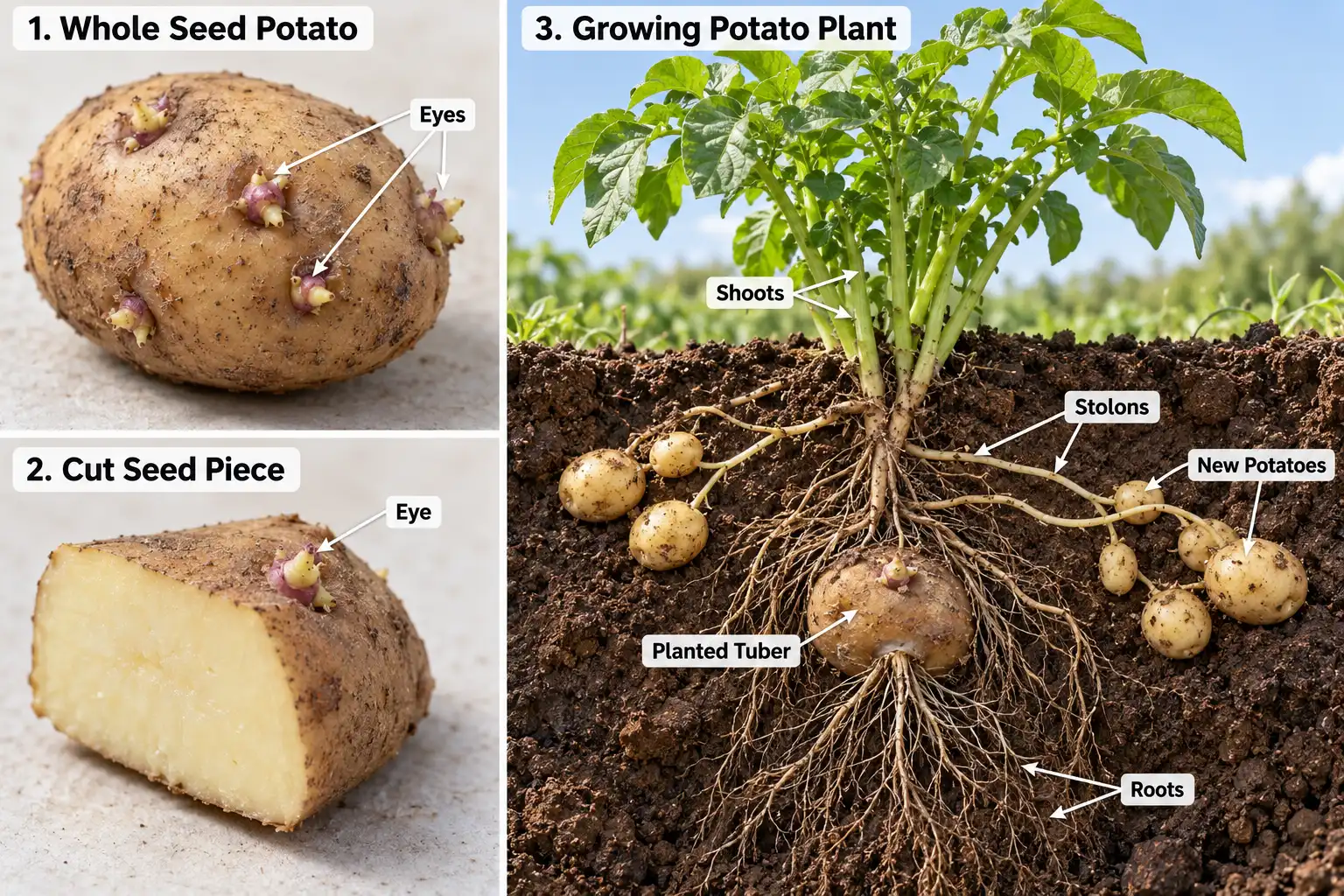
Although they look nearly identical, their intended use and disease management differ. Understanding those differences helps you choose healthy planting material and avoid preventable crop problems.
Seed potatoes are whole potato tubers or cut pieces used to grow new potato plants. Their eyes produce shoots that develop into plants and new tubers. Certified seed potatoes are recommended because they reduce the risk of introducing diseases into your soil.
What Exactly Are Seed Potatoes?
Seed potatoes are potatoes used as planting material rather than food. They are not the small botanical seeds produced by flowers.
A potato is a tuber, which is a swollen underground stem that stores energy. Its surface contains small buds called eyes. Each viable eye can develop shoots when conditions support growth.
The University of Maine Cooperative Extension explains that seed potatoes can be planted whole or divided into pieces containing at least one eye.
How does a seed potato grow?
The growth process follows five main stages:
- Sprouting: An eye develops a shoot using energy stored in the seed potato.
- Plant establishment: The shoot emerges and produces stems, leaves, and roots.
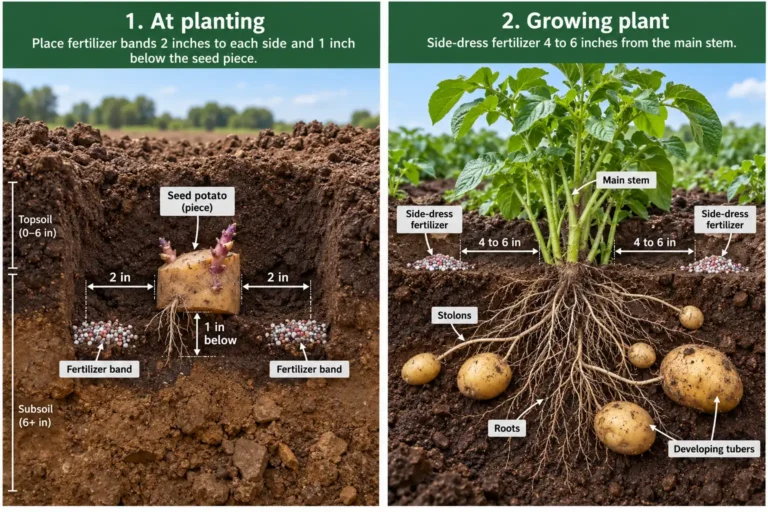
- Tuber initiation: Underground stems called stolons begin forming small new tubers.
- Tuber development: The new potatoes enlarge as the plant produces and distributes carbohydrates.
- Maturity: The foliage eventually ages, and mature tubers develop firmer skins.
The original seed potato supplies early growth. The potatoes you harvest are newly formed tubers, not simply an enlarged version of the planted piece.
Potato plants can also produce true botanical seeds inside small fruits. However, tuber propagation maintains the characteristics of a named potato variety more consistently.
How Are Certified Seed Potatoes Different From Grocery Potatoes?
The main difference is how the potatoes are produced, inspected, and intended to be used.
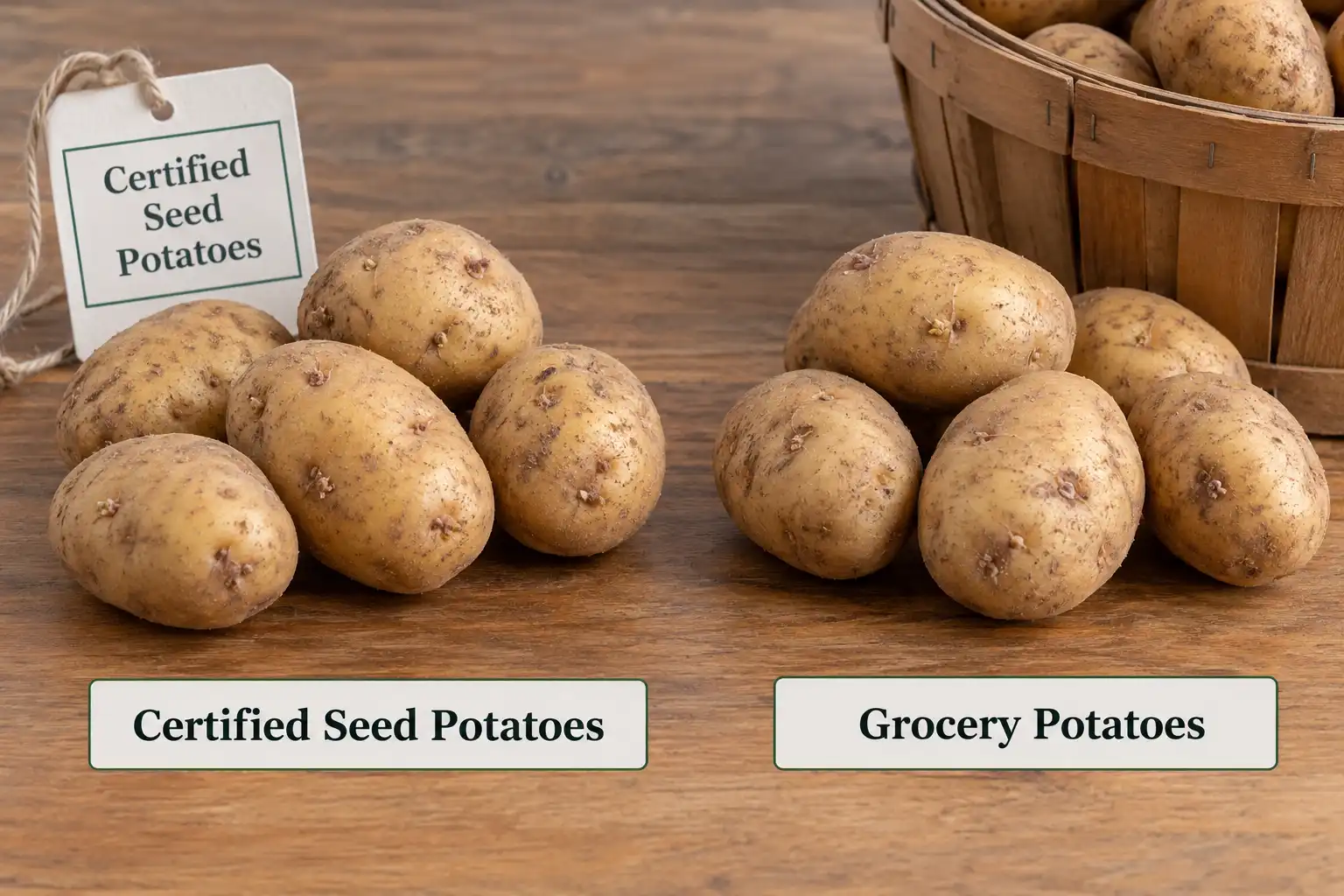
Certified seed potatoes come from specialized production programs that monitor variety identity and disease levels.
According to the Potato Association of America, certification programs use established standards to help provide healthier planting material with reliable varietal identity. Certification reduces disease risk, but it does not guarantee that every tuber is completely pathogen-free.
Ordinary grocery potatoes are produced for consumption. Some receive sprout-inhibiting treatments, and they are not necessarily inspected under seed certification standards.
| Potato type | Main characteristics | Planting suitability |
|---|---|---|
| Certified seed potatoes | Produced for planting and inspected under certification standards | Recommended |
| Grocery potatoes | Produced for consumption and may contain sprout inhibitors | Not recommended |
| Saved garden potatoes | Can reproduce but may accumulate seed-borne diseases | Higher risk |
| True potato seeds | Botanical seeds produced by potato flowers | Mainly used for breeding and specialized growing |
Iowa State University Extension recommends certified planting stock because saved or supermarket potatoes may carry diseases that are difficult to detect visually.
A grocery potato might sprout and grow successfully. However, visible sprouts do not establish that it is safe planting material.
What Should Healthy Seed Potatoes Look Like?
Healthy seed potatoes should be firm, intact, and free from visible rot or serious damage.
Before planting, look for these characteristics:
- Firm texture: Avoid soft, leaking, or badly shriveled tubers.
- Healthy eyes: Check for at least one viable eye on every planned planting piece.
- Sound skin: Reject tubers with extensive decay, suspicious lesions, or mold.
- Suitable size: Small tubers can remain whole, while larger potatoes can be divided.
- Certification label: Check that the seed lot is labeled for planting and identifies its variety.
Visible sprouts are not always necessary. Some healthy seed potatoes remain dormant until temperatures and storage conditions encourage growth.
The University of Maine Cooperative Extension also distinguishes healthy, moderately aged seed from excessively old tubers with weak, branched sprouts. Older seed can produce less vigorous plants.
Does potato variety matter?
Yes. Varieties differ in maturity, cooking characteristics, and climate adaptation.
| Variety | Main distinction | Suitable use or region |
|---|---|---|
| Red Norland | Early red-skinned variety | Fresh use and early harvests |
| Yukon Gold | Yellow-fleshed, all-purpose type | Boiling, roasting, and mashing |
| Kennebec | White-fleshed storage variety | General cooking and storage |
| Red LaSoda | Early red-skinned variety adapted to southeastern production | Florida and parts of the Southeast |
Nebraska Extension identifies Norland as an early variety and Kennebec as a storage choice. UF/IFAS Extension identifies Red LaSoda as a variety grown in the southeastern United States.
Choose a variety that can mature during your local potato planting season, not simply one with a preferred skin color.
How Should You Cut and Prepare Seed Potatoes?
Plant small, healthy seed potatoes whole whenever practical. Cut larger ones into pieces containing sufficient stored tissue and at least one viable eye.
1. Decide whether cutting is necessary
The University of Maine recommends planting healthy tubers weighing approximately 1.5 to 3 ounces whole.
Larger potatoes can be divided into planting pieces weighing about 1.75 to 2.25 ounces. Avoid very thin pieces with little stored tissue.
2. Cut with a clean knife
Use a clean, sharp knife and make smooth cuts. Each piece needs at least one eye, preferably two or three where practical.
Discard pieces showing internal decay or suspicious discoloration. Minimize the exposed cut surface.
3. Allow cut surfaces to heal when appropriate
The University of Minnesota Extension recommends holding cut pieces at 60 to 70°F for a few days until their surfaces develop a protective layer.
The University of Maine also allows freshly cut seed to be planted when soil conditions are favorable. However, cold or saturated soil increases the risk of seed-piece decay.
For small garden plantings, allowing cut surfaces to heal before planting is a sensible precaution when conditions permit.
For additional preparation details, see how to cut and cure potato planting pieces.

When and How Should You Plant Seed Potatoes?
Plant seed potatoes in workable, well-drained soil during the appropriate cool-season planting window.
Soil temperature matters more than a fixed calendar date.
Nebraska Extension recommends planting once soil temperatures reach at least 45°F. The University of Maine Cooperative Extension recommends approximately 50°F.
Both emphasize avoiding cold, wet soil that can encourage seed-piece rot.
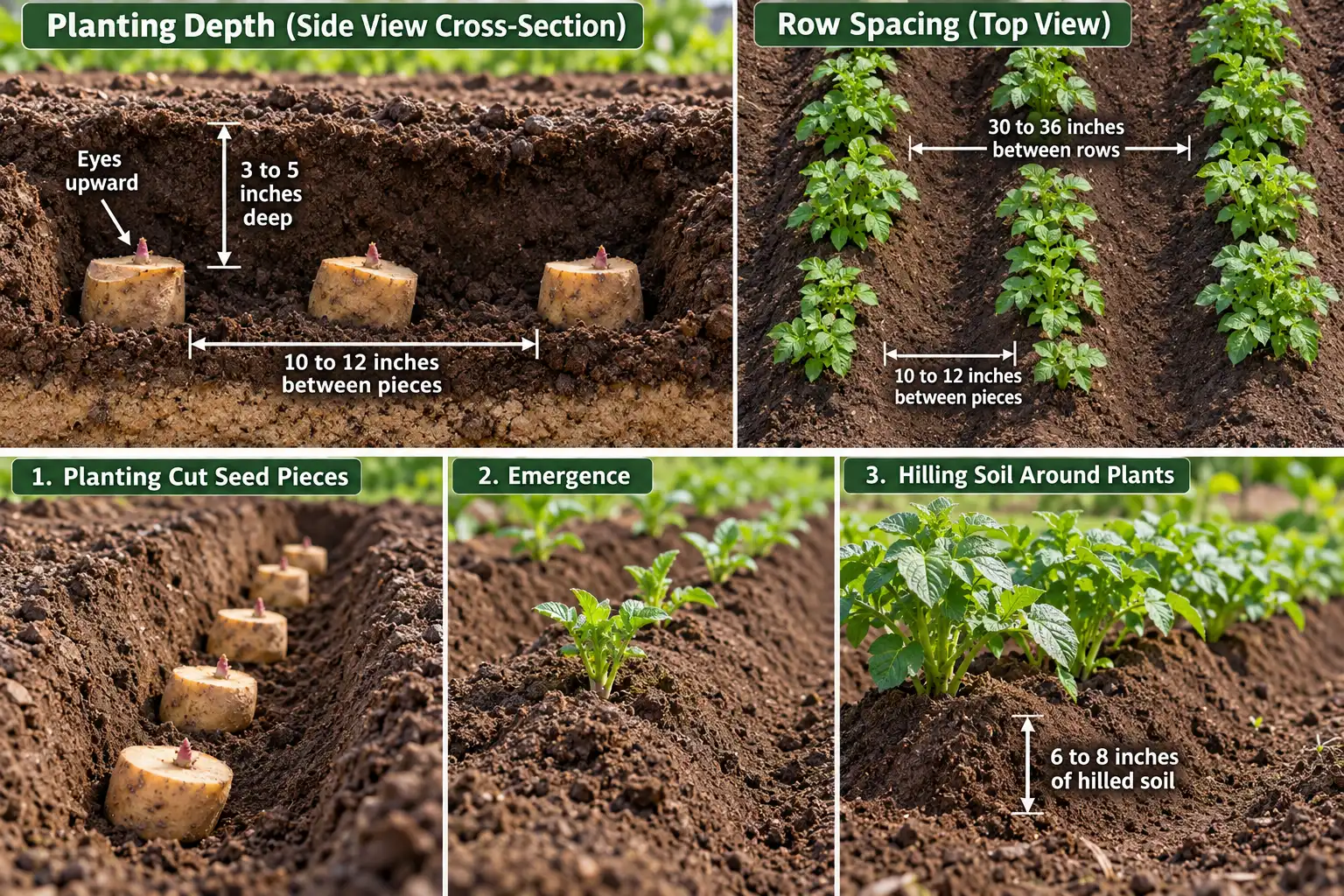
For a typical northern home garden, University of Minnesota Extension recommends these starting measurements:
| Planting detail | Recommended measurement |
|---|---|
| Planting depth | 3 to 5 inches |
| Distance between seed pieces | 10 to 12 inches |
| Distance between rows | 30 to 36 inches |
| Seed-piece weight | Approximately 2 ounces |
| Moisture after establishment | About 1 inch of water weekly, including rainfall, adjusted for soil conditions |
Place cut pieces with their cut sides down and eyes facing upward when possible. Cover them with loose soil without compacting the planting area.
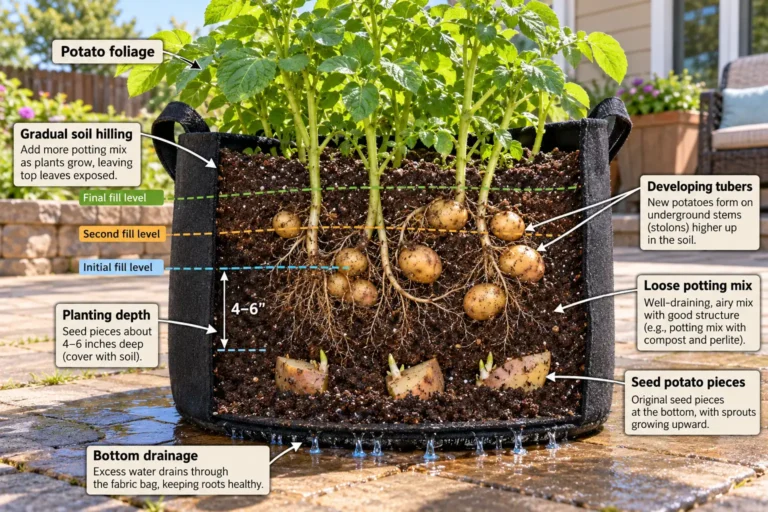
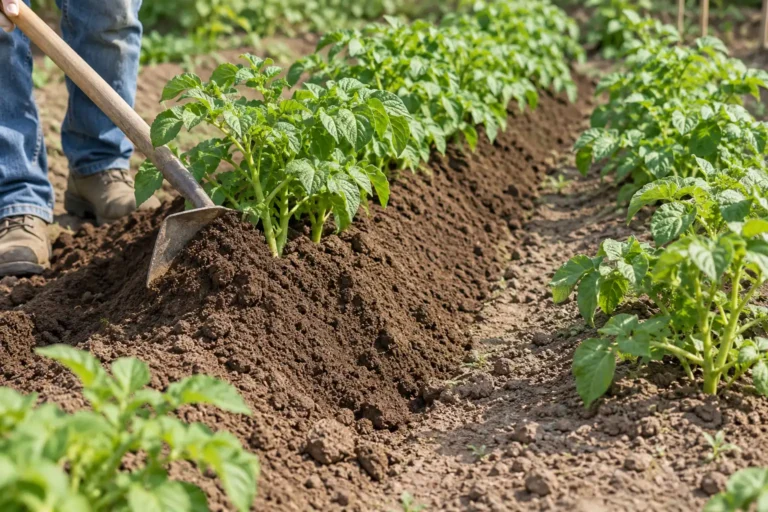
After emergence, gradually mound soil around the stems. This practice, called hilling, keeps developing potatoes covered and reduces light exposure that can cause greening.
Do Seed Potato Planting Dates Change by Region?
Yes. Northern growers generally plant in spring, while much of Florida grows potatoes during cooler winter and spring months.
The University of Minnesota Extension and UF/IFAS Extension provide substantially different planting windows because their growing seasons differ.
| Region | Typical planting guidance |
|---|---|
| Twin Cities, Minnesota | Around early April, once soil warms |
| Northern Minnesota | Soil may not become suitable until May |
| North Florida | January through March |
| Central Florida | November through February |
| South Florida | October through January |
Florida planting density may also differ. UF/IFAS recommends approximately 6 to 8 inches between seed pieces and at least 36 inches between rows in its home potato growing guide.
These are regional guidelines, not guaranteed dates. Local drainage, frost risk, soil warmth, and variety maturity still matter.
In regions with suitable late-season conditions, fall potato planting dates require separate consideration.
How Many Seed Potatoes Do You Need?
The amount depends on planting distance, row length, and seed-piece weight.
Use this calculation:

Assuming one 2-ounce piece every 12 inches, the following estimates apply:
| Planting area | Seed pieces | Seed weight |
|---|---|---|
| One 8-foot row | 8 | 1 lb |
| 4-by-8-foot raised bed, two rows | 16 | 2 lb |
| One 100-foot row | 100 | 12.5 lb |
| One planted acre, 36-inch rows | 14,520 | About 1,815 lb |
The raised-bed example assumes two rows spaced 30 inches apart, with enough room to hill the plants. The acre estimate assumes the entire acre is planted without roads or headlands.
The University of Maine Cooperative Extension’s seed-rate table provides comparable commercial estimates for different piece weights and row spacings.
For a different seed-piece size or spacing, recalculate before purchasing. These figures describe planting-stock requirements, not expected harvest weight.
What Problems Can Occur With Seed Potatoes?
Most early failures involve weak planting material, poor drainage, dormancy, or unfavorable soil temperatures.
| Problem | Possible cause | Recommended action |
|---|---|---|
| Eyes are not sprouting | Natural dormancy or cool storage | Allow time for dormancy to break before discarding firm tubers |
| Seed pieces rot underground | Saturated soil or damaged cut surfaces | Improve drainage and allow healthy cut pieces to heal |
| Sprouts are long and weak | Excessive physiological aging or unsuitable storage | Avoid heavily deteriorated seed and handle sprouts carefully |
| Seed potato is soft or moldy | Storage decay or disease | Discard affected tubers |
| Plants emerge unevenly | Seed variation, temperature, moisture, or disease | Check soil conditions and planting-stock quality |
The University of Maine notes that seed age, temperature, handling damage, and moisture influence emergence and early plant vigor.
Certified planting material cannot prevent every disease after planting. Rotate potatoes away from previous potato, tomato, pepper, and eggplant plantings. University of Minnesota Extension recommends a three- to four-year rotation where feasible.
FAQs about Seed Potatoes
Do seed potatoes need to sprout before planting?
No, visible sprouts are not always required before planting. Healthy dormant tubers can develop shoots when conditions permit, although short, sturdy sprouts may help establish plants sooner in suitable soil.
Can you eat leftover seed potatoes?
Seed potatoes sold for planting should not be treated as food, particularly when their treatment history is uncertain. The University of Maine warns that chemically treated potato seed must not be used for food or animal feed.
Can you plant green seed potatoes?
Yes, firm seed potatoes with healthy eyes can still be planted after greening from light exposure. However, green potatoes should not be eaten because light exposure is associated with increased toxic glycoalkaloids.
Can you save homegrown potatoes to plant next year?
Yes, saved potatoes can grow new plants, but repeated replanting may accumulate viruses and other seed-borne diseases. Certified seed is the safer choice when maintaining healthy planting stock is the priority.
How many potatoes will one seed potato produce?
One healthy seed piece can develop a plant that produces several new potatoes. The number and size depend on variety, stem development, growing temperature, soil moisture, nutrients, and overall plant health.
Choosing Seed Potatoes for Your Next Planting
Start with certified seed potatoes of a variety suited to your region. Choose firm tubers with healthy eyes, plant small potatoes whole, and cut larger ones into adequately sized pieces.
Avoid saturated soil and match planting dates to local temperatures. Healthy seed selection, careful handling, and suitable planting conditions provide a stronger foundation for the new crop.