Can Sugarcane Grow in Cold Climates? Growing Limits and Options
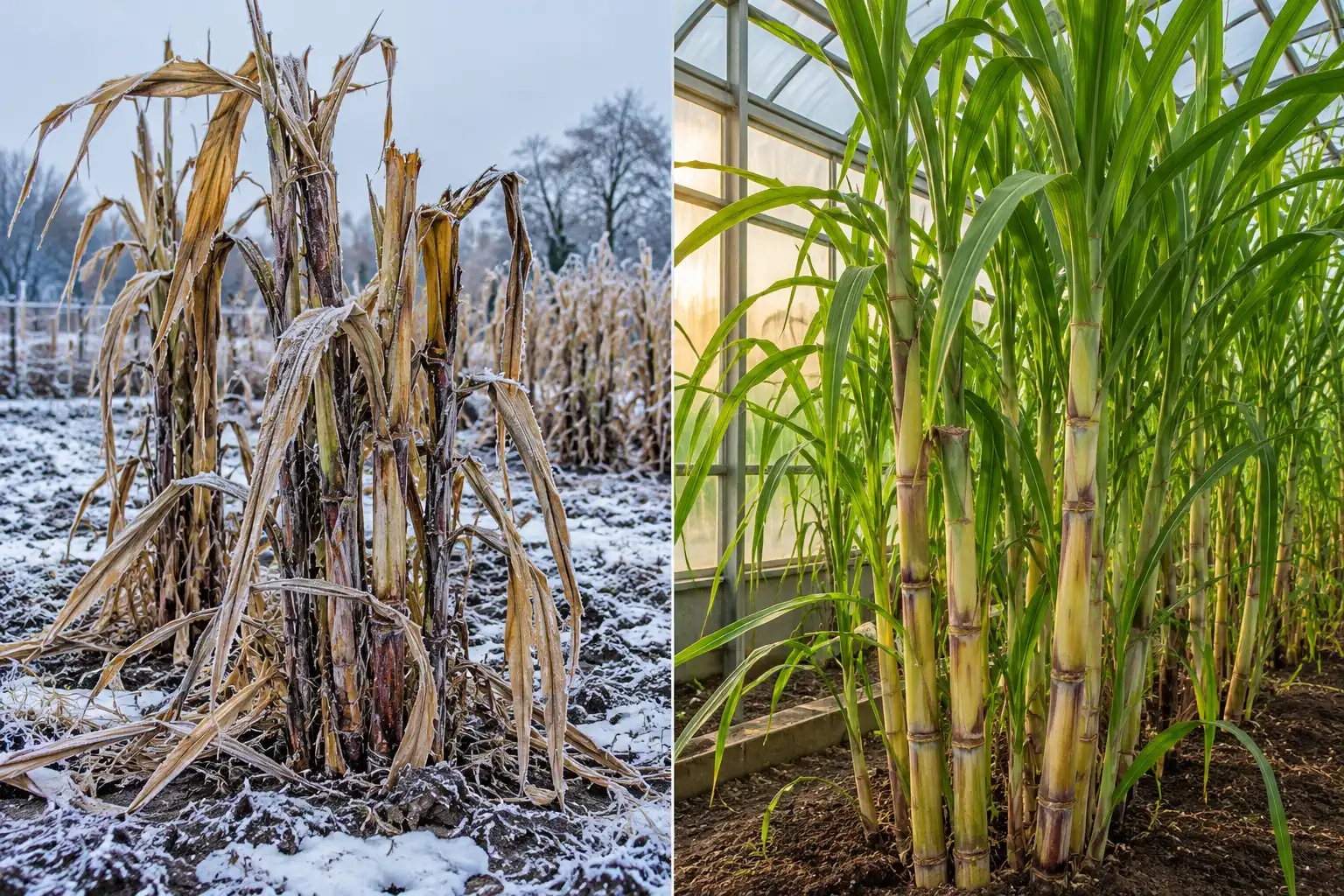
Can sugarcane grow in cold climates? The answer depends on whether you want summer growth, mature sweet stalks, or plants that survive winter. Sugarcane needs sustained warmth, making these goals difficult in regions with short summers and freezing winters.
Yes, sugarcane can grow in cold climates during warm summer months. However, short northern growing seasons rarely produce fully mature cane. Freezing temperatures damage exposed stalks, so dependable sugar production generally requires a longer warm season or heated protection.
Can Sugarcane Grow in Cold Climates Outdoors?
Sugarcane can grow outdoors in cold regions during summer, but producing mature, sugar-rich stalks is considerably harder.
Sugarcane is a tropical perennial grass. Its commercial varieties are hybrids of several Saccharum species.
According to UF/IFAS Extension, sugarcane performs best at temperatures between 70°F and 90°F. Frequent frost and freezing temperatures reduce productivity.
The other limitation is time.
UF/IFAS reports that sugarcane typically takes 9 to 14 months to reach harvest in Florida. Northern summers generally provide much less uninterrupted warmth.
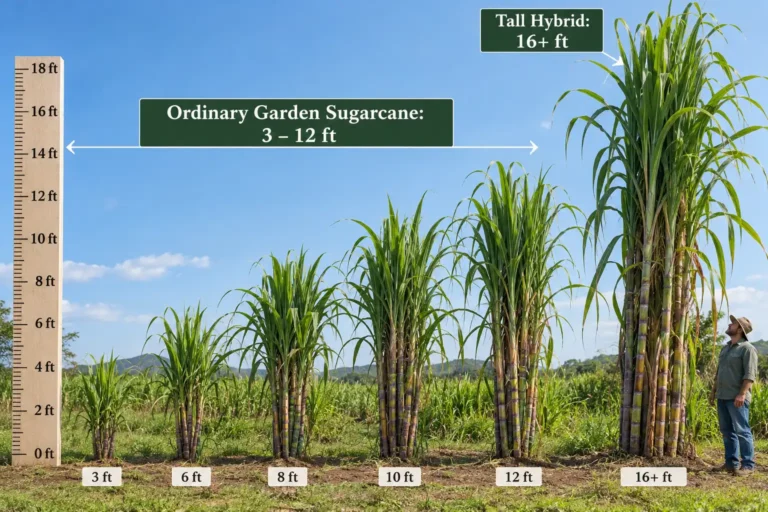
For example, a sugarcane plant might produce several feet of green growth during a warm Michigan summer. However, that does not mean its stalks have reached the maturity required for dependable sugar production.
The important difference is between three outcomes:
- Growing foliage: Possible during a warm northern summer.
- Producing mature cane: Difficult without an extended warm season.
- Surviving winter outdoors: Depends on the severity of freezing and protection of underground buds.
For northern growers, a few experimental plants are more realistic than an outdoor sugarcane field intended for commercial sugar production.
How Cold Can Sugarcane Tolerate?
Sugarcane tolerates cool weather better than prolonged freezing, but its growth slows sharply before temperatures reach 32°F.
University of Illinois cold-tolerance research found that conventional sugarcane has very little growth around 50°F. The plants do not necessarily die, but photosynthetic activity becomes severely limited.
The LSU AgCenter’s freeze research identifies several levels of freezing injury.
| Temperature | Expected sugarcane response |
|---|---|
| 70°F to 90°F | Favorable conditions for active growth |
| Around 50°F | Growth becomes extremely slow |
| 32°F to 25°F | Leaves may brown and terminal buds may die |
| 25°F to 22°F | More buds die and internal stalk damage becomes possible |
| Below 22°F | Aboveground parts of commercial varieties can be killed |
These are approximate responses, not guaranteed survival limits. Freeze duration, cultivar, and plant condition also influence damage.
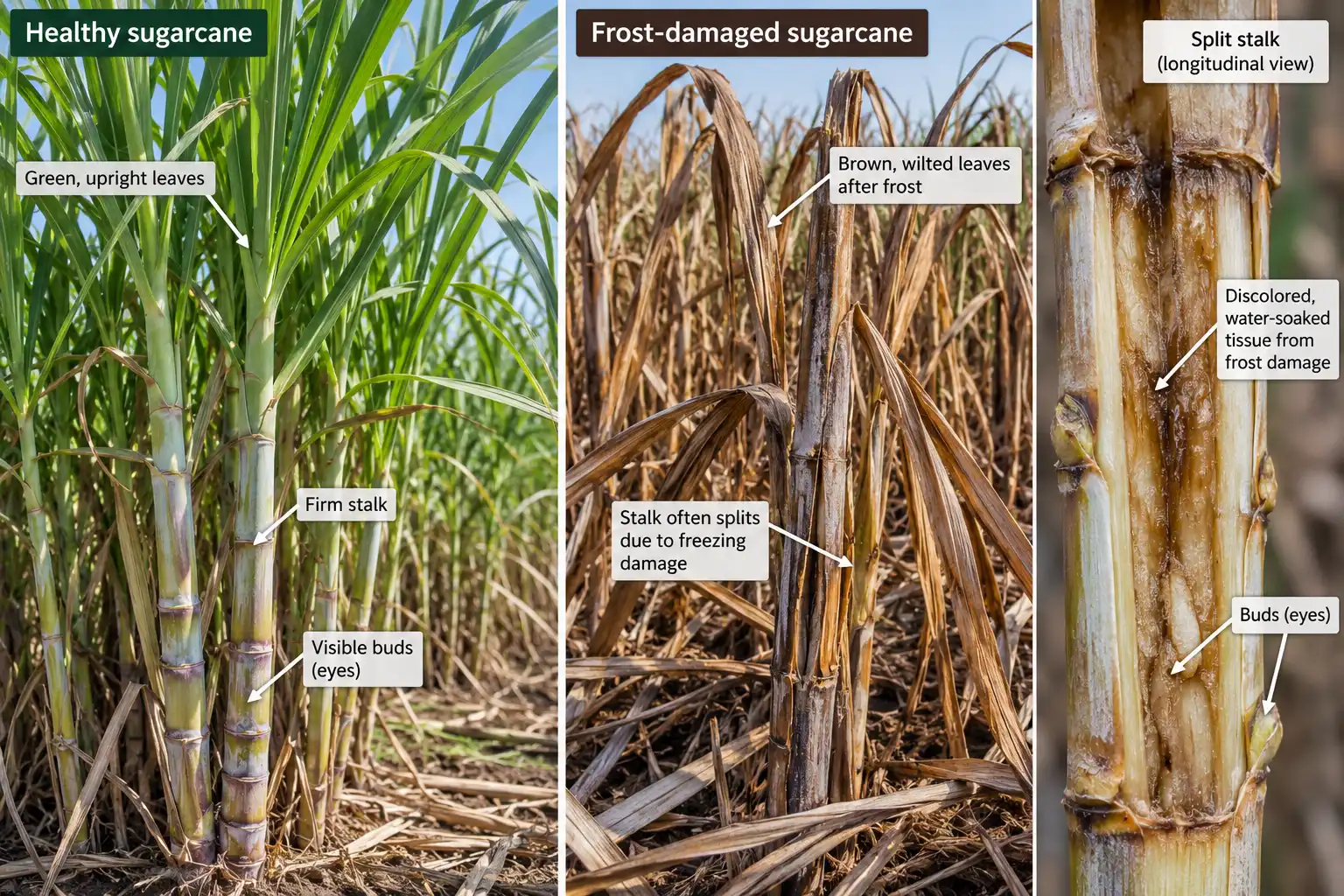
One distinction matters: dead leaves or stalks do not always mean the underground plant has died.
Protected basal buds sometimes survive and produce new shoots when warmer weather returns. However, a surviving plant may still have suffered substantial yield losses.
Which USDA Growing Zones Are Suitable for Sugarcane?
Zones 10 and 11 generally offer better conditions for perennial sugarcane. Zones 8 and 9 may support outdoor cane, but damaging freezes remain a concern.
The USDA Agricultural Research Service explains that hardiness zones represent average annual extreme minimum winter temperatures.
They do not measure summer heat or growing-season length.
| USDA zone | Outdoor growing potential | Practical approach |
|---|---|---|
| 10 to 11 | Favorable for perennial growth where freezes are rare | Grow outdoors and monitor occasional cold events |
| 8 to 9 | Possible, with winter injury and variable regrowth | Use adapted varieties and protect underground buds |
| 6 to 7 | Warm-season growth possible; winter survival unreliable | Grow seasonally or move plants indoors |
| 3 to 5 | Too cold for dependable unprotected overwintering | Use heated protection or choose another crop |
These categories are general planning guidance, not verified hardiness ratings for every sugarcane cultivar.
Why Does Louisiana Grow Sugarcane Despite Winter Freezes?
Louisiana demonstrates that sugarcane can succeed in a subtropical region with freezing winters.
Commercial production relies on adapted varieties, established underground buds, a lengthy warm growing period, and harvest management around freeze risks.
However, Louisiana’s conditions are substantially different from those in Minnesota, Wisconsin, or northern New York.
The presence of commercial sugarcane in Louisiana does not mean conventional varieties can survive northern winters.
Is a Northern Summer Long Enough to Mature Sugarcane?
Usually not. A northern frost-free season may support considerable growth without providing enough time for full maturity.
Consider a location with these hypothetical frost dates:
| Growing-season event | Date |
|---|---|
| Last spring frost | May 15 |
| First fall frost | October 1 |
| Frost-free period | Approximately 139 days |
| Typical Florida cane harvest cycle | 9 to 14 months |
Even with favorable summer temperatures, 139 days falls well short of the typical Florida harvest cycle.
Starting cane indoors can extend growth, but cool temperatures and weak light still limit development.
For your location, compare the average last spring frost and first fall frost dates. Then consider how many days actually provide temperatures favorable for cane growth.
Do not use frost-free days alone to predict harvest maturity. Heat, sunlight, variety, and plant age also matter.
How to Grow Sugarcane in a Cold Climate
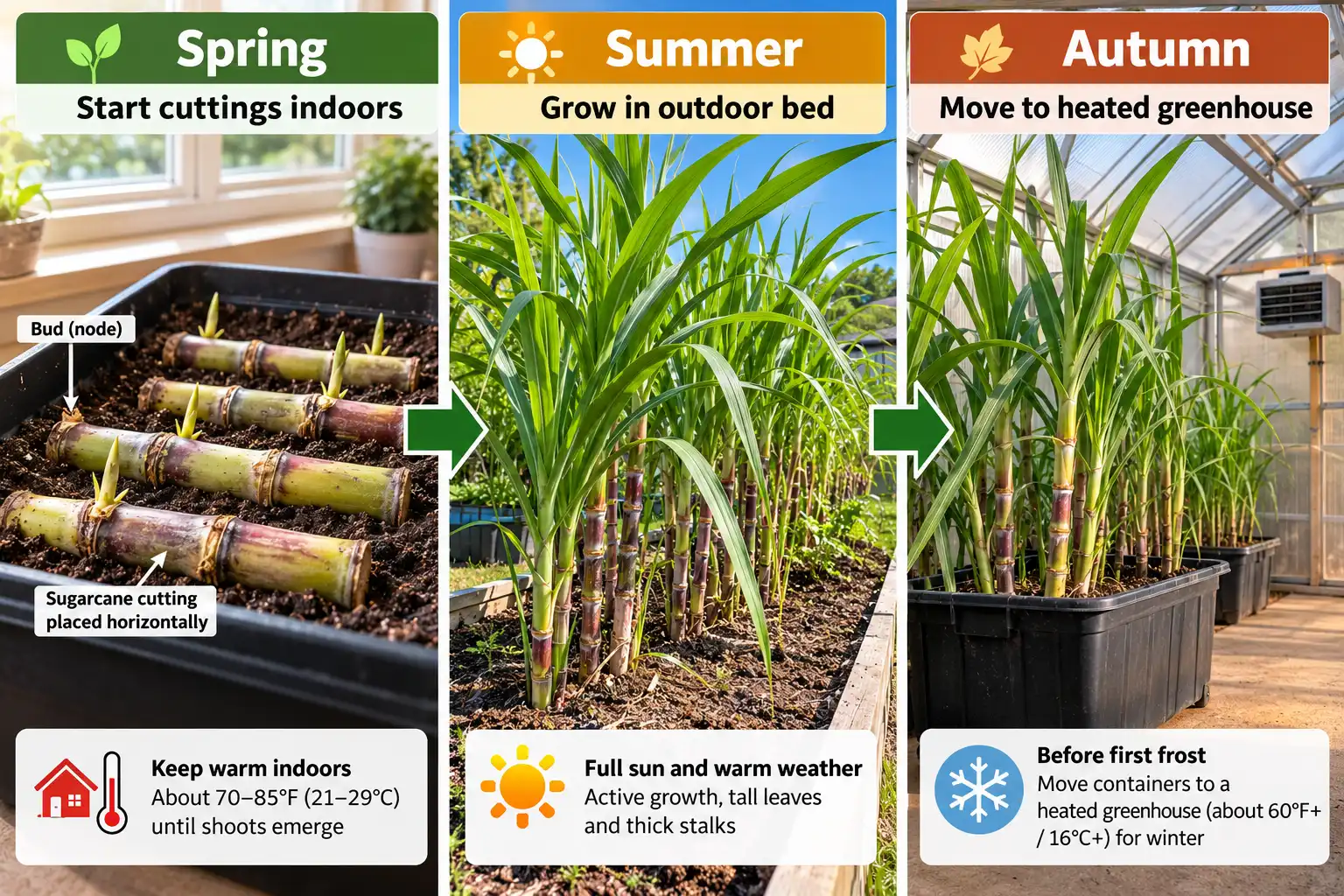
A small seasonal planting is the most practical outdoor experiment. A heated greenhouse offers a better opportunity to maintain growth beyond summer.
1. Choose Healthy Planting Material
Sugarcane is normally propagated from stalk cuttings called seed-cane or setts, rather than ordinary seed.
UF/IFAS recommends cuttings containing five or six buds to improve the chance of successful sprouting.
Choose healthy, disease-free material. A chewing or syrup variety is more suitable for edible stalks than energy cane selected primarily for fiber.
2. Start Cane Under Warm Protection
Begin propagation in a warm indoor growing area before outdoor temperatures become suitable.
Place cuttings horizontally in a well-drained growing medium. Keep the medium consistently moist without saturating it.
Strong light and warmth encourage shoot development.
3. Move Plants Outdoors After Frost Risk Passes
Choose a location with full sunlight and well-drained soil.
For garden planting, UF/IFAS’s sugarcane guide recommends furrows around 6 inches deep, with seed-cane covered by 4 to 6 inches of soil.
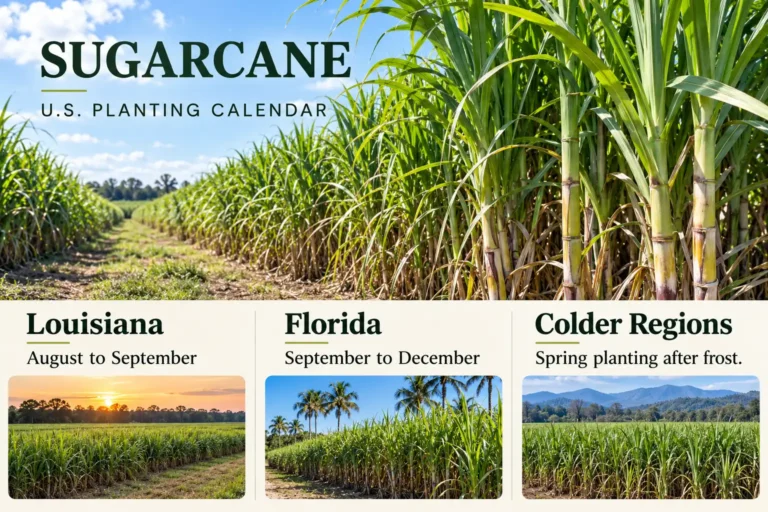
Outdoor planting should wait until freezing risk passes and the soil warms.
4. Maintain Moisture and Soil Fertility
Sugarcane requires consistent moisture during active growth.
Use a soil test report to determine fertilizer needs rather than automatically applying commercial rates developed for southern fields.
Plan irrigation around soil conditions and calculated crop water requirements.
5. Protect Plants Before Fall Freezes
Move container-grown plants into warm shelter before freezing weather.
For established outdoor plants, save healthy planting material if winter survival is unlikely.
Expect smaller stalks and uncertain sugar content when the outdoor season ends early.
How Much Space Does a Small Sugarcane Planting Need?
Sugarcane needs more space than its initial cuttings suggest because each planted section can develop multiple stalks.
UF/IFAS describes garden rows spaced approximately 4 to 10 feet apart.
At 4-foot row spacing:
- A 10-foot row represents approximately 40 square feet of field area.
- One acre contains 43,560 square feet.
- An acre at that spacing contains approximately 10,890 linear feet of row.
The acre calculation estimates available row length, not the number of plants or expected yield.
For cold climates, begin with a small plot before considering more acreage. Limited growing-season length remains the main restriction, regardless of planting density.
Can Sugarcane Survive Winter in Cold Regions?
Sugarcane can survive some freezing conditions when underground growing points remain protected. However, prolonged freezing makes reliable survival increasingly unlikely.
Three protection methods have different limitations.
Mulching Outdoor Plants
Mulch helps moderate soil temperature around underground buds.
This approach is more reasonable in relatively mild winter regions, particularly where established sugarcane already demonstrates reliable regrowth.
Mulch cannot guarantee survival through deeply frozen northern soil.
Growing Sugarcane in Containers
Containers allow plants to move into protected conditions before winter.
However, sugarcane develops tall stalks and substantial roots. Mature plants can become difficult to manage indoors.
Container growing is more suitable for maintaining a few plants or propagating future planting material than for producing commercial quantities of cane.
Using a Heated Greenhouse
A heated greenhouse provides the greatest control over winter conditions.
Maintain warmth, strong light, ventilation, and adequate root moisture if continued growth is the goal.
An unheated greenhouse may temporarily reduce frost exposure, but it cannot reliably prevent freezing during severe winter weather.
Are Cold-Tolerant Sugarcane Varieties Available?
Some sugarcane varieties handle freezing injury better than others, but this does not establish reliable survival in northern USDA zones.
For example, LSU AgCenter identifies HoCP 04-838 as having relatively good post-freeze stalk tolerance among the varieties evaluated.
That characteristic concerns how harvested cane withstands deterioration following freezing. It does not prove the cultivar can survive a Zone 5 winter.
University of Illinois researchers have also studied miscanes, hybrids involving sugarcane and cold-tolerant Miscanthus grass.
These research hybrids can maintain photosynthetic activity at lower temperatures than conventional sugarcane. However, they should not be treated as established replacements for ordinary sugar-producing varieties in northern fields.
Better Sugar-Producing Crops for Cold Climates
Sweet sorghum and sugar beets are generally more practical than conventional sugarcane when a region has cold winters.
Sweet Sorghum for Sweet Stalk Juice
Sweet sorghum is an annual crop with sugar-rich stalks.
Penn State Extension reports that sweet sorghum can reach harvest around 120 days after planting, depending on growing conditions.
Its guidance includes planting when soil reaches approximately 65°F.
That shorter crop cycle makes sweet sorghum a more realistic option for some northern growing seasons. Harvested stalks still require prompt processing if syrup or juice is the goal.
Sugar Beets for Cooler Growing Regions
Sugar beets accumulate sucrose in their enlarged roots instead of aboveground stalks.
The University of Minnesota Extension documents established sugar beet production in Minnesota and North Dakota.
They are a stronger commercial sugar-crop option for suitable northern regions, although successful production depends on soils, rotation, equipment, and processing access.
If your goal is dependable production rather than experimenting with tropical crops, consider which crops match your growing conditions before investing in sugarcane.
Common Problems When Growing Sugarcane in Cold Weather
Cuttings Fail to Sprout
Cold growing media, damaged buds, or excessive moisture can prevent sprouting.
Move viable cuttings into warmer conditions and inspect them for decay. UF/IFAS notes that sprouting commonly takes one to three weeks under favorable conditions, while low temperatures can delay emergence.
Leaves Turn Brown After Frost
Brown leaves indicate cold injury, but they do not prove that every underground bud is dead.
Inspect stalks for internal discoloration and soft, water-soaked tissue. Wait for warming conditions before deciding whether protected basal buds will regrow.
Plants Remain Small Despite Fertilizer
Temperature or sunlight may be restricting growth.
Adding more fertilizer cannot compensate for insufficient warmth. Check light exposure, root conditions, and soil moisture before changing nutrient applications.
Stalks Develop Soft, Rotting Sections
Freezing injury and persistent wet conditions can contribute to deterioration.
Remove severely damaged material, improve drainage, and avoid retaining rotting stalks as planting material.
FAQs About Sugarcane Grow in Cold Climates
Can Sugarcane Grow in an Unheated Greenhouse?
Sugarcane can grow in an unheated greenhouse during warm periods, but winter survival is uncertain. Greenhouse temperatures may fall below freezing overnight, so dependable winter protection requires sufficient heating or another frost-free location.
Can Sugarcane Grow in Pots in Northern States?
Yes, sugarcane can grow in large, well-drained containers during summer. Move the plants indoors before freezing temperatures arrive, and provide enough light and warmth to maintain healthy growth through winter.
Is Purple Sugarcane More Cold-Hardy Than Green Sugarcane?
Purple coloration alone does not establish greater cold tolerance. Cold response depends on cultivar genetics and growing conditions, so select planting material using documented regional performance rather than stalk color.
Can You Harvest Sweet Sugarcane Before the First Frost?
You can harvest stalks before frost, but early harvest does not guarantee sufficient sugar content. Cane that has not completed its normal growth period may produce less recoverable sugar than fully mature stalks.
Will Sugarcane Grow Back After a Hard Freeze?
Sugarcane may regrow when protected underground buds survive the freeze. However, severely frozen soil and prolonged exposure can kill those growing points, preventing regrowth even after temperatures rise.
What Should You Plant in Your Climate?
Sugarcane is worth trying in a northern garden when summer growth or a small experimental harvest is the goal. Use healthy cuttings, start early under protection, and prepare for fall frost.
For dependable sugar production, choose a crop that can complete its harvest cycle within your local growing season. Sweet sorghum or sugar beets will often be the more practical choice.