How Tall Does Sugarcane Grow? Typical Heights Explained
How tall does sugarcane grow in a field or backyard planting? Its height depends on the variety, growing season, and climate. Understanding the difference between stalk height and total plant height also helps you judge its growth more accurately.
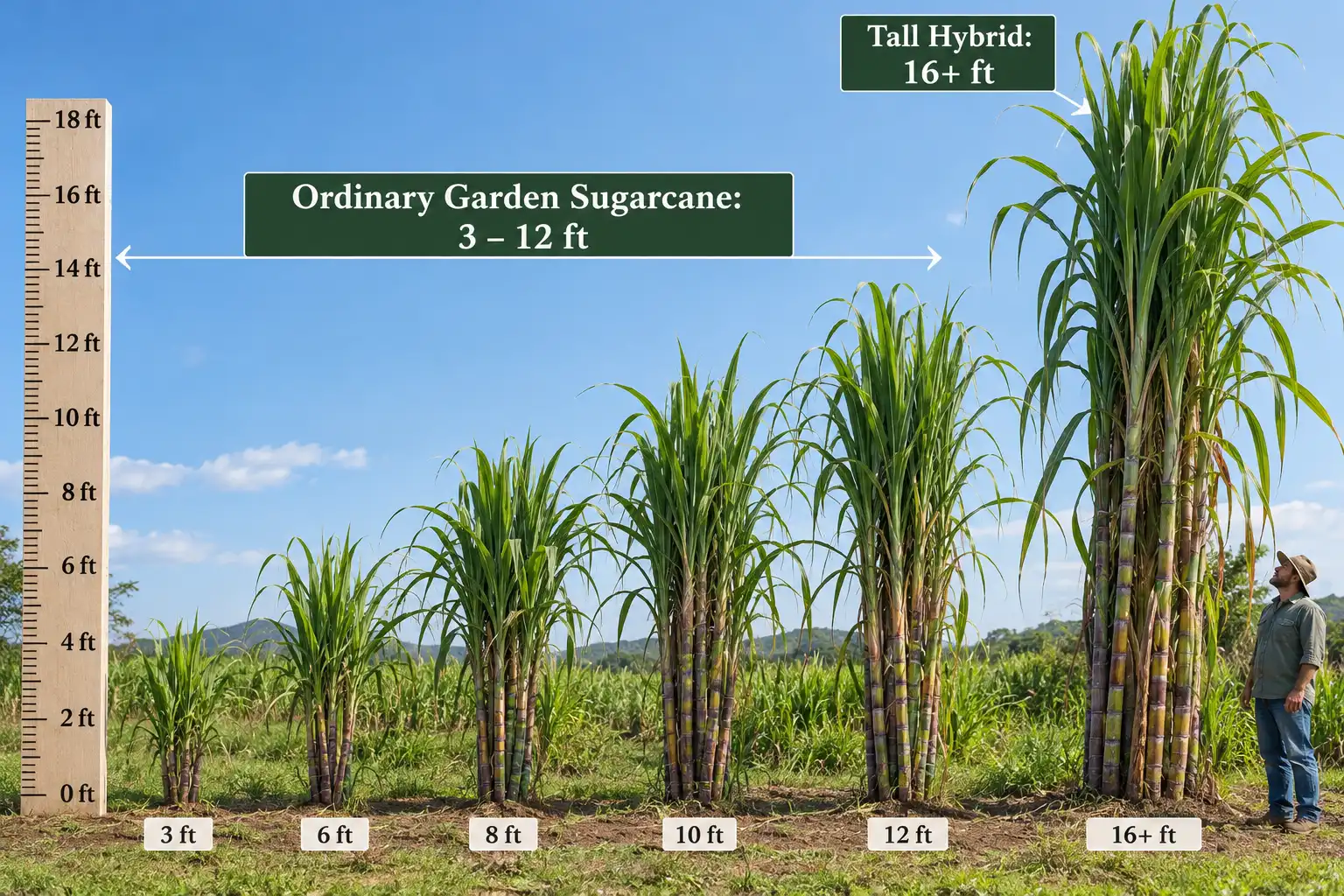
Sugarcane commonly reaches about 8 to 12 feet in favorable growing conditions. However, UF/IFAS lists a broader garden height range of 3 to 12 feet, while certain vigorous hybrids can exceed 16 feet at maturity.
How Tall Does Sugarcane Grow in Different Climates?
Mature sugarcane can range from a few feet tall to nearly 20 feet under exceptional conditions. However, climate and variety determine which heights are realistic.
The UF/IFAS Santa Rosa County Extension guide lists a 3-to-12-foot height range for garden sugarcane. Another UF/IFAS publication confirms that some mature sugarcane hybrids exceed 16 feet.
The following comparison shows how much growing conditions change the expected height.
| Growing conditions | Reported height |
|---|---|
| Home garden sugarcane | 3 to 12 feet |
| Cooler climate with a short season | 5 to 8 feet |
| Warm subtropical garden | Around 12 feet |
| Certain vigorous commercial hybrids | Over 16 feet |
| Exceptionally tall tropical sugarcane | Nearly 20 feet |
Ranges come from UF/IFAS Extension and the San Diego Zoo’s sugarcane cultivation guide. They describe different growing situations, not guaranteed heights for every cultivar.
The Agricultural Marketing Resource Center also describes sugarcane reaching 10 to 20 feet. That broad estimate reflects the crop’s potential rather than a typical height for every U.S. planting.
For planning a garden or field, the shorter published ranges provide a more practical starting point than the maximum.
What Counts as Sugarcane Height?
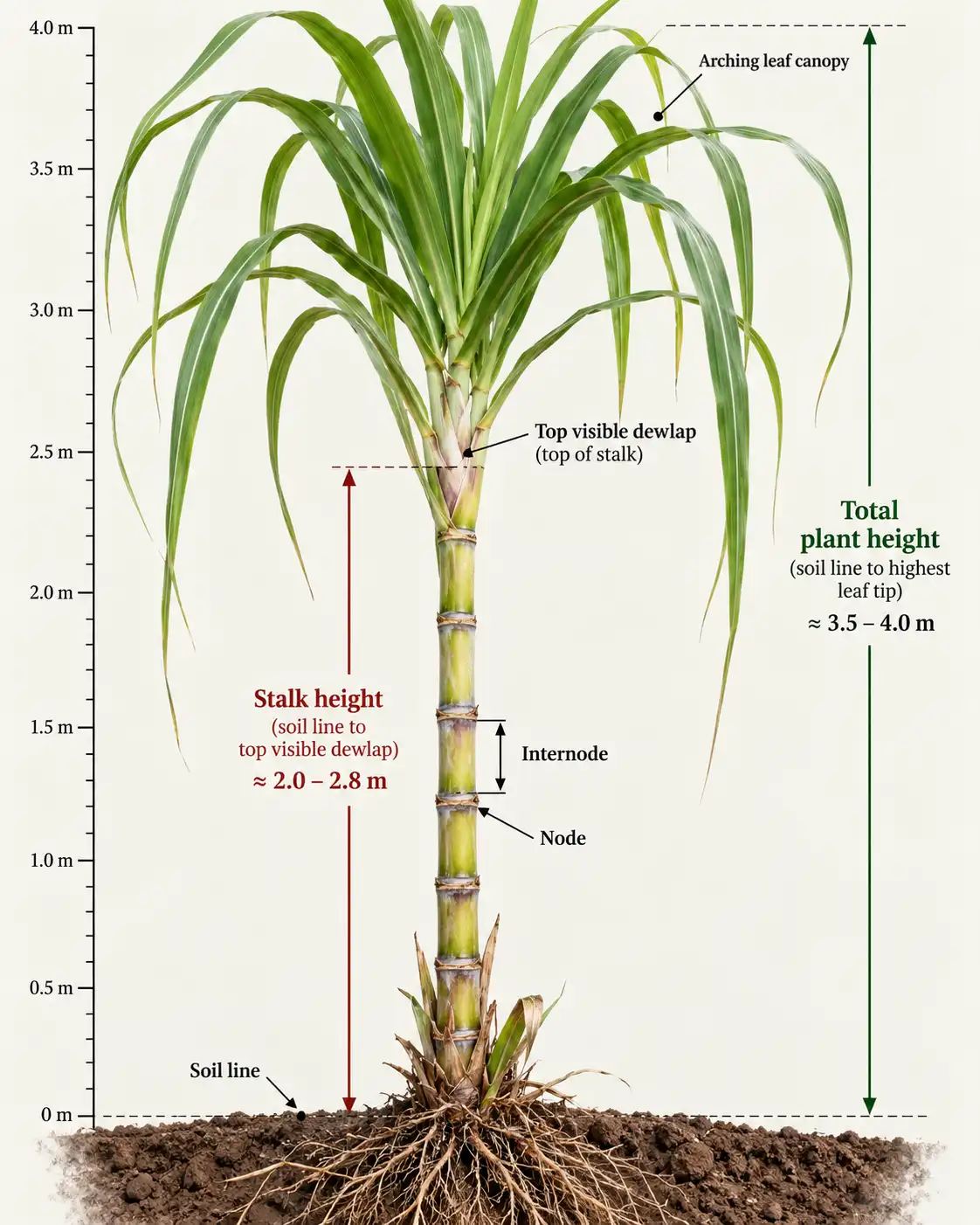
Sugarcane has two useful height measurements: the stalk height and the total height of the plant, including its leaves.
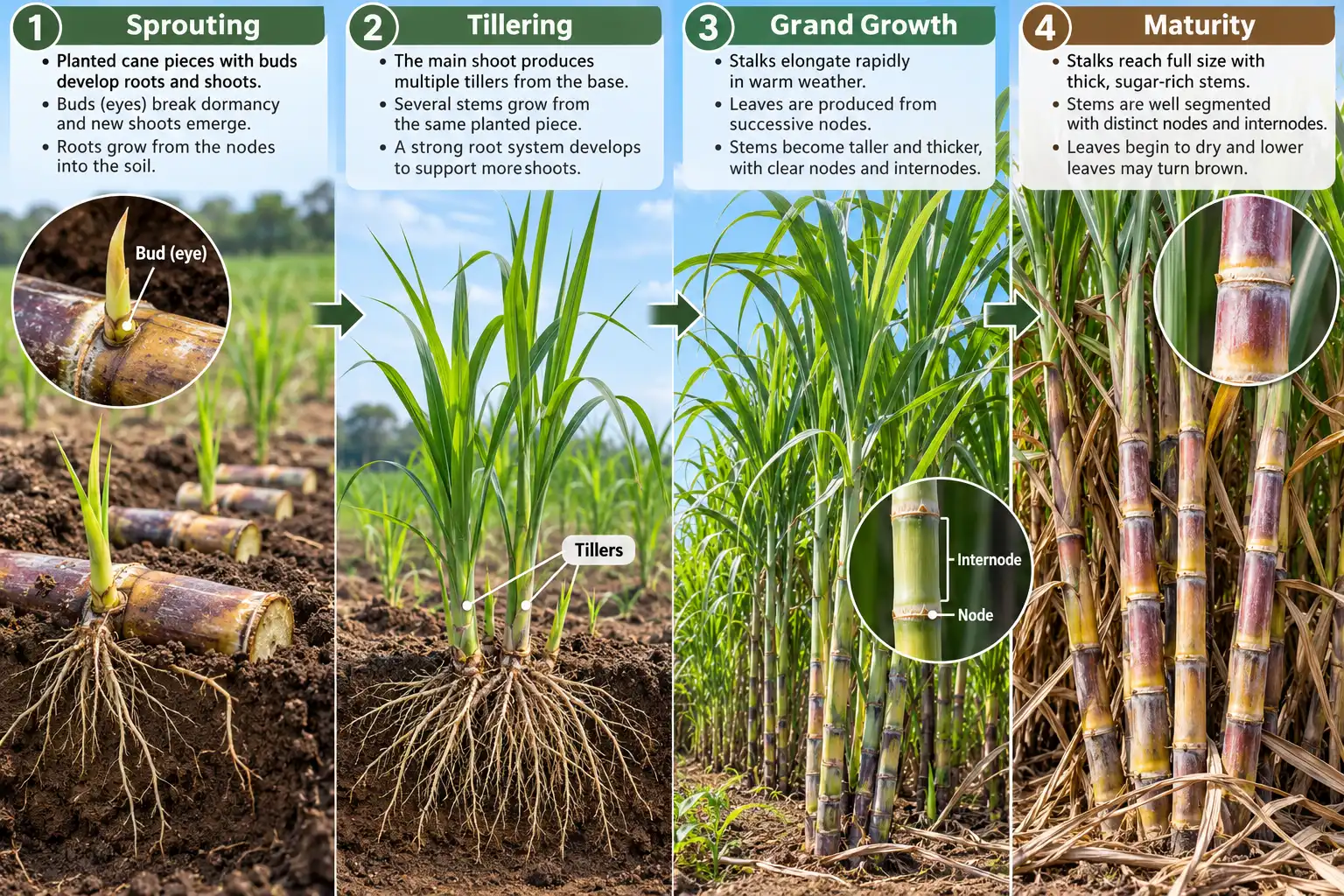
The stalk consists of solid, jointed sections called nodes and internodes. Long leaves emerge from nodes near the upper stalk and can extend above the harvestable cane.
According to UF/IFAS’s sugarcane botany guide, internode length varies with cultivar and growing conditions.
For consistent measurements:
- Stalk height: Measure vertically from ground level to the uppermost visible leaf collar, called the top visible dewlap.
- Total plant height: Measure from ground level to the highest upright leaf tip or flower tassel.
For example, a stalk measuring 108 inches to the selected leaf collar is 9 feet tall. Its leaves may extend higher.
Use stalk height when comparing crop development. Use total height when planning around fences, walkways, and overhead structures.
How Fast Does Sugarcane Grow?
Sugarcane grows slowly during establishment, accelerates during warm weather, and gradually slows as it approaches maturity.
UF/IFAS describes the fastest development as the grand growth period, when stalk elongation becomes particularly active.
Early Growth and Tillering
Sugarcane grows from buds on planted stalk sections called seed cane.
Under favorable conditions, new shoots can emerge within one to three weeks. Cold soil delays sprouting.
Young plants initially develop leaves and additional shoots called tillers. Height increases slowly during this stage.
Rapid Stalk Elongation
During warm months, the stalks elongate through the expansion of their internodes.
Moisture, sunlight, temperature, and nutrients influence the rate. Growth is not uniform, so a fixed inches-per-day estimate would be misleading.
Maturity and Slower Growth
Once sugarcane approaches maturity, stalk elongation slows and sucrose accumulation becomes increasingly important.
UF/IFAS reports that Florida sugarcane is typically harvested after 9 to 14 months of growth, depending on the production system. Some tropical systems allow considerably longer growing periods.
How Does Sugarcane Height Vary Across the United States?
The longer sugarcane receives warm growing conditions, the more opportunity it has to develop tall stalks.
Florida
South Florida provides a long production season suited to commercial sugarcane. Warm temperatures support continued stalk development, although individual varieties differ.
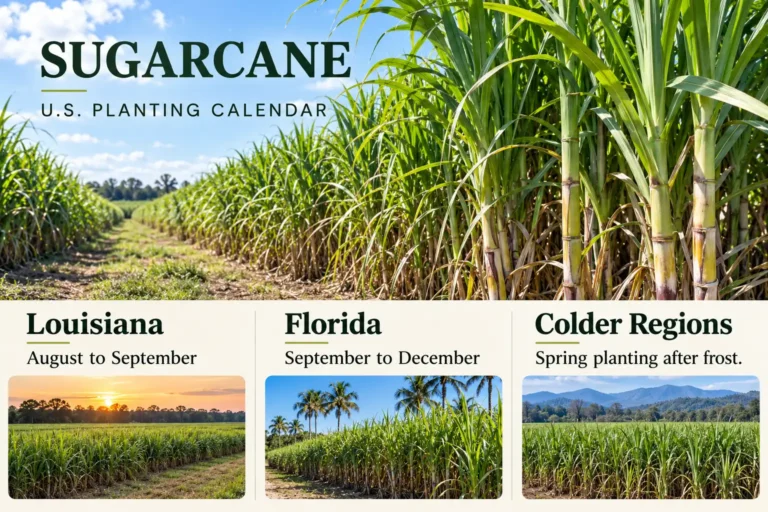
North Florida experiences greater frost risk. The UF/IFAS garden height range of 3 to 12 feet is more useful there than assuming every planting will exceed 12 feet.
Louisiana and the Gulf Coast
Louisiana sugarcane makes much of its vertical growth during the warm months. However, freezing temperatures limit the growing season and influence harvest timing.
The LSU AgCenter emphasizes choosing cultivars suited to local soils, cold exposure, and crop management rather than judging them by height alone.
Cooler U.S. Regions
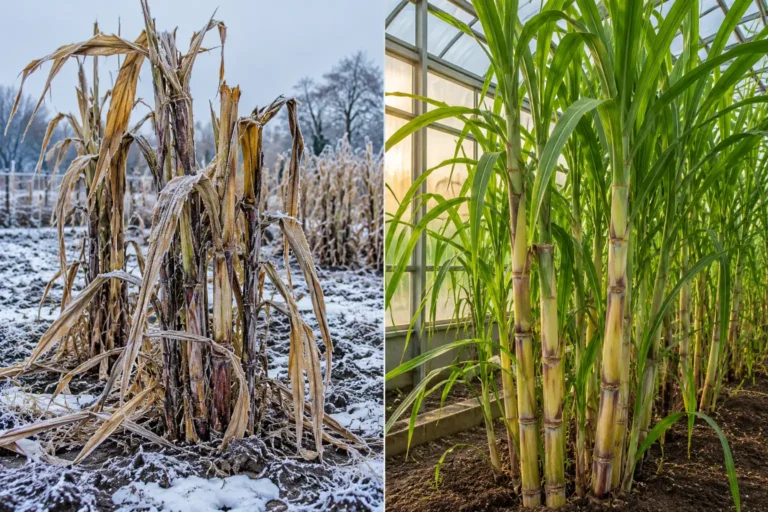
Where frost arrives early, cane may remain shorter or require winter protection.
The San Diego Zoo’s cultivation guide describes sugarcane reaching approximately 5 to 8 feet when grown as an annual in cooler climates.
A shorter stalk in these conditions does not automatically indicate unhealthy growth.
Before dedicating growing space to sugarcane, consider matching crops to the local growing season.
What Determines How Tall Sugarcane Grows?
Variety, temperature, sunlight, moisture, and soil conditions determine sugarcane’s final height.
1. Sugarcane Variety
Not every cultivar has the same growth habit.
UF/IFAS distinguishes chewing cane, syrup cane, and commercial crystal-sugar cane. Their differences include stalk fiber and sugar characteristics, not simply height.
For specific commercial examples, the LSU AgCenter’s 2026 variety guidance identifies L 01-299 as well suited to heavier Louisiana soils, with strong ratooning ability. HoCP 96-540 is better adapted to sandier soils and has superior cold tolerance.
Neither distinction proves that one cultivar will always grow taller.
2. Temperature and Sunlight
Sugarcane performs well under warm growing conditions.
UF/IFAS identifies approximately 70 to 90°F as a favorable temperature range. Cold weather restricts growth, while adequate sunlight supports vigorous shoot development.
Choose an open planting site with full sun whenever possible.
3. Water and Soil Fertility
Sugarcane needs sufficient soil moisture to support active stalk elongation.
Dry soil slows development. Excessively wet, poorly drained soil can also damage roots.
For field production, calculating crop water requirements helps guide irrigation decisions.
Balanced nutrition matters too. A soil test interpretation is more reliable than adding fertilizer simply because the cane seems short.
Why Is My Sugarcane Not Growing Tall?
Slow growth often reflects limited warmth, insufficient sunlight, moisture stress, or unsuitable growing conditions.
The first step is to determine whether the plant is still establishing or has stopped developing during favorable weather.
Short but Green Sugarcane
Healthy green plants may simply need more growing time.
Check the cultivar and planting date. If temperatures remain cool, additional fertilizer will not replace the missing heat.
Yellow Leaves and Weak Growth
Inspect soil moisture, drainage, and plant health.
Waterlogged roots and nutrient deficiencies can affect development. Use soil testing when symptoms suggest a fertility problem rather than applying nitrogen without evidence.
Tall Sugarcane That Falls Over
Some varieties develop lodging, which occurs when mature stalks bend or fall.
UF/IFAS warns that certain cultivars are prone to lodging. Tall cane near pathways can become inconvenient and hazardous because the leaves have sharp edges.
Provide adequate space and avoid planting large clumps beside heavily used walkways.
Does Taller Sugarcane Produce More Sugar?
No. Taller sugarcane is not automatically sweeter or more productive.
Stalk height describes plant growth, while sugar yield depends on several other factors, including sucrose concentration and harvest maturity.
A USDA Agricultural Research Service study published in 2025 examined Florida sugarcane cultivars planted in October, November, and December. Earlier planting generally favored height development, but later planting produced higher cane and sugar yield components in the trial.
The results illustrate why height alone cannot predict yield.
UF/IFAS also explains that sugarcane stores sucrose throughout its stalk as it ripens. The youngest upper sections generally contain less sugar than mature stalk sections.
For harvesting, consider stalk development, crop maturity, intended use, and local frost risk rather than selecting an arbitrary height.
FAQs About Sugarcane Height
Can Sugarcane Grow 20 Feet Tall?
Yes, sugarcane can approach 20 feet under particularly favorable tropical growing conditions. However, this is an upper-end possibility rather than a typical height for backyard plants or commercially harvested cane in the United States.
How Tall Can Sugarcane Grow in a Pot?
Potted sugarcane can develop tall stalks, but its final height depends on cultivar, container space, water, and sunlight. Restricted roots and rapid soil drying can limit growth, so container plants should not be expected to match field-grown cane.
Does Sugarcane Grow Back After Harvesting?
Yes, established sugarcane can produce new stalks from underground buds after harvest. This regrowth is called a ratoon crop, and the new shoots require another growing period to develop harvestable stalks.
Does Purple Sugarcane Grow Taller Than Green Sugarcane?
Not necessarily. Sugarcane stalk color depends on genetics and growing conditions, so purple coloration does not reliably indicate greater height. Compare identified cultivars under similar conditions rather than using stalk color to predict mature size.
Does Flowering Make Sugarcane Taller?
Flowering can increase the plant’s visible height because a tassel develops above the upper leaves. However, flowering shifts the growing point toward reproduction and does not necessarily produce more harvestable stalk length or sugar.
Key Points for Your Sugarcane Planting
Plan enough vertical space for cane that may exceed 10 feet, especially in warm southern growing regions.
Measure stalk height consistently, provide full sun and adequate moisture, and account for the length of your growing season. If the crop stays shorter than expected, investigate growing conditions before changing fertilizer rates.
Judge harvest readiness by crop maturity and sugar development, not height alone.