When to Plant Sugarcane: Best Planting Months by Region

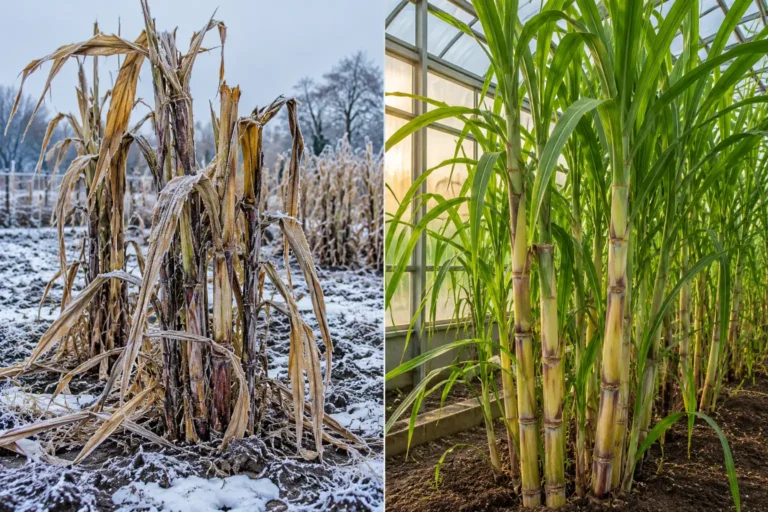
Sugarcane needs a long, warm growing season, but its planting date varies across the United States. Knowing when to plant sugarcane helps you establish healthy stalks, protect developing buds from freezing temperatures, and give the crop enough time to mature.
When to plant sugarcane depends on where you grow it. Louisiana fields are usually planted in August or September, Florida fields mostly from September through December, and gardeners facing winter freezes can wait until spring frost risk has passed.
When to Plant Sugarcane by Region
Sugarcane is generally planted in late summer or fall across the main U.S. production regions. However, spring planting can work for home growers in colder locations.
The following calendar combines regional guidance from LSU AgCenter, UF/IFAS Extension, and other regional sources.
| Region | Planting window | Important consideration |
|---|---|---|
| Louisiana | August to September | Fall establishment before winter |
| Central and South Florida | September to December most commonly | Longer planting season in warmer locations |
| North Florida | August to November, or spring after frost | Early fall establishment or protected winter dormancy |
| Lower Rio Grande Valley, Texas | August to December historically | Water availability and local freeze exposure |
| Colder Southern areas | Spring after the last expected freeze | Shorter growing season and winter protection |
| Frost-free tropical U.S. locations | Depends on local conditions | Soil moisture and drainage determine timing |
The Florida calendar needs some explanation. UF/IFAS lists September through January for field planting, while USDA Agricultural Research Service describes August through December as the typical commercial season. These ranges reflect different planting conditions and reporting practices, not a single fixed starting date.
The historical Texas window comes from Rio Grande Valley Sugar Growers. It should not be treated as a current statewide planting recommendation.
Is Fall or Spring Better for Planting Sugarcane?
Fall planting is generally preferred in established U.S. sugarcane regions, while spring planting is useful where winter freezes threaten new growth.
Fall planting
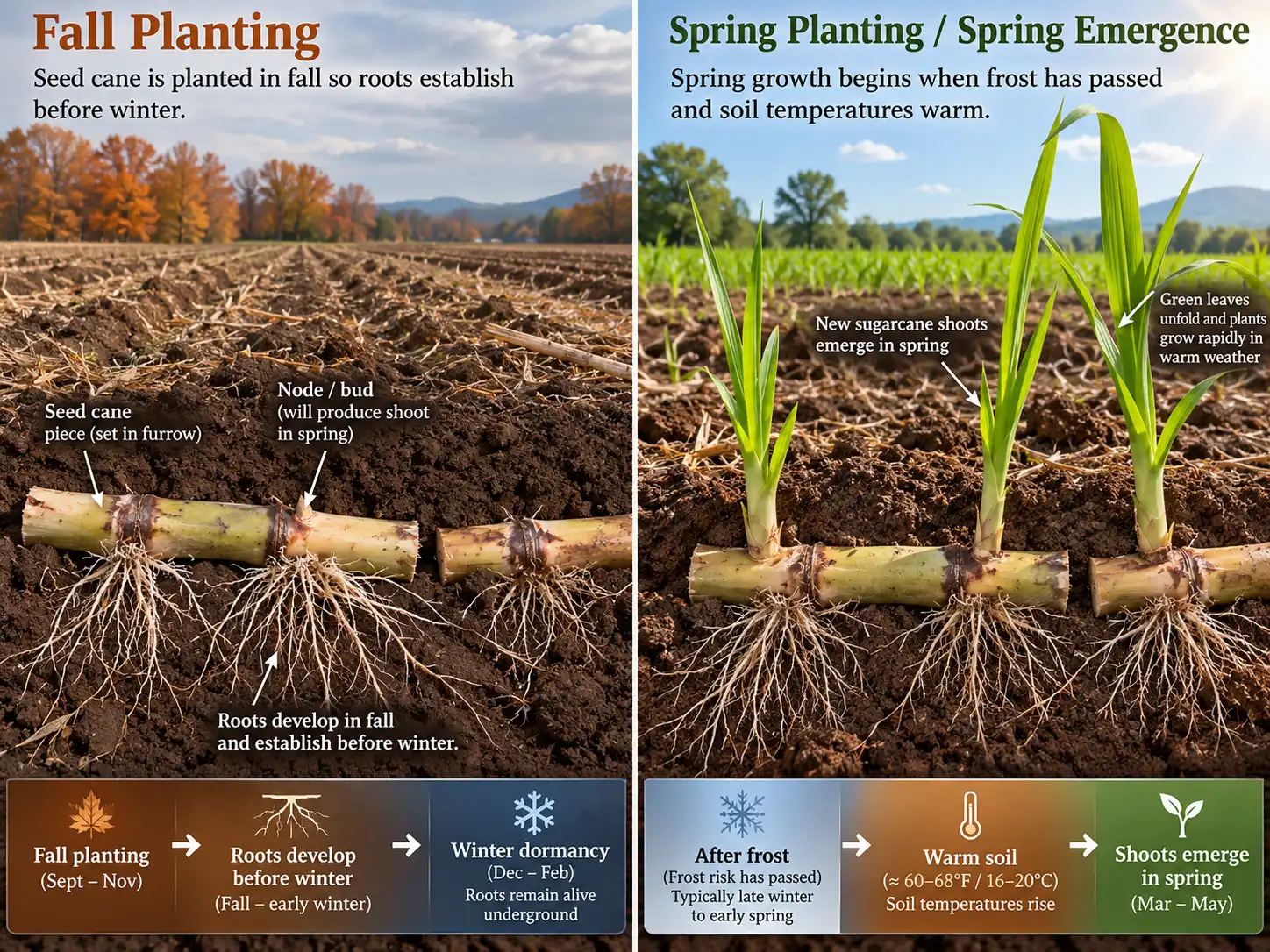
Fall planting allows sugarcane to establish underground buds and roots before winter.
In Louisiana, planted cane survives the colder months and resumes vigorous growth the following spring. This schedule supports harvesting during the next production season.
For North Florida, the UF/IFAS Backyard Sugarcane publication identifies mid-August through mid-September as an early establishment window.
It also describes planting after mid-November, when buds can remain dormant until spring. The two methods serve different purposes.
Spring planting
Spring planting avoids exposing newly developing shoots to winter freezes.
UF/IFAS Extension’s 2026 sugarcane landscape guidance confirms that planting after frost risk has passed is possible.
However, spring-planted cane may have insufficient growing time to produce fully mature stalks before the next winter in colder areas.
What Temperature Is Best for Planting Sugarcane?
Sugarcane grows most actively in warm weather and is vulnerable to freezing temperatures.
UF/IFAS reports that sugarcane thrives in humid conditions between approximately 70°F and 95°F. Extended periods below 70°F slow its growth.
Use these conditions to guide planting:
| Condition | Effect on planting |
|---|---|
| Warm weather, 70°F to 95°F | Supports active sugarcane growth |
| Extended cool weather below 70°F | Slows growth and establishment |
| Freezing temperatures, 32°F or below | Can damage exposed foliage and shoots |
| Persistently saturated soil | Raises the risk of seed-cane rot |
For spring planting, wait until the local freeze risk has passed and warmer weather is becoming consistent.
The NOAA National Centers for Environmental Information provides regional last-freeze information based on climate records. Actual frost dates vary from year to year.
USDA hardiness zones provide useful context, but a zone number alone cannot determine a suitable sugarcane planting date. Local freezes, growing-season length, and drainage also matter.
Does Planting Sugarcane Earlier Produce Higher Yields?
Earlier planting does not always produce higher sugarcane yields. The response depends on region, variety, and planting method.
LSU AgCenter reports that traditional whole-stalk planting generally performs best in early August in Louisiana. Shorter mechanically planted stalk sections, called billets, generally perform better during late August and September.
Florida research shows a different response.
A 2025 USDA Agricultural Research Service study evaluated October, November, and December planting dates near Belle Glade, Florida.
October planting increased early tillering, while November and December produced higher cane and sugar yields in the reported first-crop trial.
The research included cultivars such as CPCL 05-1201 and CP 96-1252. Researchers noted that additional ratoon-crop evaluation was needed.
These results support using local recommendations rather than assuming the earliest possible planting date is always preferable.
How to Plant Sugarcane Once the Planting Window Opens
Plant healthy, budded stalk sections in moist, well-drained soil with enough space for the crop to develop.
Sugarcane is ordinarily propagated from stalk cuttings, not botanical seeds.
For a small planting, follow these steps:
- Select healthy seed cane. Choose mature, disease-free stalks with viable buds.
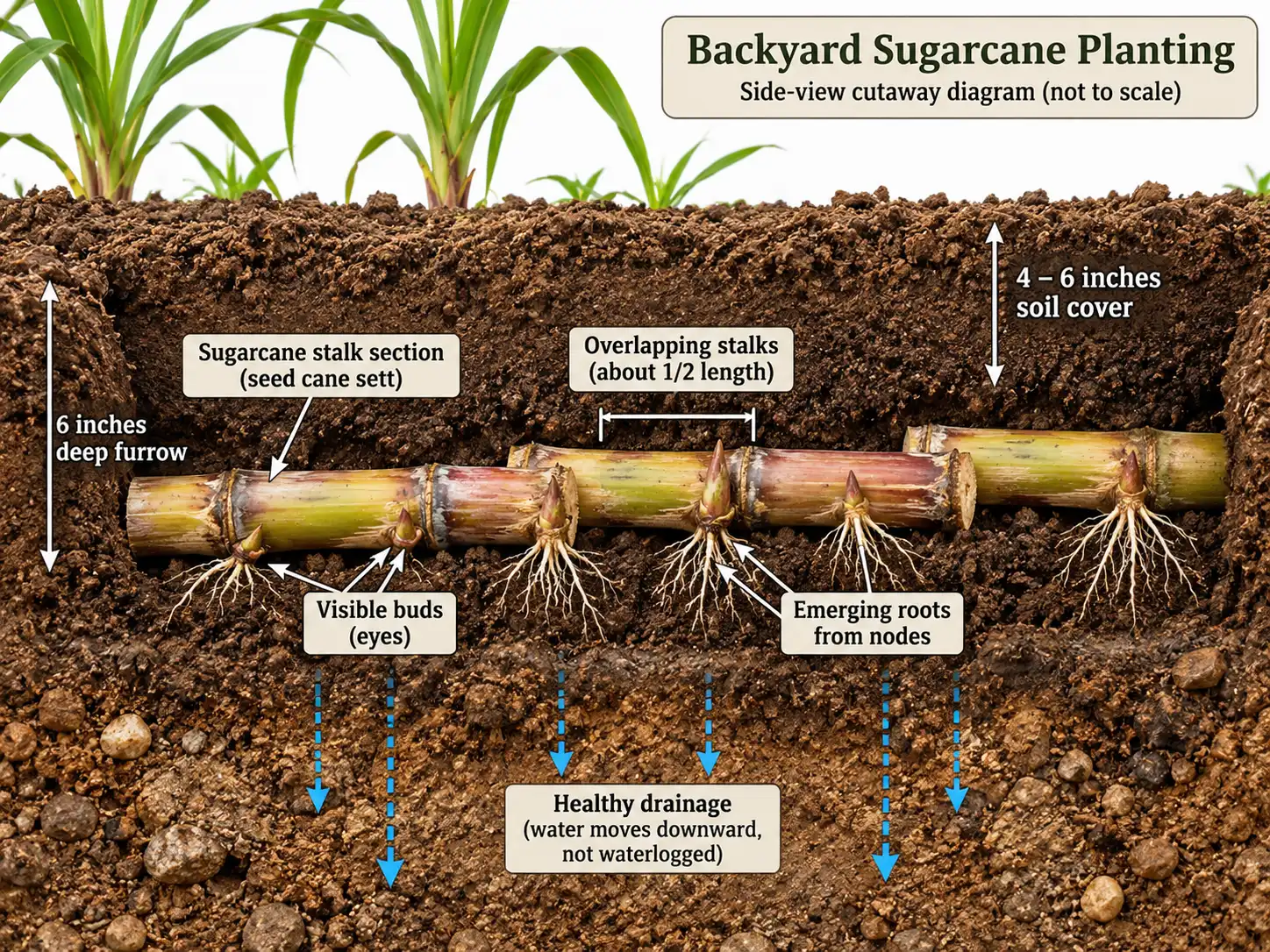
- Cut the stalks. Prepare sections containing approximately five to six buds, as recommended by UF/IFAS for backyard planting.
- Prepare the furrow. A roughly 6-inch-deep furrow is suitable for the UF/IFAS backyard method.
- Position the cuttings. Lay them lengthwise and overlap adjoining pieces by approximately half their length.
- Cover the stalks. UF/IFAS backyard guidance recommends approximately 4 to 6 inches of soil cover.
- Water carefully. Keep the soil moist without allowing the planting furrow to remain saturated.
Commercial planting depths can differ. LSU AgCenter’s billet planting guidance recommends no more than 3 inches of soil cover for that planting method.
Before fertilizing, interpret your soil test results to identify actual nutrient needs.
How Much Seed Cane Do You Need for a Row or Acre?
Seed-cane requirements depend on row spacing, planting method, and cutting size.
UF/IFAS field guidance recommends approximately 3 to 4 short tons of seed cane per acre, with rows on 5-foot centers and overlapping stalk pieces.
For an acre planted at 5-foot row spacing:
43,560 ÷ 5 = 8,712 row feet
That provides approximately 8,712 linear feet of planted row per acre before allowing for headlands or access areas.
A 20-foot row on 5-foot centers occupies approximately 100 square feet.
Using the same commercial planting rate of 6,000 to 8,000 pounds of seed cane per acre:
Seed cane needed = (6,000 to 8,000 × 100) ÷ 43,560
This equals approximately 14 to 18 pounds of seed cane per 20-foot row.
The calculation is a planning estimate, not a fixed backyard requirement. Actual quantities change with cutting thickness, variety, and overlap.
For a small garden, prioritize healthy bud coverage rather than applying field-scale rates without adjustment.
How Long After Planting Does Sugarcane Start Growing?
Sugarcane can emerge within one to three weeks under favorable warm, moist conditions. Cold weather may delay emergence until spring.
According to UF/IFAS Gardening Solutions, new shoots generally appear within that period unless cold temperatures cause dormancy.
The first harvest requires considerably more time than sprouting.
UF/IFAS’s Backyard Sugarcane guide reports approximately 12 to 14 months from planting to mature stalks under suitable conditions.
After harvest, underground buds can produce new stalks through a process called ratooning.
| Growth stage | Expected timing |
|---|---|
| Initial sprouting | Approximately 1 to 3 weeks in warm conditions |
| Winter dormancy | May continue until spring |
| First mature stalk crop | Commonly around 12 to 14 months |
| Ratoon crop | Regrows after harvest, depending on winter survival |
These are planning ranges rather than guaranteed harvest dates. Variety, temperature, available water, and frost damage affect development.
What Happens If You Plant Sugarcane Too Late?
Late planting can reduce establishment time, increase frost exposure, or delay the first harvest.
The main risk depends on the season.
Late fall planting
If winter freezes are approaching, new shoots may not develop enough roots before cold weather arrives.
In suitable locations, dormant planting after colder weather begins may be preferable to encouraging tender shoots immediately before a freeze.
Late spring planting
Sugarcane planted late in spring loses part of its warm growing season.
This becomes especially limiting outside the main sugarcane-producing regions, where the next frost may arrive before stalks reach maturity.
Weak or uneven emergence
If planted stalks fail to emerge, inspect the planting site for:
- Persistently saturated soil or poor drainage.
- Dried, damaged, or decaying seed-cane sections.
- Excessive soil cover for the planting method.
- Cool conditions that delay bud growth.
LSU AgCenter identifies drought, excessive moisture, freezing temperatures, and stalk rot as important threats to establishment.
Correct drainage and planting depth before replacing healthy cuttings that may simply be dormant.
For irrigation planning, calculate crop water requirements using local weather and planted area rather than watering on a fixed calendar alone.
FAQs About Plant Sugarcane
Can you plant sugarcane in March?
Yes, March can be suitable for spring planting in locations where frost risk has passed and warm weather is returning. However, March is not Louisiana’s normal commercial planting season, which occurs mainly in August and September.
Is October too late to plant sugarcane?
October is within Florida’s normal commercial planting period, but it is later than Louisiana’s usual August to September window. In colder areas, October planting requires careful consideration of winter dormancy and freeze protection.
Can sugarcane grow in USDA Zone 8?
Sugarcane can grow in some Zone 8 locations, especially where underground buds receive enough winter protection. However, freezes can damage exposed growth, and shorter growing seasons may limit maturity compared with warmer regions.
Can you plant sugarcane in January?
January falls within the broader September to January Florida field-planting guidance. In locations with regular winter freezes, January planting is less dependable unless the seed cane remains protected or dormant until warmer weather.
Does sugarcane need to be replanted every year?
No, sugarcane is a perennial grass that can produce additional crops from underground buds after harvest. However, winter injury, disease, and declining stands eventually make replanting necessary for dependable production.
Can you start sugarcane indoors before spring?
Yes, budded cane sections can be started in containers and moved outdoors after frost risk passes. Provide warmth, light, and good drainage, but remember that early sprouting alone does not guarantee fully mature stalks.
Choose the Right Planting Window for Your Location
Use your regional planting calendar first, then check the forecast, seed-cane condition, and soil drainage.
Choose established fall planting dates in Louisiana and Florida. In colder gardens, prioritize planting after spring frost or use a locally recommended dormant planting method. Healthy seed cane and a long warm growing season matter as much as the calendar date.