Are Peanuts Grains or Legumes? The Botanical Answer

Their botanical classification tells a different story. Understanding how peanuts differ from cereals, beans, and tree nuts helps you identify food groups, read ingredient labels, and understand how peanut crops grow.
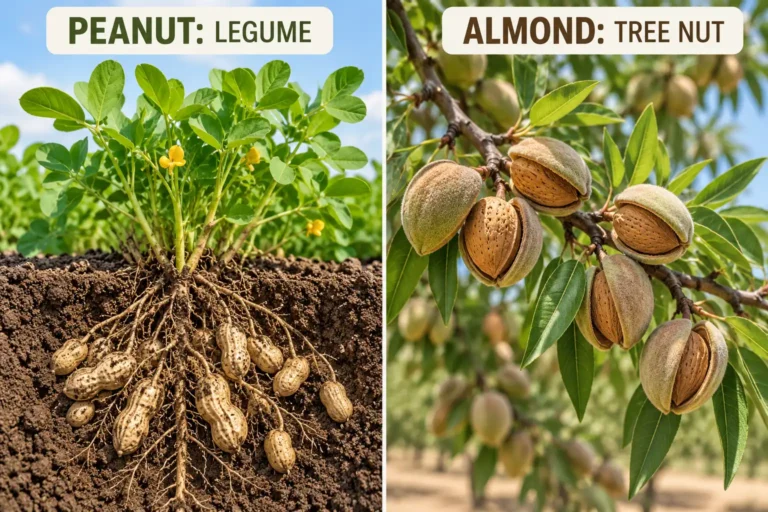
Are peanuts grains? No. Peanuts are legumes belonging to the bean family, not cereal grains. Their edible seeds develop inside underground pods. Although peanuts are botanically legumes, they are commonly grouped with nuts and protein-rich foods.
Are Peanuts Grains or Legumes?
Peanuts are legumes because they belong to the Fabaceae plant family, which also includes peas, beans, lentils, and soybeans.
Their scientific name is Arachis hypogaea.
According to North Carolina State University Extension, peanuts produce edible seeds inside pods that develop beneath the soil. This is a defining characteristic of the peanut plant.
Cereal grains belong to a different botanical group.
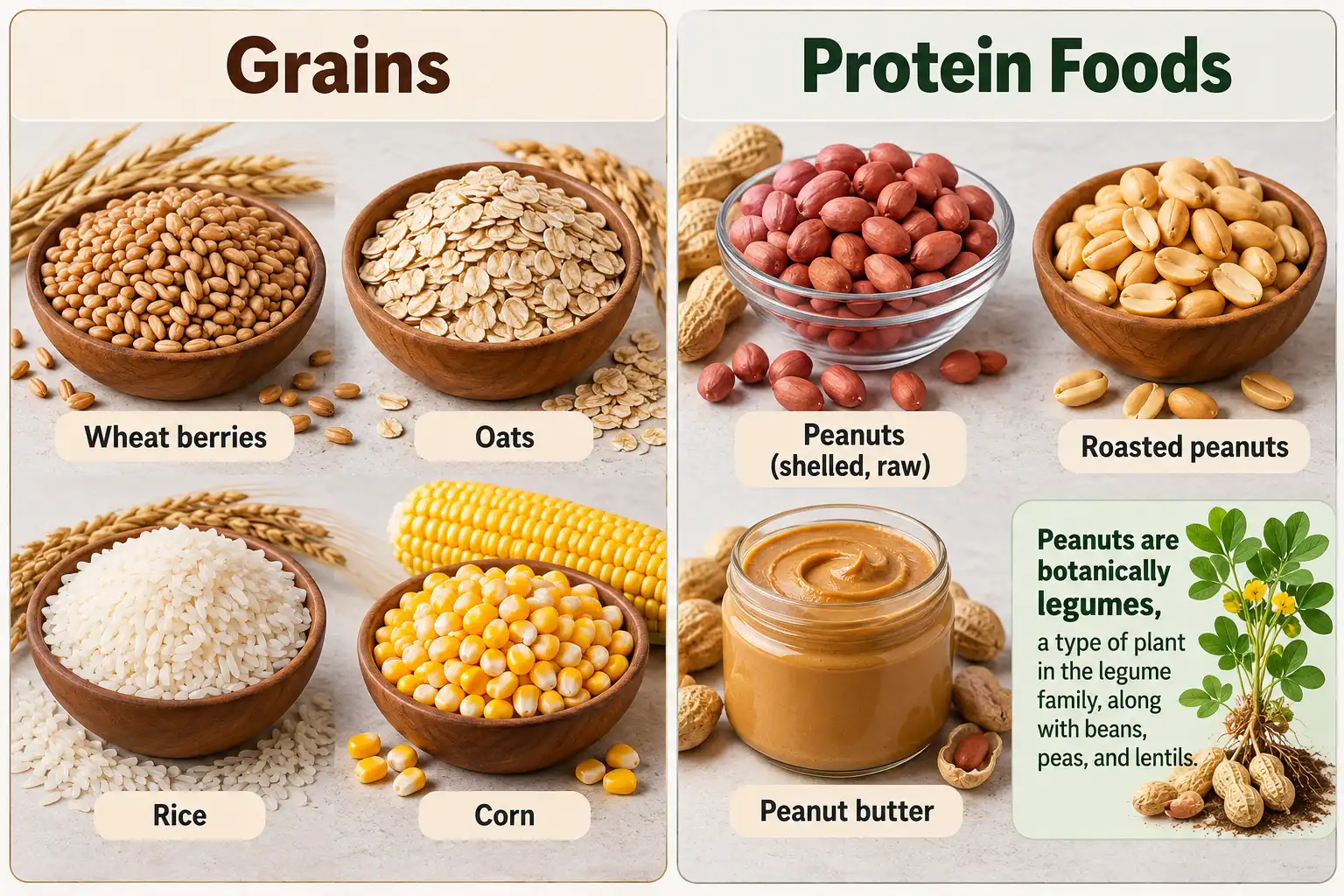
Wheat, rice, oats, and corn come from the grass family, Poaceae. Their harvested grains develop aboveground.
The difference becomes clearer when examining their structures:
- Peanuts: Seeds enclosed inside legume pods.
- Cereal grains: Small, dry fruits containing seeds, typically harvested from grass heads or ears.
- Tree nuts: Fruits or seeds produced by woody plants, such as hazelnuts and almonds.
Peanuts contain carbohydrates, but carbohydrate content does not determine whether a crop is a grain.
Botanical classification depends on the plant’s identity and reproductive structures.
Peanuts vs. Grains vs. Tree Nuts
Peanuts, cereal grains, and tree nuts differ in plant family, reproductive structures, and food classification.
| Feature | Peanuts | Cereal grains | Tree nuts |
|---|---|---|---|
| Examples | Runner, Virginia peanuts | Wheat, rice, oats | Hazelnuts, almonds |
| Plant classification | Legume | Grass | Woody plant |
| Plant family | Fabaceae | Poaceae | Varies by species |
| Where harvested food develops | Underground pods | Aboveground heads or ears | Aboveground fruits |
| Main nutritional characteristics | Rich in fats and protein | Generally rich in carbohydrates | Generally rich in fats |
| U.S. dietary classification | Protein foods | Grains | Protein foods |
The clearest difference is botanical rather than nutritional.
For example, oats are cereal grains because they grow on grass plants. Peanuts develop inside legume pods instead.
Similarly, field corn is a cereal crop, even though its kernels are used for animal feed, industrial products, and human food.
Why Do Peanuts Grow Underground?
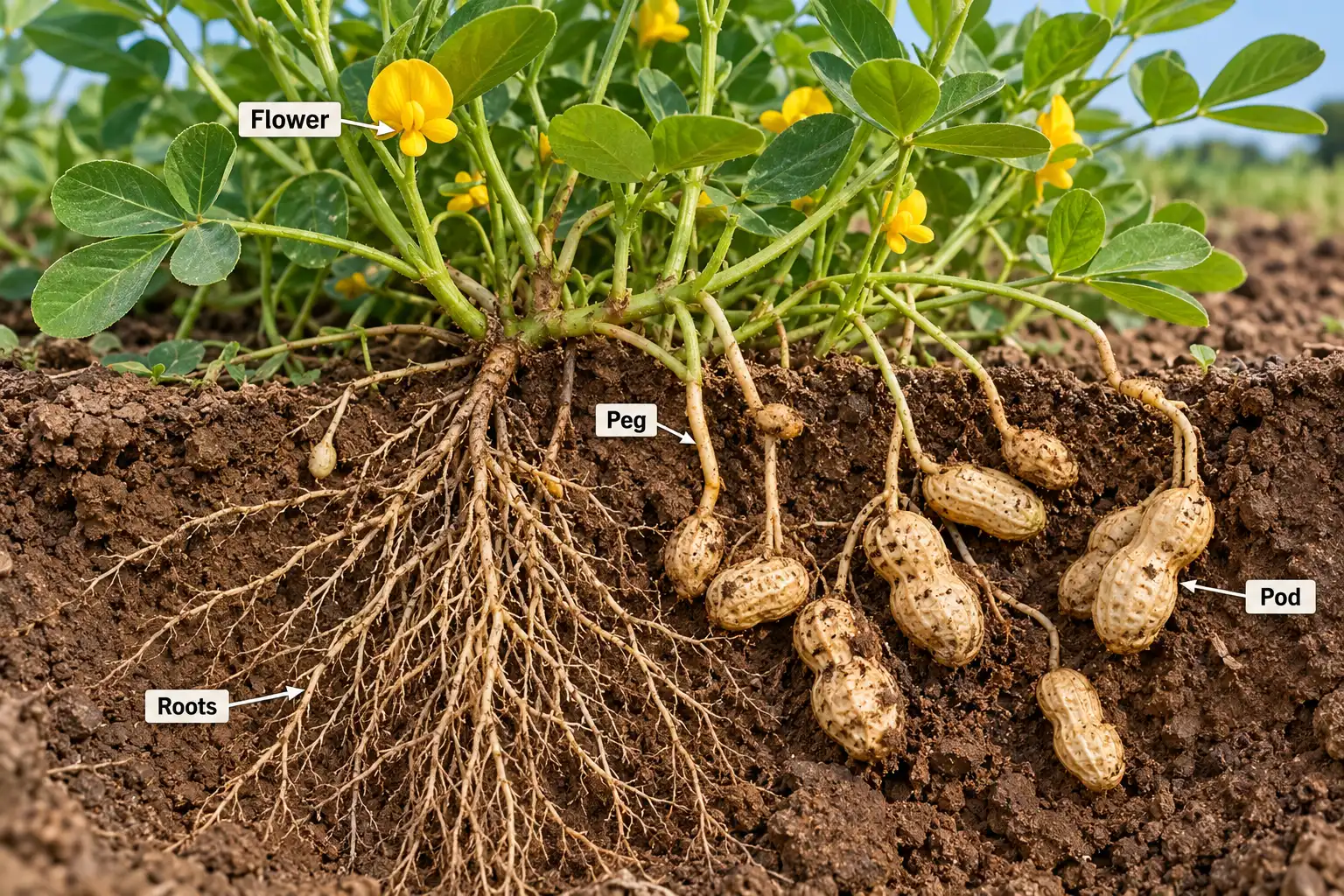
Peanuts develop underground because their fertilized flowers produce specialized structures called pegs.
Unlike most familiar legumes, peanuts produce their mature pods below the soil surface.
The process follows four stages.
1. Flowering: Small yellow flowers appear above the soil.
2. Peg formation: After fertilization, a stalk-like peg grows downward toward the soil.
3. Soil penetration: The peg enters the soil, where the developing fruit enlarges.
4. Pod development: The peanut pod matures underground, enclosing its edible seeds.
This process is called geocarpy. Importantly, the pods develop from fertilized flowers, not directly from the plant’s roots.
Are Peanuts Nuts, Seeds, or Pulses?
Peanuts are edible seeds of a legume plant, although they are commonly called nuts.
These terms describe different aspects of the crop.
Are peanuts actually nuts?
Botanically, peanuts are not true nuts. Their edible kernels are seeds enclosed in legume pods.
However, peanuts resemble familiar tree nuts in flavor, texture, and nutritional composition.
They are commonly roasted, salted, or ground into butter, just like many culinary nuts.
Are peanuts considered pulses?
Peanuts are legumes, but they are generally excluded from the agricultural classification of pulses.
Pulses include dried beans, lentils, chickpeas, and dried peas grown primarily for their edible dry seeds.
The Food and Agriculture Organization of the United Nations (FAO) excludes oil-bearing legumes from its pulse classification. Peanuts are commonly classified as oilseeds because they contain substantial amounts of oil.
Therefore, the terms are not interchangeable:
A peanut is a legume and an edible seed, commonly called a nut, but it is neither a cereal grain nor a pulse under FAO’s crop classification.
Do Peanuts Count as Grains in Your Diet?
No. USDA MyPlate groups peanuts with nuts, seeds, and other protein foods rather than cereal grains.
This reflects their nutritional composition and typical dietary uses.
According to USDA MyPlate’s Protein Foods guidance, one tablespoon of peanut butter counts as one ounce-equivalent from the Protein Foods Group, not the Grains Group.
Peanuts contain substantial amounts of fat and protein.
Cereal grains generally provide more starch. Whole grains also contain bran, germ, and endosperm.
That does not make peanuts nutritionally superior or inferior. They simply contribute different nutrients to a diet.
Peanut butter, roasted peanuts, and plain peanut flour remain peanut products, regardless of how they are processed.
Are Peanuts Grain-Free and Gluten-Free?
Plain peanuts are naturally grain-free and gluten-free because they contain no cereal grains or gluten proteins.
However, grain-free and gluten-free do not mean the same thing.
Rice and corn are grains, but they do not naturally contain the gluten found in wheat, barley, and rye.
Likewise, peanuts do not contain those gluten proteins, even though they are legumes.
Processed peanut products require additional attention.
Flavored peanuts may contain wheat-based coatings. Snack mixtures can also contain cereal ingredients.
The FDA’s gluten-free labeling guidance explains that naturally gluten-free foods can encounter gluten through shared harvesting, handling, or processing equipment.
For celiac disease, choose appropriately labeled gluten-free products and check ingredient information.
Also remember that gluten-free does not mean peanut-free. The FDA recognizes peanuts and wheat as separate major food allergens.
Are All Peanut Varieties Legumes?
Yes. Runner, Virginia, Spanish, and Valencia peanuts are all legumes, despite differences in seed size, appearance, and intended uses.
North Carolina State Extension identifies four main U.S. market types:
| Peanut type | Distinguishing characteristic | Common use |
|---|---|---|
| Runner | Usually uniform kernels | Peanut butter |
| Virginia | Large kernels | In-shell snacks |
| Spanish | Small kernels, reddish-brown skins | Candies and roasted snacks |
| Valencia | Commonly three or more seeds per pod | Boiled and roasted peanuts |
These are market types, not four different botanical food groups.
Their characteristics influence processing and marketing, but none becomes a cereal grain.
Why Does This Classification Matter for Growers?
The distinction matters because peanuts and cereal grains have different growth patterns, nutrient relationships, and harvesting requirements.
Peanuts can form nitrogen-fixing root nodules through associations with suitable bacteria.
They also require soil conditions that allow pegs to enter the ground and develop pods.
North Carolina State Extension describes peanuts as warm-season crops suited to full sun and well-drained, relatively light soils. It gives approximately 120 to 150 days to maturity, depending on the variety.
Regional management still matters.
In Oklahoma, Oklahoma State University Extension identifies differences in leaf spot susceptibility among Spanish, Virginia, and runner peanut types.
These differences influence variety selection and disease management, but never change the crop’s botanical classification.
When selecting field crops, match each crop’s soil, climate, and management requirements rather than treating all seed-producing crops as grains.
FAQs About Peanuts Grains or Legumes
Is peanut flour considered grain flour?
No. Peanut flour is produced from peanut seeds and therefore belongs to the legume category, not the cereal grain category. It cannot replace wheat flour equally in every recipe because its composition and baking properties differ.
Why are peanuts called nuts if they are legumes?
Peanuts are called nuts because their flavor, texture, and common culinary uses resemble those of tree nuts. Their familiar name reflects how people eat them rather than their botanical family or reproductive structure.
Are peanuts related to soybeans?
Yes. Peanuts and soybeans both belong to the Fabaceae family, making them botanical relatives. However, their seed composition, common uses, growth habits, and production requirements differ, so they are treated as distinct agricultural crops.
Are peanut shells and skins grains?
No. The rough peanut shell is a legume pod, while the thin reddish skin surrounding the kernel is a seed coat. Neither structure is a cereal grain, and the shell is normally removed before eating.
Can someone with a peanut allergy eat other legumes?
Not necessarily a problem. A peanut allergy does not automatically mean an allergy to beans, peas, or lentils. Food Allergy Research & Education explains this distinction, but individual food restrictions should be discussed with an allergist.
Key Points About Peanut Classification
Peanuts are legumes, not grains or true botanical nuts. Their edible seeds develop inside underground pods, and their oil-rich composition makes them different from familiar cereal crops.
For food decisions, classify plain peanuts with protein foods rather than grains. For farming decisions, treat peanuts as warm-season oilseed legumes with distinct soil, rotation, and harvesting needs.