Are Tree Nuts the Same as Peanuts? Differences and Allergy Risks
No. Although both are commonly eaten as nuts, they come from different plant families. This difference matters when identifying foods, understanding peanut allergies, and deciding which ingredients may cause an allergic reaction.
No, tree nuts are not the same as peanuts. Peanuts are legumes that develop underground, while tree nuts include almonds, walnuts, cashews, and pistachios. Their allergies are distinct, although some people are allergic to both.
Are Tree Nuts the Same as Peanuts Botanically?
No. Peanuts belong to the legume family, while tree nuts come from several different families of trees.
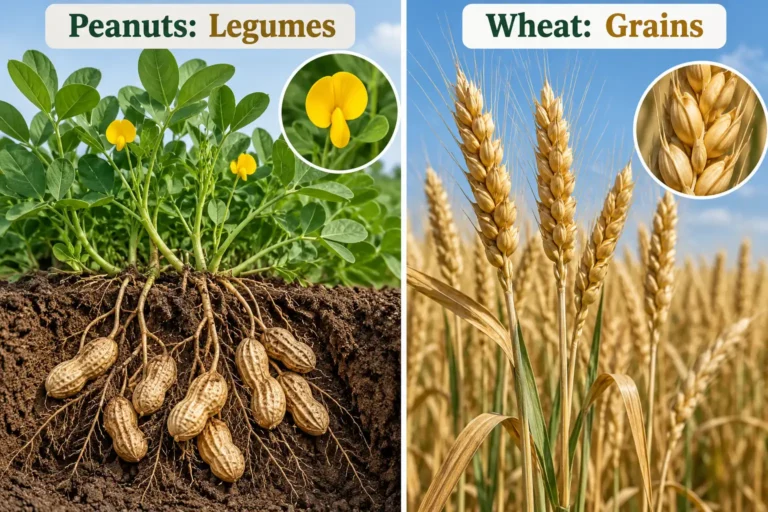
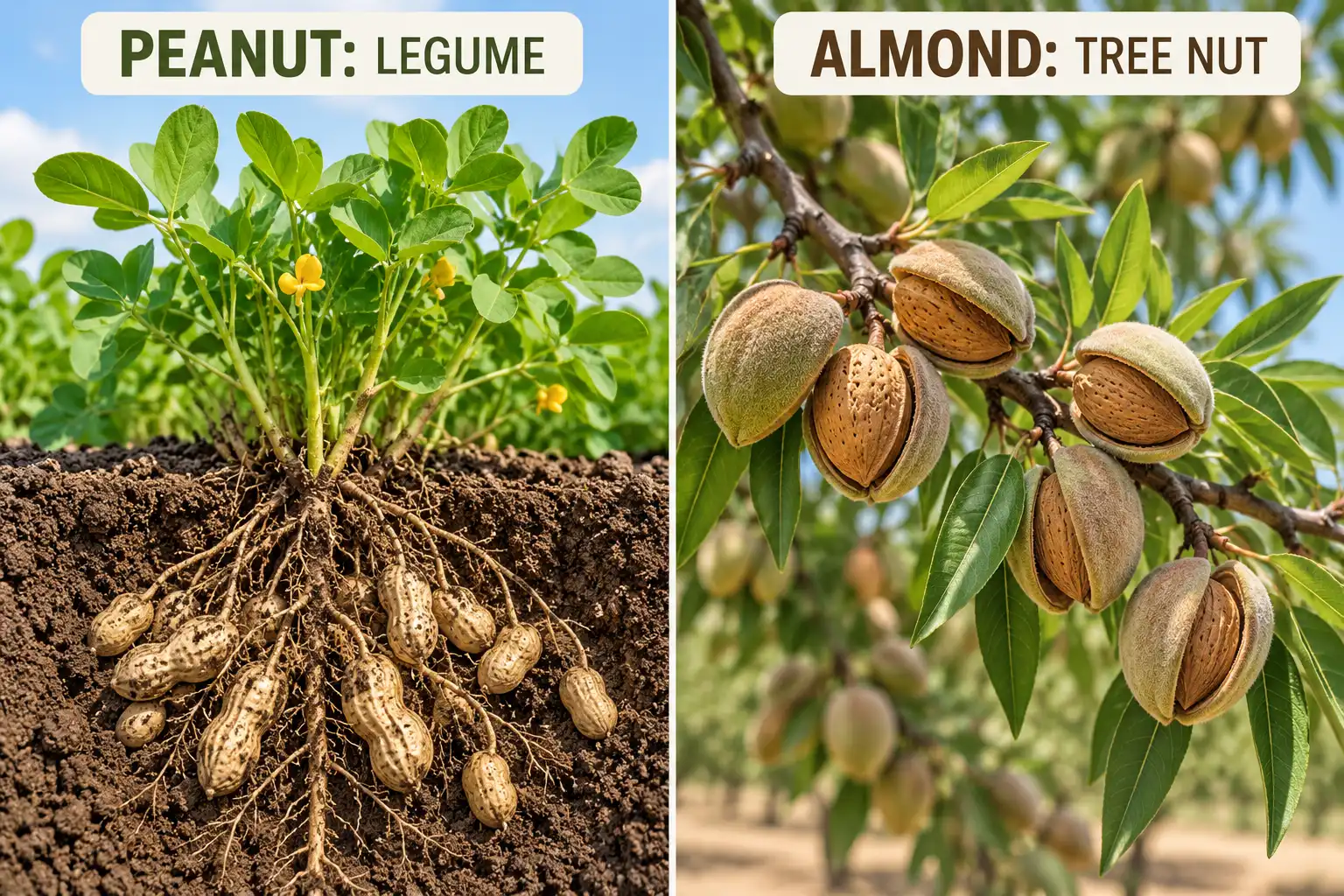
The peanut plant (Arachis hypogaea) belongs to the Fabaceae family, alongside beans, peas, lentils, and soybeans. Unlike most legumes, peanuts produce their edible pods underground.
According to the USDA Agricultural Research Service, peanut flowers develop above ground. After fertilization, a structure called a peg grows downward into the soil, where the peanut pod develops.
Tree nuts, including almonds, walnuts, and cashews, develop on trees. Many are technically seeds inside fruits, but they belong to the tree nut category for food allergy purposes.
Agriculturally, peanuts belong with beans and pulses, rather than orchard tree crops.
This botanical difference explains why peanuts and tree nuts are classified separately.
Peanuts vs. Tree Nuts: Main Differences
The biggest differences involve plant origin, growing habits, and the proteins responsible for allergic reactions.
| Feature | Peanuts | Tree Nuts |
|---|---|---|
| Plant classification | Legume | Several families of trees |
| Where they grow | Pods develop underground | Edible seeds or kernels develop on trees |
| Examples | Runner, Virginia, Spanish, and Valencia peanuts | Almonds, walnuts, cashews, and pecans |
| Allergy classification | Peanut allergen | Tree nut allergens |
| U.S. food labeling | Labeled as peanuts | Specific tree nut must be identified |
Both foods contain fats, protein, and other nutrients. However, nutritional similarities do not make them botanically identical or interchangeable for people with allergies.
In the United States, the FDA recognizes peanuts and tree nuts as two separate major food allergen categories.
Which Foods Are Tree Nuts?
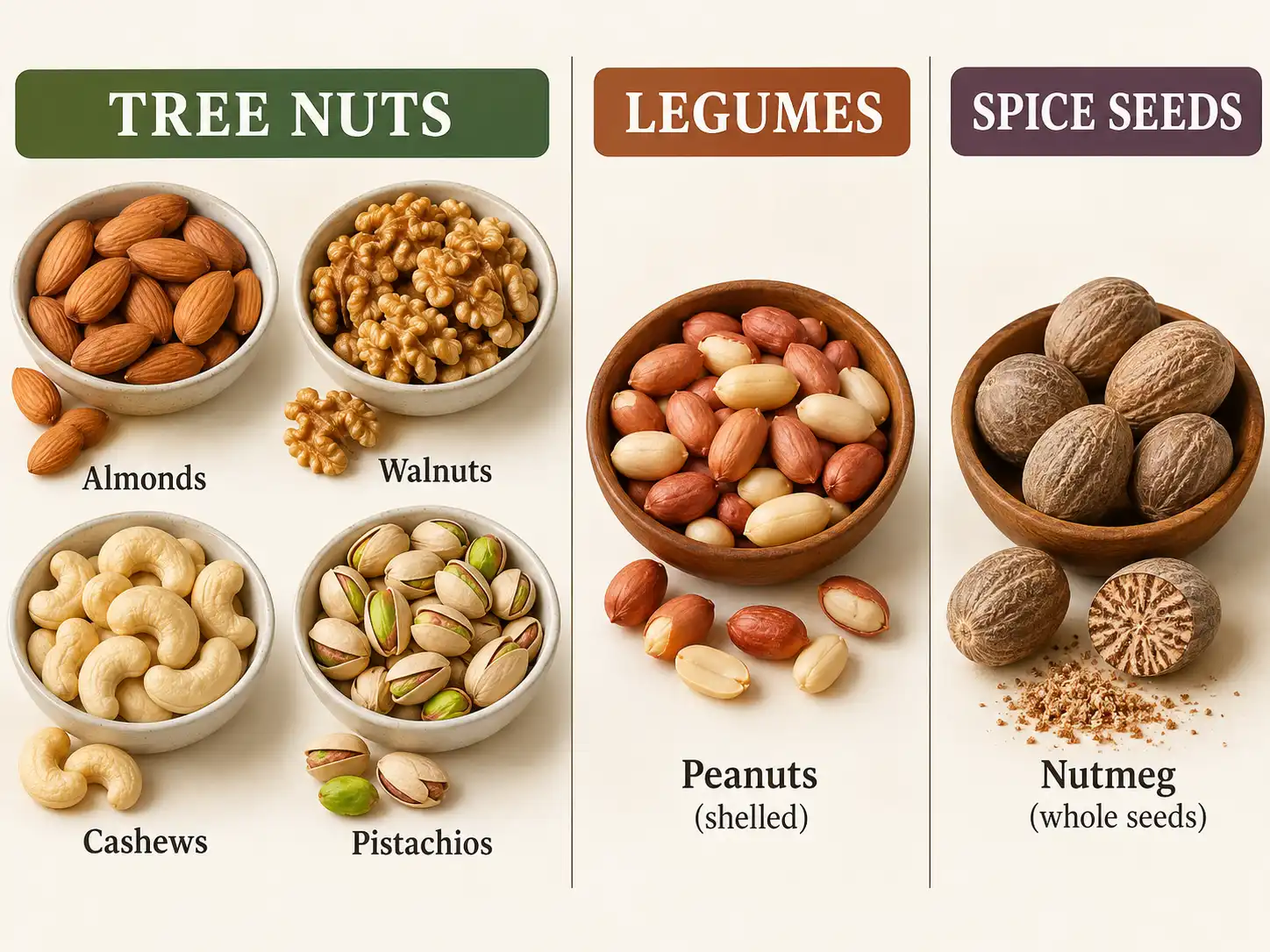
Common tree nuts include almonds, walnuts, cashews, pistachios, pecans, hazelnuts, Brazil nuts, and macadamia nuts.
These foods are grouped together for allergy identification, even though they do not all belong to the same botanical family.
Some foods with “nut” in their names are not tree nuts.
Is an Almond a Tree Nut?
Yes, an almond is considered a tree nut for food allergy purposes.
Botanically, the edible almond is a seed enclosed within a stone fruit called a drupe. Despite this technical classification, almond is recognized as a tree nut allergen.
An almond allergy is different from a peanut allergy. Someone may react to almonds without being allergic to peanuts, or vice versa.
Is Nutmeg a Nut?
No, nutmeg is not a tree nut. It is a spice made from the seed of the nutmeg fruit.
The American College of Allergy, Asthma & Immunology (ACAAI) explains that nutmeg is generally tolerated by people with tree nut allergies.
Having a peanut or tree nut allergy does not automatically mean nutmeg must be avoided.
However, an individual can develop an allergy to nutmeg itself.
Is Coconut a Tree Nut?
Coconut is botanically a fruit, not a true tree nut.
Importantly, the FDA’s updated food allergen guidance removed coconut from its major tree nut allergen list in January 2025.
Most people with tree nut allergies tolerate coconut. However, coconut can cause its own allergic reactions.
Can Peanut Allergies and Tree Nut Allergies Overlap?
Yes. Although peanut and tree nut allergies are different, a person can have both.
The immune system reacts to specific proteins in foods. Peanut proteins differ from tree nut proteins, so an allergy to one does not automatically establish an allergy to the other.
However, overlapping allergies are relatively common.
The American Academy of Allergy, Asthma & Immunology (AAAAI) estimates that approximately 30% of people with peanut allergies also have a tree nut allergy.
Some tree nuts also share similar allergenic proteins. For example, cashews and pistachios are closely related, as are walnuts and pecans.
Another concern is cross-contact. Peanuts and tree nuts may encounter each other during processing, packaging, or food preparation.
Therefore, someone with a peanut allergy should discuss unfamiliar tree nuts with an allergist before eating them.
The same advice applies to someone with a tree nut allergy who has never eaten peanuts.
Is Peanut Oil Safe With a Peanut Allergy?
Highly refined peanut oil is generally tolerated by most people with peanut allergies, but unrefined peanut oil can cause reactions.
The difference comes from peanut protein.
Highly Refined Peanut Oil
Refining removes nearly all the peanut proteins responsible for allergic reactions.
According to Food Allergy Research & Education (FARE), studies show that most people with peanut allergies can safely consume highly refined peanut oil.
The FDA also excludes highly refined peanut oil from its major food allergen labeling requirements.
However, anyone with a diagnosed peanut allergy should discuss its use with an allergist before including it in their diet.
Unrefined or Cold-Pressed Peanut Oil
Unrefined peanut oil can retain allergenic peanut proteins.
Cold-pressed and some specialty peanut oils are not processed enough to remove these proteins.
People with peanut allergies should avoid these oils.
If a restaurant cannot identify which peanut oil it uses, do not assume it is highly refined or safe. Shared cooking equipment can introduce additional allergens.
The type of oil and the risk of cross-contact both matter.
How to Read Food Labels for Peanuts and Tree Nuts
U.S. packaged food labels must identify peanuts and applicable tree nuts when they are used as ingredients.
The FDA requires the specific type of tree nut to be identified. For example, a food containing almonds must identify almonds rather than using only the general term “tree nuts.”
However, not every product uses a separate “Contains” statement.
Follow these three checks:
1. Read the complete ingredient list. Look for peanuts, peanut flour, peanut butter, almonds, cashews, and other known allergens.
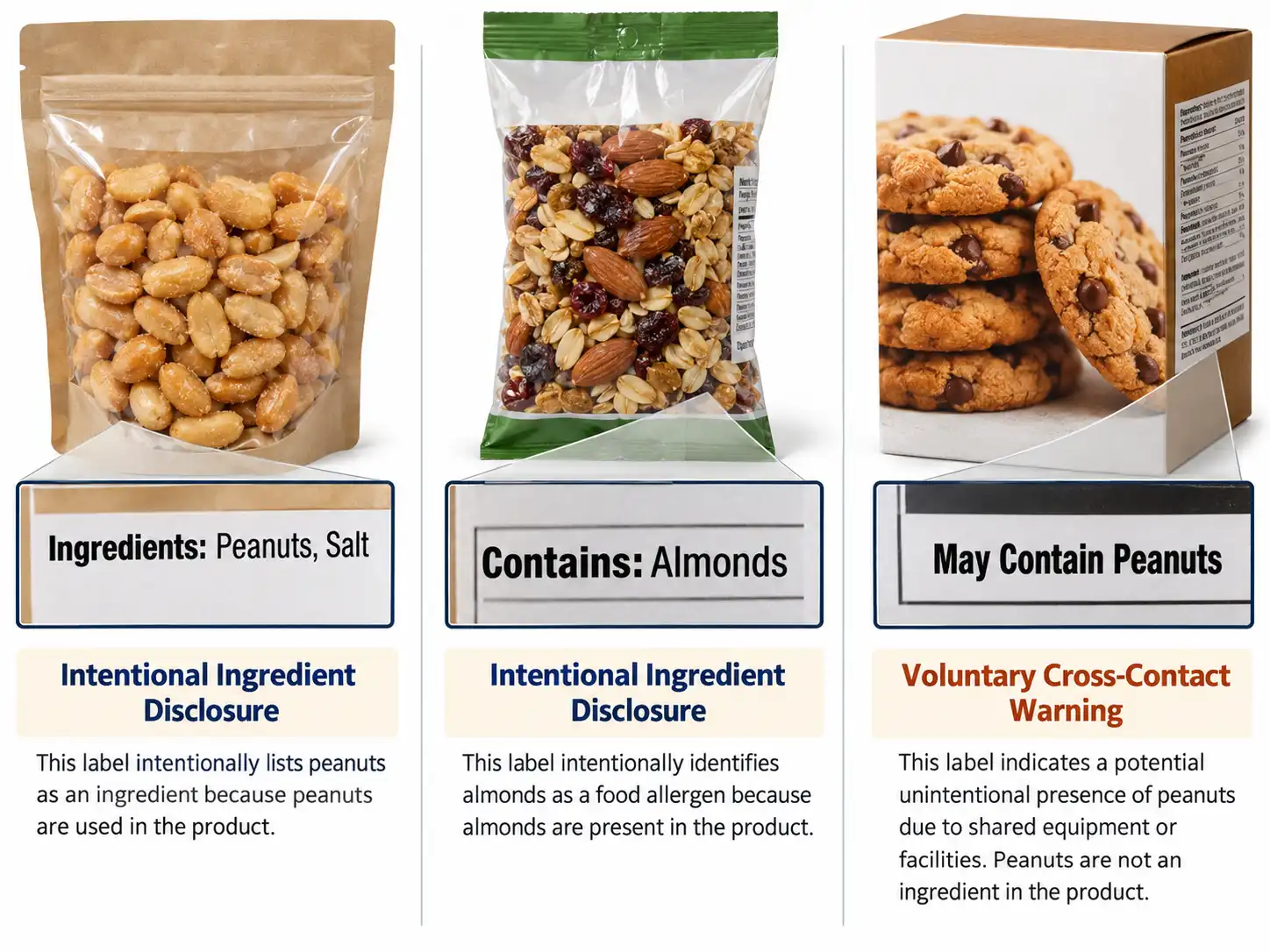
2. Check the allergen declaration. Statements such as “Contains: Peanuts” or “Contains: Almonds” identify allergens intentionally present in the product.
3. Look for cross-contact warnings. Phrases such as “May contain peanuts” or “Made on shared equipment” indicate possible accidental exposure.
The FDA’s food label guidance explains that precautionary statements are voluntary. Therefore, the absence of a “may contain” warning does not guarantee that cross-contact is impossible.
Check labels each time you purchase a food, even if you have bought it before. Ingredients and manufacturing practices can change.
Be particularly careful with mixed nuts, granola, candy, nut butters, and bakery products.
If allergen information is unclear, contact the manufacturer before eating the product.
What Does a Peanut Allergy Reaction Look Like?
A peanut allergy reaction can range from mild discomfort to life-threatening anaphylaxis.
Symptoms may appear soon after exposure and can affect several parts of the body.
Common signs include itching, hives, skin redness, swelling of the lips or face, nausea, stomach cramps, and vomiting.
More serious symptoms can include throat tightness, wheezing, breathing difficulty, dizziness, or loss of consciousness.
What Should You Do During a Severe Reaction?
Anaphylaxis requires immediate treatment with epinephrine and emergency medical assistance.
If severe symptoms develop, or mild symptoms occur in multiple body systems, follow the person’s prescribed allergy emergency action plan.
FARE’s emergency response guidance recommends administering epinephrine immediately and calling 911 for suspected anaphylaxis.
Do not substitute antihistamines for epinephrine when treating anaphylaxis. Emergency medical evaluation is necessary even if symptoms improve.
How Can You Find Out Which Nuts Are Safe to Eat?
An allergist can determine whether a suspected reaction involves peanuts, tree nuts, or both.
Evaluation may include reviewing symptoms, examining previous reactions, and performing skin-prick or specific IgE blood tests.
However, a positive test does not always confirm that eating a particular food will cause an allergic reaction.
When appropriate, an allergist may recommend a medically supervised oral food challenge.
Never attempt a food challenge at home after a suspected serious allergic reaction.
Avoid unnecessarily restricting foods that are already tolerated without discussing the decision with an allergist. Identifying specific allergens can help maintain a varied diet while preventing dangerous exposures.
FAQs About Tree Nuts the Same as Peanuts
Can someone with a peanut allergy eat almonds?
Yes, some people with peanut allergies can safely eat almonds because these are different allergens. However, someone who has never eaten almonds should consult an allergist before introducing them, particularly when other nut allergies are suspected.
Is peanut butter considered a tree nut butter?
No. Peanut butter comes from peanuts, which are legumes. Almond butter and cashew butter come from tree nuts. These products are not interchangeable for allergy safety, and shared processing equipment may create cross-contact risks.
Does a peanut allergy mean you cannot eat beans or soybeans?
No. Most people with peanut allergies can tolerate other legumes, including beans, lentils, and soybeans. However, individual allergies can occur. Lupin is another legume that deserves particular attention because cross-reactions with peanut allergy are recognized.
Can children outgrow a peanut allergy?
Yes. According to the AAAAI, approximately 20% of people with peanut allergies may outgrow them over time. An allergist can reassess the allergy and determine whether supervised testing is appropriate. Never attempt reintroduction without medical guidance.
Can someone be allergic to walnuts but not almonds?
Yes. Tree nut allergies can involve one type of nut without affecting every other type. However, some tree nuts have related proteins. Allergy testing and medical history help determine which individual nuts can be eaten safely.
Key Points About Peanuts and Tree Nuts
Peanuts are legumes, while almonds, walnuts, cashews, and similar foods are tree nuts. Nutmeg is a spice seed, not a tree nut.
For anyone managing a food allergy, the most useful distinction is not simply where these foods grow. It is which proteins trigger the allergy and whether cross-contact could occur.
Read ingredient labels carefully, understand the difference between refined and unrefined peanut oil, and follow an allergist’s guidance when introducing unfamiliar nuts.