Are Peanuts a Nightshade? Why They Are Actually Legumes
Although peanuts grow underground like potatoes, they belong to a completely different plant family. Understanding the difference helps you identify nightshade foods, read ingredient labels, and make informed dietary or crop rotation decisions.
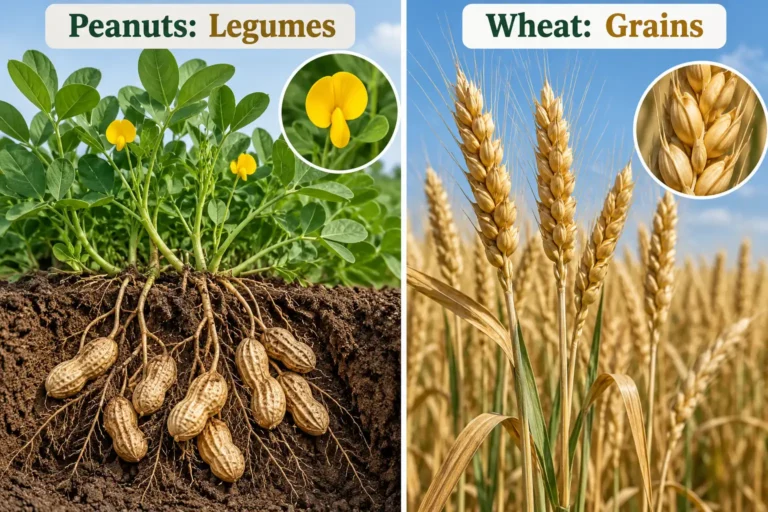
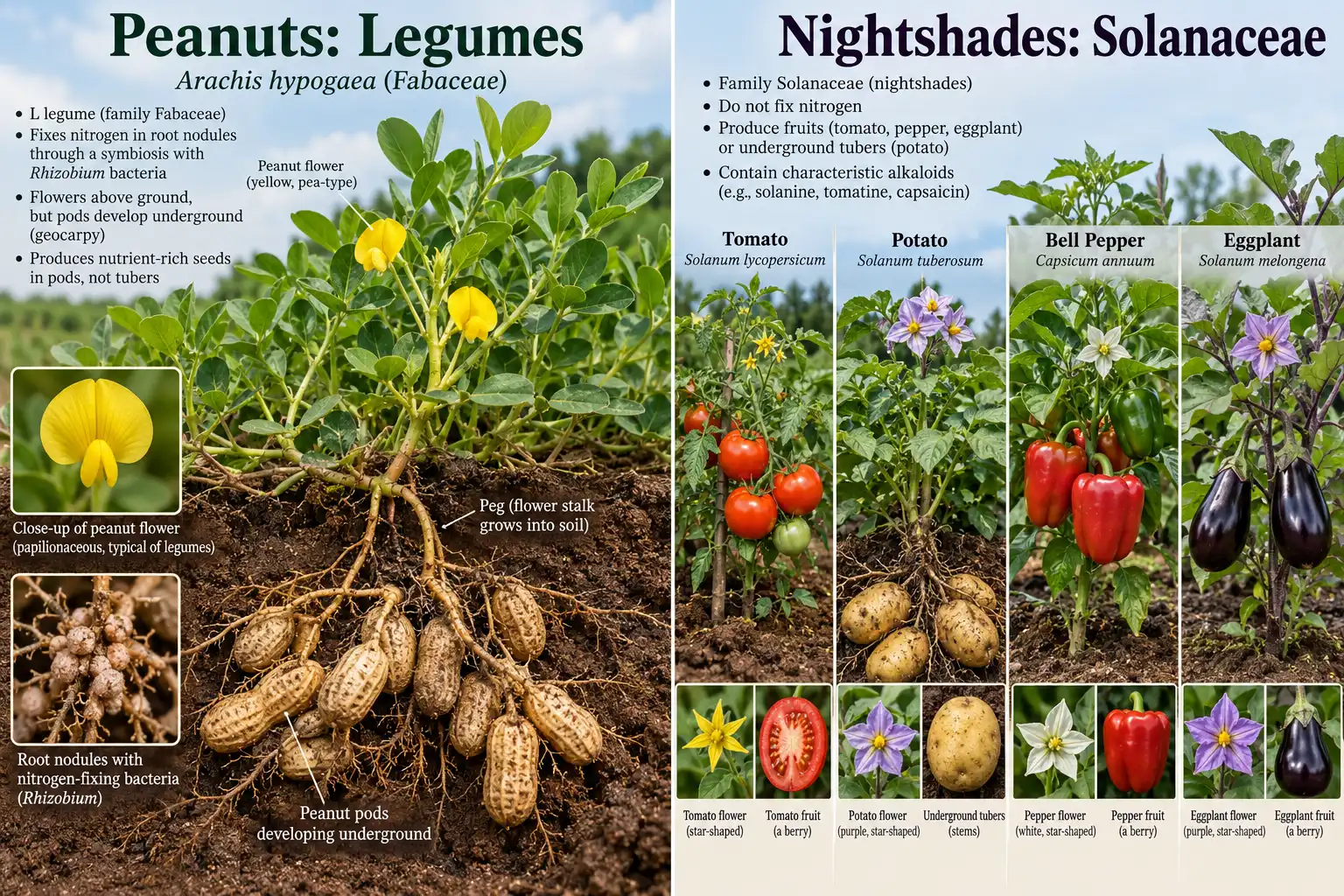
No, peanuts are not nightshades. Peanuts (Arachis hypogaea) belong to the legume family, Fabaceae, alongside beans, peas, and lentils. Nightshades belong to Solanaceae, which includes tomatoes, potatoes, peppers, and eggplants. Plain peanuts are naturally nightshade-free.
Are Peanuts a Nightshade or a Legume?
Peanuts are legumes, not nightshades or true botanical nuts.
The Royal Botanic Gardens, Kew classifies the cultivated peanut, Arachis hypogaea, within Fabaceae, also called the legume or pea family.
This puts peanuts in the same botanical family as:
- Garden peas
- Soybeans
- Chickpeas
- Lentils
- Common beans
Legumes generally produce seeds inside pods. Peanuts follow that pattern, although their pods develop underground rather than hanging above the soil.
The edible peanut kernels are seeds contained within those pods.
Do Different Peanut Varieties Belong to Different Families?
No. Runner, Virginia, Spanish, and Valencia peanuts all belong to the same species and botanical family.
According to NC State Extension, these are the four principal peanut market types grown in the United States. They differ in kernel size, appearance, and common uses, but none are nightshades.
Roasting, boiling, or processing peanuts into peanut butter does not change their botanical classification.
Peanuts vs. Nightshade Vegetables: What’s the Difference?
The defining difference is botanical family, not where the edible part grows.
The Penn State Extension plant-family guide identifies potatoes, tomatoes, eggplants, and peppers as Solanaceae crops. Peanuts belong to Fabaceae instead.
| Food | Botanical family | Nightshade? |
|---|---|---|
| Peanuts | Fabaceae | No |
| Tomatoes | Solanaceae | Yes |
| White potatoes | Solanaceae | Yes |
| Bell peppers | Solanaceae | Yes |
| Chili peppers | Solanaceae | Yes |
| Eggplants | Solanaceae | Yes |
| Sweet potatoes | Convolvulaceae | No |
| Black pepper | Piperaceae | No |
Two foods in this comparison deserve special attention.
Sweet potatoes are not nightshades. NC State Extension identifies sweet potatoes (Ipomoea batatas) as members of the morning glory family. Despite their name, they are only distantly related to ordinary potatoes.
Black pepper is not a nightshade either. Black pepper comes from Piper nigrum, a member of Piperaceae. Bell peppers and chili peppers belong to Solanaceae.
Therefore, the word pepper does not automatically identify a nightshade food.
Why Do Peanut Pods Grow Underground?
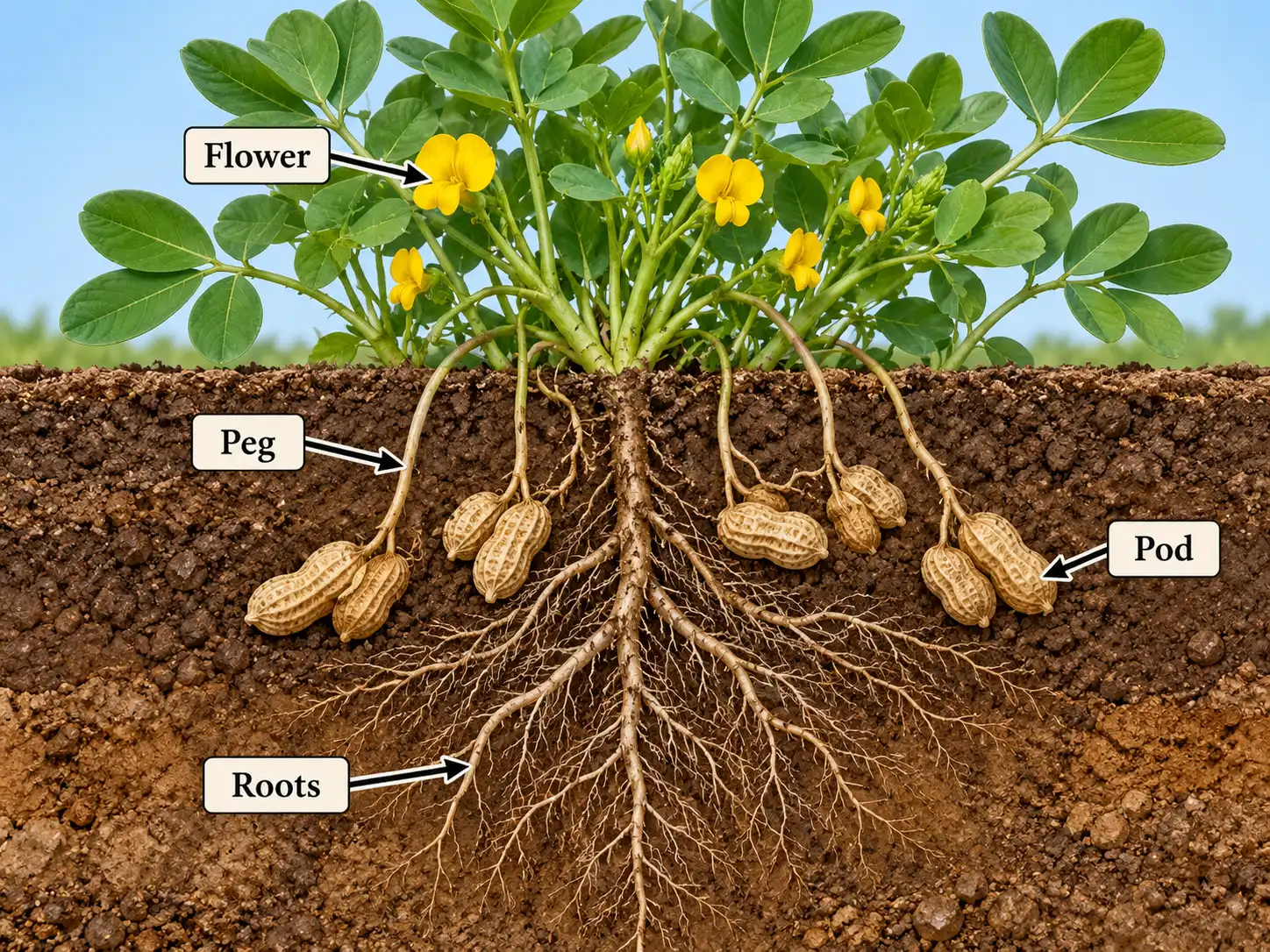
Peanuts develop underground because their fertilized flowers produce specialized structures called pegs.
Peanut plants initially produce small yellow flowers above the soil. After pollination, the developing ovary extends downward on a peg, which penetrates the soil.
The peanut pod then enlarges underground, where its seeds mature.
This process is called geocarpy.
NC State Extension describes this unusual development in its peanut plant profile.
Does Growing Underground Make Peanuts Related to Potatoes?
No. Underground growth is not evidence that two crops belong to the same plant family.
A peanut is a seed inside a pod. A potato is an enlarged underground stem called a tuber.
Potato plants can grow from seed potato pieces, while peanut plants can grow from their seeds.
These differences reflect distinct plant structures and reproductive processes.
The location of a harvestable crop does not determine its botanical family.
Can Peanut Butter and Peanut Snacks Contain Nightshades?
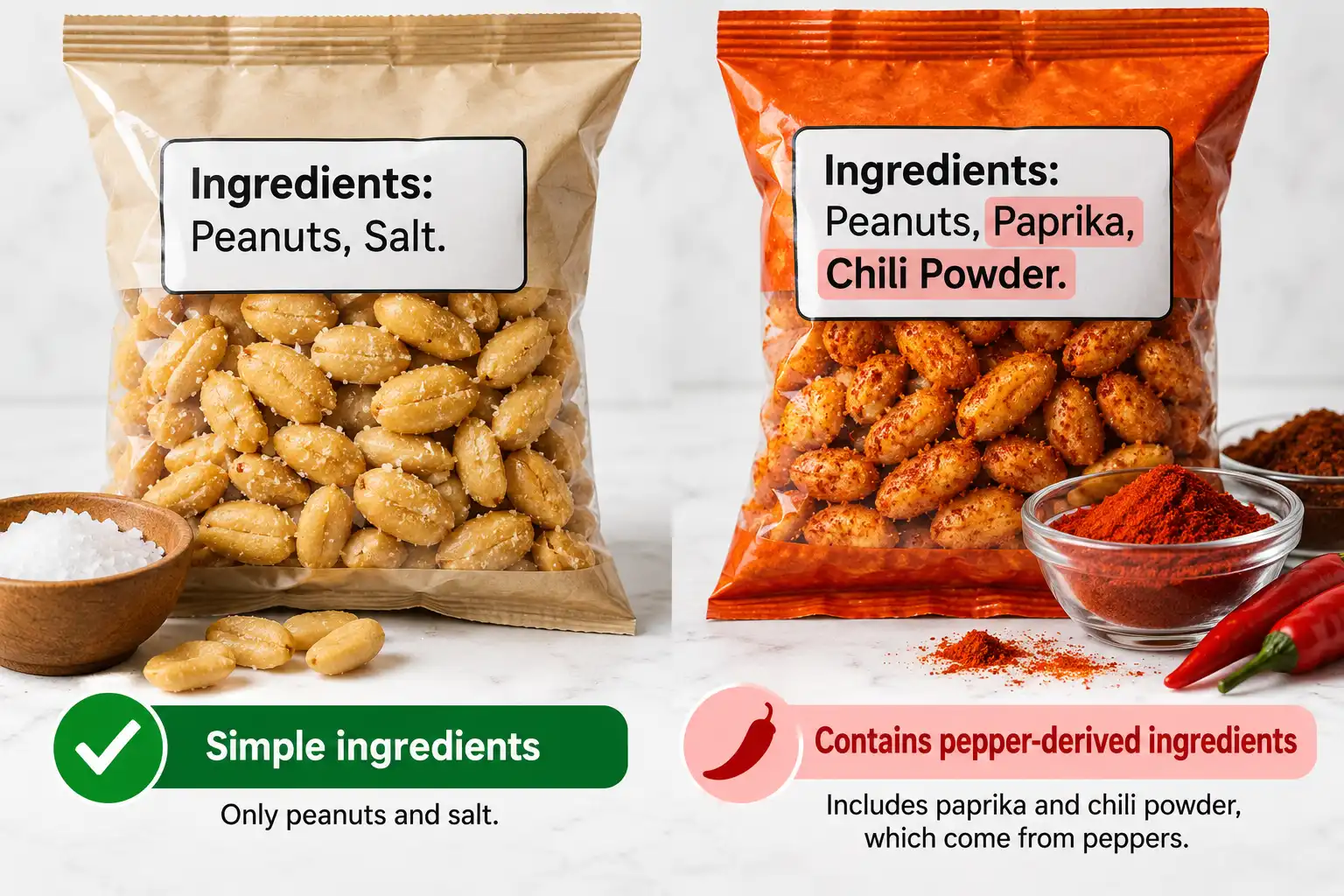
Yes, some processed peanut products contain additional ingredients derived from nightshade plants, even though peanuts themselves are not nightshades.
Pure peanuts, unsweetened peanut butter containing only peanuts, and plain peanut oil do not inherently contain nightshade ingredients.
However, flavored or coated peanut products may contain:
- Paprika or paprika extract
- Cayenne pepper
- Chili powder
- Crushed red pepper
- Tomato powder
- Potato starch
Paprika and cayenne come from Capsicum peppers, which belong to the nightshade family.
How to Check Peanut Products for Nightshade Ingredients
Start with the full ingredient list rather than the product name.
Choose products with simple, identifiable ingredients when you need to avoid nightshades.
Be especially careful with spicy peanuts, barbecue-flavored snacks, coated peanuts, and prepared peanut sauces.
The FDA’s food ingredient guidance explains that manufacturers may identify certain ingredients collectively as “spices” or “natural flavor.” These descriptions do not always reveal their individual plant sources.
If strict avoidance is necessary and a label is unclear, contact the manufacturer before consuming the product.
Why Do Some Diets Exclude Both Peanuts and Nightshades?
Some restrictive diets eliminate multiple botanical groups, even when those plants are unrelated.
For example, the Autoimmune Protocol (AIP) elimination diet excludes both legumes and nightshades.
The Cleveland Clinic’s AIP diet guide lists peanuts and peanut butter under excluded legumes. It separately identifies tomatoes, potatoes, peppers, and eggplants as excluded nightshades.
That does not mean peanuts belong to Solanaceae.
It means the elimination phase of that particular diet restricts both food groups.
A nightshade-free diet and an AIP elimination diet are therefore not interchangeable.
Furthermore, there is no established reason for everyone to avoid peanuts simply because they avoid nightshades. Broad food restrictions should be based on individual dietary needs and appropriate medical guidance.
Does Nightshade Sensitivity Mean You Should Avoid Peanuts?
No. A suspected sensitivity to nightshade foods does not automatically indicate a problem with peanuts.
Botanical classification and food allergy are separate questions.
Peanuts contain proteins that can trigger serious allergic reactions in susceptible individuals. A peanut allergy can occur regardless of whether someone tolerates tomatoes, potatoes, or peppers.
The American College of Allergy, Asthma & Immunology explains that peanut allergies require individual assessment. Being allergic to one food does not automatically establish an allergy to every related food.
If peanuts have previously caused hives, swelling, breathing difficulty, or other suspected allergic symptoms, seek medical evaluation rather than testing tolerance yourself.
Important: Being nightshade-free does not make a peanut product safe for someone with a peanut allergy.
Does the Peanut Family Matter for Crop Rotation?
Yes. Botanical families help growers organize crop rotation plans and understand potential pest and disease risks.
Peanuts belong to Fabaceae, while potatoes, tomatoes, peppers, and eggplants belong to Solanaceae.
These crops therefore represent different plant families within a rotation.
Penn State Extension recommends considering plant families because repeatedly growing related crops can encourage some shared pests and diseases to build up.
However, moving from a nightshade crop to peanuts does not guarantee that every soilborne pest will disappear. Some pathogens and nematodes affect plants from multiple families.
For field planning, check the history of soilborne diseases, local pest pressure, and crop-specific extension guidance.
The botanical classification remains the same across U.S. growing regions, even when climate and pest risks differ.
FAQs About Peanuts a Nightshade
Is peanut butter a nightshade?
No, plain peanut butter is not a nightshade because peanuts belong to the legume family. However, flavored peanut spreads may contain other ingredients, so check the label if you follow a strict nightshade-free diet.
Are roasted or boiled peanuts considered nightshades?
No, roasting or boiling peanuts does not change their botanical family. Plain roasted and boiled peanuts remain legumes, although commercially prepared versions can contain chili-based seasonings or other nightshade-derived ingredients.
Is peanut oil a nightshade?
No, peanut oil comes from peanuts, which belong to Fabaceae rather than Solanaceae. Pure peanut oil contains no nightshade-derived ingredients, but a flavored oil may contain seasonings that require checking, particularly when dietary restrictions apply.
Are peanuts related to tree nuts?
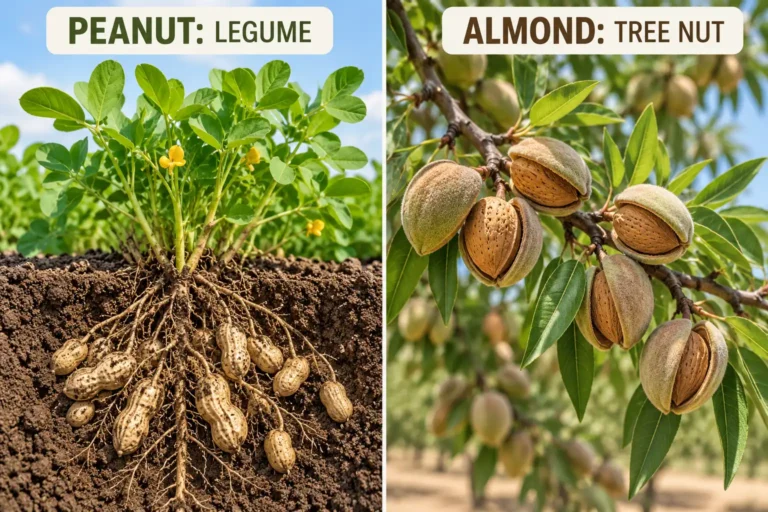
Peanuts are legumes, not tree nuts, and are botanically different from almonds, walnuts, and cashews. However, peanut and tree nut allergies can coexist, so botanical differences alone cannot establish whether a food is safe for someone with allergies.
Are raw peanuts nightshades?
No, raw peanuts are seeds of Arachis hypogaea, the same legume species used to produce roasted peanuts and peanut butter. Their processing state does not affect classification, although raw agricultural peanuts require appropriate handling and preparation for safe consumption.
Key Points About Peanuts and Nightshades
Peanuts are legumes, not members of the nightshade family.
Their underground pods may resemble the way potatoes grow, but the two crops are botanically unrelated.
For dietary decisions, distinguish plain peanuts from products containing pepper-based seasonings. Also, treat peanut allergies and restricted diets as separate concerns.
The reliable rule is simple: plant family determines whether a food is a nightshade, not its appearance, preparation, or growing location.