
How Are Sugar Beets Harvested? A Step-by-Step Guide
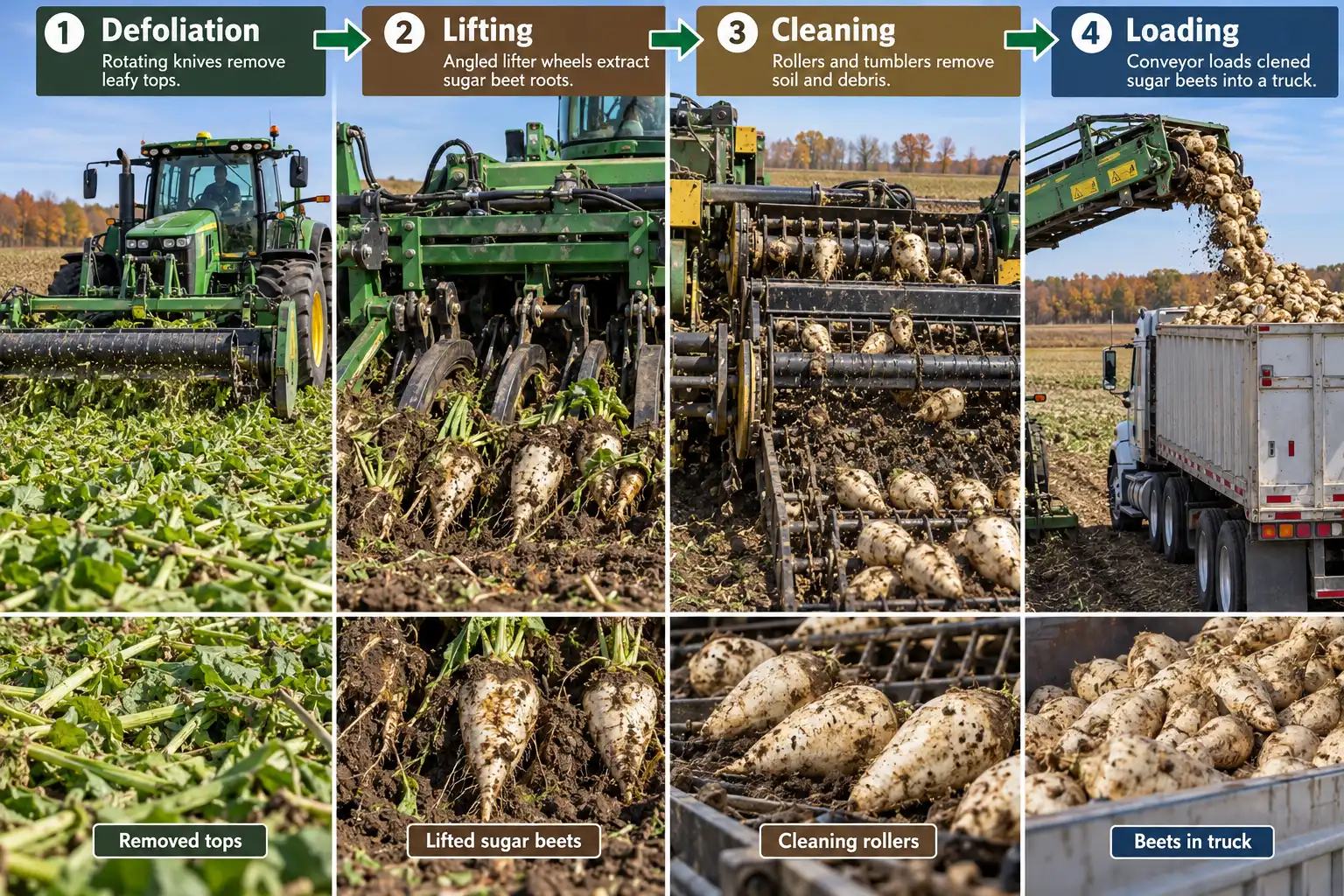
How are sugar beets harvested on commercial farms? Specialized machines remove the leaves, lift the roots, and transfer them into trucks. However, harvest success depends on more than machinery. Soil conditions, root temperature, and careful handling determine how much usable sugar reaches the factory.
Sugar beets are harvested mechanically using defoliators and specialized beet harvesters. The defoliator removes leaves and trims the crown. The harvester lifts and cleans the roots. Trucks then transport them to processing facilities or temperature-managed storage piles.
How Are Sugar Beets Harvested, Step by Step?
Commercial sugar beet harvesting follows six main steps. Each stage helps recover the roots while limiting damage, unwanted soil, and sugar losses.
Step 1: Remove the leaves
A mechanical defoliator uses rotating flails to strip leaves from the sugar beet plants. Scalping knives may also trim the crown, removing remaining leaf stems and growing tissue.
Step 2: Lift the roots
A sugar beet harvester follows the defoliator. Angled lifting wheels or shares loosen the soil and lift the roots without deliberately cutting through them.
Step 3: Remove excess soil
Cleaning rollers and conveying systems separate loose soil, clods, and plant debris from the roots. Much of the soil falls back onto the field.
Step 4: Load the beets
A conveyor transfers the harvested roots into a truck or an onboard hopper. When using a truck, its driver typically travels alongside the harvesting machine.
Step 5: Transport to the receiving station
Trucks deliver the beets to a designated receiving location or factory. Loads are weighed, and samples may be collected to measure sugar content and impurities.
Step 6: Store or process the roots
A beet piler removes additional debris and builds storage piles. Beets scheduled for immediate processing go directly into the factory’s sugar extraction system.
The University of Wisconsin Extension sugarbeet guide describes this machinery-based harvest sequence. It also emphasizes prompt lifting after defoliation and minimizing soil contamination.
What Equipment Is Used to Harvest Sugar Beets?
Most commercial sugar beet operations use specialized defoliating and lifting equipment rather than conventional grain combines.
| Harvesting method | How it works | Main consideration |
|---|---|---|
| Separate defoliator and lifter-loader | Two machines remove foliage and lift roots | Requires coordinated equipment passes |
| Self-propelled beet harvester | Combines several harvest operations in one machine | Higher equipment investment |
| Manual harvesting | A digging fork or shovel loosens each root | Practical only for small plantings |
A traditional tractor-drawn system commonly uses a separate defoliator and harvester. Depending on the machine, harvesters can lift several rows simultaneously.
Self-propelled machines may combine defoliation, lifting, cleaning, and temporary storage. Their onboard hoppers allow unloading into a truck at appropriate intervals.
Whatever the system, the equipment must match the field’s row spacing. Misalignment increases the chance of missed, sliced, or broken roots.
When Are Sugar Beets Harvested in the United States?
Most commercial sugar beets in the United States are harvested during late summer and fall, particularly September and October.
The exact schedule depends on the growing region, weather, root maturity, and processing factory.
| Growing region | Typical harvest period | Regional consideration |
|---|---|---|
| Minnesota and North Dakota | Limited early harvest in August or September; main harvest commonly in October | Cool temperatures help long-term storage |
| Idaho, Oregon, and Washington | Late September through October | Irrigation and autumn soil conditions affect digging |
| Michigan and northern Great Plains | Mainly September and October, with local variation | Frost, rainfall, and factory schedules affect progress |
| Imperial Valley, California (historical) | April through July | Commercial sugar beet production ended following the 2025 processor closure |
The Southern Minnesota Beet Sugar Cooperative describes limited pre-pile harvests before its main harvest, which normally begins around October 1.
Similarly, Amalgamated Sugar identifies late September and October as its usual harvest period in the Northwest.
California was a notable exception because sugar beets grew through winter. However, the USDA Economic Research Service documented the 2025 closure of California’s last beet sugar processing factory.
What Conditions Make a Sugar Beet Field Ready for Harvest?
A field is ready when the roots have developed sufficiently, soil permits clean lifting, and the processor can accept deliveries.
Three conditions deserve attention.
1. Root development and sugar content
Sugar beets accumulate sucrose in their enlarged roots during the growing season. Waiting longer can increase root weight, but weather and processing deadlines may outweigh that benefit.
2. Soil moisture
Excessively wet soil sticks to harvested beets. Mud also reduces cleaning efficiency and can cause field compaction.
Very hard, dry soil can make lifting more difficult. Check whether a digging tool can loosen the root without breaking it.
For irrigated fields, use soil conditions and crop water requirement calculations to guide irrigation decisions ahead of harvest.
3. Weather and receiving arrangements
Check the processor’s delivery schedule and temperature restrictions before starting.
Avoid removing foliage from a large area if lifting must stop unexpectedly. Topped roots left in the soil can deteriorate or begin producing new leaves.
How Do Defoliation and Lifting Settings Reduce Losses?
Correct defoliator height and lifter depth help preserve marketable roots.
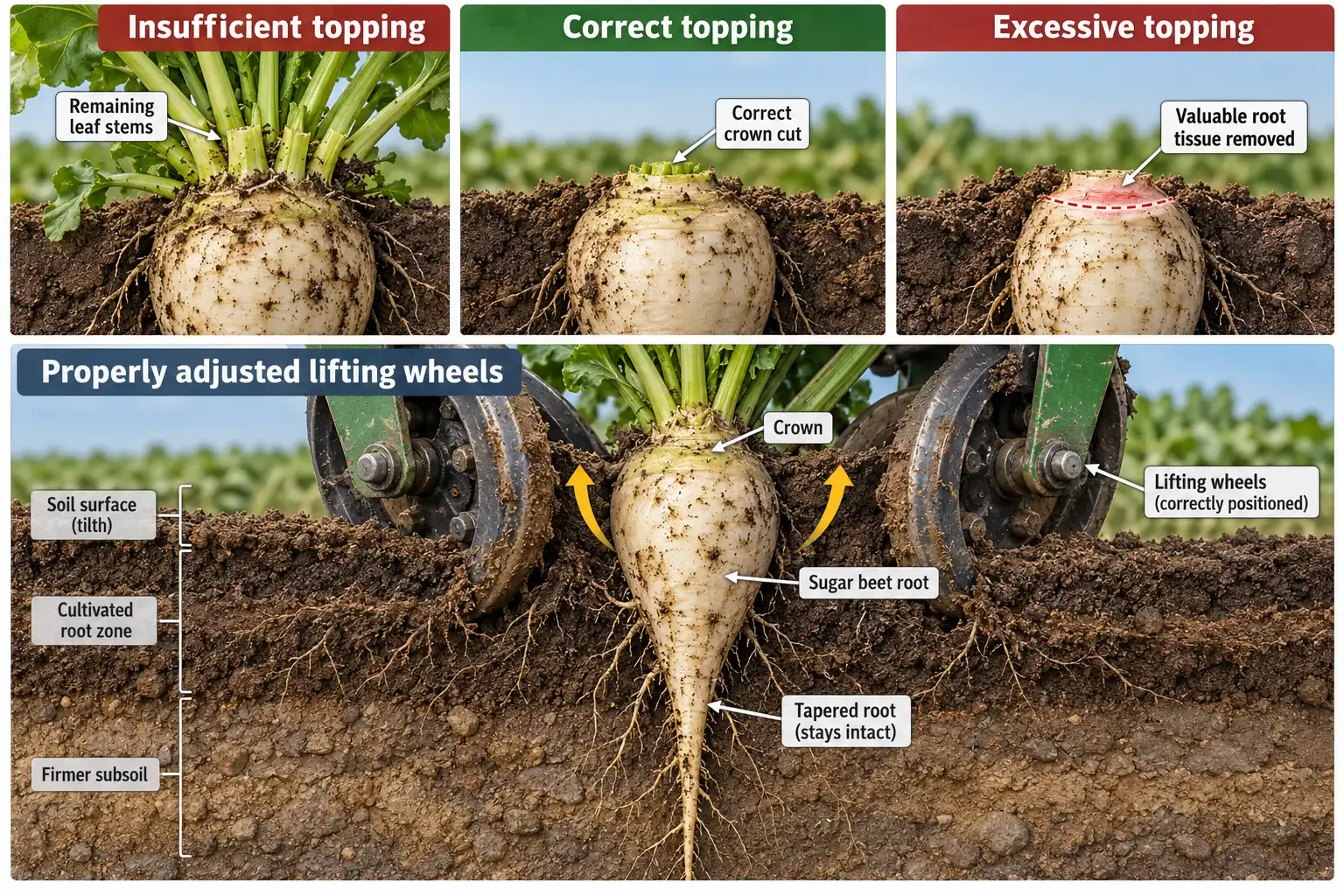
During topping, the aim is to remove leaf material without cutting away excessive root tissue. Cutting too deeply wastes sugar-bearing material, while leaving substantial leaf stems can interfere with storage.
Uneven root heights make this harder. The operator may need to adjust scalping equipment to accommodate the field.
Lifter wheels also require careful adjustment. They must lift roots deeply enough to avoid excessive tail breakage while limiting unnecessary soil pickup.
After starting harvest, inspect the field for unlifted roots, broken root tips, and damage to the crowns.
Inspect the truck load for bruises and excess soil. Reduce machine speed or adjust cleaning intensity if damage becomes noticeable.
Why Do Temperature and Frost Matter During Harvest?
Temperature affects how much sugar remains in harvested roots during storage.
Sugar beets remain alive after lifting. Their cells continue respiring and consuming stored sugars. Warm roots respire faster and are more vulnerable to deterioration.
The American Crystal Sugar Company heat and frost policies establish a useful commercial example. Under its standard policy, harvest is stopped when internal root temperatures reach 55°F during warming conditions. Certain ventilated storage sites have specific exceptions.
This is a processor’s operating rule, not a universal biological harvest threshold.
Frost presents a different problem. The leaf canopy can temporarily protect roots from cold air, but exposed crowns may suffer damage.
Frost-damaged roots can deteriorate rapidly after being placed in storage. Accordingly, a processor may suspend deliveries until root tissue has recovered sufficiently.
For decisions about freezing, follow the receiving company’s published policy rather than relying on air temperature alone.
What Happens to Sugar Beets After Harvest?
Harvested sugar beets are either processed relatively soon or stored under controlled conditions until the factory needs them.
At a receiving station, the piler typically removes additional loose soil and plant debris. Samples help assess delivered root quality, including sugar content and unwanted material.
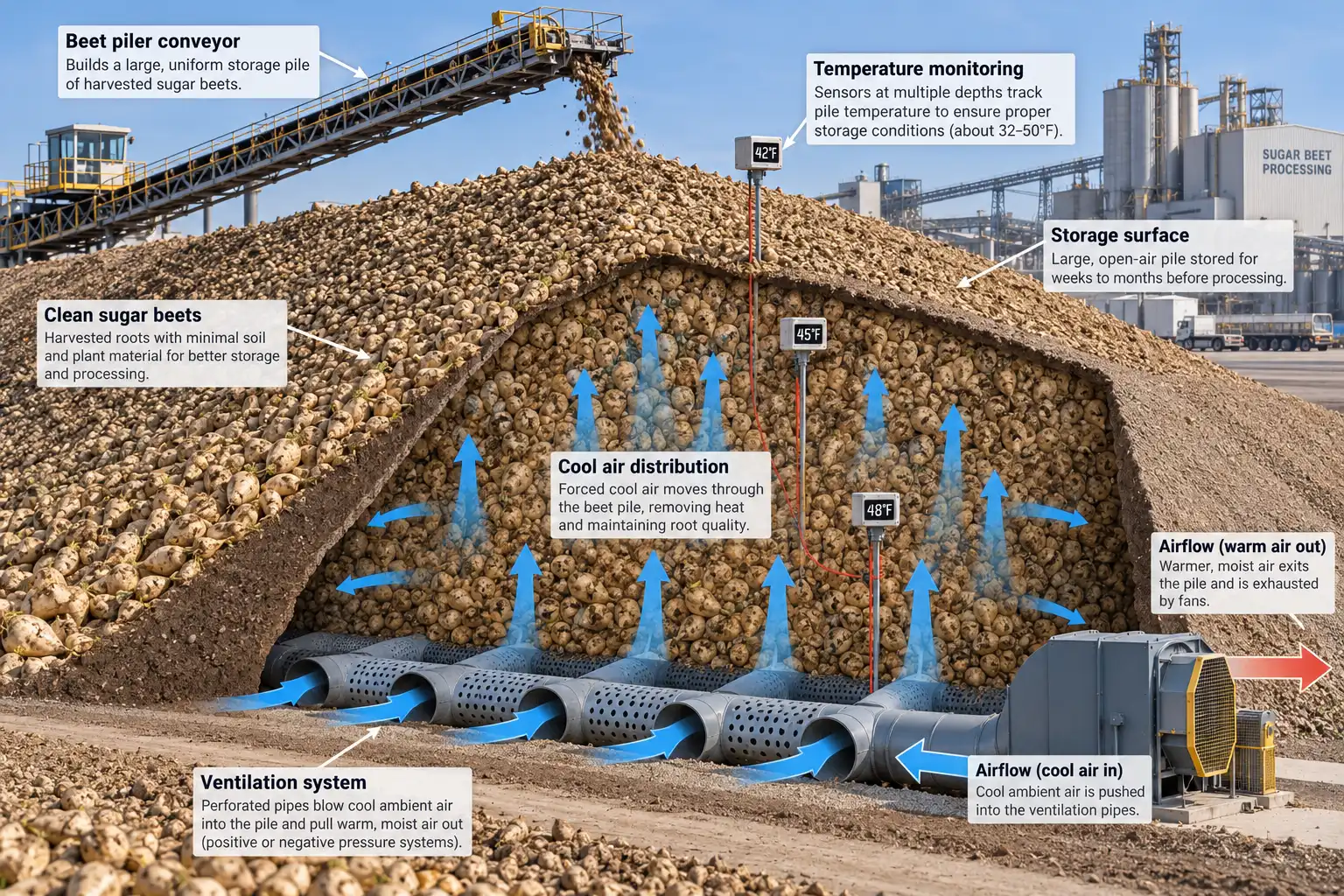
The roots then enter large outdoor storage piles. Some facilities use ventilation systems and temperature monitoring to manage storage conditions.
Cool, stable temperatures reduce respiration and slow deterioration. Warm spots, excessive plant trash, and damaged roots can increase storage losses.
When the factory requires more beets, trucks move roots from the piles to processing facilities.
The roots are washed and sliced into thin strips called cossettes. Hot water extracts sucrose from the slices. The extracted juice is purified, concentrated, and crystallized into sugar.
What Problems Can Occur During Sugar Beet Harvesting?
The most common harvest problems involve excess soil, damaged roots, uneven topping, and unfavorable storage temperatures.
| Problem | Likely cause | What to check |
|---|---|---|
| Too much soil in loads | Wet soil or ineffective cleaning | Field moisture and cleaning settings |
| Broken root tips | Incorrect lifter depth or excessive speed | Lifter wheels and travel speed |
| Leaves remaining on roots | Inadequate defoliation | Flail condition and topper adjustment |
| Excessive crown removal | Scalping knives set too low | Crown cutting height |
| Roots left in the field | Row misalignment or lifting problems | Row guidance and lifter operation |
| Poor storage quality | Warm or damaged roots and poor ventilation | Receiving temperature and root condition |
A simple field check can reveal losses hidden by soil.
Select a representative harvested row section. Look for missed beets, exposed broken roots, and damaged crowns. Repeat the inspection in different field conditions.
Machine settings that work in light soil may not work equally well in heavy or wet soil.
Do not increase cleaning intensity simply to remove more dirt if the adjustment causes excessive bruising.
How Many Tons of Sugar Beets Are Harvested per Acre?
Sugar beet yields vary by growing region, weather, soil conditions, and management.
For a concrete example, USDA National Agricultural Statistics Service reports that Minnesota averaged 29.9 short tons of sugar beets per harvested acre in 2025.
That state average is a useful example for understanding harvest volume, not a prediction for a particular field.
Example: A 10-acre field
At 29.9 short tons per acre:
10 acres × 29.9 short tons/acre = 299 short tons
That equals 598,000 pounds of harvested sugar beets.
Converting a 100-foot row
For rows spaced 22 inches apart:
- Row area: approximately 183 square feet.
- Equivalent acreage: approximately 0.00421 acre.
- At 29.9 tons per acre: approximately 252 pounds of roots.
The calculation helps compare field-scale quantities with smaller growing areas.
Use actual weigh tickets and field acreage to measure commercial yields. Harvest losses and differences in soil contamination can change the delivered weight.
Can Sugar Beets Be Harvested by Hand?
Yes. Small plantings can be harvested manually using a digging fork or shovel.
Loosen the surrounding soil before lifting the root. Avoid cutting or puncturing its enlarged body.
Remove the foliage and handle the roots gently. If the crop is going to a sugar processor, follow that company’s topping and delivery requirements.
Hand harvesting is practical for demonstration plots, small gardens, or research plantings. It is not an economical replacement for mechanized commercial harvesting.
Industrial sugar beet production also requires access to a processor and specialized transport arrangements. Those requirements matter when selecting crops for a farming operation.
FAQs About Sugar Beets Harvested
Do farmers pull sugar beets or dig them up?
Commercial farmers use specialized machines to lift sugar beets from the soil. Angled wheels or shares loosen and raise the roots, combining aspects of pulling and digging without relying on the leaves.
Can a regular combine harvest sugar beets?
No. Conventional grain combines are designed to harvest aboveground grain, not large underground roots. Sugar beet harvesters use dedicated topping, lifting, cleaning, and conveying components to collect roots with limited damage.
Are sugar beets washed immediately after harvest?
Usually not. Commercial harvesters remove much of the loose soil mechanically, while receiving stations provide additional dry cleaning. Thorough washing normally takes place at the processing factory before the roots are sliced.
Can sugar beets be harvested after a frost?
Yes, provided the roots are suitable for harvesting and meet the processor’s requirements. However, visibly frost-damaged or frozen roots may be rejected from storage until conditions permit safe handling and delivery.
How long can harvested sugar beets be stored?
Sugar beets can remain in managed commercial storage for several months. The actual storage period depends on temperature, root quality, pile ventilation, weather, and the factory’s processing schedule.
Key Points for a Successful Sugar Beet Harvest
Sugar beet harvesting requires coordination between defoliation, lifting, cleaning, transportation, and storage.
For the best harvest outcome, prioritize complete leaf removal, careful root handling, suitable soil conditions, and timely delivery. Follow the processing company’s acceptance rules, especially during unusually warm weather or after frost.